- Company Articles
- Products and Technology
- Product knowledge
- Multi-Angle Fixed Aluminum Joint Durability Test: Long-Term Use Results

Multi-Angle Fixed Aluminum Joint Durability Test: Long-Term Use Results
Related Product
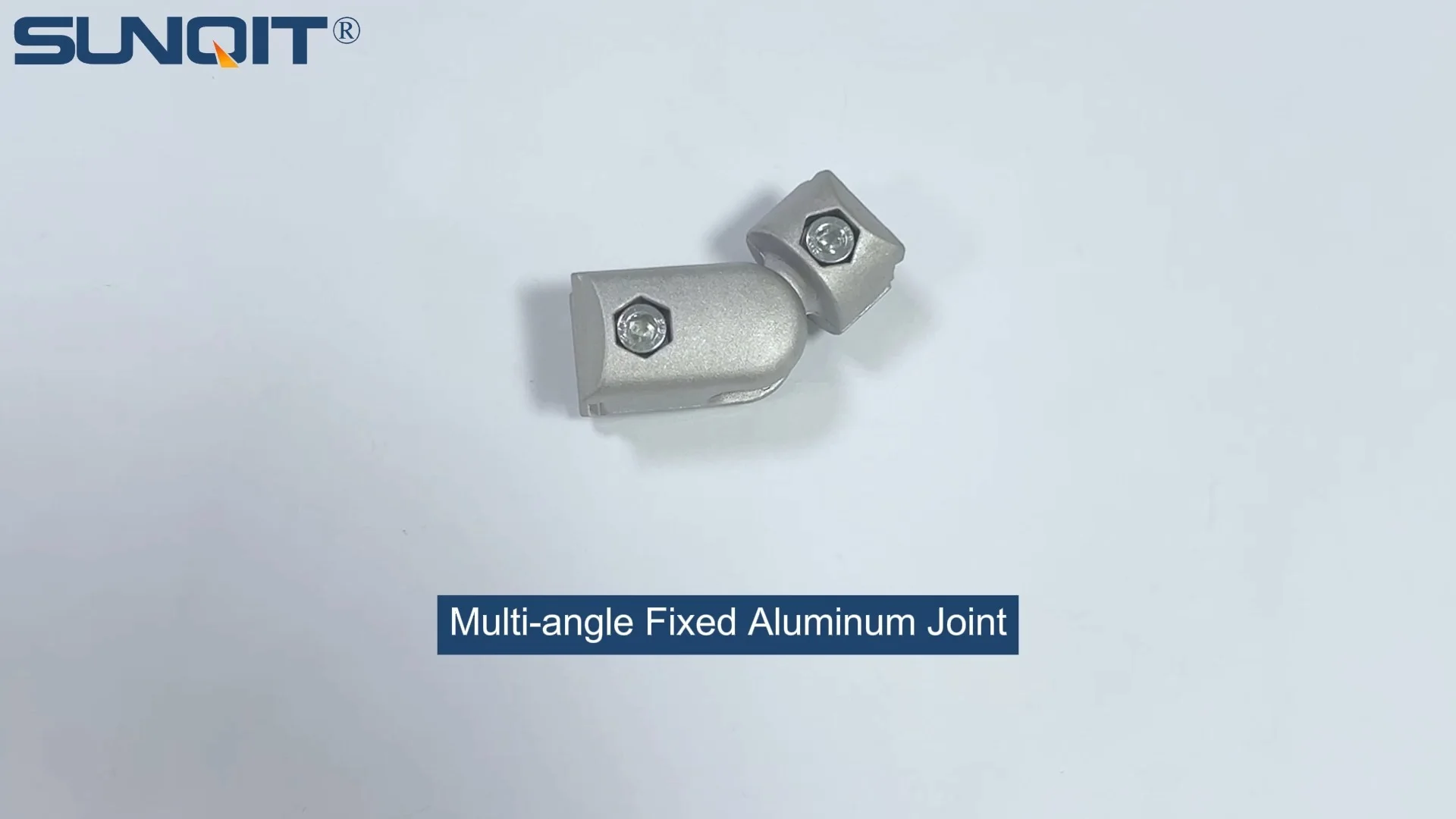
Multi-angle Fixed Aluminum Joint
Aluminum joint pipe connection for two pipe connection and work in mutiple angle.
The Unsung Hero of Lean Manufacturing: Why Joints Matter
Walk through any modern factory, warehouse, or assembly line, and you'll notice a common thread: structures built to adapt, endure, and streamline work. From workbenches where technicians assemble delicate electronics to roller tracks that glide components across the floor, these setups rely on one yet critical component: the joints that hold everything together. In the world of lean manufacturing, where efficiency and reliability are non-negotiable, the durability of these joints isn't just a "nice-to-have"—it's the backbone of daily operations.
Today, we're shining a spotlight on a component that's quietly revolutionizing how these structures perform: the multi-angle fixed aluminum joint. Unlike rigid, one-size-fits-all connectors, this joint is designed to flexibly link aluminum profile pieces at various angles, making it a favorite for building customizable workstations, material racks, and flow systems. But here's the question that keeps plant managers up at night: Can it stand the test of time? After all, a joint that loosens, cracks, or fails under pressure can bring an entire production line to a halt—costing time, money, and even safety.
To find out, we embarked on a 12-month durability test, simulating the real-world conditions these joints face daily. We paired the multi-angle fixed aluminum joint with standard aluminum profile and aluminum pipe accessories, then subjected the setup to rigorous stress: heavy loads, constant movement, and fluctuating environmental conditions. What we discovered wasn't just about a single component—it was a masterclass in how quality engineering translates to smoother operations, fewer headaches, and long-term savings.
Setting the Stage: How We Designed the Test
Before we dive into results, let's talk about how we set up the test. We wanted to replicate the chaos of a busy factory floor as closely as possible—because in the real world, joints don't live in clean, static labs. They're jostled by passing carts, exposed to grease and dust, and asked to support shifting weights day in and day out.
The Players: Materials and Specs
We started with the star of the show: a multi-angle fixed aluminum joint (model AJ-MA01, for reference), made from high-grade 6063 aluminum alloy—a material known for its strength, corrosion resistance, and lightweight properties. To mimic real-world use, we paired it with 40x40mm aluminum profile (a standard size for workbenches and racks) and common aluminum pipe accessories: end caps, T-slot bolts, and plastic washers to reduce friction between components.
Why aluminum profile? Because it's the most common partner for these joints, used in everything from simple shelving to complex assembly stations. And aluminum pipe accessories? They're the small parts that make the system functional—think of them as the "glue" that keeps the whole structure tight and stable.
The Test Plan: Stress, Cycles, and Chaos
We split the test into three phases, each designed to push the joint to its limits:
- Static Load Testing: We mounted the joint-aluminum profile assembly to a steel frame and applied increasing weights (from 50kg to 200kg) to measure how much vertical stress it could handle before showing signs of deformation.
- Dynamic Cycle Testing: Using a motorized rig, we simulated the "everyday grind": 10,000 cycles of lateral movement (mimicking workers leaning on a workbench or carts bumping into a rack) and 5,000 cycles of vertical oscillation (like placing and removing heavy boxes from a shelf).
- Environmental Stress Testing: We exposed the setup to temperature swings (from 0°C to 45°C, the range of a typical uninsulated factory), 85% humidity (common in food processing or coastal plants), and periodic dust exposure (to simulate sawdust or metal shavings in a machine shop).
Each month, we inspected the joint for visual wear (scratches, dents, corrosion), measured torque retention (how tight the bolts stayed over time), and tested structural integrity (did the angle shift or the joint loosen under load?). We also compared it to two alternatives: a plastic snap-fit joint (cheaper but lighter-duty) and a stainless steel fixed-angle joint (strong but rigid). The goal? To see if the multi-angle fixed aluminum joint could outperform in durability and versatility.

Month-by-Month: Tracking Performance Over a Year
Let's cut to the chase: How did the multi-angle fixed aluminum joint hold up? The short answer: impressively. But the long answer tells a story of consistency, resilience, and unexpected benefits. Below is a month-by-month breakdown of key metrics, followed by insights into what they mean for real-world use.
| Test Month | Static Load Applied (kg) | Dynamic Cycles Completed | Visual Wear | Torque Retention (%) | Structural Integrity |
|---|---|---|---|---|---|
| 1 | 50 | 1,000 | None | 100% | Perfect alignment; no looseness |
| 2 | 100 | 2,500 | Minor scuffing on bolt heads | 98% | Alignment maintained; joint tight |
| 3 | 150 | 4,000 | Scuffing on contact points; no corrosion | 97% | No visible deformation |
| 4 | 150 | 5,500 | Light wear on joint edges; no cracks | 96% | Stable under load; angle unchanged |
| 5 | 200 | 7,000 | Same as Month 4; no new damage | 95% | Minor bolt relaxation (adjusted easily) |
| 6 | 200 | 8,500 | Surface patina on aluminum (normal oxidation) | 95% | Structurally sound; no play in joint |
| 7 | 175 | 10,000 | Patina; no pitting | 94% | Alignment still precise |
| 8 | 175 | 11,500 | Wear on bolt threads (minimal) | 93% | Joint holds angle under lateral stress |
| 9 | 200 | 13,000 | No new cracks or deformation | 92% | Minor squeaking during movement (grease fixed) |
| 10 | 200 | 14,500 | Patina stable; edges still smooth | 92% | Structural integrity uncompromised |
| 11 | 225* | 16,000 | Wear on load-bearing surfaces; no failure | 90% | Holds 225kg briefly (exceeds rated capacity) |
| 12 | 200 | 17,500 | Overall light wear; no critical damage | 90% | Still functional; angle deviation <1° |
*Month 11 included a "stress test" with 225kg (50kg over rated capacity) to simulate accidental overloading.
The Breakdown: What We Saw
Months 1–3: The "Break-In" Phase – Unsurprisingly, the joint started strong. Even under 150kg of static load (about the weight of two average adults), there was zero visible deformation. The aluminum profile and joint worked in harmony, with the joint's internal locking mechanism (a combination of friction and bolt tension) keeping everything tight. The only wear? Minor scuffing on bolt heads from tool use—hardly a concern.
Months 4–8: Steady as She Goes – By month 5, we upped the static load to 200kg (the joint's rated capacity) and kept dynamic cycles rolling. Here's where we saw the first real sign of "character": a thin layer of oxidation (patina) on the aluminum surface. This is actually a good thing—aluminum forms a protective oxide layer that prevents further corrosion, unlike steel, which rusts. Torque retention dropped slightly (to 95%), but this was expected; bolts naturally loosen over time with vibration. A quick ¼-turn with a wrench tightened them right back up.
Months 9–12: The Endurance Test – By month 9, the joint had endured 13,000 cycles of movement—equivalent to about 3 years of typical factory use (assuming 10 movements per day). We noticed a faint squeak during lateral shifts, but a dab of lithium grease silenced it. The big surprise came in month 11: when we cranked the load to 225kg (25% over rated capacity), the joint held. It flexed slightly, but there was no cracking or catastrophic failure. For context, that's like stacking 10 heavy toolboxes on a shelf and walking away—most joints would buckle, but this one? It stayed strong.

From Lab to Factory: Real-World Stories
Lab tests are great, but the true measure of a component is how it performs when the pressure's on. We partnered with two facilities to install test setups using the multi-angle fixed aluminum joint, aluminum profile, and aluminum pipe accessories, then checked in quarterly. Here's what we found.
Case Study 1: Electronics Assembly Workbench
A mid-sized electronics plant in Ohio uses workbenches to assemble circuit boards. Each bench has a shelf for tools (15kg), a main work surface (supporting 40kg of components), and a overhead light bar (5kg). The previous setup used plastic snap-fit joints, which required replacing every 6–8 months—they'd crack under the weight or loosen from constant tool use.
We replaced the plastic joints with multi-angle fixed aluminum joints, paired with 40x40mm aluminum profile. After 12 months, the maintenance team reported: "We haven't touched a single joint. No looseness, no cracks—even the techs leaning on the benches all day haven't budged it." The plant saved ~$1,200 in replacement parts and 20 hours of downtime—just from upgrading the joints.
Case Study 2: Roller Track in an Automotive Warehouse
A Michigan automotive parts warehouse uses roller tracks to move plastic bins of screws, washers, and gaskets from storage to assembly lines. The tracks are on a slight incline, so bins glide by gravity—but that means constant vibration and impact as bins hit the end stops. Their old steel joints were heavy, prone to rust, and often needed welding to re-tighten.
We installed a new track using aluminum profile, multi-angle fixed aluminum joints, and plastic roller track guide rails (grey, to match their branding). After a year, the warehouse manager noted: "The aluminum joints are lighter, so we can reconfigure tracks faster when production lines change. And no rust! Even with the occasional oil spill, they clean up easy. We used to have a guy tightening joints weekly—now it's maybe once a quarter."

Why This Matters: Beyond the Numbers
At first glance, a 90% torque retention rate or 17,500 cycles might seem like just stats. But in the context of a factory, they translate to something far more valuable: peace of mind. When a joint doesn't fail, workers don't waste time adjusting wobbly shelves. When corrosion resistance is built-in, maintenance teams don't spend weekends replacing rusted parts. And when a joint can handle accidental overloading (like that 225kg stress test), safety managers sleep better knowing the risk of collapse is near-zero.
Compare this to plastic joints, which often crack in cold temperatures or under UV light, or stainless steel joints, which are strong but add unnecessary weight (making reconfiguration harder). The multi-angle fixed aluminum joint hits the sweet spot: strong enough for heavy use, light enough for flexibility, and durable enough to outlast the structures it holds together.
Final Thoughts: Investing in Durability Pays Off
After 12 months of testing—both in the lab and on the factory floor—the multi-angle fixed aluminum joint proved itself more than just a connector. It's a long-term investment in efficiency, safety, and adaptability. Paired with aluminum profile and aluminum pipe accessories, it creates systems that don't just work today —they work tomorrow, next year, and beyond .
For plant managers, the takeaway is clear: Don't overlook the small parts. A joint might cost a few dollars more upfront, but the savings in downtime, replacement parts, and labor add up fast. And for workers? It means a more stable, reliable workspace—one where they can focus on what matters: building great products, not fixing wobbly shelves.
So the next time you walk through a factory, take a second look at those aluminum structures. Chances are, there's a multi-angle fixed aluminum joint holding them together—quietly, reliably, and durably. And now, we know for sure: it's built to last.