- Company Articles
- Products and Technology
- Product knowledge
- Multi-Angle Fixed Aluminum Joint Failure Analysis: Common Causes

Multi-Angle Fixed Aluminum Joint Failure Analysis: Common Causes
Related Product
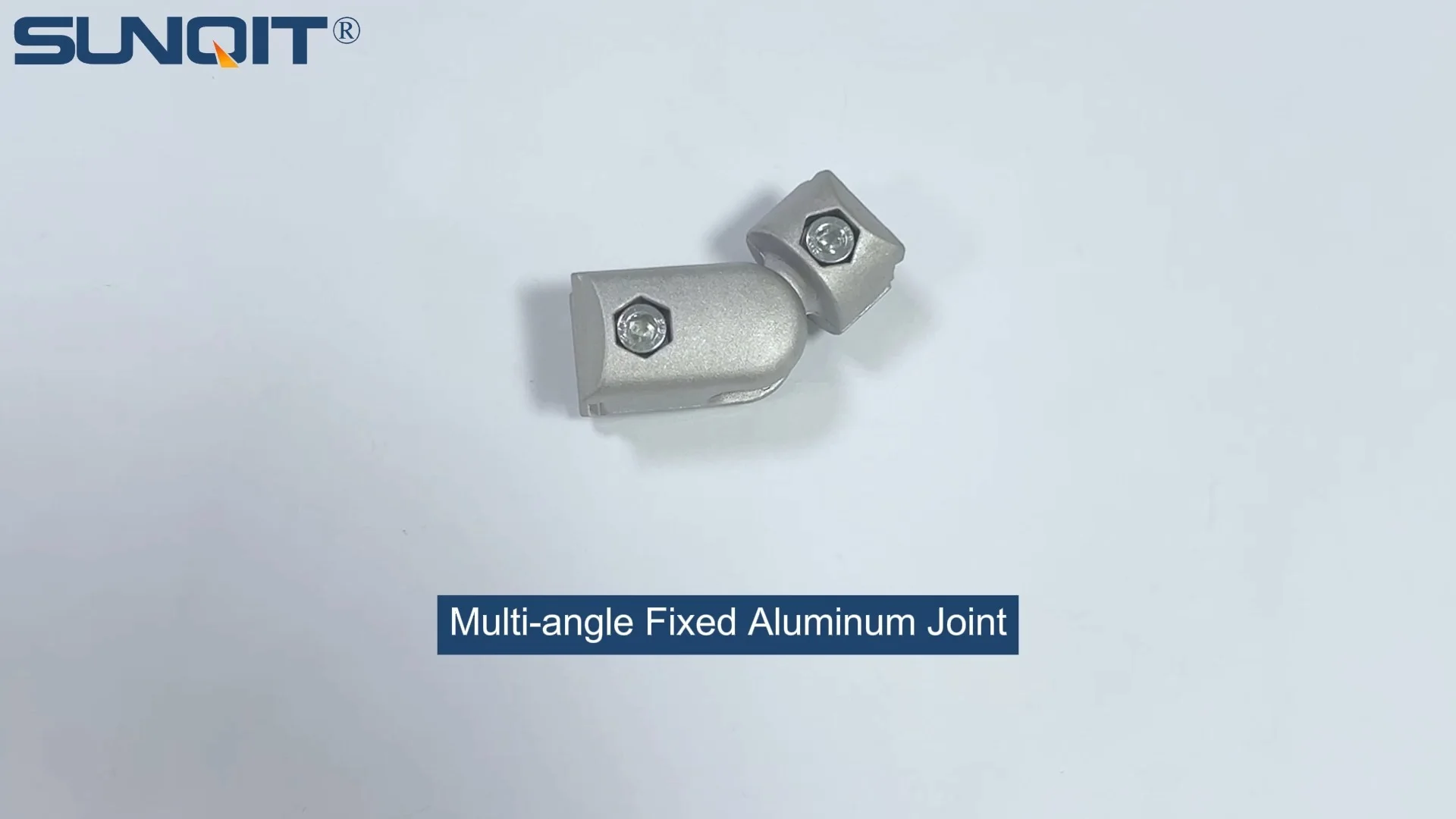
Multi-angle Fixed Aluminum Joint
Aluminum joint pipe connection for two pipe connection and work in mutiple angle.
Introduction: The Backbone of Lean Systems
In the bustling environment of modern manufacturing, where efficiency and adaptability reign supreme, few components work as quietly yet critically as the multi-angle fixed aluminum joint. These unassuming connectors are the unsung heroes holding together everything from aluminum lean pipe workbenches to intricate material racks, forming the skeletal framework of lean systems worldwide. But what happens when this backbone weakens? A loose joint in a workbench might start as a minor annoyance—a slight wobble when placing tools—but left unaddressed, it can escalate into production delays, safety hazards, or even complete system failure.
Consider a typical day on the factory floor: assembly line workers rely on stable workbenches to assemble delicate electronics; material handlers depend on sturdy racks to store inventory; and automated systems trust roller tracks, connected by these joints, to move components seamlessly. When a multi-angle fixed aluminum joint fails, it's not just a part that breaks—it's a disruption to the entire workflow. Suddenly, that "minor wobble" becomes a bottleneck. Parts slide off uneven work surfaces, tools fall, and teams scramble to makeshift solutions, all while deadlines inch closer.
This article dives into the why behind these failures. We'll explore the common causes of multi-angle fixed aluminum joint breakdowns, from material shortcuts to installation oversights, and how they impact real-world operations. Whether you're a plant manager troubleshooting recurring issues or a procurement specialist sourcing components for a new lean system, understanding these failure points is key to building more resilient, reliable infrastructure. Let's start by unpacking what makes these joints so vital—and so vulnerable.
Understanding Multi-Angle Fixed Aluminum Joints
Before we dissect failure, let's first understand the design and purpose of multi-angle fixed aluminum joints. These components are engineered to connect aluminum pipes, profiles, or tubes at various angles—90 degrees, 45 degrees, 135 degrees, and more—while maintaining structural integrity. Unlike flexible joints, which allow movement, "fixed" here means they're intended to hold a rigid position once installed, making them ideal for static structures like workbenches or semi-static setups like material racks.
Their popularity in lean systems stems from three key traits: versatility, lightweight strength, and cost-effectiveness. Aluminum, by nature, is lighter than steel but still offers impressive tensile strength, making it easy to transport and assemble without sacrificing durability. When paired with aluminum pipe accessories—like bolts, washers, and end caps—these joints create modular systems that can be reconfigured as production needs change. For example, a workbench built with multi-angle joints can be adjusted to different heights or extended with additional aluminum lean pipe sections, aligning perfectly with lean manufacturing's focus on adaptability.
But versatility comes with complexity. A single multi-angle joint might have internal threads, precision-machined grooves, or locking mechanisms to secure pipes in place. Take the "internal rotary aluminum joint"—a common variant— which allows for angular adjustments during installation but locks tight once set. The tolerance here is critical: even a fraction of a millimeter misalignment in the threading or a weak spot in the aluminum casting can compromise the joint's ability to hold load over time.
To visualize, think of a simple T-joint connecting three aluminum pipes to form a workbench corner. The joint must bear downward pressure from the workbench surface, lateral stress from tools or parts placed on the edges, and even minor vibrations from nearby machinery. Over weeks and months, these forces add up. If the joint isn't designed, installed, or maintained properly, it becomes the weakest link in the chain.

Common Failure Modes: How These Joints Let Us Down
Multi-angle fixed aluminum joints fail in ways that are often subtle before they're catastrophic. Let's break down the most common failure modes, each with its own telltale signs and consequences.
1. Loosening Under Load
The most frequent complaint? Joints that gradually loosen, leading to wobbling structures or misaligned components. Imagine a workbench where the top surface starts to tilt—this is often due to a joint losing grip. At first, it might tighten back with a quick twist of a wrench, but over time, the threads wear down, making re-tightening impossible. In severe cases, the joint may separate entirely, causing the structure to collapse.
2. Cracking and Fracturing
Cracks are the silent killers of aluminum joints. They often start small—hairline fractures around bolt holes or along the joint's casting seams—and grow with repeated stress. A common scenario is a joint used in a material rack, where heavy boxes are loaded and unloaded daily. The cyclic pressure causes fatigue cracks, which weaken the joint until it snaps under normal load. These cracks are easy to miss during routine inspections, especially if they're hidden by paint or corrosion.
3. Deformation and Warping
Aluminum is malleable, which is a strength in manufacturing but a weakness under extreme stress. Joints that bear loads beyond their design capacity may warp, bending out of shape or losing their ability to grip pipes. For example, a joint supporting a overloaded shelf might bend at the connection point, causing the shelf to sag. Even if it doesn't break immediately, the deformation compromises the joint's structural integrity, making future failure inevitable.
4. Corrosion and Material Degradation
While aluminum is naturally resistant to rust, it's not immune to corrosion—especially in harsh environments. Exposure to saltwater (near coastal facilities), chemicals (in automotive or pharmaceutical plants), or even high humidity can lead to pitting or oxidation on the joint's surface. Over time, this corrosion eats away at the aluminum, weakening the material and creating gaps between the joint and connected pipes. In extreme cases, the joint may crumble when pressure is applied.
| Failure Mode | Visual Signs | Typical Consequence |
|---|---|---|
| Loosening | Wobbling structures, visible gaps between joint and pipe | Reduced stability, increased vibration damage |
| Cracking | Hairline fractures, powder-like residue (aluminum oxide) around seams | Sudden structural failure under load |
| Deformation | Bent or misshapen joint bodies, pipes no longer aligned | System misalignment, uneven load distribution |
| Corrosion | Pitting, discoloration (white/greenish film), rough surface texture | Weakened material, loss of grip on connected pipes |

Root Causes of Failure: Digging Deeper
Now that we've identified how these joints fail, let's explore why. Most failures trace back to one (or a combination) of five root causes: material shortcuts, manufacturing flaws, installation errors, environmental stress, or plain old wear and tear.
Material Deficiencies: Cutting Corners on Quality
Not all aluminum is created equal. High-quality joints use aerospace-grade aluminum alloys (like 6061-T6) known for their strength and corrosion resistance. But some suppliers, chasing lower costs, opt for cheaper, lower-grade aluminum or alloys with high impurity levels. These subpar materials are more prone to cracking under stress or deforming under load. For example, aluminum with excess silicon may be brittle, while alloys lacking copper can't withstand repeated tension.
Another red flag? Inconsistent wall thickness in the joint body. A joint designed to have a 3mm thick wall might, in low-quality versions, thin to 2mm in spots due to poor casting. These thin areas become stress concentrators, failing first when the joint is loaded. Unfortunately, this defect is often invisible to the naked eye, making it hard to spot until failure occurs.
Manufacturing Flaws: When Precision Goes Wrong
Even with good material, poor manufacturing can doom a joint. Casting defects—like air bubbles (porosity) or incomplete filling of the mold—create weak spots. A tiny air pocket inside the joint body, for instance, acts like a pre-crack, expanding under pressure until the joint splits. Machining errors are another culprit: misaligned threads that don't match standard aluminum pipe accessories, or rough edges that cause uneven stress distribution when pipes are inserted.
Heat treatment is also critical. Aluminum alloys like 6061 require precise heating and cooling to achieve their full strength. Rushing this process or using incorrect temperatures can leave the metal too soft (prone to deformation) or too brittle (prone to cracking). We've seen cases where joints from a budget supplier, heat-treated improperly, failed after just 100 hours of light use on a workbench—far short of the 10,000+ hours expected from quality parts.
Installation Errors: The Human Factor
Even a perfect joint can fail if installed incorrectly. The most common mistake? Over-tightening or under-tightening the bolts. Over-tightening stretches the aluminum threads, stripping them or warping the joint body. Under-tightening leaves gaps, allowing the joint to loosen with vibration. Both scenarios lead to premature failure.
Misalignment is another issue. Pipes forced into a joint at an angle (instead of straight) create uneven stress. For example, if a worker bends an aluminum lean pipe slightly to fit into a T-joint, the joint will bear lateral stress it wasn't designed for, leading to cracking over time. Using the wrong tools—like pliers instead of torque wrenches—exacerbates this, as does skipping steps like cleaning pipe ends (grease or debris can prevent a tight seal).
Case Study: The Wobbly Workbench Mystery
A mid-sized electronics manufacturer recently upgraded their assembly line with new aluminum lean pipe workbenches. Within three months, operators reported wobbling surfaces on several benches. Initial inspections showed loose joints, which maintenance crews tightened—only for them to loosen again within weeks.
Digging deeper, the root cause emerged: the installation team had used standard socket wrenches instead of torque wrenches. Without torque control, some bolts were tightened to 80 Nm (far above the recommended 45 Nm), stripping the aluminum threads. Others were tightened to just 20 Nm, leaving them loose. To make matters worse, the workbenches sat near a stamping machine, whose vibrations amplified the loosening.
The fix? Retraining the team on torque specifications and equipping them with calibrated torque wrenches. They also added thread-locking adhesive to the bolts and installed rubber vibration dampeners under the workbench legs. Six months later, the joints remained tight, and productivity returned to normal.
Environmental Stress: When Nature Takes Its Toll
Aluminum joints thrive in controlled environments—think climate-controlled factories with low humidity. But expose them to extremes, and problems arise. High temperatures (above 120°C) can soften the aluminum, while freezing temperatures make it brittle. Coastal facilities face salt spray, which accelerates corrosion, while chemical plants deal with fumes that eat away at protective coatings.
Vibration is another environmental villain. Even minor, constant vibration—from nearby motors or conveyor belts—causes "micro-loosening" of bolts over time. This isn't just about the joint itself; the repeated movement wears down the threads on both the joint and the aluminum pipe, making re-tightening ineffective. In one automotive plant, a joint on a material rack near a welding robot failed after six months due to constant vibration, even though the load on the rack was well within design limits.
Wear and Tear: The Cost of Time
Nothing lasts forever, and multi-angle fixed aluminum joints are no exception. Over years of service, repeated loading and unloading, temperature cycles, and minor vibrations take their toll. The internal locking mechanisms (like spring-loaded pins or friction washers) wear down, reducing the joint's ability to grip pipes. Threads become smooth from repeated tightening and loosening. Even the aluminum itself fatigues, with microscopic cracks growing each time the joint is stressed.
This is normal—but predictable. Most manufacturers specify a "service life" for their joints (often 5–7 years in moderate use). Ignoring this and keeping joints in service beyond their lifespan is a recipe for failure. A food packaging plant learned this the hard way when a 10-year-old material rack joint collapsed, spilling inventory. An inspection revealed the joint's aluminum had fatigued to the point where it crumbled under hand pressure.

Preventing Failure: Proactive Steps for Longevity
The good news? Most multi-angle fixed aluminum joint failures are preventable with the right strategies. Let's break down actionable steps to keep these critical components—and the lean systems they support—strong.
Choose Quality Materials and Suppliers
Start at the source: partner with reputable suppliers who use high-grade aluminum alloys and provide material certifications. Ask for test reports (like tensile strength or corrosion resistance) and avoid "too-good-to-be-true" pricing—if a joint costs 50% less than competitors, it's likely cutting corners on material or manufacturing.
Look for suppliers specializing in lean system components, as they understand the unique demands of these applications. For example, a supplier that also offers aluminum pipe accessories (like coated bolts or corrosion-resistant washers) can ensure compatibility, reducing the risk of mismatched parts causing stress points.
Train Installers on Precision Techniques
Invest in training for installation teams. Teach them to use torque wrenches set to the manufacturer's specifications, clean pipe ends before assembly, and check for alignment using spirit levels. Simple habits—like hand-threading bolts before using a wrench to avoid cross-threading—can extend joint life dramatically.
Document the process: create a step-by-step installation guide with photos, torque values, and tool lists. Post it near assembly areas as a reminder. For complex joints (like internal rotary variants), consider hands-on workshops with the supplier to ensure teams understand how the locking mechanisms work.
Implement Regular Maintenance Checks
Preventive maintenance is key. Schedule quarterly inspections of all multi-angle joints, looking for signs of loosening, cracking, or corrosion. Tighten loose bolts (using torque wrenches, of course) and replace any joints with visible damage. For high-stress areas (like workbenches near heavy machinery), inspect monthly.
Environmental protection matters too. In humid or corrosive environments, clean joints with a mild detergent and apply a thin coat of anti-corrosion spray (like WD-40 Specialist Long-Term Corrosion Inhibitor). For coastal facilities, consider upgrading to anodized aluminum joints, which have a thicker protective oxide layer.
Retire Aging Joints Gracefully
Even with perfect maintenance, joints don't last forever. Track the service life of each joint (using asset tags or a digital log) and replace them proactively—before they fail. For critical systems (like load-bearing racks), consider replacing joints every 5 years, even if they look fine. The cost of replacement is trivial compared to the downtime and safety risks of a sudden failure.
Conclusion: Strengthening the Backbone
Multi-angle fixed aluminum joints may be small, but their role in lean systems is enormous. They're the quiet connectors that turn aluminum pipes and profiles into the workbenches, racks, and tracks that keep manufacturing humming. When they fail, the ripple effects are felt across the entire operation—from delayed orders to frustrated teams.
By understanding the common failure modes and their root causes—material shortcuts, manufacturing flaws, installation errors, environmental stress, and wear—we can take proactive steps to prevent them. Choose quality materials, train teams on precision installation, maintain regularly, and retire old joints on schedule. In doing so, we transform these humble components from potential weak links into the reliable backbone of efficient, resilient lean systems.
After all, in lean manufacturing, every detail matters. And when it comes to multi-angle fixed aluminum joints, attention to detail isn't just good practice—it's the key to keeping production moving, safely and efficiently, for years to come.