- Company Articles
- Products and Technology
- Installation And Maintenance
- Multi-Angle Fixed Aluminum Joint for Adjustable Workbenches: User Guide

Multi-Angle Fixed Aluminum Joint for Adjustable Workbenches: User Guide
Related Product
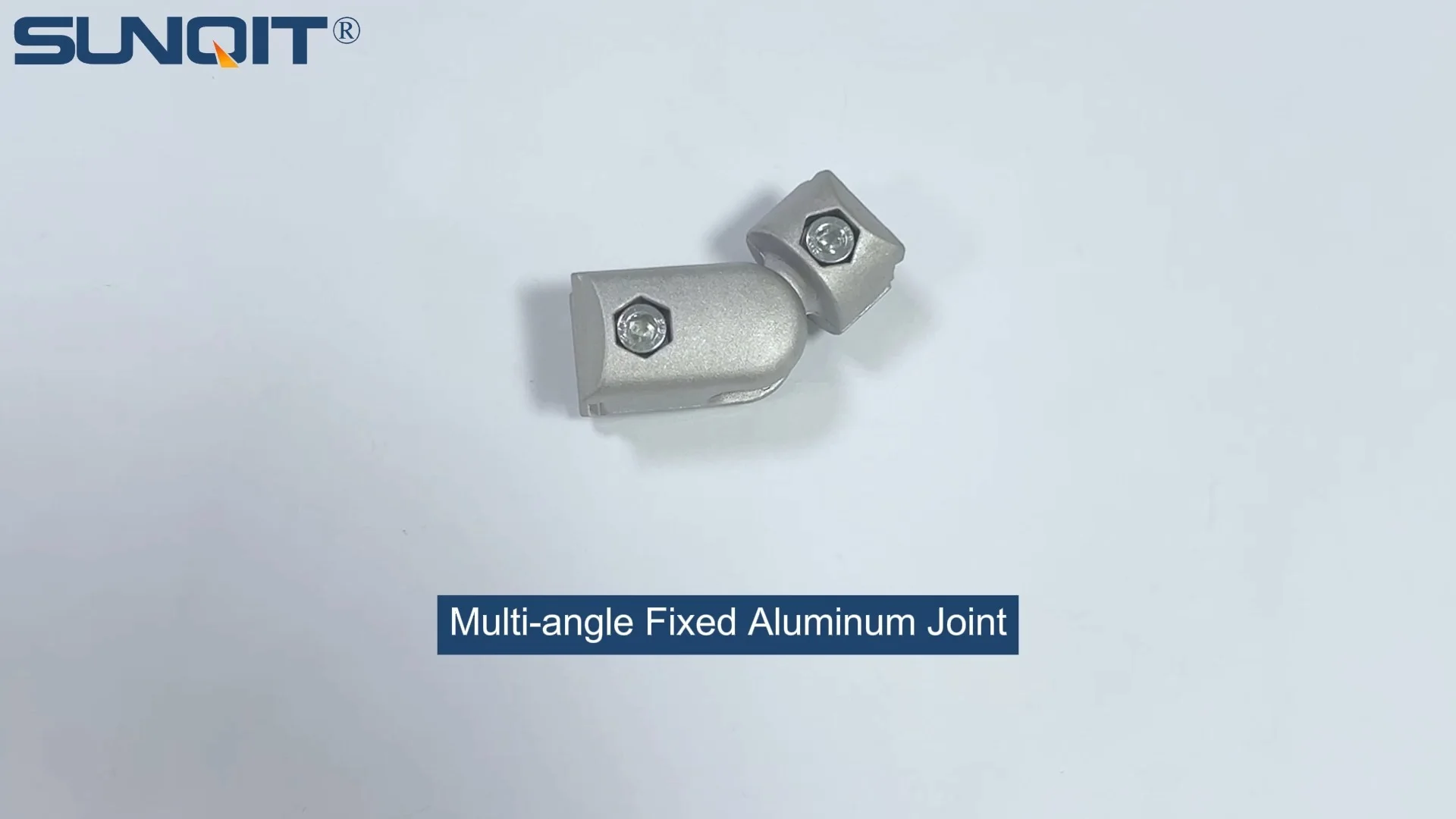
Multi-angle Fixed Aluminum Joint
Aluminum joint pipe connection for two pipe connection and work in mutiple angle.
It's a Tuesday morning at BrightTech Electronics, and Maria, the production supervisor, stands in front of a row of workbenches that look like they've seen better days. One bench is too low for the new assembly tasks, another has shelves that can't be adjusted to fit larger components, and the team has resorted to stacking boxes on the floor because there's no room for materials. "We need something that grows with us," she sighs, scrolling through supplier catalogs. That's when she spots it: a photo of a sleek, silver workbench with shelves that pivot, heights that change, and components that seem to click together like a puzzle. The secret? A small but mighty part called the multi-angle fixed aluminum joint . If you've ever felt stuck with rigid, one-size-fits-nobody workspaces, this guide is for you. Let's dive into how this unassuming component can transform your workshop, lab, or assembly line from a source of frustration into a hub of flexibility and productivity.
What Is a Multi-Angle Fixed Aluminum Joint, Anyway?
At its core, a multi-angle fixed aluminum joint is the "hinge" that brings your workspace to life. Picture this: you have lengths of aluminum pipe —lightweight, strong, and easy to handle—and you want to connect them into a workbench, a material rack, or even a mobile trolley. But not all angles are 90 degrees. Maybe you need a 45-degree slope for a conveyor, or a 135-degree brace for extra stability. That's where these joints shine. Made from high-grade aluminum alloy (often 6063-T5, known for its strength and corrosion resistance), they're designed to lock aluminum pipes into place at virtually any angle, then stay put—even under the daily grind of tools, parts, and busy hands.
Unlike cheap plastic connectors that crack or rigid steel brackets that require welding, these aluminum joints offer the best of both worlds: durability and adaptability. They typically feature internal threads or clamping mechanisms that let you tighten them securely with a hex key, no power tools needed. And because they're made of aluminum, they won't rust in humid workshops or corrode if you spill a little coolant—perfect for environments where reliability matters.
Key Features That Make These Joints a Game-Changer
Not all joints are created equal. Here's what to look for when shopping for multi-angle fixed aluminum joints, and why these features matter for your workspace:
- Adjustable Angle Range: Most quality joints let you set angles from 0 to 180 degrees, with detents (small notches) at common angles like 30°, 45°, 90°, and 135° for quick setup. This means you can build a flat workbench one day and a tilted assembly station the next without buying new parts.
- Load Capacity: Don't let their lightweight fool you. A good joint can handle 50-100 kg of weight per connection—enough for heavy tools, stacks of circuit boards, or even a full bin of metal parts. Check the specs: a joint rated for 80 kg per connection means a 4-legged workbench could support 320 kg (that's over 700 pounds!) before you even factor in the strength of the aluminum pipes.
- Compatibility with Aluminum Profile Accessories: The best joints play well with others. They'll work seamlessly with aluminum profile accessories like end caps (to cover sharp pipe ends), pipe clamps (to hold tools or cables), and even ESD (electrostatic discharge) components if you're working with sensitive electronics. No more mismatched parts or jerry-rigged fixes.
- Tool-Free (or Tool-Minimal) Assembly: Tightening a joint should take 30 seconds, not 30 minutes. Look for models with captive screws (so you don't lose them!) and ergonomic hex sockets that fit standard Allen keys. This saves time during setup and makes reconfiguring your workspace a breeze when your needs change.
- Surface Finish: Anodized or powder-coated finishes aren't just for looks. They add a layer of protection against scratches, fingerprints, and chemicals—important if your workspace is busy (or messy, let's be real). Plus, a smooth, matte finish won't leave marks on your aluminum pipes, keeping your setup looking professional.

Why Flexibility Matters: Real Benefits for Real Workspaces
Let's get practical. Why should you care about a joint that bends? Because rigid workspaces cost you time, money, and sanity. Here's how multi-angle fixed aluminum joints solve common headaches:
Adapt to Changing Tasks: Last month, your team was assembling small sensors; this month, they're building larger control panels. With fixed joints, you'd need a whole new workbench. With adjustable joints? Loosen a few screws, reangle the pipes, and your "too-small" bench is now a "just-right" bench. No waiting for custom orders, no wasted space storing old furniture.
Durability That Keeps Up With You: Think about how many times a workbench gets bumped, leaned on, or loaded with heavy parts. Cheap joints wiggle, plastic cracks, and suddenly your "stable" surface is wobbling mid-assembly. Aluminum joints, paired with sturdy aluminum pipes, can handle years of daily use without losing their grip. One manufacturer we spoke to reported using the same joints for over 5 years in a busy auto parts shop—no replacements needed.
Cost-Effective Over Time: Custom-built workbenches cost a fortune, and they're obsolete the second your needs change. Multi-angle joints let you start small (a basic workbench) and expand as you grow (add shelves, extend the length, or convert it into a mobile trolley with caster wheels ). It's like buying a modular sofa instead of a fixed one—you pay for what you need now, and add on later.
Safety First: Wobbly workbenches aren't just annoying—they're dangerous. A tool that slides off a tilted surface, or a shelf that collapses under weight, can cause injuries. Multi-angle joints lock securely, so once you set an angle, it stays set. Plus, aluminum's non-sparking nature makes them safer in environments with flammable materials, unlike steel joints that can create sparks if knocked.

How to Choose the Right Multi-Angle Joint for Your Project
Not every joint will work for every job. Here's a quick checklist to find your perfect match:
| Your Need | What to Look For | Example Scenario |
|---|---|---|
| Heavy loads (e.g., engine parts, metal sheets) | Joint with reinforced clamping mechanism; load capacity ≥80 kg per connection | A material rack for storing 20kg metal panels needs joints that won't budge under pressure. |
| Precise angles (e.g., optical labs, electronics assembly) | Joints with degree markings and fine-adjustment knobs | A 15-degree slope for a PCB conveyor needs to be exact to prevent parts from jamming. |
| Humid or corrosive environments (e.g., food processing, marine workshops) | Anodized or stainless steel-coated joints; avoid untreated aluminum | A fish processing workbench needs joints that won't rust from constant water exposure. |
| Quick reconfiguration (e.g., event setups, pop-up workshops) | Tool-free joints with quick-release levers | A trade show display that needs to be built and taken down in 2 hours flat. |
| ESD-sensitive work (e.g., semiconductor manufacturing) | Joints with ESD-safe coatings (black ESD finish) to dissipate static | An electronics assembly line where static could fry microchips. |
Pro tip: Always check the diameter of your aluminum pipes before buying joints. Most joints fit standard sizes like 28mm, 30mm, or 40mm pipes—buying mismatched sizes is a rookie mistake that'll leave you with a pile of useless parts. When in doubt, ask your supplier for a compatibility chart—reputable lean system suppliers will happily share one.

Step-by-Step: Building Your First Adjustable Workbench
Ready to stop reading and start building? Let's walk through assembling a basic workbench using multi-angle fixed aluminum joints, aluminum pipes, and a few essential accessories. You'll need:
- 4 pieces of aluminum pipe (e.g., 120cm long for the legs, 180cm for the tabletop frame)
- 8 multi-angle fixed aluminum joints (4 for the corners, 4 for bracing)
- A sheet of aluminum honeycomb panel (lightweight, flat surface for the tabletop)
- 4 adjustable leveling feet (to keep the bench stable on uneven floors)
- Basic tools: hex key set, measuring tape, level, pencil
Step 1: Measure Twice, Cut Once (Or Not Cut At All!) Aluminum pipes often come pre-cut to length, but double-check your workspace dimensions. For a standard workbench, aim for a height of 80-90cm (adjustable, of course!) and a width of 60-120cm. Mark where the joints will go on each pipe—typically 5-10cm from the ends to leave room for clamping.
Step 2: Attach the Legs to the Frame Take two long pipes (the tabletop frame) and two shorter pipes (the legs). Slide a multi-angle joint onto each end of the frame pipes. Tilt the joints to 90 degrees (use the detent if your joint has one) and insert the leg pipes. Tighten the joint clamps with a hex key—snug, but not so tight you strip the threads. Repeat for the other side to form a rectangle with legs.
Step 3: Add Bracing for Stability No one likes a wobbly bench! Cut two shorter pipes (cross-braces) and use joints set at 45 degrees to connect the legs. This "X" shape adds rigidity, especially if you'll be leaning on the bench or placing heavy tools on it. Pro tip: Use a level to make sure the frame is square before tightening the braces—your future self (and your back) will thank you.
Step 4: Mount the Tabletop Lay the aluminum honeycomb panel on top of the frame. Use pipe clamps (another type of aluminum profile accessory ) to secure it—these clamp onto the frame pipes and hold the panel in place without drilling holes. If you need to remove the panel later (to access wiring, for example), just loosen the clamps.
Step 5: Level and Test Screw the adjustable leveling feet into the bottom of the legs. Place the bench in its final spot, then twist the feet until the bench is level (use the bubble level here). Give it a good shake—if it wobbles, check the joint tightness or add extra braces. Now, stand back and admire your handiwork: a workbench that can grow, shrink, tilt, or even be taken apart and rebuilt elsewhere. Nice job!
Beyond Workbenches: Creative Uses for Multi-Angle Joints
These joints aren't just for workbenches—they're limited only by your imagination. Here are a few ideas from real users:
- Mobile Material Racks: Attach caster wheels to the legs of a pipe frame connected with multi-angle joints, and you've got a rolling rack for raw materials. Angle the shelves at 10 degrees to keep bins from sliding off when moving.
- Ergonomic Standing Desks: Build a frame with adjustable height (thanks to joints at the legs) so you can switch between sitting and standing. Add a keyboard tray set at a 15-degree angle to reduce wrist strain.
- Custom Conveyor Guides: In assembly lines, products often need to turn corners. Use 45° or 90° joints to build roller track guides that gently nudge parts into place—no expensive custom conveyors required.
- Lab Safety Barriers: In research labs, you might need temporary barriers around experiments. Use joints to connect clear acrylic panels and aluminum pipes into a protective screen that can be reconfigured as projects change.
Troubleshooting: When Things Don't Go Smoothly (And How to Fix Them)
Even the best tools hit snags. Here are common issues and quick fixes:
- Joints Keep Loosening: Check if you're using the right pipe diameter—if the pipe is too small, the joint can't clamp properly. If the pipe fits, try applying a drop of thread locker (like Loctite) to the screw threads—just don't use too much, or you'll never get it apart!
- Pipes Are Misaligned: If your frame is crooked, double-check the angle settings on the joints. Most have degree markings—use a protractor if you're unsure. Tighten joints in a crisscross pattern (like tightening car lug nuts) to distribute pressure evenly.
- Surface Scratches on Joints: Aluminum is soft, so avoid using abrasive cleaners. Wipe with a damp cloth and mild soap instead. For deeper scratches, a little aluminum polish (like Mothers Mag & Aluminum Polish) can buff them out.
Maintaining Your Joints for Long-Lasting Use
A little care goes a long way. Here's how to keep your multi-angle joints in top shape:
- Inspect Monthly: Give joints a quick once-over—look for loose screws, cracks, or signs of corrosion. Tighten any loose clamps before they become a problem.
- Clean Regularly: Dust and grime can build up in the joint threads, making them hard to adjust. Blow out debris with compressed air, then wipe with a dry cloth.
- Store Spares: Keep a few extra joints on hand—you never know when inspiration (or a broken joint) will strike. Store them in a dry place to prevent corrosion.
Wrapping Up: Your Workspace, Your Rules
Remember Maria from BrightTech Electronics? A month after switching to multi-angle fixed aluminum joints, she sent us a photo: her old, clunky workbenches were gone, replaced by sleek, adjustable setups. One bench was tilted at 30 degrees for soldering, another had shelves that folded down when not in use, and the team had even built a mobile cart for moving parts between stations. "We used to spend hours rearranging tools; now we spend that time building better products," she said. That's the power of flexibility.
Whether you're running a small workshop, a busy assembly line, or a home garage, multi-angle fixed aluminum joints put you in control. They turn aluminum pipe and aluminum profile accessories into something greater: a workspace that adapts to you, not the other way around. And when your business grows, your workspace can grow with it—no expensive overhauls, no wasted time, no more "good enough" setups.
So, what will you build first? A workbench that finally fits? A material rack that rolls where you need it? Whatever it is, remember: the best workspaces aren't just made of metal and pipes—they're made of the freedom to create, adapt, and thrive. And it all starts with a joint that lets you say, "I'll do it my way."