- Company Articles
- Products and Technology
- Product knowledge
- Multi-Angle Fixed Aluminum Joint for Automotive Parts Storage Racks

Multi-Angle Fixed Aluminum Joint for Automotive Parts Storage Racks
Related Product
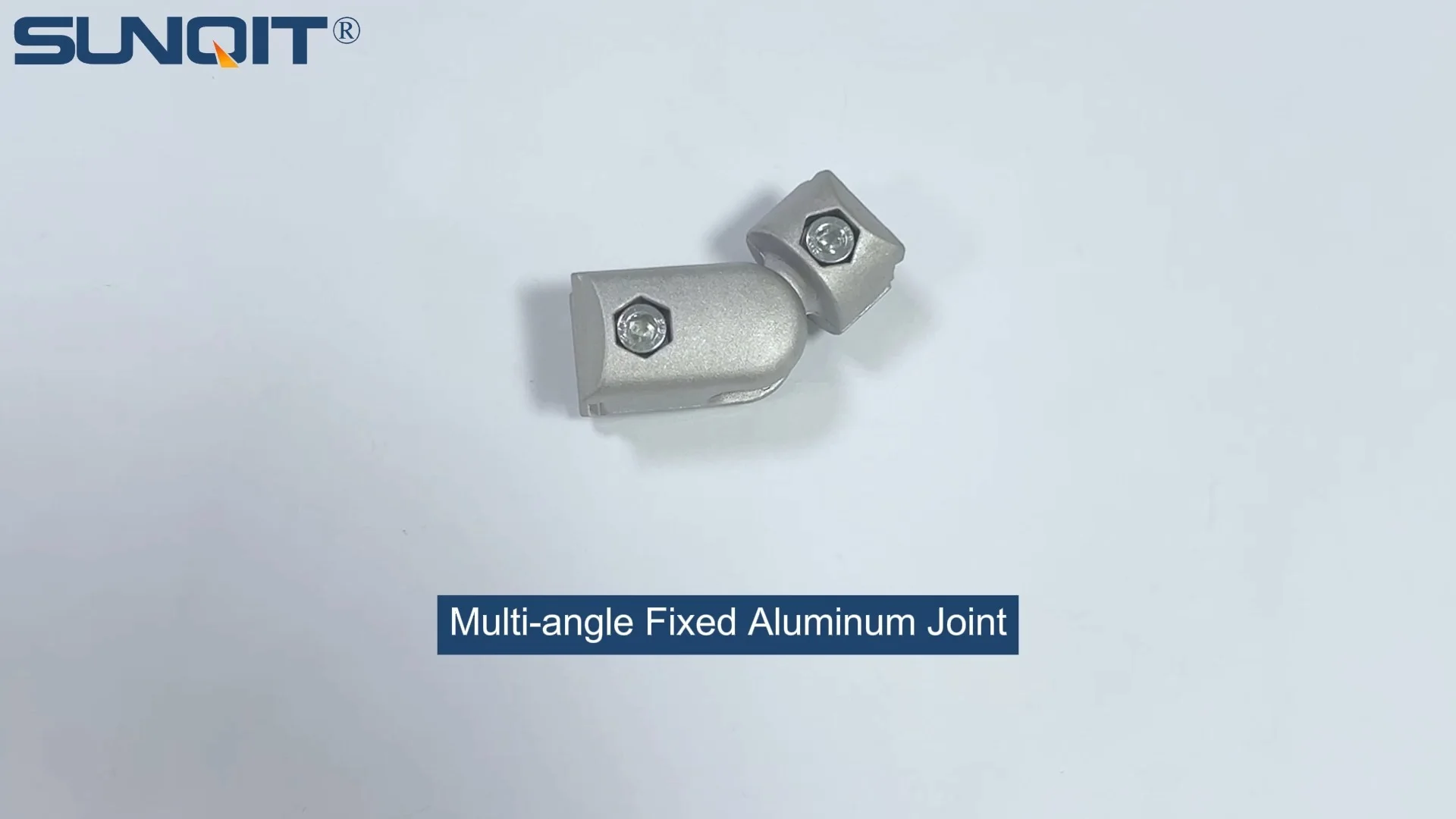
Multi-angle Fixed Aluminum Joint
Aluminum joint pipe connection for two pipe connection and work in mutiple angle.
The unsung hero of efficient, flexible, and durable storage solutions in automotive manufacturing
Introduction: The Hidden Chaos of Automotive Parts Storage
Walk into any automotive manufacturing plant, and you'll likely be dazzled by the precision of assembly lines, the hum of robots, and the shine of newly minted car parts. But behind this polished facade lies a critical, often overlooked backbone: the storage racks that keep the entire operation running smoothly. These racks hold everything from tiny screws and gaskets to heavy engine components and body panels—each piece with its own size, weight, and storage requirements. When storage systems fail to keep up, the consequences ripple through the production line: delayed assembly, misplaced parts, wasted labor, and even compromised product quality.
For decades, automotive warehouses have grappled with a fundamental challenge: how to balance flexibility (to adapt to new parts and production changes) with durability (to withstand constant use and heavy loads) and efficiency (to ensure quick, easy access). Traditional storage solutions—think rigid steel racks or one-size-fits-all plastic shelving—often fall short. Steel racks are strong but heavy, hard to reconfigure, and prone to corrosion in busy, oily environments. Plastic options are lightweight but lack the strength to hold heavier components. And both leave little room for customization when production lines shift or new car models require different parts storage.
Enter the multi-angle fixed aluminum joint —a small but mighty component that's quietly revolutionizing how automotive storage racks are built and used. Designed to connect aluminum profiles at various angles with precision and strength, this joint turns ordinary storage systems into adaptable, durable, and efficient workhorses. In this article, we'll dive deep into why this unassuming piece of hardware matters, how it integrates with other components like aluminum extrusion profiles and flow racks, and why it's becoming a staple in lean system-driven automotive facilities worldwide.
The Unique Challenges of Automotive Parts Storage
Before we unpack the benefits of the multi-angle fixed aluminum joint, let's first understand the unique hurdles automotive storage racks must overcome. Unlike warehouses storing uniform products (e.g., boxes of cereal or stacks of clothing), automotive parts storage is a study in diversity. Here's why it's so complex:
- Extreme Variability in Parts: An average car has over 30,000 parts, ranging from 0.5-inch screws to 6-foot-long axles. Some are lightweight (e.g., plastic trim pieces), others weigh hundreds of pounds (e.g., transmission housings). Some are fragile (e.g., electronic sensors), others are rugged (e.g., steel brackets). A storage system must accommodate all these without damage or inefficiency.
- Space Constraints: Automotive plants are often tight on space, with every square foot dedicated to production. Storage racks can't be bulky or wasteful—they need to maximize vertical and horizontal space while leaving room for forklifts, pallet jacks, and workers to move freely.
- Constantly Changing Needs: Car manufacturers update models yearly, and production lines retool frequently to introduce new features. A storage rack that works for a 2023 sedan might be obsolete for a 2024 electric SUV. Rigid systems that can't adapt lead to costly replacements or inefficient workarounds.
- Durability in Harsh Environments: Automotive warehouses are not gentle places. Racks endure daily impacts from equipment, exposure to oils and chemicals, and temperature fluctuations. Weak joints or flimsy materials quickly fail, risking damage to parts or even workplace injuries.
- Efficiency in Retrieval: In assembly, time is money. A worker spending 5 extra minutes searching for a misplaced part can delay an entire production line. Storage systems must be intuitive, with clear organization and easy access to keep workflows moving.
These challenges demand a storage solution that's not just strong, but smart. It needs to be customizable to fit odd-sized parts, durable enough to handle heavy loads, and flexible enough to reconfigure when needs change. And that's where the multi-angle fixed aluminum joint comes into play.

What Is a Multi-Angle Fixed Aluminum Joint?
At its core, a multi-angle fixed aluminum joint is a connecting component designed to link aluminum profiles—long, extruded aluminum beams with T-shaped slots—at multiple angles. Think of it as the "hinge" that turns individual aluminum extrusion profiles into a fully functional storage rack, workbench, or flow rack. But unlike a simple hinge, this joint is engineered for rigidity: once locked into place, it holds the profiles firmly, ensuring the structure can bear heavy weights without wobbling or shifting.
Most multi-angle fixed aluminum joints are made from high-grade aluminum alloy (often 6063-T5, a material prized for its strength-to-weight ratio and corrosion resistance). They feature precision-machined slots and holes that align with the T-slots in aluminum profiles, allowing them to be secured with bolts or screws. What sets "multi-angle" joints apart is their ability to connect profiles at common angles—typically 30°, 45°, 90°, and 135°—without requiring custom machining or welding. This versatility means a single joint type can be used to build straight shelves, L-shaped corners, sloped flow lanes, or tiered racks, all from the same set of components.
To visualize this, imagine building a storage rack for car door panels. You might need vertical supports (90° angles), horizontal shelves (180° straight connections), and a sloped flow rack section (15° incline) to let panels slide gently to the front for easy access. A multi-angle fixed aluminum joint can handle all these angles, using the same base component. No need for separate 90° joints, 45° joints, or custom brackets—just one joint, multiple possibilities.
Key Design Features: Multi-angle fixed aluminum joints typically include adjustable locking mechanisms (like set screws or cam levers) to secure angles firmly, precision-machined contact points to ensure a tight fit with aluminum profiles, and corrosion-resistant finishes (like anodizing) to withstand harsh warehouse environments. Some models also include built-in reinforcement ribs to boost load capacity, making them ideal for heavy parts storage.
But why aluminum? Aluminum offers a unique combination of benefits for automotive storage: it's lightweight (easier to handle during assembly and reconfiguration), naturally resistant to corrosion (no rust, even with oil exposure), and recyclable (aligning with sustainability goals). When paired with aluminum extrusion profiles—another lightweight, strong material—the result is a storage system that's both durable and adaptable.

Key Features of Multi-Angle Fixed Aluminum Joints
To understand why these joints are transforming automotive storage, let's break down their most critical features and how they solve real-world problems:
1. Multi-Angle Versatility
The defining feature is, of course, the ability to connect profiles at multiple angles. Most joints support common angles like 30°, 45°, 90°, 135°, and 180° (straight), with clear markings on the joint body to ensure precise alignment. This eliminates the need for separate specialized joints for each angle, reducing inventory costs and simplifying assembly. For example, a single joint can build a 90° vertical shelf, a 45° corner brace, and a 180° extension—all with a few adjustments.
2. High Load Capacity
Don't let aluminum's lightweight fool you: these joints are built to carry heavy loads. A typical multi-angle fixed aluminum joint can support 50-150 kg per connection , depending on size and design. This makes them suitable for storing everything from small parts bins to heavy engine blocks. The secret lies in their rigid, fixed design—once locked, the joint acts as a solid bridge between profiles, distributing weight evenly across the structure.
3. Tool-Free (or Minimal-Tool) Assembly
Unlike steel racks that require welding or drilling, multi-angle fixed aluminum joints attach to aluminum profiles using simple fasteners (like T-slot bolts or wing nuts) that slide into the profile's T-slots. Many models can be assembled with just a hex key or even by hand, drastically reducing setup time. For busy automotive plants, this means faster installation, easier reconfiguration, and less downtime when production lines change.
4. Compatibility with Standard Aluminum Profiles
These joints are designed to work with standard aluminum extrusion profiles—the same profiles used in everything from workbenches to machine guards. This compatibility means you can mix and match components: a 40x40mm aluminum profile (a common size) can connect to a 30x60mm profile using the same joint, giving you endless design flexibility. No need for custom profiles or proprietary systems.
5. Corrosion Resistance
Automotive warehouses are messy places, with oils, coolants, and cleaning chemicals often splashing onto storage racks. Aluminum's natural oxide layer resists corrosion, and many joints are further protected with anodized finishes (a process that thickens the oxide layer) for added durability. Unlike steel joints, which rust and weaken over time, aluminum joints maintain their strength and appearance even in harsh environments.
6. Low Maintenance
Once installed, multi-angle fixed aluminum joints require little upkeep. There's no painting to touch up (unlike steel), no rust to remove, and no welding repairs needed if a connection loosens. A quick check with a hex key every few months to tighten bolts is usually all it takes to keep them in top shape—saving maintenance teams time and resources.

Integration with Aluminum Profiles and Extrusion Profiles
A multi-angle fixed aluminum joint is only as good as the aluminum profiles it connects. To fully appreciate its value, we need to understand how it works with these profiles to create robust storage systems. Aluminum extrusion profiles are long, hollow beams made by forcing heated aluminum through a die to create specific cross-sectional shapes. Most feature T-slots—longitudinal grooves that run the length of the profile—designed to accept bolts, nuts, and connectors like the multi-angle joint.
Here's how the magic happens: The joint has prongs or tabs that slide into the T-slots of two or more aluminum profiles. Once positioned at the desired angle (e.g., 90° for a vertical shelf), bolts are inserted through holes in the joint and tightened into the T-slots, clamping the joint securely to the profiles. The T-slot design ensures a strong, even connection, distributing weight across the profile rather than concentrating it on a single point. This is critical for supporting heavy automotive parts without bending or warping the structure.
Take, for example, a flow rack —a gravity-fed storage system where parts slide from the back to the front for easy access (common for high-turnover items like fasteners or small components). To build a flow rack, you'd use aluminum extrusion profiles for the frame, then angle the shelves at 5-10° using multi-angle fixed aluminum joints. Roller tracks (another key component) are then mounted to the sloped shelves, allowing parts to glide forward as the front ones are removed. The joint's ability to hold the angle precisely ensures the rollers stay aligned, preventing jams and ensuring smooth flow.
Another example is a heavy-duty storage rack for engine blocks. Here, you'd use larger aluminum profiles (e.g., 80x80mm) for the vertical supports and horizontal beams, connected at 90° angles with reinforced multi-angle joints. The joints' high load capacity ensures the rack can hold multiple 200kg engine blocks without sagging. And if production shifts to smaller engines, the same profiles and joints can be reconfigured into a narrower rack—no need to buy new equipment.
The compatibility between joints and profiles also extends to accessories. Want to add a shelf divider? Slide a small aluminum profile into the T-slot and secure it with a joint. Need to mount a label holder for part identification? Use a T-slot bolt to attach it directly to the profile. This modularity turns a basic rack into a fully customized storage solution tailored to the exact needs of the automotive parts it holds.
Building Efficient Flow Racks with Multi-Angle Joints
Flow racks are a cornerstone of lean manufacturing in automotive plants, designed to minimize waste by ensuring parts are always available at the point of use. By using gravity to move parts forward, they eliminate the need for workers to reach to the back of shelves, reducing strain and speeding up retrieval. But building an effective flow rack requires precise angle alignment and strong, stable connections—exactly what multi-angle fixed aluminum joints provide.
Let's walk through how these joints transform a basic frame into a high-performance flow rack:
- Frame Construction: Start with vertical aluminum profiles (supports) connected by horizontal beams at the top and bottom, using 90° angles on the multi-angle joints. This creates a stable base that can be anchored to the floor for added security.
- Sloped Shelf Installation: The key to a flow rack is the sloped shelves. Using the multi-angle joint, attach horizontal aluminum profiles to the vertical supports at a 5-15° angle (depending on the weight and size of the parts). The joint's angle markings ensure each shelf is identical, preventing uneven flow.
- Roller Track Mounting: Once the sloped shelves are in place, mount roller tracks (often plastic or aluminum) along the length of the shelves. The T-slots in the aluminum profiles make it easy to secure the tracks using T-slot bolts, and the joint's rigidity ensures the tracks stay straight—no wobbly paths that could jam parts.
- Dividers and Guides: For storing multiple part types on the same shelf, add dividers using smaller aluminum profiles connected with 90° joints. This keeps parts separated and organized, reducing mix-ups during retrieval.
- Adjustments as Needed: If parts start jamming or flowing too quickly, simply loosen the joint bolts, adjust the angle slightly, and retighten. No need to rebuild the entire shelf—just a quick tweak to optimize performance.
One automotive plant in Michigan, for example, used this setup to store door hinges for their SUV line. By angling the shelves at 8° with multi-angle joints and adding yellow plastic roller tracks (a color chosen for high visibility), they reduced part retrieval time by 30% and cut down on hinge damage from dropped or misaligned parts. When they introduced a new hinge design with a slightly different size, they simply adjusted the dividers using extra aluminum profiles and joints—no new rack needed.
Enhancing Workbench Functionality in Assembly Lines
Storage racks aren't the only place multi-angle fixed aluminum joints shine—they're also game-changers for workbenches, the workhorses of automotive assembly lines. Workbenches need to hold tools, parts bins, computers, and sometimes even small assembly fixtures, all while remaining ergonomic (to reduce worker fatigue) and adaptable (to different tasks).
Traditional workbenches are often heavy, fixed-height, and hard to customize. A worker assembling dashboard components might need a shelf for tools above the bench, while a colleague assembling brake parts might need a lower shelf for heavy bins. With multi-angle fixed aluminum joints, workbenches can be tailored to each task.
Consider a workbench E (single deck-without caster) —a basic, stationary workbench common in automotive plants. Using aluminum profiles for the frame and multi-angle joints, you can add:
- Adjustable Height: By using telescoping aluminum profiles and joints with locking bolts, the bench height can be adjusted from 70cm to 90cm to fit workers of different heights, reducing back strain.
- Overhead Shelves: Mount shelves above the bench at 90° angles using joints, providing space for tool organizers or part bins without cluttering the work surface.
- Side Extensions: Add a 45° angled extension to one side for a computer monitor or barcode scanner, keeping the main bench clear for assembly.
- Under-Bench Storage: Use 180° straight joints to attach shelves or bins under the bench, storing rarely used tools or bulky equipment out of the way but still accessible.
One plant in Ohio took this a step further by building modular workbenches that can be reconfigured daily. For morning shifts assembling door panels, the bench has a sloped bin rack (angled at 15° with multi-angle joints) for small clips and screws. For afternoon shifts assembling seats, the bin rack is removed, and a larger shelf is added at 90° to hold seat cushions. The joints make switching between setups quick—taking just 15 minutes instead of hours with traditional benches.
Durability is also key here. Workbenches endure constant impacts from tools, spills, and heavy parts. The aluminum joint and profile combination holds up to this abuse, withstanding daily knocks without loosening or bending. And because aluminum doesn't absorb oils or chemicals, cleaning the bench is easy—just wipe it down with a cloth, no scrubbing required.
Installation Guide: Building Your First Aluminum Storage System
Ready to see how easy it is to build with multi-angle fixed aluminum joints? Below is a step-by-step guide to assembling a basic 3-tier flow rack for small automotive parts (e.g., screws, washers, or gaskets). This project requires minimal tools and can be completed in under 2 hours by one person.
| Step | Action | Tools Needed | Tips for Success |
|---|---|---|---|
| 1 | Gather materials: 4 vertical aluminum profiles (120cm long, 40x40mm), 6 horizontal profiles (80cm long, 40x40mm), 12 multi-angle fixed aluminum joints, 24 T-slot bolts (M6x16mm), 24 washers, 6 roller tracks (80cm long), 12 roller track brackets, and a rubber mallet. | Hex key set (3mm and 5mm), measuring tape, pencil, level. | Sort profiles and joints by size to avoid mix-ups. Lay everything out on a flat surface (like a workbench) to stay organized. |
| 2 | Build the vertical frames: Take 2 vertical profiles and 2 horizontal profiles. Connect the top horizontal profile to the verticals at 90° using 4 joints (1 at each corner). Repeat for the second frame. | Hex key (5mm), level. | Use the level to ensure the frame is square—adjust angles if the bubble isn't centered. Tighten bolts just enough to hold the joint in place (you'll fully tighten later). |
| 3 | Connect the two frames with horizontal cross-braces: Attach 2 horizontal profiles to the top of the frames (connecting left and right) using 4 joints (90° angles). Repeat for the bottom and middle to create a 3-tier structure. | Hex key (5mm), rubber mallet. | Tap joints gently with the rubber mallet to seat them fully on the profiles before tightening. This ensures a snug fit. |
| 4 | Angle the middle and top shelves for flow: Loosen the bolts on the middle and top horizontal profiles. Using the joint's angle markings, tilt each shelf to 7° (for small parts). Retighten bolts fully. | Hex key (5mm), protractor (optional). | Double-check the angle with a protractor if precision is critical. Even a 1° difference can affect how well parts flow. |
| 5 | Mount roller tracks to the sloped shelves: Attach roller track brackets to the horizontal profiles using T-slot bolts. Slide roller tracks into the brackets and secure with small bolts. | Hex key (3mm), screwdriver. | Align the roller tracks so they're parallel—this prevents parts from getting stuck. Leave a 2cm gap between tracks for easy cleaning. |
| 6 | Final check: Tighten all bolts fully, shake the rack gently to test stability, and load a few sample parts to ensure they flow smoothly. | Hex key (5mm), sample parts (e.g., small bins). | If the rack wobbles, check that all joints are tight and the vertical profiles are plumb (straight up and down). |
And just like that, you've built a durable, flexible flow rack! If you later need to add more tiers, change the angle, or move the rack to a new location, simply loosen the joints, adjust, and retighten. No welding, no cutting, no hassle.
Durability and Sustainability: A Lean System Win
In automotive manufacturing, lean systems aim to eliminate waste—whether it's wasted time, materials, or money. Multi-angle fixed aluminum joints align perfectly with this philosophy by offering long-term durability and sustainability that reduce waste over time.
First, durability means fewer replacements. A well-built aluminum storage system with quality joints can last 10-15 years, even in heavy use. Compare that to plastic racks, which might need replacement every 2-3 years, or steel racks that rust and weaken after 5-7 years. Fewer replacements mean less waste in landfills and lower long-term costs for the plant.
Second, aluminum is infinitely recyclable. When a rack finally reaches the end of its life, the aluminum profiles and joints can be melted down and reused to make new components—with no loss in quality. This reduces the plant's carbon footprint and aligns with growing pressure from consumers and regulators to adopt sustainable practices.
Third, flexibility reduces waste from overbuying. Instead of purchasing a new rack every time production changes, plants can reconfigure existing systems using the same joints and profiles. A survey of automotive manufacturers using aluminum modular systems found that they reduced storage equipment costs by 25% within the first year by reusing components instead of buying new ones.
Finally, the lightweight nature of aluminum reduces energy use. Shipping aluminum profiles and joints requires less fuel than steel, and installing them requires less labor (no need for heavy equipment to move steel beams). Even in daily use, aluminum racks are easier to move (if on casters) or reconfigure, saving workers' energy and reducing fatigue.
For plants striving to implement or improve their lean system, these benefits are hard to ignore. The multi-angle fixed aluminum joint isn't just a storage component—it's a tool for building a more efficient, sustainable, and cost-effective operation.
Why Choose Multi-Angle Fixed Aluminum Joints Over Alternatives?
With so many joint options on the market—steel brackets, plastic connectors, fixed-angle aluminum joints—why should automotive plants invest in multi-angle fixed aluminum joints? Let's compare:
vs. Steel Brackets
Steel brackets are strong but heavy, hard to reconfigure, and prone to corrosion. Welding is often required to attach them, making changes nearly impossible without cutting and rewelding. They're also expensive to ship and install due to their weight. Multi-angle aluminum joints offer similar strength at 1/3 the weight, require no welding, and resist corrosion—making them a better choice for flexible, long-term use.
vs. Plastic Connectors
Plastic connectors are lightweight and cheap but lack the strength to hold heavy parts. They warp in high temperatures, crack under impact, and degrade when exposed to oils or chemicals—common in automotive plants. Multi-angle aluminum joints, by contrast, handle heavy loads, resist heat and chemicals, and last decades longer. The higher upfront cost is offset by lower replacement and maintenance expenses.
vs. Fixed-Angle Aluminum Joints
Fixed-angle aluminum joints (e.g., only 90° or only 45°) are cheaper than multi-angle versions but offer no flexibility. If you need to change a shelf angle or build a corner rack, you'll need to buy new joints. Multi-angle joints eliminate this problem by supporting multiple angles in one component, reducing inventory costs and simplifying design.
vs. Welded Aluminum Joints
Welded aluminum joints create strong, permanent connections, but they're impossible to reconfigure. If production changes, the entire rack must be scrapped. Multi-angle joints offer the same strength with the added benefit of adjustability—critical in dynamic automotive environments where change is constant.
In short, multi-angle fixed aluminum joints strike a rare balance: strength without weight, durability without rigidity, and flexibility without complexity. For automotive plants looking to future-proof their storage systems, they're the clear choice.
Real-World Impact: How One Plant Transformed Storage
To put the benefits of multi-angle fixed aluminum joints into perspective, let's look at a real-world example. A mid-sized automotive parts supplier in Indiana, which manufactures suspension components for major car brands, was struggling with outdated storage systems. Their warehouses used a mix of steel racks (heavy, hard to move) and plastic shelving (weak, warped from oil exposure). Parts were often misplaced, retrieval times were slow, and the IT team estimated that disorganized storage was costing them $120,000 annually in lost productivity.
In 2022, they decided to overhaul their storage systems using aluminum extrusion profiles, multi-angle fixed aluminum joints, and flow racks. Here's what happened:
- 35% Faster Retrieval: By installing flow racks with sloped shelves (angled using multi-angle joints) and clear labeling, workers could now grab parts in seconds instead of minutes. A time-motion study found that average retrieval time dropped from 2.5 minutes to 1.6 minutes per part.
- 20% More Storage Capacity: The modular aluminum systems allowed them to build taller racks (using vertical profiles and joints) and add custom dividers, squeezing more parts into the same warehouse space. They avoided a costly warehouse expansion.
- 50% Reduction in Part Damage: The gentle flow of parts on roller tracks (mounted to joint-secured shelves) reduced drops and impacts. Damaged parts, which had cost $45,000 annually, fell to $22,000.
- Easy Reconfiguration for New Parts: When a major client introduced a new suspension kit with larger components, the plant reconfigured 10 existing racks in one day using the same joints and profiles—no new equipment needed. This saved $30,000 in new rack purchases.
- Happier Workers: Ergonomic workbenches, built with adjustable heights using multi-angle joints, reduced reported back pain by 40%. Worker satisfaction scores (measured via quarterly surveys) rose by 15 points.
Within 18 months, the plant had recouped the cost of the new storage system through productivity gains and reduced waste. Today, they're expanding the use of aluminum modular systems to other areas of the facility, including assembly line workstations and material handling carts.
Maintenance Tips to Maximize Lifespan
While multi-angle fixed aluminum joints are low-maintenance, a little care can extend their lifespan and ensure they perform optimally for years. Here are simple tips for keeping your joints and aluminum storage systems in top shape:
- Inspect Joints Quarterly: Every 3 months, walk through the warehouse and check that all joint bolts are tight. Use a hex key to snug any that have loosened from vibration or use. This prevents wobbling and ensures the rack remains stable.
- Clean Regularly: Wipe down aluminum profiles and joints with a damp cloth to remove dust, oil, or chemicals. For stubborn grime, use a mild soap solution (avoid harsh detergents, which can damage anodized finishes). Dry thoroughly to prevent water spots.
- Lubricate Threads (Sparingly): If a joint becomes hard to adjust, apply a small amount of dry lubricant (e.g., graphite powder) to the T-slot bolts. Avoid oil-based lubricants, which attract dust and can make bolts harder to tighten later.
- Protect from Impact: Install bumper guards on rack corners or use rubber mallets when adjusting profiles to prevent dents. A dented profile can weaken the joint connection, so address damage promptly (small dents can often be gently tapped out with a rubber mallet).
- replace Worn Parts: If a joint's locking mechanism fails or a bolt strips, replace it immediately. Most suppliers offer replacement parts at low cost, and waiting can lead to bigger problems (e.g., a shelf collapsing under load).
- Train Staff on Proper Use: Ensure workers know not to stand on racks, overload shelves, or hang heavy items from unsupported profiles. Even strong aluminum systems have weight limits—post load ratings clearly on each rack.
Following these tips will keep your multi-angle fixed aluminum joints—and the storage systems they build—functioning like new for decades.
The Future of Automotive Storage: What's Next?
As automotive manufacturing evolves—with trends like electric vehicles, autonomous driving, and just-in-time production—storage systems will need to keep pace. Multi-angle fixed aluminum joints are well-positioned to play a key role in this future, thanks to their adaptability and compatibility with emerging technologies.
One trend to watch is the integration of smart technology. Imagine aluminum profiles with embedded RFID tags that track inventory levels automatically, or sensors in joints that alert maintenance when a connection loosens. While this is still in early stages, the modular nature of aluminum systems makes adding such features easier than with rigid steel or plastic racks.
Another trend is the rise of "lights-out" warehouses—fully automated facilities with robots handling parts storage and retrieval. Aluminum modular systems, with their lightweight frames and precise joint alignment, are ideal for these environments. Robots can easily navigate around lightweight racks, and the joints' consistency ensures shelves are always aligned, preventing robot errors.
Finally, sustainability will continue to drive innovation. Aluminum is already one of the most recycled materials on the planet, but future joints may use even more recycled content or be designed for easier disassembly (e.g., tool-free joints) to further reduce waste.
Whatever the future holds, one thing is clear: the need for flexible, durable, and efficient storage will only grow. Multi-angle fixed aluminum joints, with their proven track record of solving today's challenges, are ready to meet tomorrow's demands.
Conclusion: The Joint That Holds It All Together
In the fast-paced world of automotive manufacturing, success hinges on the smallest details. The multi-angle fixed aluminum joint may not grab headlines like a new electric motor or autonomous robot, but it's a quiet innovator that transforms how plants store, organize, and retrieve the parts that build our cars. By combining strength, flexibility, and durability, it solves the age-old storage challenges of variability, space, and adaptability—all while supporting lean system goals and sustainability efforts.
Whether you're building a flow rack for small fasteners, a heavy-duty storage system for engine blocks, or an ergonomic workbench for assembly line workers, the multi-angle fixed aluminum joint delivers. It turns ordinary aluminum extrusion profiles into extraordinary storage solutions—solutions that grow with your plant, adapt to change, and stand the test of time.
So the next time you walk through an automotive warehouse and marvel at the orderliness of the racks, take a closer look at the joints holding them together. Chances are, you'll find the multi-angle fixed aluminum joint—small in size, but enormous in impact—working tirelessly to keep the wheels of production turning.