- Company Articles
- Products and Technology
- Product knowledge
- Multi-Angle Fixed Aluminum Joint for Conveyor Systems: Integration Tips

Multi-Angle Fixed Aluminum Joint for Conveyor Systems: Integration Tips
Related Product
Multi-angle Fixed Aluminum Joint
Aluminum joint pipe connection for two pipe connection and work in mutiple angle.
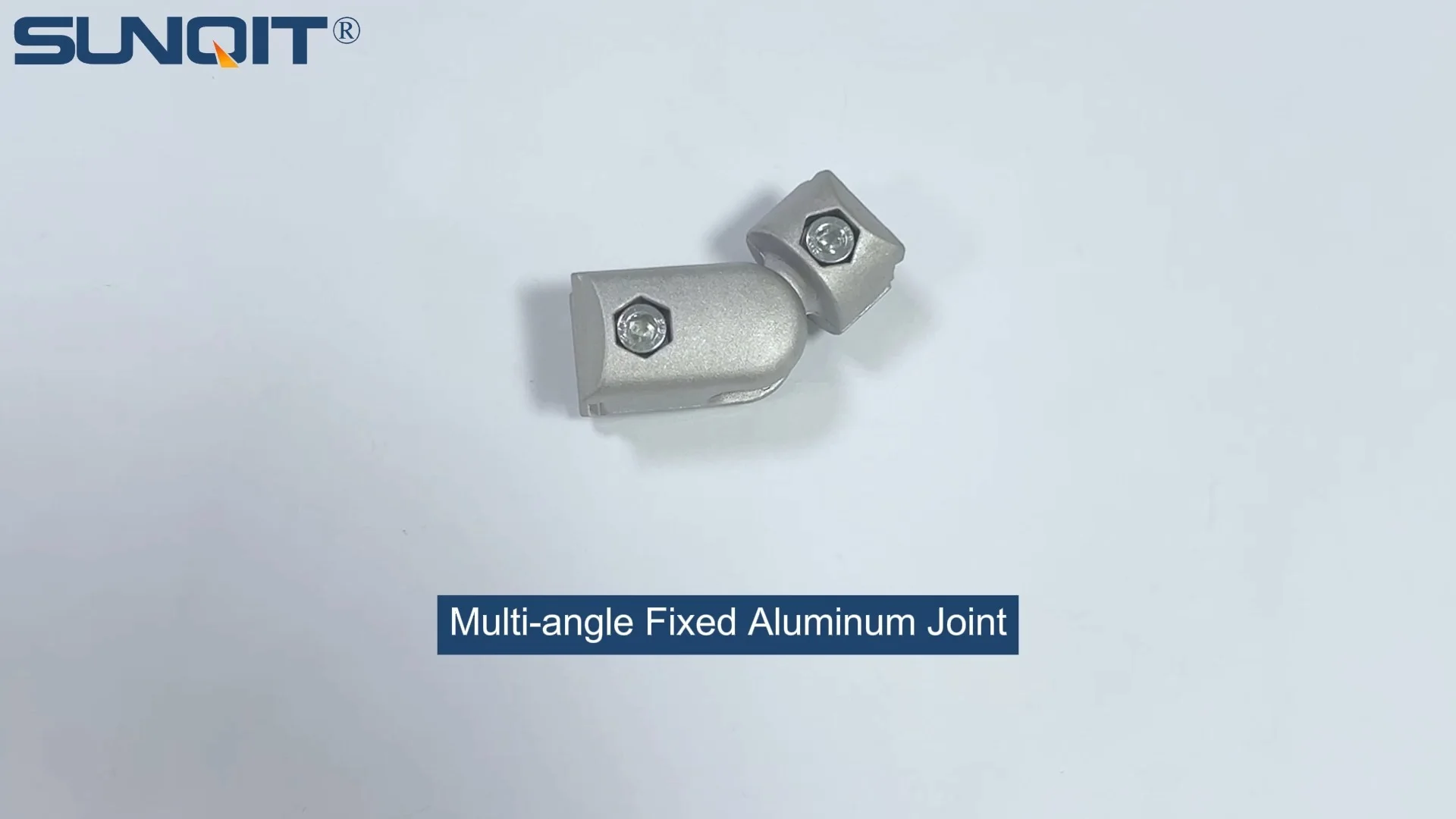
Walk into any modern manufacturing facility, and you'll notice a silent hero keeping operations running: the conveyor system. It's the circulatory system of production, moving parts, components, and finished goods from one station to the next with precision. But what makes a conveyor system truly efficient? It's not just the belts or rollers—it's the yet critical components that hold everything together. Today, we're diving deep into one such component that's revolutionizing conveyor design: the multi-angle fixed aluminum joint. Whether you're upgrading an existing line or building a new one, understanding how to integrate these joints can mean the difference between a clunky, rigid setup and a flexible, future-ready production powerhouse.
What Are Multi-Angle Fixed Aluminum Joints, Anyway?
Let's start with the basics. Imagine trying to build a LEGO structure without the right connectors—you might get something standing, but it won't be sturdy or adaptable. Multi-angle fixed aluminum joints are the "connectors" of the industrial world, designed to link aluminum pipes, profiles, and roller tracks at specific, fixed angles. Unlike generic steel joints that rust or plastic ones that warp under pressure, these aluminum joints bring together durability, lightweight design, and corrosion resistance in one package.
Crafted from high-grade aluminum alloy (often with an anodized finish to boost scratch and corrosion resistance), these joints are engineered to handle the daily wear of manufacturing environments. Their "multi-angle" nature is what sets them apart: they come pre-designed to lock into common angles like 30°, 45°, 90°, or 135°, eliminating the guesswork of on-site bending or welding. And "fixed" doesn't mean rigid—while the angle itself stays set, the joint's precision machining ensures a tight, wobble-free connection that can withstand constant vibration from moving roller tracks or heavy loads.
Quick Example: A electronics assembly plant needs a conveyor to feed circuit boards from a soldering station (on a raised platform) down to a testing workbench (3 feet lower). Instead of using multiple straight joints and complicated supports, they use a 45° multi-angle fixed aluminum joint to smoothly connect the upper and lower roller track sections. The result? A seamless, space-saving slope that keeps boards moving without jams—all thanks to that single, precisely angled joint.
Why These Joints Are a Game-Changer for Conveyor Systems
You might be thinking, "Can't I just use regular steel clamps or welded connections?" Sure—but those options often come with hidden costs. Steel clamps rust in humid environments, welded joints are permanent (making reconfigurations a nightmare), and both add unnecessary weight to your system. Multi-angle fixed aluminum joints solve these pain points while adding benefits that directly impact your bottom line:
1. Flexibility Without Compromise Modern production lines rarely stay static. New products, updated workflows, or facility expansions often require conveyor reconfigurations. With multi-angle joints, you're not stuck with a straight line or a single 90° turn. Need to add a 30° bend to navigate around a new workbench? Swap out the old joint for a 30° model. The fixed angles mean you don't sacrifice stability for adaptability—each connection is engineered to hold its position under load, whether it's supporting a lightweight plastic roller track or a heavy-duty steel roller track with metal parts.
2. Space Optimization Floor space in manufacturing is precious. Traditional conveyor setups with bulky supports or overly sharp turns waste valuable square footage. Multi-angle joints let you design tighter, more efficient layouts. For instance, a 135° joint can create a gentle "dogleg" turn that takes up 30% less space than a standard 90° turn with extra support beams. This is especially critical in small to mid-sized facilities where every inch counts toward fitting in another workbench or storage rack.
3. Lightweight Durability Aluminum is about 30% lighter than steel, which might not sound like much until you multiply it across an entire conveyor system. Lighter joints reduce strain on support structures (like aluminum profile frames) and make manual adjustments easier for your maintenance team. Yet despite their lightness, these joints are surprisingly tough: a well-made multi-angle aluminum joint can handle loads up to 500 lbs per connection, depending on the pipe diameter and wall thickness. That's more than enough for most assembly line needs, from small electronics components to heavier automotive parts.
4. Compatibility with Your Existing Setup The best part? These joints play well with other common components. Whether your conveyor uses aluminum profile (like 4040 or 3030 series), basic aluminum tube, or even stainless steel pipe series, there's a multi-angle joint designed to fit. They pair seamlessly with roller track connectors, caster accessories for mobile conveyors, and aluminum pipe accessories like clamps or foot bases—no need to overhaul your entire system to upgrade.

Key Features to Look for When Choosing Your Joints
Not all multi-angle fixed aluminum joints are created equal. To ensure you're getting a product that will last (and actually improve your conveyor's performance), keep an eye out for these critical features:
Pro Tip: Always Check the Spec Sheet for These 5 Things
1. Angle Tolerance: A joint labeled "90°" should be precise—look for tolerances of ±0.5° or better to avoid misalignment in your roller track.
2. Load Rating: Measured in pounds or kilograms, this tells you the maximum weight the joint can support without bending. Don't skimp here—underrated joints lead to sagging conveyor sections and jams.
3. Tube/Pipe Compatibility: Most joints are sized for specific pipe diameters (e.g., 28mm aluminum lean pipe or 40mm aluminum profile). Mismatched sizes lead to loose connections.
4. Installation Hardware: Does it come with compatible bolts or screws? Look for stainless steel hardware to prevent rust at the connection points.
5. Surface Finish: Anodized finishes add a protective layer against scratches and corrosion—essential for humid or dusty environments.
Material Thickness Matters Too Thicker aluminum walls (typically 1.5mm or more) mean stronger joints, but they also add weight. For most light to medium-duty conveyors (moving parts under 200 lbs), a 1.2mm wall is sufficient. Heavier applications (like automotive part handling) may require 2.0mm walls. Ask your supplier for a load test certificate if you're unsure—reputable lean pipe suppliers will have no problem providing this.

Step-by-Step Integration: From Unboxing to Full Operation
Integrating multi-angle fixed aluminum joints into your conveyor system doesn't require a team of engineers—but it does demand careful planning. Follow these steps to ensure a smooth, problem-free setup:
Step 1: Map Your Conveyor Layout (Measure Twice, Cut Once) Start by sketching your ideal conveyor path. Note every turn, slope, or elevation change—each will need a multi-angle joint. Measure the angles with a protractor or digital angle finder (don't guess!). For example, if a section needs to rise 12 inches over 36 inches of horizontal length, that's a 18.4° angle—you'll need a joint that can handle that (or round up to the nearest standard angle, like 30°, and adjust with shims if needed). Mark where each joint will go, and note the pipe/track diameters and materials (aluminum profile vs. steel pipe) to ensure compatibility.
Step 2: Gather Your Tools and Components You'll need basic tools: a hex key set (most joints use metric sizes like M5 or M6), a torque wrench (to avoid over-tightening and stripping threads), a level, and a rubber mallet (for gentle adjustments). Don't forget the supporting components: the aluminum pipe or profile, roller track (like 40 steel roller track or 38 aluminum roller track), and any accessories like caster wheels (if building a mobile conveyor) or end stops for roller track.
Step 3: Prep the Pipes/Profiles Clean the ends of your aluminum pipe or profile with a cloth to remove dirt or oil—this ensures a tight fit with the joint. If using new aluminum extrusion profile, check for burrs and smooth them with sandpaper to prevent cuts during installation. For used components, inspect for dents or bent sections that could throw off alignment.
Step 4: Assemble the Joint (The "Hand-Tight First" Rule) Slide the joint onto the pipe ends, aligning the angle with your layout marks. Hand-tighten the set screws first—this lets you (fine-tune) the positioning before locking it down. Use a level to ensure the joint is straight vertically and horizontally (a misaligned joint here will cause jams downstream). Once aligned, use the torque wrench to tighten the screws to the manufacturer's specs (usually 20-25 Nm for aluminum joints)—over-tightening can crack the joint or strip the threads.
Step 5: Test, Adjust, Repeat After installing a joint, give the connected sections a gentle shake. They should feel solid—no wobbling. Place a test load (like a box of parts similar to what will run on the conveyor) and roll it along the track. If it sticks or tilts, check the joint's angle with your level—you may need to loosen and realign. Once satisfied, move to the next joint and repeat. For longer conveyor systems, install joints in sections (e.g., 10-foot segments) to avoid cumulative errors.
Common Mistake to Avoid: Skipping the torque wrench. It's tempting to crank down on the screws with a hex key, but aluminum is softer than steel—over-tightening can warp the joint or strip the threads, leading to failure down the line. Stick to the recommended torque, and consider using thread locker (like Loctite) on critical joints in high-vibration areas.

How Multi-Angle Joints Work with Other Conveyor Components
A multi-angle joint is only as good as the components it connects. Let's break down how it pairs with the most common conveyor parts:
Aluminum Profile: The Backbone of Your Structure Aluminum profile (like the 4040 or 3030 EU standard series) is often used for conveyor frames. Multi-angle joints designed for profile will have grooves or tabs that lock into the profile's T-slots, creating a secure connection without drilling. For example, a 90° crossing aluminum joint can connect two perpendicular 4040 profiles, forming a sturdy frame for a roller track to sit on. Look for joints with "T-slot compatible" labels to ensure they'll slide into your existing profile.
Roller Track: Keeping Things Moving Roller track (whether plastic, steel, or aluminum) relies on smooth, consistent alignment—something multi-angle joints excel at. For instance, 38 aluminum roller track with side guides needs to stay perfectly straight or angled to prevent parts from slipping off. A multi-angle joint ensures the track sections connect without gaps or misalignment, so rollers spin freely and parts glide smoothly. Pair joints with roller track placon mount brackets (used to attach track to aluminum profile) for extra stability.
Caster Accessories: Mobility for Flexible Conveyors If your conveyor needs to move (e.g., to serve multiple workbenches), add caster wheels to the base frame. Multi-angle joints can connect the vertical support pipes to the horizontal base pipes, and caster accessories like castor installation bases can be bolted directly to the joints. Just ensure the joint's load rating includes the caster and wheel weight plus the conveyor's load.
| Component | How Multi-Angle Joints Enhance It | Example Setup |
|---|---|---|
| Aluminum Profile (4040) | Locks into T-slots for tool-free assembly; creates rigid frames at custom angles | 90° joint connecting two 4040 profiles to build a Z-shaped conveyor support frame |
| 38 Aluminum Roller Track | Aligns track sections at slopes or turns, preventing gaps that cause jams | 30° joint connecting upper and lower roller track sections in a food packaging line |
| Caster Wheels | Connects vertical support pipes to base frame; distributes weight evenly across casters | 135° joint creating a stable "kickstand" base for a mobile conveyor with 4-inch caster wheels |
| Workbench | Attaches conveyor directly to workbench legs at optimal feeding angle | 45° joint linking a roller track to the side of a workbench E (single deck), feeding parts to the operator |
Real-World Success Story: How One Plant Cut Downtime by 40%
Let's put this all into perspective with a real example. A small automotive parts manufacturer was struggling with their conveyor system: it used old steel pipe joints that rusted, leading to frequent jams and 2-3 hours of weekly downtime for repairs. Their layout was rigid—they couldn't reconfigure it to accommodate a new workbench for assembling door handles, so workers had to manually carry parts, wasting time and increasing errors.
They switched to multi-angle fixed aluminum joints, paired with 38 aluminum roller track and 4040 aluminum profile. Here's what changed:
- Reduced Downtime: Aluminum joints didn't rust, and tight connections meant fewer jams. Downtime dropped from 12 hours/month to 7 hours.
- Flexible Layout: Using 45° and 135° joints, they reconfigured the conveyor to loop around the new workbench, eliminating manual carrying. Parts now flow directly to the assembly station.
- Easier Maintenance: When a roller track needed replacement, the joints could be loosened with a hex key—no cutting or welding. The maintenance team now swaps sections in 15 minutes instead of 2 hours.
The result? A 40% reduction in downtime and a 25% increase in parts assembled per hour. All from upgrading a single component: the joints.
Maintenance Tips to Keep Your Joints (and Conveyor) Running Smoothly
Multi-angle fixed aluminum joints are low-maintenance, but a little care goes a long way:
Inspect Monthly: Check for loose screws (tighten with a torque wrench to specs), signs of corrosion (wipe with a damp cloth and apply anti-corrosion spray if needed), and cracks in the joint body. Pay extra attention to joints in high-vibration areas (near motors or heavy roller track).
Clean Regularly: Dust and debris can build up in joint crevices, especially in manufacturing environments. Use a soft brush or compressed air to clean them out—this prevents grit from wearing down the threads or causing misalignment.
Lubricate Threads Annually: Apply a small amount of anti-seize lubricant to the set screws (avoid oil, which attracts dust). This makes future adjustments easier and prevents threads from seizing due to corrosion.
replace Worn Parts Promptly: If a joint is cracked, bent, or the threads are stripped, replace it immediately. A failing joint can throw off the entire conveyor alignment, leading to jams, damaged parts, or even worker injuries.
The Future of Multi-Angle Joints: What's Next?
As manufacturing trends toward smaller batches and faster reconfigurations, multi-angle fixed aluminum joints are evolving too. Look for innovations like:
Smart Joints with Sensors: Embedded strain sensors that alert maintenance when a joint is overloaded or loose—preventing failures before they happen.
Modular Angle Kits: Multi-angle joints that can switch between angles (e.g., from 45° to 90°) with interchangeable inserts, reducing the need to stock multiple joint types.
Eco-Friendly Materials: Recycled aluminum alloys and plant-based lubricants for greener manufacturing.
Final Thoughts: Small Component, Big Impact
Multi-angle fixed aluminum joints might not be the most glamorous part of your conveyor system, but they're the unsung heroes that turn a collection of pipes and rollers into a (efficient), adaptable production tool. By choosing the right joints, integrating them carefully, and maintaining them properly, you can transform your conveyor from a source of frustration into a competitive advantage—one angle at a time.
So, the next time you're evaluating your production line, don't overlook the small stuff. Sometimes, the biggest gains come from the components that hold everything together.