- Company Articles
- Products and Technology
- Solution
- Multi-Angle Fixed Aluminum Joint for Custom Lean Solutions: Design Ideas

Multi-Angle Fixed Aluminum Joint for Custom Lean Solutions: Design Ideas
Related Product
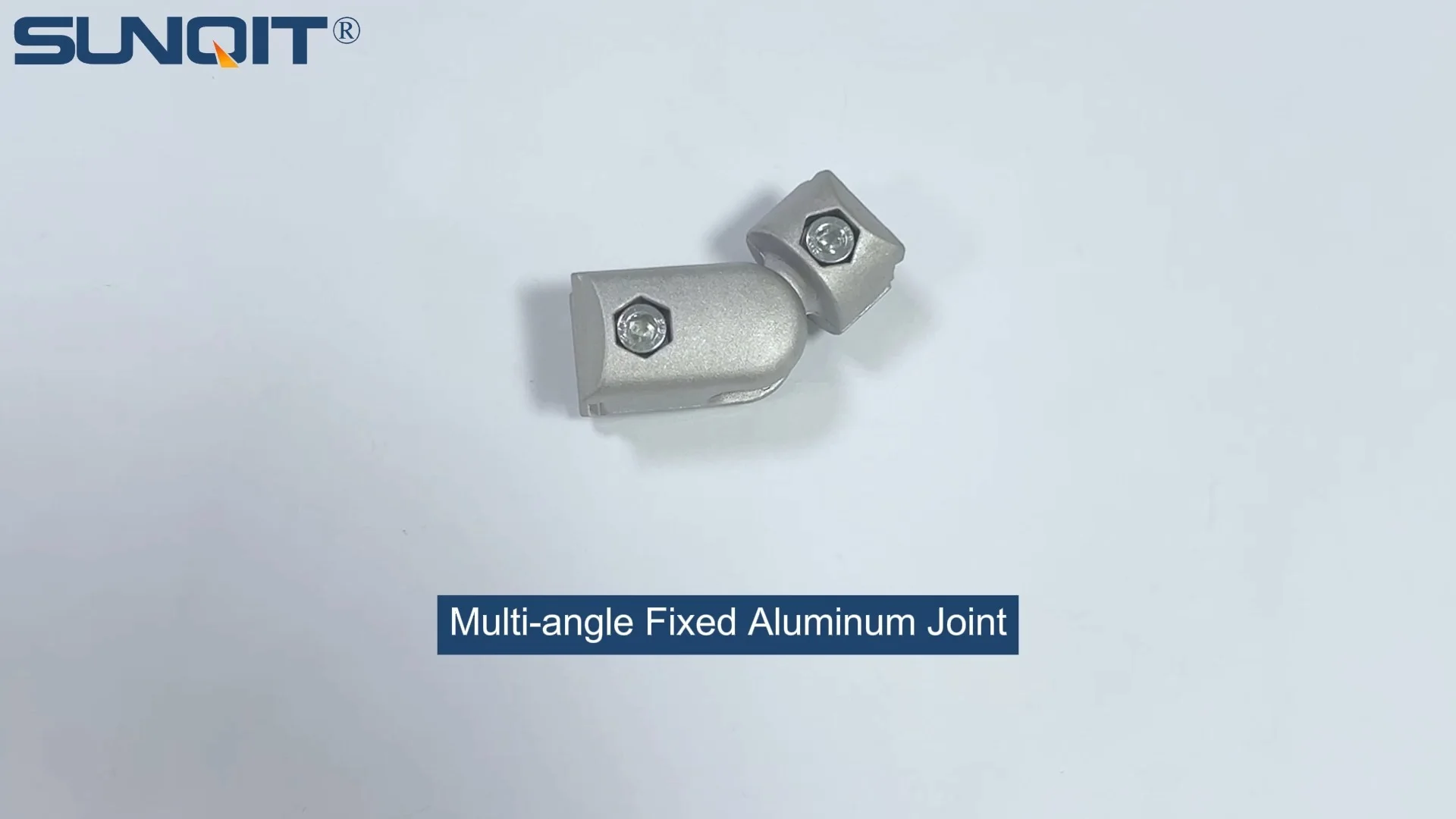
Multi-angle Fixed Aluminum Joint
Aluminum joint pipe connection for two pipe connection and work in mutiple angle.
Picture this: It's Monday morning, and you're standing in the middle of your production floor, coffee in hand, staring at a workspace that feels like it's working against you. Last week's product launch was a hit, but now you need to scale up—fast. The old steel workbenches are too low for the new assembly tools, the material racks are crammed with parts that don't fit, and your team is wasting precious minutes every hour just moving supplies around. You've heard about "lean systems" and "flexible workspaces," but the thought of tearing everything down and starting over makes your head spin. What if there was a way to adapt what you already have, without the hassle of welding, heavy lifting, or weeks of downtime? Enter the unsung hero of modular design: the multi-angle fixed aluminum joint. This small but mighty component is changing how teams build, adapt, and thrive in dynamic work environments—and today, we're diving into how it can transform your space, too.
Understanding the Need for Flexibility in Modern Lean Systems
Lean manufacturing isn't just a buzzword—it's a philosophy built on eliminating waste, streamlining processes, and continuous improvement. At its core, lean is about adaptability: your workspace should evolve as your needs do. But for many teams, the reality looks very different. Traditional setups rely on rigid materials like steel or wood, which are sturdy but stubborn. Want to raise a shelf by 6 inches? You'll need a welder. Need to reconfigure a workbench for a taller operator? Better order a whole new frame. These inflexible systems create hidden waste: time wasted on rework, money wasted on new equipment, and morale wasted when teams can't work efficiently.
This is where modular components step in. A true lean system shouldn't lock you into one layout; it should grow with you. Think of it like building with Lego blocks instead of concrete: you can add, remove, or rearrange pieces without starting from scratch. And at the heart of this modular revolution is the ability to connect components quickly, securely, and at the angles you need. That's where the multi-angle fixed aluminum joint comes into play. It's not just a connector—it's the bridge between your current workspace and the flexible, efficient setup you've been chasing.
The Multi-Angle Fixed Aluminum Joint: A Design Breakdown
Let's start with the basics: What exactly is a multi-angle fixed aluminum joint? At first glance, it might look like a simple metal piece with a few holes, but its design is surprisingly clever. Imagine a small, lightweight connector (usually made from high-grade aluminum alloy) with multiple ports—think of them as "arms"—that can hold aluminum lean pipes or profiles at different angles. Unlike fixed-angle joints that only work at 90 degrees, this one bends the rules: 30°, 45°, 90°, 135°—you name it. The magic is in its clamping mechanism: insert an aluminum lean pipe into one of the joint's ports, tighten a screw (usually with a hex key), and the joint grips the pipe securely. Loosen it, adjust the angle, and retighten, and you've got a whole new configuration. It's strong enough to support tools, parts, and even heavy workbenches, but light enough that one person can reposition it in minutes.
But what makes this design so special? Let's break down its key features:
- Multi-Angle Versatility: Most joints on the market lock you into one angle, but this one lets you mix and match. Need a 45° slope for a gravity-fed material rack? Done. Want to attach a side shelf at 90° to your workbench? Easy. Even 135° angles for corner connections are possible, making it perfect for tight spaces.
- Secure, Tool-Free Adjustments (Almost): While you'll need a basic hex key to tighten the clamp, there's no welding, drilling, or glue required. This means your team can make changes on the fly—no special skills needed.
- Lightweight but Durable: Aluminum alloy (often 6061-T6, a favorite in industrial design) gives the joint strength without the heft. It's corrosion-resistant, too, so it holds up in humid factories, cleanrooms, or even outdoor workshops.
- Consistent Sizing: These joints are designed to work with standard aluminum lean pipe sizes (think 20mm, 30mm, or 40mm diameters) and aluminum profiles, so you won't have to hunt for custom parts. Mix and match components from different suppliers, and the joint will still play nice.
In short, this joint solves a problem we've all faced: the gap between "what we need now" and "what we might need tomorrow." It turns static structures into dynamic systems that grow with your team.

Material Matters: Why Aluminum Makes All the Difference
You might be wondering: Why aluminum? Why not steel, plastic, or even wood? The answer lies in aluminum's unique blend of properties that make it perfect for modular lean solutions. Let's start with weight. Steel is strong, but it's heavy—really heavy. A 6-foot steel pipe can weigh 20 pounds or more, making it tough to maneuver, especially for teams without heavy lifting equipment. Aluminum, on the other hand, is about 1/3 the weight of steel. That means one person can carry, position, and assemble aluminum lean pipes and joints without straining their back or needing help. This alone cuts setup time in half and reduces the risk of workplace injuries.
Then there's corrosion resistance. If your workspace deals with moisture, chemicals, or even just humidity (looking at you, coastal factories), steel rusts. Rust weakens joints, stains parts, and shortens the lifespan of your equipment. Aluminum forms a natural oxide layer that protects it from corrosion, so it stays strong and clean for years—no painting or maintenance required. This is a game-changer for food processing plants, labs, or any environment where cleanliness matters.
But aluminum isn't just lightweight and rust-proof—it's also surprisingly strong. Modern aluminum alloys (like the ones used in these joints) have a tensile strength comparable to mild steel, meaning they can support heavy loads without bending or warping. A well-designed aluminum frame with multi-angle joints can easily hold 200+ pounds—more than enough for most workbench tools, material bins, or assembly parts. And because aluminum is malleable, manufacturers can precision-engineer the joint's clamping mechanism to grip pipes tightly without damaging them, ensuring a secure hold that won't loosen over time.
Finally, there's sustainability. Aluminum is 100% recyclable, and recycling it uses just 5% of the energy needed to produce new aluminum. For teams committed to green manufacturing, this is a big win. When you're done with a joint or pipe, you can recycle it instead of sending it to a landfill—a small step that adds up to big environmental impact.

Compatibility: Building a Toolkit with Aluminum Lean Pipe and Accessories
A joint is only as useful as the components it connects. The beauty of the multi-angle fixed aluminum joint is that it plays well with a whole ecosystem of modular parts, turning a single joint into a complete building system. Let's break down the key players in this toolkit:
| Component Type | Examples | How It Works with the Multi-Angle Joint |
|---|---|---|
| Aluminum Lean Pipe | 20mm, 30mm, and 40mm diameter pipes; straight or curved | Pipes insert into the joint's ports, where the clamping mechanism grips them tightly. The joint's multi-angle design lets you connect pipes horizontally, vertically, or at slopes (e.g., 45° for chutes or 30° for inclined roller tracks). |
| Aluminum Profile Accessories | End caps, T-slot rubber covers, cable management clips | Profiles (like 2020 or 4040 aluminum extrusion) connect via the joint to form frames; accessories snap into the profiles' T-slots to hide sharp edges, organize cables, or add tool hooks. |
| Workbench Components | Workbench E (single deck, without casters); tabletop panels (wood, plastic, or aluminum) | Joints connect vertical support pipes and horizontal frame pipes to create a stable workbench base. Adjust the joint angles to set the height (e.g., 90° for standard legs, 135° for reinforced corners) and add cross-braces for extra stability. |
| Material Racks & Flow Systems | Material Rack B (3 row, 3 floor); roller tracks (plastic or aluminum) | Joints allow you to angle shelves at 15°–30° for gravity flow, ensuring parts slide to the front of the rack. Mix 90° and 45° angles to create tiered shelves that maximize vertical space. |
| Mobile Solutions | Swivel casters, brake wheels, trolley frames | Attach caster mounting plates to the bottom of vertical pipes (connected via 90° joints) to turn static racks into mobile trolleys. The joint's secure hold ensures the trolley doesn't wobble, even when moving over uneven floors. |
Let's take a closer look at how these components come together. Say you want to build a custom workbench for electronics assembly. Start with four 1.2m aluminum lean pipes (vertical legs) and connect them with multi-angle joints at the top and bottom to form a rectangle (using 90° angles). Add cross-braces between the legs (using 45° angles) for stability. Then, attach a wooden or aluminum tabletop to the frame. Need a side shelf for tools? Add two more pipes to the side of the frame, using 90° joints to connect them horizontally, and top with a smaller panel. Want to route cables under the bench? Snap cable clips into the T-slots of the aluminum profiles (connected via the joint) to keep wires organized. In less than an hour, you've built a workbench that's exactly the height, width, and configuration you need—no special tools, no mess, no stress.
Or consider a material rack for small parts. Start with a vertical frame of aluminum pipes and joints. Use 30° angles to attach inclined roller tracks (plastic or aluminum) to the frame, creating gravity-fed shelves. Parts slide down the tracks as the front ones are used, so your team never has to reach for the back of the shelf. Need to adjust the shelf height for taller bins? Loosen the joint, reposition the track, and retighten. It's that simple. This kind of flexibility isn't just convenient—it's transformative for productivity. When your tools and parts are exactly where you need them, every minute of work becomes more efficient.

Real-World Applications: From Workbenches to Full Lean Systems
Enough theory—let's talk real impact. Teams across industries are using multi-angle fixed aluminum joints to solve everyday problems, and their stories are proof that modular design isn't just for big corporations with unlimited budgets. Here are a few examples that hit close to home:
Case Study 1: The Small Electronics Plant That Scaled in Days
Maria runs a team of 12 at a family-owned electronics assembly plant. When a major client ordered a rush batch of smart home devices, her team needed to add three new workbenches—fast. The old steel benches were bolted to the floor, and hiring a welder would take a week and cost $2,000. Instead, Maria ordered aluminum lean pipes, multi-angle joints, and workbench tops. Her team spent a single afternoon assembling the new benches: using 90° joints for the legs, 45° joints for cross-braces, and 135° joints to attach side shelves for tools. They even repurposed old material racks by adjusting the joint angles to fit the new device's smaller parts bins. Total cost? $600. Total time? 4 hours. The client's order shipped on time, and Maria's team now uses the same joints to reconfigure the benches monthly for different product runs.
Case Study 2: The Bakery That Solved Space Woes with Mobile Racks
Jake's bakery is a local favorite, but his kitchen was chaos. Dough mixers, cooling racks, and ingredient bins were constantly in the way, and his team was tripping over static steel shelves. He needed mobile storage that could roll out of the way during peak baking hours. Using aluminum lean pipes, multi-angle joints, and swivel casters, Jake built custom rolling racks. The joints let him angle the shelves at 15° to keep ingredients from sliding off, and the lightweight aluminum meant even his smallest team member could move the racks alone. Now, during the morning rush, the racks roll into a corner; in the afternoon, they're front and center for prep. Jake estimates the new setup saved his team 10+ hours a week in cleanup and prep time—and his customers? They're getting fresher pastries, faster.
Case Study 3: The School Lab That Adapts to Every Experiment
Science teachers at Westfield High School were tired of one-size-fits-all lab tables. Biology needed space for microscopes, chemistry for Bunsen burners, and physics for heavy equipment. With multi-angle joints and aluminum lean pipes, they built modular lab stations. Each station has a base frame with joints that let them swap out tops: a heat-resistant surface for chemistry, a smooth one for biology, and a reinforced one for physics. When a class needs more space, they disassemble the stations and rebuild them in minutes. The students even get in on the action—designing their own setups for group projects. It's hands-on learning, both for science and for problem-solving.
What these stories have in common isn't just the joint—it's the mindset shift. Instead of seeing their workspace as fixed, these teams see it as a canvas. They don't wait for "someday" to get the perfect setup; they build it themselves, today, with the tools they have. And that's the power of modular design: it puts control back in your hands.
Design Ideas: Unleashing Creativity with Modular Components
Ready to start building? Here are five design ideas to spark your creativity—no engineering degree required:
1. The Ergonomic Workbench: Start with a base frame of aluminum lean pipes and multi-angle joints. Set the height to 38–42 inches (adjustable for different operators) using 90° joints for the legs. Add a tilting top (using 15°–30° joints) to reduce neck strain during detailed work. Attach a tool rail along the back with hooks (connected via T-slot accessories) for easy access to screwdrivers, pliers, and tape measures. Add a small shelf under the top (using 90° joints) for bins of small parts. Pro tip: Use casters on two legs so you can tilt and roll the bench for cleaning.
2. The Mobile Material Trolley: Build a rectangular frame with aluminum pipes and joints (90° angles for corners). Add a bottom shelf (using 45° cross-braces for stability) and a top shelf with a 10° slope (using 10° joints) for gravity flow. Attach swivel casters with brakes to the bottom frame. Now you've got a trolley that carries parts to the production line, keeps them organized, and locks in place when not moving. Perfect for assembly lines or stockrooms.
3. The Incline Flow Rack: Mount vertical aluminum pipes to the wall (using 90° joints and wall brackets). Attach inclined roller tracks (plastic or aluminum) to the pipes using 20°–30° joints, creating tiered shelves. Load parts from the top, and they slide down as needed. This works for everything from small hardware to packaged goods—no more digging through bins.
4. The Adjustable Testing Station: For labs or quality control, build a frame with vertical pipes and joints that let you adjust the height of a test platform. Use 135° joints to add side arms for monitors or sensors, and T-slot accessories to route cables neatly. Swap out platform tops for different tests—wood for durability, plastic for chemical resistance, or metal for conductivity.
5. The Retail Display Rack: Even non-manufacturing teams can benefit! Build a freestanding frame with aluminum pipes and multi-angle joints. Use 45° and 90° angles to create tiered shelves for products. Add hooks (via T-slot accessories) for hanging items, and wheels for easy rearrangement during sales or seasonal displays. Lightweight and stylish, it's a budget-friendly alternative to expensive retail fixtures.
The best part? These are just starting points. Once you get comfortable with the joint, you'll start seeing possibilities everywhere. A corner in your garage becomes a hobby workspace, a spare room turns into a home office with adjustable desks, or a classroom gets flexible seating for group projects. The only limit is your imagination.
Overcoming Common Myths: Why "Good Enough" Rigid Setups Are Holding You Back
We get it—change is scary. You might be thinking, "Our current setup works fine," or "Aluminum seems flimsy compared to steel." Let's bust a few myths to help you decide if modular design is right for you:
Myth 1: "Rigid setups are more stable." Not true. A well-built aluminum frame with multi-angle joints is just as stable as steel—if not more. The clamping mechanism distributes pressure evenly across the pipe, creating a tight, wobble-free hold. And because aluminum is lighter, the frame is less likely to shift or tip when loaded. Many teams report fewer accidents with aluminum setups because they're easier to maneuver and less likely to cause strain injuries.
Myth 2: "Modular components are too expensive." It's true that aluminum joints and pipes cost more upfront than steel pipes from the hardware store. But consider the long-term savings: no welding costs, no downtime during reconfigurations, and no need to buy new equipment every time your needs change. One manufacturer we worked with saved $15,000 in the first year by reusing their aluminum components instead of buying new steel frames. Plus, aluminum holds its value—you can resell or recycle it if you no longer need it.
Myth 3: "It's too complicated to build." If you can use a hex key, you can build with these joints. Most manufacturers include clear instructions, and there are hundreds of YouTube tutorials showing step-by-step builds. Start small—a simple shelf or cart—and work your way up. You'll be a pro in no time.
Myth 4: "We don't need to change that much." Even small changes add up. If reconfiguring a workbench saves your team 5 minutes per hour, that's 40 minutes a day, 3.3 hours a week, or 171 hours a year—over 4 workweeks! Multiply that by your team size, and you're looking at hundreds of hours of wasted productivity. Lean isn't about perfection; it's about small, continuous improvements. The multi-angle joint makes those improvements possible.
Conclusion: Building a Workspace That Grows with You
The multi-angle fixed aluminum joint isn't just a piece of metal—it's a tool for empowerment. It lets you stop adapting to your workspace and start making your workspace adapt to you. Whether you're a small manufacturer scaling up, a lab chasing breakthroughs, or a team just trying to work smarter, this joint gives you the freedom to build, test, and refine your space without the stress of traditional setups. It's lightweight but strong, simple but versatile, and it's changing the way we think about work.
So, what will you build first? A workbench that fits your tallest operator? A flow rack that cuts down on wasted steps? A mobile trolley that brings parts right to your team? Whatever it is, remember: lean systems aren't about having the "perfect" space—they're about having a space that can grow, change, and get better. And with the multi-angle fixed aluminum joint in your toolkit, the only limit is how you imagine it.
Your workspace shouldn't hold you back. It should propel you forward. Start building today.