- Company Articles
- Products and Technology
- Product knowledge
- Multi-Angle Fixed Aluminum Joint for Flexible Workstations: 3C Industry Use

Multi-Angle Fixed Aluminum Joint for Flexible Workstations: 3C Industry Use
Related Product
Multi-angle Fixed Aluminum Joint
Aluminum joint pipe connection for two pipe connection and work in mutiple angle.
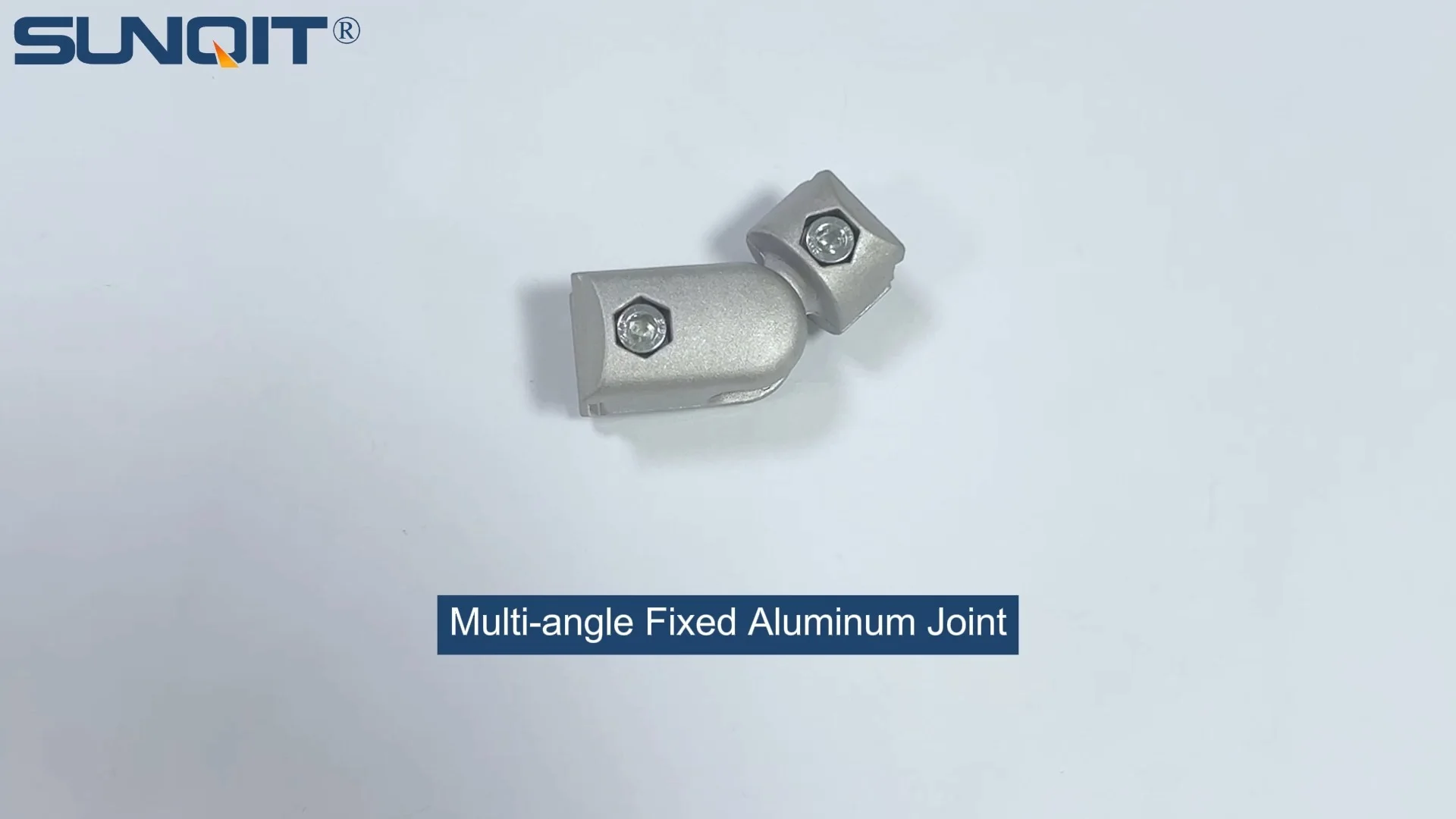
Walk into any modern 3C manufacturing facility—where smartphones, laptops, and smartwatches come to life—and you'll notice a quiet revolution on the factory floor. Gone are the days of rigid, one-size-fits-all production lines bolted to the ground. Instead, you'll find workstations that shift, adapt, and reconfigure with the ease of adjusting a bookshelf. At the heart of this flexibility lies a small but mighty component: the multi-angle fixed aluminum joint. It's not just a connector; it's the unsung hero that lets 3C manufacturers keep pace with a market that changes faster than the latest smartphone model.
Why Flexibility Matters in 3C Manufacturing
The 3C industry—computers, communications, and consumer electronics—thrives on innovation. A new phone model launches, and suddenly, production lines need to handle slimmer screens, different battery sizes, or bulkier camera modules. A laptop brand updates its chassis design, and workbenches that once held 13-inch frames now need to accommodate 16-inch ones. In this world, downtime is the enemy. Traditional workstations, built with welded steel or fixed wooden frames, force manufacturers into a painful choice: either stick with outdated setups and risk inefficiency, or tear everything down and rebuild—losing precious time and money in the process.
This is where flexible workstations step in. Designed to be reconfigured quickly, they're built using modular components that snap together, adjust, and adapt. And if flexible workstations are the body of this system, then multi-angle fixed aluminum joints are the joints that let it move. These unassuming connectors hold everything together while still allowing for quick changes, making them indispensable in 3C factories where adaptability isn't just a nice-to-have—it's survival.
What Is a Multi-Angle Fixed Aluminum Joint?
Let's start with the basics. A multi-angle fixed aluminum joint is a specialized connector made from high-grade aluminum, engineered to join aluminum profiles (another key term we'll circle back to) at various angles—think 30°, 45°, 90°, or even 135°. Unlike rigid steel brackets that lock into a single position, these joints are designed to be both sturdy and adjustable. They typically feature threaded holes, clamping mechanisms, or T-slot compatibility, allowing them to attach securely to aluminum profiles while still being loosened and repositioned when needed.
Picture this: You're building a workbench. You need the legs to stand at 90° to the tabletop, but the side shelves might slope at 45° to keep tools within easy reach. A multi-angle fixed aluminum joint can handle both. Tighten the bolts, and it holds firm under the weight of laptops or circuit boards. Loosen them, adjust the angle, retighten, and suddenly that same joint is supporting a different setup. It's like having a Swiss Army knife for workstation assembly—one tool that solves multiple problems.
Aluminum: The Material of Choice
Why aluminum? For starters, it's lightweight. A 3C workstation might need to be moved across the factory floor (maybe to make space for a new production line), and heavy steel joints would turn that into a two-person job. Aluminum keeps things light without sacrificing strength—critical when workbenches hold sensitive (and often expensive) components like motherboards or display panels.
Aluminum is also corrosion-resistant. 3C factories are often climate-controlled, but they're not sterile. Dust, humidity, and occasional spills are part of daily life. Steel joints might rust over time, weakening the connection. Aluminum, especially when anodized (a process that adds a protective oxide layer), stands up to these elements, ensuring joints stay strong for years. And let's not forget aesthetics: aluminum has a clean, modern look that fits well in high-tech environments, where even the workstations are part of the brand's commitment to innovation.

The Role of Multi-Angle Fixed Aluminum Joints in Flexible Workstations
To understand why these joints are so valuable, let's break down their role in three key areas of 3C manufacturing: assembly workstations, material handling systems, and lean production setups.
1. Assembly Workstations: Where Precision Meets Adaptability
Assembly lines are the lifeblood of 3C production. Each workstation along the line is tailored to a specific task: installing batteries, attaching screens, testing circuit boards. But when a new product launches, those tasks change. A workstation that once held a phone vertically for screen installation might now need to hold it horizontally for camera module alignment.
Here's where multi-angle fixed aluminum joints shine. Let's say the workstation has an aluminum profile frame. The clamping fixtures that hold the phone are attached to this frame via joints. With traditional fixed joints, you'd need to swap out the entire fixture. With multi-angle joints? Loosen the bolts, rotate the fixture to the new angle, retighten, and you're done. It's a 10-minute adjustment instead of a half-day rebuild.
Take the example of a workbench (there's that keyword!) for laptop assembly. The workbench's frame is built from aluminum profiles connected by multi-angle joints. The tabletop is a lightweight aluminum honeycomb panel (another common 3C component), and the sides have adjustable shelves for tools. When the factory switches from 13-inch to 15-inch laptops, the operator can adjust the height of the backstop (using a joint) to prevent the larger laptops from sliding off. No new parts, no downtime—just a quick tweak.
2. Material Handling: Keeping Components Moving
In 3C manufacturing, materials need to flow smoothly from one workstation to the next. Delays in getting a batch of circuit boards to the testing station can bottleneck the entire line. That's where roller tracks come in (another keyword from our list). Roller tracks are like mini conveyor belts, using wheels to slide components along a path. But to be effective, they need to be positioned at just the right angle—too steep, and components might slide too fast and get damaged; too flat, and they might get stuck.
Multi-angle fixed aluminum joints secure roller tracks to the workstation frame, allowing operators to set the perfect slope. For example, a roller track feeding into a testing station might angle downward at 5° to let components glide gently into place. If the next batch of components is heavier (say, metal chassis instead of plastic), the operator can adjust the joint to 3°, slowing the flow to prevent jams. It's a small adjustment that keeps the entire line running smoothly.
3. Lean Production: Minimizing Waste, Maximizing Efficiency
Lean system principles (there's our third keyword!) are all about eliminating waste—whether it's time, materials, or space. Multi-angle fixed aluminum joints align perfectly with this philosophy. Traditional workstations often have "dead space"—areas that can't be repurposed because the frame is fixed. With modular joints, every inch of the workstation can be adapted. A shelf that once held tools can become a holder for quality control checklists. A vertical frame can be reangled to support a new lighting system, reducing eye strain for workers assembling tiny components.
Lean systems also emphasize continuous improvement. If a team notices that workers are reaching too far for tools, they can reconfigure the workstation using the joints—no need to wait for a maintenance crew or order new parts. This empowerment leads to happier, more efficient teams, and that translates to better products.

Comparing Traditional vs. Multi-Angle Aluminum Joint Workstations
Still not convinced? Let's put it in black and white. Below is a comparison of traditional welded steel workstations and modern flexible workstations using multi-angle fixed aluminum joints, based on real-world data from 3C factories that have made the switch.
| Feature | Traditional Welded Steel Workstation | Flexible Workstation with Multi-Angle Aluminum Joints |
|---|---|---|
| Setup Time | 2–3 days (requires welding, painting, curing) | 2–4 hours (bolt-together assembly) |
| Reconfiguration Time | 1–2 days (cutting, rewelding, repainting) | 30–60 minutes (loosen bolts, adjust, retighten) |
| Weight (per workstation) | 200–300 lbs | 80–120 lbs |
| Cost Over 5 Years* | $5,000 (initial build + 2 rebuilds) | $3,500 (initial build + unlimited reconfigurations) |
| Worker Satisfaction | Low (rigid setups cause discomfort) | High (adjustable to individual needs) |
*Based on average costs for a mid-sized 3C factory producing 50,000 units/year.
The numbers speak for themselves. Flexible workstations with multi-angle fixed aluminum joints save time, money, and headaches. But don't just take our word for it—let's look at a real-world example.

Real-World Impact: A Case Study
Consider a mid-sized 3C manufacturer in Shenzhen that produces smartwatches. In 2023, they launched a new model with a larger display and a redesigned strap mechanism. Their old assembly line used welded steel workstations, and reconfiguring for the new model would have taken 3 days—time they couldn't afford, as competitors were already ramping up production.
Instead, they switched to flexible workstations built with aluminum profiles and multi-angle fixed aluminum joints. Here's what happened:
- Day 1: Workers disassembled the old workstation frames using basic tools (no welding torches needed). The aluminum profiles and joints were reused—only the tabletop panels needed to be replaced to fit the new watch size.
- Day 2: They reassembled the frames, adjusting the multi-angle joints to position the roller tracks at a 4° angle (instead of the previous 6°) to handle the slightly heavier new watch cases.
- Day 3: The line was fully operational, testing the first batch of new smartwatches. Total downtime? Just 8 hours—less than a single workday.
The result? The manufacturer beat their launch deadline by a week, captured 15% more market share, and saved $120,000 in production delays. And because the joints allowed for (fine adjustments), workers could tweak their individual workstations to reduce arm strain—cutting down on repetitive motion injuries by 20%.
How to Choose the Right Multi-Angle Fixed Aluminum Joint
Not all multi-angle fixed aluminum joints are created equal. To get the most out of your flexible workstation, you'll need to choose the right joint for your needs. Here are key factors to consider:
Load Capacity: Know What You're Supporting
3C components vary widely in weight. A smartphone motherboard might weigh ounces, but a laptop battery pack could weigh over a pound. Multiply that by dozens of units on a workbench, and suddenly the joint is supporting significant weight. Check the joint's load rating—most manufacturers list this (e.g., "supports up to 50 lbs per joint"). Err on the side of caution; it's better to have a joint that can handle more weight than you need than one that fails mid-production.
Angle Range: Does It Cover Your Needs?
Some joints are limited to 90° and 45°, while others can adjust from 0° to 180°. Think about your typical setups. If you mostly need straight angles, a basic joint might suffice. If you work with sloped shelves, curved frames, or custom material racks, opt for a joint with a wider angle range. Look for joints with clear angle markings (e.g., notches at 30°, 45°, 60°) to make adjustments faster and more precise.
Compatibility: Match Your Aluminum Profiles
Aluminum profiles come in standard sizes, like 2020 (20mm x 20mm), 3030, or 4040. Make sure the joint is designed for your profile size. Most joints use T-slot compatibility, meaning they slide into the slots on the profile and tighten with bolts. If your factory already uses a specific profile size, check that the joint's clamping mechanism fits—you don't want to buy joints that can't attach to your existing frames.
Durability: Look for Anodized Finish
As we mentioned earlier, anodized aluminum is more resistant to corrosion and wear. A good joint should have a smooth, even anodized finish (usually silver, black, or clear). Avoid joints with rough edges or flaking coating—these are signs of poor quality and will wear out quickly in a busy factory.
Maintenance Tips: Keeping Your Joints in Top Shape
Multi-angle fixed aluminum joints are low-maintenance, but a little care goes a long way. Here's how to keep them working like new:
- Regular Inspections: Every month, check that bolts are tight. Vibrations from machinery can loosen them over time, weakening the joint. A quick tighten with a hex key takes 30 seconds and prevents accidents.
- Cleaning: Dust and debris can build up in the joint's threads or T-slot connections. Wipe them down with a dry cloth or compressed air every week. For stubborn grime, use a mild detergent—avoid harsh chemicals that might damage the anodized finish.
- Lubrication: If the joint has moving parts (like a rotating base), apply a small amount of silicone lubricant once a quarter. This keeps adjustments smooth and prevents squeaking.
- replace When Needed: Even the best joints wear out. If you notice cracks in the aluminum, stripped threads, or bolts that won't tighten, replace the joint immediately. A single faulty joint can compromise the entire workstation.
Future Trends: Where Multi-Angle Joints Are Headed
The 3C industry isn't slowing down, and neither are the tools that support it. Here are two trends to watch for multi-angle fixed aluminum joints:
Smart Joints with Built-In Sensors
Imagine a joint that can "tell" you when it's loose. Some manufacturers are experimenting with joints embedded with tiny sensors that monitor tension. If a bolt starts to loosen, the sensor sends an alert to the factory's management system, allowing for proactive maintenance before a workstation fails. This is still in the prototype stage, but it could revolutionize how factories manage their equipment.
Modular Joints for IoT Integration
3C factories are increasingly adopting IoT (Internet of Things) technology—sensors that track production metrics, energy use, and worker safety. Future multi-angle joints might include built-in mounting points for these sensors, making it easier to integrate IoT into existing workstations. For example, a joint could hold a temperature sensor to monitor heat around sensitive components, or a motion sensor to detect when a workstation is unused and automatically power down nearby lights.
Conclusion: The Joint That Powers the Future of 3C Manufacturing
In the fast-paced world of 3C manufacturing, flexibility isn't just a buzzword—it's the difference between leading the market and falling behind. Multi-angle fixed aluminum joints may be small, but they're the foundation of that flexibility. They turn rigid workstations into adaptable systems, save time and money, and empower workers to do their best. Whether you're assembling smartphones, laptops, or the next big wearable tech, these joints are the quiet force that keeps production lines moving, innovating, and thriving.
So the next time you pick up a new gadget, take a moment to appreciate the unsung heroes behind it—the multi-angle fixed aluminum joints that helped build it. They may not be as flashy as the device itself, but without them, that gadget might never have made it to your hands.