- Company Articles
- Products and Technology
- Product knowledge
- Multi-Angle Fixed Aluminum Joint for Material Racks: Design Tips

Multi-Angle Fixed Aluminum Joint for Material Racks: Design Tips
Related Product
Multi-angle Fixed Aluminum Joint
Aluminum joint pipe connection for two pipe connection and work in mutiple angle.
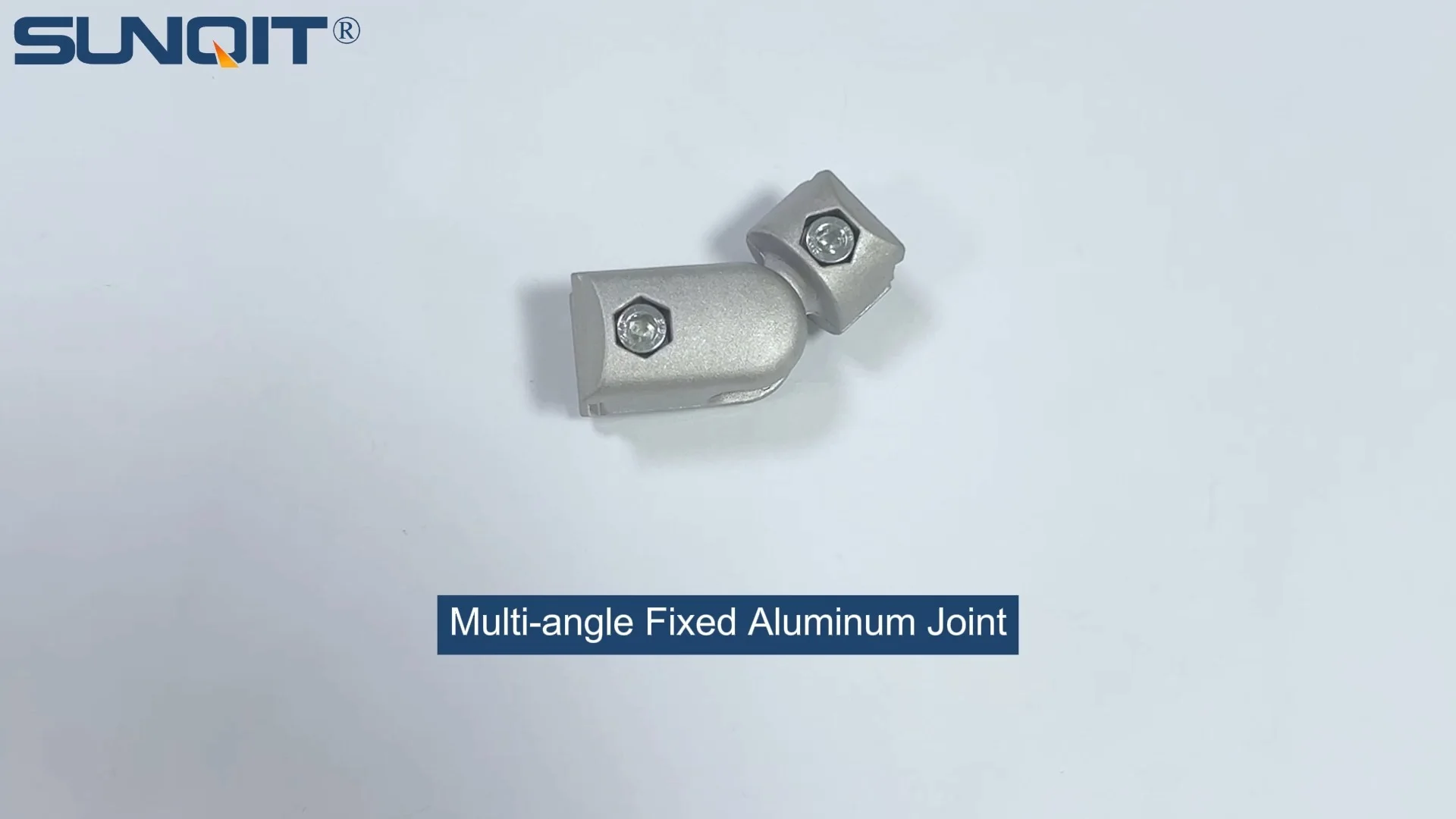
Every day, on factory floors and in warehouses around the world, a silent battle plays out between chaos and order. Walk into a facility where tools and materials are haphazardly stacked, and you'll see the toll: workers wasting precious minutes hunting for parts, strained backs from lifting heavy items off unstable shelves, and the quiet frustration of a system that just doesn't "click." Now step into a space where material racks stand tall, organized, and adaptable—where every component has its place, and accessing what you need feels almost effortless. The difference often comes down to one small but mighty detail: the joints that hold everything together. Today, we're diving deep into the world of multi-angle fixed aluminum joints, the unsung heroes of efficient material rack design, and how they can turn your workspace from a source of stress into a well-oiled machine.
Understanding the Multi-Angle Fixed Aluminum Joint: More Than Just a Connector
At first glance, a joint might seem like little more than a metal piece that holds pipes together. But the multi-angle fixed aluminum joint is far from ordinary. Imagine a connector that bends and twists to fit your exact needs—whether you're building a shelf that angles upward to prevent items from sliding off, a corner rack that wraps around a tight space, or a multi-tiered structure that maximizes vertical storage. That's the power of "multi-angle": it doesn't box you into 90-degree corners or straight lines. Instead, it bends (literally) to the unique demands of your workspace.
Aluminum, the material of choice here, is no accident. It's lightweight enough to make assembly easy (no need for a team of workers to hoist heavy steel joints), yet strong enough to support the daily grind of a busy facility. Unlike plastic, it won't crack under pressure or warp in high temperatures. Unlike untreated steel, it resists rust and corrosion—critical in environments where spills, humidity, or cleaning chemicals are part of the routine. And let's not overlook the finish: aluminum's sleek, clean look adds a professional touch to even the most industrial settings, making your workspace feel intentional rather than thrown together.
But what truly sets this joint apart is its "fixed" nature, paired with adjustability. Think of it as a reliable friend who's flexible when you need them to be but steady when the going gets tough. During installation, you can tweak the angle to perfection—say, 45 degrees for a sloped shelf that guides materials toward the front, or 135 degrees to wrap around a machinery corner. Once set, it locks firmly in place, ensuring your rack doesn't wobble, shift, or sag, even when loaded with heavy components. For workers who rely on consistency, that stability is everything. No more second-guessing if a shelf will hold, no more wasted time readjusting loose parts—just a structure you can trust, day in and day out.
Key Design Principles: Building Racks That Work for You
Designing a material rack with multi-angle fixed aluminum joints isn't just about slapping pipes and connectors together. It's about creating a system that aligns with how your team actually works. Here are the principles that turn a basic rack into a workspace game-changer:
1. Start with the User: What Does Your Team Need?
Before picking up a single joint, ask: Who will use this rack, and how? A warehouse where workers use forklifts to load pallets needs wide, sturdy shelves low to the ground. An assembly line where operators reach for small parts all day needs racks at waist height, with easy-to-grab compartments. For example, consider a material rack b (3 row and 3 floor) —a common configuration in electronics manufacturing, where tiny components like circuit boards and screws need to be organized by type. With multi-angle joints, you could angle the top row slightly downward so frequently used parts are easier to see, while the bottom row (for bulkier items) stays flat for stability. It's not just about storage; it's about reducing the physical strain of bending, reaching, or squinting to find what you need.
2. Prioritize Adaptability: Build for Tomorrow, Not Just Today
Workspaces change. A product line expands, a new machine is added, or a process is reorganized. A rack built with rigid, one-size-fits-all joints becomes a liability when that happens—you either live with inefficiency or spend money replacing it. Multi-angle fixed aluminum joints solve this by letting you reconfigure on the fly. Need to add a shelf? Loosen a few joints, adjust the angle, and lock it in. Switching from storing boxes to rolls of material? Tilt the shelves to prevent rolling, using the joint's angle settings. This adaptability isn't just cost-effective; it's empowering. It lets your team take ownership of their space, making tweaks as needed without waiting for a maintenance crew or expensive contractors.
3. Balance Load and Stability: Safety First, Always
A rack's job is to hold weight—and not just "some" weight, but consistent, reliable weight. The multi-angle joint's design shines here, but only if you use it correctly. Aluminum is strong, but it has limits. Always check the joint's load rating (usually listed by the supplier) and pair it with compatible aluminum profile —the rails or pipes that form the rack's frame. A thick, sturdy aluminum profile paired with a heavy-duty multi-angle joint can support hundreds of pounds, but skimp on either, and you risk a collapse. Remember: a shelf that sags under load isn't just inefficient; it's dangerous. Workers shouldn't have to wonder if the rack above their heads is secure.
| Joint Type | Max Load Capacity | Angle Range | Best For |
|---|---|---|---|
| Standard Fixed Joint | 200 lbs per connection | 90° only | Straight shelves, simple racks |
| Multi-Angle Fixed Aluminum Joint | 350 lbs per connection | 30°–180° | Sloped shelves, corner racks, multi-tiered systems |
| Heavy-Duty Steel Joint | 500 lbs per connection | 90° only | Industrial machinery storage, extra-heavy items |

Integrating Multi-Angle Joints with Aluminum Profile: A Match Made in Efficiency
You can't talk about multi-angle joints without mentioning their perfect partner: aluminum profile . These are the long, grooved aluminum rails that form the "bones" of your rack. Think of them as the canvas, and the multi-angle joint as the brush—together, they let you paint any storage solution you can imagine. The profile's T-shaped grooves are key here: they let you slide the joint into place, tighten a screw, and lock it securely, no welding or drilling required. This "tool-free" assembly is a game-changer for anyone who's ever spent hours fumbling with nuts, bolts, and power tools.
Let's take a real-world example: building a material rack b (3 row and 3 floor) using multi-angle joints and aluminum profile. The goal is to create three rows (horizontal sections) and three floors (vertical tiers) to store small to medium-sized components. Here's how it comes together:
- Vertical Supports: Start with four tall aluminum profiles as the legs. Using multi-angle joints set to 90 degrees, attach shorter horizontal profiles to form the frame of the first "floor."
- Sloped Shelves (Row 1): For the top row, where small screws or washers might slide off, angle the shelves upward by 15 degrees using the multi-angle joint. This keeps items in place without needing to add lips or guards.
- Corner Reinforcement: At the corners of each floor, use 135-degree joints to add diagonal bracing. This prevents the rack from wobbling when workers pull items off the shelves.
- Adjustable Dividers: Slide additional aluminum profiles into the T-grooves of the main shelves, using multi-angle joints to angle them and create custom-sized compartments for different parts.
The result? A rack that's tailored to the exact parts you store, with no wasted space and no frustrating "one-size-fits-all" compartments. And if next month you start storing larger boxes instead of small parts? Loosen the joints, adjust the dividers, and you're good to go. That's the beauty of aluminum profile and multi-angle joints—they grow with your needs.

Enhancing Functionality with Accessories: It's the Little Things
A great material rack isn't just about the frame—it's about the extras that make daily use easier. Here are a few accessories that pair perfectly with multi-angle fixed aluminum joints to take your rack from "good" to "great":
Caster Wheels: Mobility Without Compromise
What if you need to move your rack? Maybe you're reorganizing the factory floor, or you want to bring materials directly to the assembly line instead of making workers walk back and forth. Adding caster wheel to the bottom of your aluminum profile legs turns your stationary rack into a mobile cart. Look for locking casters—they let you roll the rack into place, then lock the wheels to prevent movement during use. Multi-angle joints help here too: if your floor isn't perfectly level (and let's be honest, few factory floors are), adjust the joint angles slightly to ensure the rack sits flat, so the casters don't wobble or get stuck.
Roller Track: Let Gravity Do the Work
For assembly lines or picking stations, roller track is a game-changer. These are sets of small wheels mounted on aluminum profiles, designed to let materials slide smoothly from one end to the other. Pair them with multi-angle joints, and you can create gravity-fed shelves where items automatically roll toward the front as others are removed. Imagine a rack where the back is slightly higher than the front (thanks to a 5-degree angle set by the multi-angle joint), and the roller track carries boxes or bins forward. Workers never have to reach to the back of the shelf again—materials come to them. It's a small change that adds up to big time savings over a shift.
Lean Pipe Workbench Integration: Creating a Unified Workspace
Your material rack shouldn't exist in a vacuum. It should work with the other tools in your workspace, like your lean pipe workbench . Lean pipe workbenches are designed for efficiency, with everything a worker needs within arm's reach. By using multi-angle joints and aluminum profile, you can connect your material rack directly to the workbench, creating a seamless flow from storage to assembly. For example, mount a small roller track between the rack and the bench, angled downward, so parts roll right onto the work surface. No more walking back and forth—just grab a part, assemble, and repeat. It's lean manufacturing in action: reducing waste (in this case, wasted movement) and making every second count.

Common Mistakes to Avoid: Don't Let These Errors Undermine Your Design
Even with the best tools, mistakes happen. Here are the most common pitfalls to watch for when designing with multi-angle fixed aluminum joints—and how to steer clear of them:
Mistake #1: Overlooking the Environment
Aluminum resists corrosion, but it's not invincible. If your workspace is extremely humid (like a food processing plant) or uses harsh chemicals (like a automotive shop with oil and degreasers), opt for anodized aluminum joints. Anodizing adds a protective layer that boosts corrosion resistance. Skipping this step could lead to joints that weaken over time, putting your rack—and your workers—at risk.
Mistake #2: Over-Tightening the Joints
It's tempting to crank down on the joint's screws to make sure it's "extra tight." But aluminum is softer than steel, and over-tightening can strip the threads or crack the joint. Use a torque wrench (or a good old-fashioned "feel"—snug but not "white-knuckle tight") to avoid damaging the connection. Remember: the joint's design locks it in place—you don't need to overdo it.
Mistake #3: Ignoring Weight Distribution
A rack might look sturdy, but if you pile all the heavy items on one side, even the best multi-angle joint can't save it. Distribute weight evenly across the rack, and use heavier-duty joints (with higher load ratings) for the bottom shelves, where most of the weight sits. And always test the rack with mock weights before loading it with real materials—better to find a weak spot in a test than during a busy shift.
Conclusion: From Frustration to Freedom—The Power of Thoughtful Design
At the end of the day, a material rack is more than metal and joints. It's a tool that shapes how your team works, how efficient your process is, and even how your workers feel at the end of their shift. A wobbly, disorganized rack adds stress and slows them down. A well-designed rack—built with multi-angle fixed aluminum joints, aluminum profile, and attention to their needs—does the opposite: it gives them freedom. Freedom to focus on the task at hand, not hunting for parts. Freedom to adjust their space as needed, without waiting for approval. Freedom to feel confident that their workspace is working for them, not against them.
So the next time you look at your material racks, don't just see pipes and shelves. See the potential to transform your workspace. With multi-angle fixed aluminum joints, that potential is within reach. It's not just about building a better rack—it's about building a better, more efficient, and less stressful workday. And isn't that worth investing in?