- Company Articles
- Products and Technology
- Product knowledge
- Multi-Angle Fixed Aluminum Joint for Medical Device Assembly: Cleanroom Use

Multi-Angle Fixed Aluminum Joint for Medical Device Assembly: Cleanroom Use
Related Product
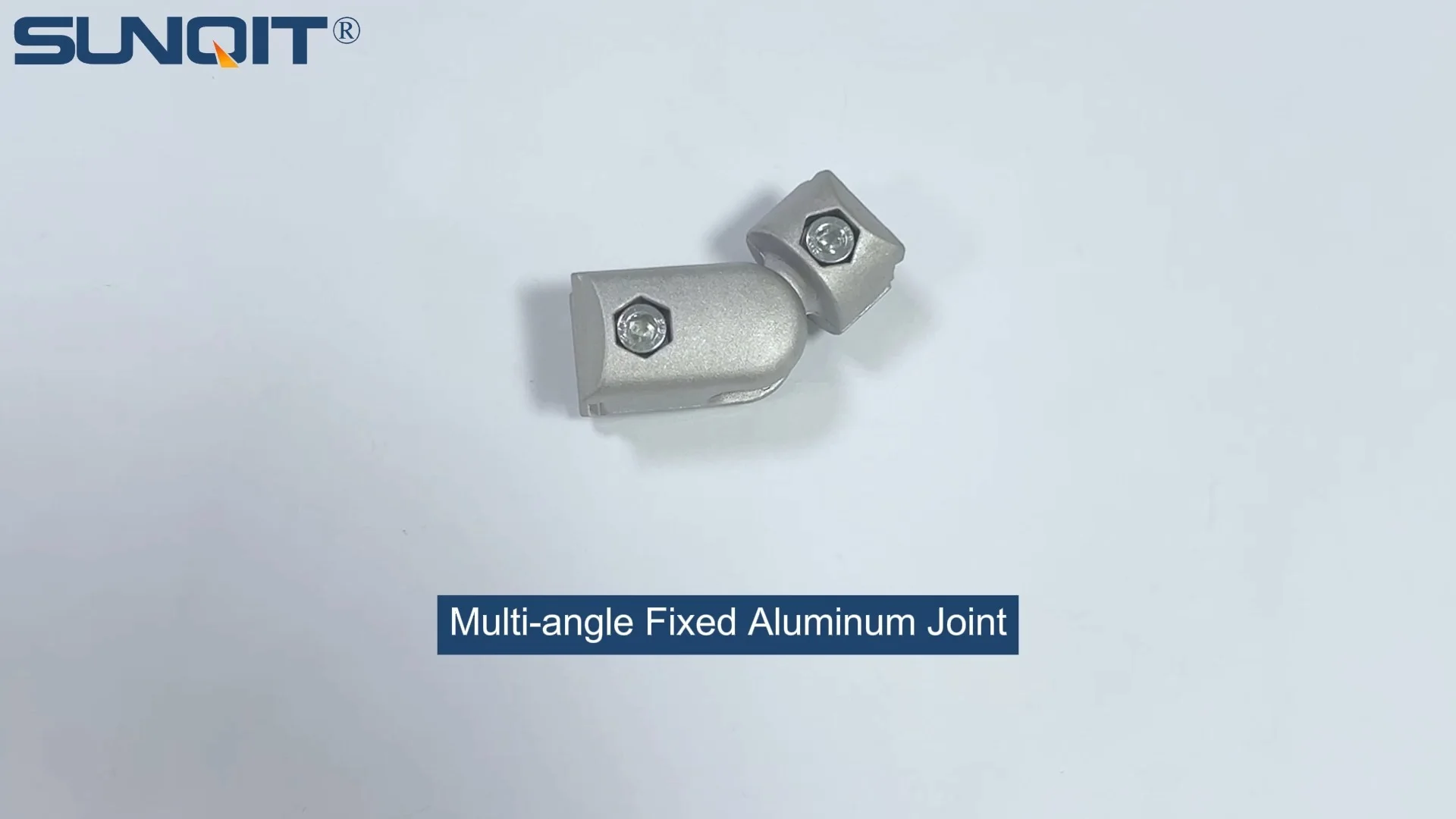
Multi-angle Fixed Aluminum Joint
Aluminum joint pipe connection for two pipe connection and work in mutiple angle.
Introduction: The Precision Paradigm of Medical Cleanrooms
In the world of medical device assembly, where a fraction of a millimeter can mean the difference between a life-saving tool and a costly error, the environment in which these devices are built matters as much as the components themselves. Cleanrooms stand as the unsung heroes here—controlled spaces where air quality, temperature, and sterility are meticulously managed to ensure that products like surgical instruments, diagnostic equipment, and implantable devices meet the strictest safety standards. But even the most advanced cleanroom is only as effective as the tools and systems within it. Imagine a workspace where every shelf, workbench, and material rack is rigid, hard to clean, or impossible to reconfigure as production needs shift. For assembly line technicians, engineers, and quality control teams, this isn't just an inconvenience—it's a barrier to efficiency, precision, and compliance. This is where modular aluminum systems step in, and at the heart of these systems lies a component that's easy to overlook but critical to success: the multi-angle fixed aluminum joint.
The Backbone of Cleanroom Efficiency: Modular Aluminum Systems
Walk into any modern medical device cleanroom, and you'll likely notice a common theme: sleek, lightweight structures that seem to balance strength with flexibility. These aren't random setups—they're modular systems built around aluminum profiles and extrusion profiles, materials chosen for their unique ability to meet the demands of sterile environments. Aluminum, by nature, is corrosion-resistant, which means it stands up to the frequent cleaning and disinfection protocols that cleanrooms require. Unlike steel, it doesn't rust, and its smooth surface leaves little room for bacteria or contaminants to hide. But what truly makes aluminum systems indispensable is their modularity. Instead of welding or bolting together permanent structures, teams can assemble, disassemble, and reconfigure workbenches, racks, and conveyors with ease. This adaptability is key in an industry where product lines change, new devices are developed, and regulatory requirements evolve. And at the center of this modularity? Joints. Specifically, the multi-angle fixed aluminum joint—a small but mighty component that turns individual aluminum profiles into cohesive, functional workspaces.

Meet the Multi-Angle Fixed Aluminum Joint: A Game-Changer in Cleanroom Design
Let's get up close with the star of the show: the multi-angle fixed aluminum joint. At first glance, it might look like a simple connector, but its design is a testament to engineering thinking about both function and cleanability. Crafted from high-grade aluminum alloy, this joint is precision-machined to connect aluminum profiles at various angles—90 degrees, 45 degrees, 135 degrees, and more—without the need for welding or complex tools. Its smooth, crevice-free surface is intentional: in a cleanroom, even the tiniest gap can trap dust or moisture, becoming a breeding ground for contaminants. The multi-angle fixed aluminum joint eliminates that risk, with rounded edges and tight tolerances that make wiping down with disinfectants quick and effective. But its real power lies in its versatility. Whether you're building a workbench where technicians assemble delicate sensors, a material rack to store sterile components, or a lightweight trolley to transport tools between stations, this joint ensures that every connection is secure, stable, and repeatable. Unlike traditional fixed joints that lock you into a single angle, the "multi-angle" feature means one joint can serve multiple purposes, reducing the number of components you need to stock and simplifying inventory management—no small feat in a busy cleanroom.

Key Benefits for Medical Device Assembly: Why Details Matter
In medical device assembly, every component is scrutinized for its impact on quality and safety—and the multi-angle fixed aluminum joint is no exception. Let's break down why it's become a staple in cleanrooms worldwide:
1. Precision Alignment for Delicate Work : When assembling devices like pacemakers or endoscopic tools, technicians need work surfaces that don't wobble or shift. The multi-angle fixed aluminum joint, when paired with aluminum profiles, creates rock-solid structures. Its tight fit ensures that workbenches stay level, material racks don't sag under the weight of components, and conveyors move smoothly—critical for tasks that require steady hands and microscopic precision.
2. Tool-Free Assembly (or Minimal Tools) : Cleanroom downtime is costly. Traditional joints often require welding, drilling, or specialized tools, which not only take time but can introduce metal shavings or debris into the sterile environment. The multi-angle fixed aluminum joint, by contrast, typically uses set screws or clamping mechanisms that can be tightened with a simple hex key. This means teams can reconfigure a workstation in minutes, not hours, keeping production on track and reducing disruption to cleanroom protocols.
3. Compatibility with Lean Systems : The medical device industry thrives on lean principles—eliminating waste, streamlining workflows, and maximizing value. The multi-angle fixed aluminum joint aligns perfectly with this mindset. By enabling quick reconfigurations, it helps teams adapt to changes in production volume or product design without overinvesting in new equipment. For example, a workbench used for assembling a small catheter today can be adjusted into a longer station tomorrow to accommodate a new, larger device—all without replacing the entire structure.
4. Durability That Stands Up to Cleanroom Rigors : Cleanrooms are tough on equipment. Daily wipe-downs with alcohol or hydrogen peroxide, exposure to humidity, and constant handling can wear down lesser materials. The multi-angle fixed aluminum joint, made from hardened aluminum alloy, resists corrosion and maintains its integrity even after years of use. This durability translates to lower replacement costs and fewer unexpected failures—both of which are critical for maintaining compliance with regulatory bodies like the FDA.
5. Sterility-Focused Design : As mentioned earlier, the joint's smooth, crevice-free surface is a game-changer for sterility. Unlike plastic joints that can degrade over time or painted steel joints that chip, aluminum's natural resistance to corrosion and its ability to be anodized (a process that adds a protective, non-porous layer) make it ideal for environments where cleanliness is non-negotiable. Every time a technician wipes down a workbench connected by these joints, they can be confident that they're not missing hidden contaminants.
1. Precision Alignment for Delicate Work : When assembling devices like pacemakers or endoscopic tools, technicians need work surfaces that don't wobble or shift. The multi-angle fixed aluminum joint, when paired with aluminum profiles, creates rock-solid structures. Its tight fit ensures that workbenches stay level, material racks don't sag under the weight of components, and conveyors move smoothly—critical for tasks that require steady hands and microscopic precision.
2. Tool-Free Assembly (or Minimal Tools) : Cleanroom downtime is costly. Traditional joints often require welding, drilling, or specialized tools, which not only take time but can introduce metal shavings or debris into the sterile environment. The multi-angle fixed aluminum joint, by contrast, typically uses set screws or clamping mechanisms that can be tightened with a simple hex key. This means teams can reconfigure a workstation in minutes, not hours, keeping production on track and reducing disruption to cleanroom protocols.
3. Compatibility with Lean Systems : The medical device industry thrives on lean principles—eliminating waste, streamlining workflows, and maximizing value. The multi-angle fixed aluminum joint aligns perfectly with this mindset. By enabling quick reconfigurations, it helps teams adapt to changes in production volume or product design without overinvesting in new equipment. For example, a workbench used for assembling a small catheter today can be adjusted into a longer station tomorrow to accommodate a new, larger device—all without replacing the entire structure.
4. Durability That Stands Up to Cleanroom Rigors : Cleanrooms are tough on equipment. Daily wipe-downs with alcohol or hydrogen peroxide, exposure to humidity, and constant handling can wear down lesser materials. The multi-angle fixed aluminum joint, made from hardened aluminum alloy, resists corrosion and maintains its integrity even after years of use. This durability translates to lower replacement costs and fewer unexpected failures—both of which are critical for maintaining compliance with regulatory bodies like the FDA.
5. Sterility-Focused Design : As mentioned earlier, the joint's smooth, crevice-free surface is a game-changer for sterility. Unlike plastic joints that can degrade over time or painted steel joints that chip, aluminum's natural resistance to corrosion and its ability to be anodized (a process that adds a protective, non-porous layer) make it ideal for environments where cleanliness is non-negotiable. Every time a technician wipes down a workbench connected by these joints, they can be confident that they're not missing hidden contaminants.

Real-World Applications: From Workbenches to Material Racks
Let's step into a hypothetical (but realistic) medical device cleanroom to see how the multi-angle fixed aluminum joint shines in action.
Case 1: The Assembly Workbench : Picture a workbench where technicians assemble diagnostic test kits. This isn't just a table—it's a hub of precision, with shelves for tools, a flat surface for assembly, and possibly integrated lighting. Using aluminum profiles and multi-angle fixed aluminum joints, this workbench can be customized to the exact height of the technicians (reducing ergonomic strain) and configured with side racks at 45-degree angles to hold pipettes and sample containers. If the test kit design changes and requires more workspace, the joint allows teams to add an extension to the bench without disassembling the entire structure. Compare this to a traditional wooden workbench, which would need to be replaced entirely—costly and time-consuming.
Case 2: Material Rack B for Sterile Components : Material Rack B (a common configuration in medical settings, often with 3 rows and 3 floors) is used to store sterile packaging, labels, and small components. Built with aluminum profiles and multi-angle fixed joints, each shelf is adjustable—so if a new component comes in a taller box, the shelf height can be raised in minutes. The joints ensure that each shelf is level and secure, preventing boxes from tipping or sliding. And because the entire rack is aluminum, it's easy to wheel into a decontamination chamber for deep cleaning between production runs.
Case 3: Mobile Workstations with Casters : In larger cleanrooms, technicians often need to move tools or partially assembled devices between stations. A mobile workstation, built with aluminum profiles, multi-angle joints, and caster wheels, becomes indispensable here. The joints connect the frame of the workstation, ensuring it's stable even when rolling over slight unevenness in the cleanroom floor. When the workstation reaches its destination, the casters lock, and the joints keep the surface steady for assembly work. No more wobbly carts or fear of components shifting during transport.
Case 1: The Assembly Workbench : Picture a workbench where technicians assemble diagnostic test kits. This isn't just a table—it's a hub of precision, with shelves for tools, a flat surface for assembly, and possibly integrated lighting. Using aluminum profiles and multi-angle fixed aluminum joints, this workbench can be customized to the exact height of the technicians (reducing ergonomic strain) and configured with side racks at 45-degree angles to hold pipettes and sample containers. If the test kit design changes and requires more workspace, the joint allows teams to add an extension to the bench without disassembling the entire structure. Compare this to a traditional wooden workbench, which would need to be replaced entirely—costly and time-consuming.
Case 2: Material Rack B for Sterile Components : Material Rack B (a common configuration in medical settings, often with 3 rows and 3 floors) is used to store sterile packaging, labels, and small components. Built with aluminum profiles and multi-angle fixed joints, each shelf is adjustable—so if a new component comes in a taller box, the shelf height can be raised in minutes. The joints ensure that each shelf is level and secure, preventing boxes from tipping or sliding. And because the entire rack is aluminum, it's easy to wheel into a decontamination chamber for deep cleaning between production runs.
Case 3: Mobile Workstations with Casters : In larger cleanrooms, technicians often need to move tools or partially assembled devices between stations. A mobile workstation, built with aluminum profiles, multi-angle joints, and caster wheels, becomes indispensable here. The joints connect the frame of the workstation, ensuring it's stable even when rolling over slight unevenness in the cleanroom floor. When the workstation reaches its destination, the casters lock, and the joints keep the surface steady for assembly work. No more wobbly carts or fear of components shifting during transport.
Compatibility with Other Components: Building a Cohesive Lean System
A great joint is only as good as the system it's part of, and the multi-angle fixed aluminum joint plays well with others. Let's talk about how it integrates with other key components to create a seamless lean system:
Aluminum Profile Accessories : From end caps that cover sharp edges to rubber strips that dampen noise, aluminum profile accessories enhance the functionality of modular systems. The multi-angle fixed aluminum joint connects these accessories effortlessly—for example, attaching a side guard to a workbench to prevent tools from rolling off.
Roller Tracks and Conveyors : In assembly lines, material flow is everything. Roller tracks, which use gravity or gentle force to move components from one station to the next, rely on stable frames. The multi-angle fixed aluminum joint connects the aluminum profiles that support these tracks, ensuring they're aligned perfectly to prevent jams. Whether it's a plastic roller track guide rail (yellow or grey, depending on cleanroom color-coding) or a steel roller track for heavier loads, the joint keeps the system rigid but adaptable.
Aluminum Guide Rails : Guide rails help direct components along a path, whether on a conveyor or a workstation. The multi-angle joint can connect these rails at angles, creating curves or junctions in the material flow—ideal for routing components around obstacles in the cleanroom.
Workbench E and Beyond : Take Workbench E, a single-deck workbench without casters (a common model in many facilities). When built with aluminum profiles and multi-angle joints, it becomes more than just a table—it's a base that can be upgraded with shelves, lighting, or tool hooks as needs change. The joints ensure that every add-on is secure, so technicians can focus on their work, not on worrying about the stability of their workspace.
Together, these components—joints, profiles, accessories, casters—form a lean system that adapts to your needs, reduces waste, and keeps the focus on what matters: producing high-quality medical devices.
Aluminum Profile Accessories : From end caps that cover sharp edges to rubber strips that dampen noise, aluminum profile accessories enhance the functionality of modular systems. The multi-angle fixed aluminum joint connects these accessories effortlessly—for example, attaching a side guard to a workbench to prevent tools from rolling off.
Roller Tracks and Conveyors : In assembly lines, material flow is everything. Roller tracks, which use gravity or gentle force to move components from one station to the next, rely on stable frames. The multi-angle fixed aluminum joint connects the aluminum profiles that support these tracks, ensuring they're aligned perfectly to prevent jams. Whether it's a plastic roller track guide rail (yellow or grey, depending on cleanroom color-coding) or a steel roller track for heavier loads, the joint keeps the system rigid but adaptable.
Aluminum Guide Rails : Guide rails help direct components along a path, whether on a conveyor or a workstation. The multi-angle joint can connect these rails at angles, creating curves or junctions in the material flow—ideal for routing components around obstacles in the cleanroom.
Workbench E and Beyond : Take Workbench E, a single-deck workbench without casters (a common model in many facilities). When built with aluminum profiles and multi-angle joints, it becomes more than just a table—it's a base that can be upgraded with shelves, lighting, or tool hooks as needs change. The joints ensure that every add-on is secure, so technicians can focus on their work, not on worrying about the stability of their workspace.
Together, these components—joints, profiles, accessories, casters—form a lean system that adapts to your needs, reduces waste, and keeps the focus on what matters: producing high-quality medical devices.
Traditional Joints vs. Multi-Angle Fixed Aluminum Joints: A Comparison
| Feature | Traditional Fixed Joints (Steel/Wood/Plastic) | Multi-Angle Fixed Aluminum Joint |
|---|---|---|
| Material | Often steel (prone to rust), wood (porous, hard to clean), or low-grade plastic (degrades over time) | High-grade aluminum alloy (corrosion-resistant, smooth, non-porous) |
| Adjustability | Fixed angles only; reconfiguration requires cutting/welding or replacing the joint | Multi-angle design (90°, 45°, 135°, etc.); reconfigurable with simple tools |
| Cleanability | May have crevices, weld seams, or rough surfaces that trap contaminants | Smooth, crevice-free surface; easy to wipe down with disinfectants |
| Load Capacity | Steel joints are strong but heavy; plastic/wood joints have lower load limits | High load capacity (up to 200kg+ per joint) while remaining lightweight |
| Installation Time | Requires welding, drilling, or adhesives; 1-2 hours per joint setup | Tool-free or hex key installation; 5-10 minutes per joint setup |
| Long-Term Durability | Steel rusts; wood warps; plastic cracks under repeated cleaning | Resistant to corrosion, warping, and chemical degradation; lasts 10+ years |
Why Choosing the Right Lean System Supplier Matters
Now that we've explored the benefits of the multi-angle fixed aluminum joint, it's worth emphasizing that not all joints (or suppliers) are created equal. In medical device manufacturing, where compliance and quality are non-negotiable, partnering with a trusted lean system supplier is just as important as choosing the right components. A reputable supplier will not only provide high-quality multi-angle fixed aluminum joints but also offer expertise in system design, ensuring that your cleanroom setup meets regulatory standards (like ISO 14644 for cleanrooms) and aligns with your lean manufacturing goals. They'll understand the nuances of medical device assembly—like the need for ESD (electrostatic discharge) protection in some workbenches or the specific load requirements of material racks—and can recommend compatible components, from aluminum profiles to caster wheels. Additionally, a good supplier will stand behind their products with warranties and technical support, so if you need help reconfiguring a system or troubleshooting a connection, you're not left on your own. In an industry where downtime can cost thousands of dollars and missed deadlines can delay life-saving devices, this peace of mind is invaluable.
Conclusion: Small Joints, Big Impact on Cleanroom Success
In the grand scheme of medical device manufacturing, the multi-angle fixed aluminum joint might seem like a minor detail. But as we've explored, it's a detail that ripples through every aspect of cleanroom operations—from the stability of workbenches to the efficiency of material flow, from the ease of cleaning to the adaptability of the entire system. It's a component that respects the hard work of technicians, engineers, and quality control teams by giving them tools that work
with
them, not against them. In a world where medical devices save lives, the spaces where they're made deserve nothing less than the best. The multi-angle fixed aluminum joint, paired with aluminum profiles, lean system principles, and a trusted supplier, isn't just about building better workspaces—it's about building a more reliable, efficient, and compliant future for medical device assembly. So the next time you walk into a cleanroom, take a moment to look at the joints connecting those aluminum profiles. You might just be looking at the unsung hero that's keeping the assembly line moving, one precise connection at a time.