Multi-Angle Fixed Aluminum Joint: How It Enables Quick Workstation Reconfiguration
Related Product
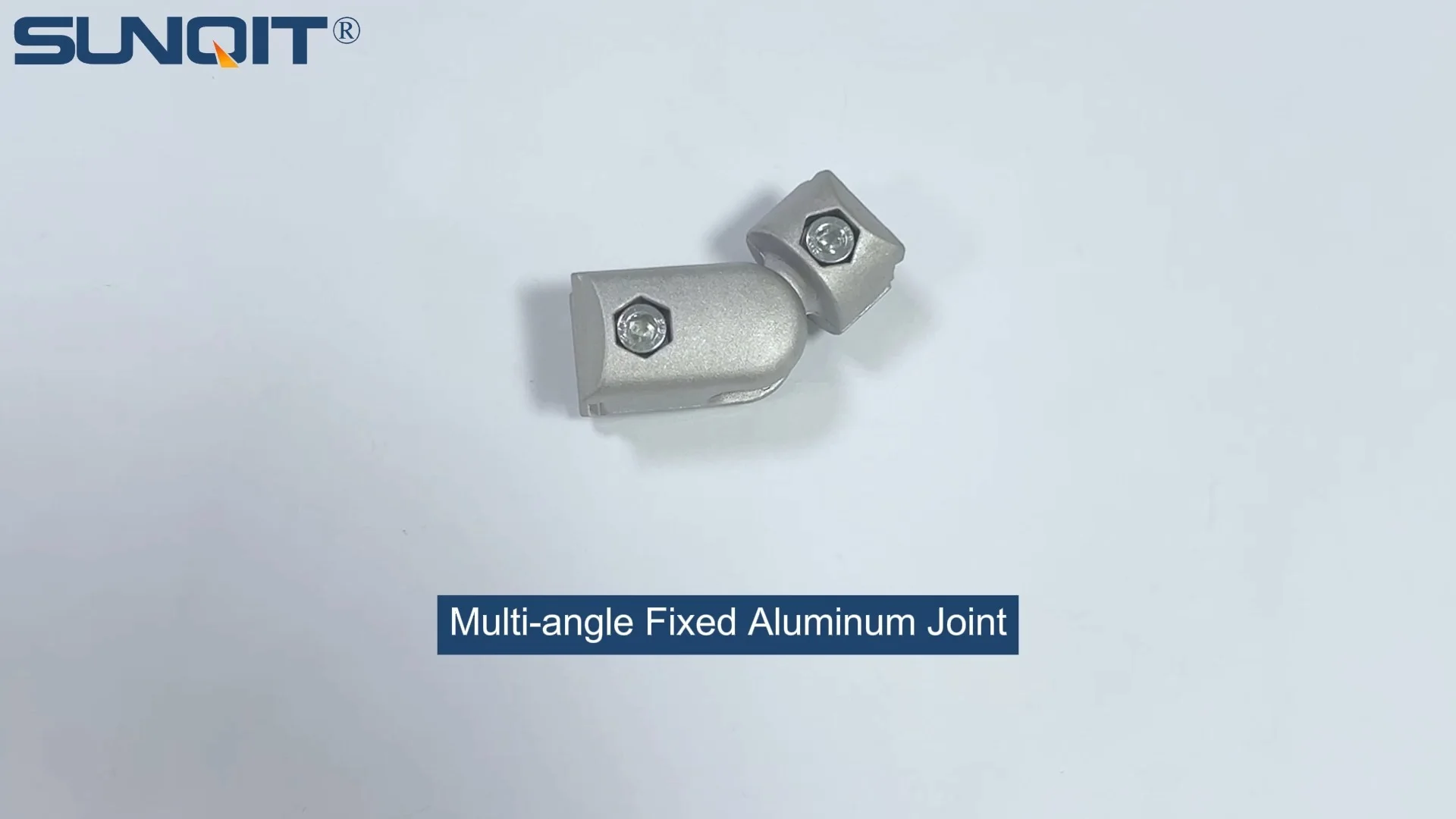
Multi-angle Fixed Aluminum Joint
Aluminum joint pipe connection for two pipe connection and work in mutiple angle.
Multi-angle Fixed Aluminum Joint

The Manufacturing World Doesn't Stand Still—Neither Should Your Workstations

Walk into any modern factory or workshop today, and you'll notice something different from a decade ago: movement . Not just the hum of machinery, but the quiet adaptability of the space itself. A workstation that assembled smartwatches last month might now be putting together wireless earbuds. A material rack once holding automotive parts could today be stacked with medical device components. This isn't chaos—it's the new normal of manufacturing: agility, flexibility, and the ability to pivot at a moment's notice.

But here's the thing: Traditional workstations weren't built for this. Welded steel frames, bolted-down shelves, and rigid structures worked when production lines ran the same product for years. But in an era of short product lifecycles, custom orders, and shifting consumer demands, those old setups are like trying to fit a square peg into a round hole—clunky, time-consuming, and ultimately limiting.

Enter the unsung hero of flexible manufacturing: the multi-angle fixed aluminum joint . It sounds technical, but think of it as the "Swiss Army knife" of workstation design. This small but mighty component is changing how factories, workshops, and production floors adapt to change. It's not just about saving time (though it does that). It's about empowering teams to rethink how work gets done—without calling in a welder or buying entirely new equipment.

In this article, we'll dive into how this unassuming joint is revolutionizing workstation reconfiguration. We'll explore its design, its role in connecting aluminum profile and aluminum pipe accessories , and how it turns static workbenches into dynamic, adaptable tools that keep up with the pace of modern production assemble . Whether you run a small workshop or manage a large manufacturing plant, understanding this component could be the key to unlocking efficiency you never knew you were missing.

What Even Is a Multi-Angle Fixed Aluminum Joint?

Let's start with the basics. At first glance, a multi-angle fixed aluminum joint looks like a small, geometric piece of metal—usually shaped like a cube or a cross, with holes or slots on multiple faces. But don't let its size fool you. This joint is the linchpin that holds modular workstation systems together. Its job? To connect aluminum profile (those sleek, T-slotted tubes you see in modern workbenches) at various angles—30°, 45°, 90°, 135°, you name it—while keeping the structure sturdy and secure.

Unlike traditional steel joints, which are often welded or require specialized tools to adjust, these aluminum joints are designed for simplicity . Most use a simple Allen wrench (or hex key) to tighten or loosen, meaning anyone on your team—from the shop floor operator to the maintenance tech—can make adjustments. And because they're made of high-grade aluminum (often 6063-T5 alloy, known for strength and corrosion resistance), they're lightweight yet tough enough to handle the daily grind of manufacturing.

But the "multi-angle" part is what really sets them apart. Imagine building with Legos, but for adults—and for industrial use. Want a workbench with a 45° side shelf for tools? The joint can handle that. Need a flow rack that angles downward to feed parts to an assembly line? The joint adjusts to that slope. It's not just about straight lines anymore; it's about creating workspaces that fit your process , not the other way around.

Aluminum Profile + Multi-Angle Joints: A Match Made for Flexibility

To truly appreciate the multi-angle fixed aluminum joint, you need to understand its partner in crime: aluminum profile . These extruded aluminum tubes come in various sizes (like 2020, 3030, or 4040, referring to their width and height in millimeters) and feature T-shaped slots along their length. These slots are where the magic happens—they let you attach joints, shelves, bins, and other accessories anywhere along the profile, without drilling holes or welding.

Pair that with a multi-angle joint, and you've got a system that's as versatile as it is strong. Let's break down how they work together:

  • Quick Assembly: Slide the joint onto the aluminum profile, line up the holes with the T-slot, insert a bolt through the slot, and tighten with an Allen wrench. Done. No welding, no cutting, no waiting for glue to dry. A basic workbench can go from a pile of parts to a usable surface in under an hour.
  • Endless Configurations: Need a 90° corner for a workbench leg? Use a right-angle joint. Want a diagonal brace to reinforce a shelf? A 45° joint does the trick. Some joints even allow for 360° rotation before locking, so you can fine-tune angles to the millimeter.
  • Easy Reconfiguration: Yesterday's workstation might have been a single-deck table, but today you need extra storage. Loosen the bolts on the joints, add a second aluminum profile shelf, re-tighten, and you're done. It's like rearranging furniture, but for industrial equipment.

And let's not forget aluminum pipe accessories —the little extras that make the system complete. Things like end caps (to cover sharp edges), pipe clamps (to hold tools or cables), and foot bases (to stabilize workbenches) all snap or bolt into the T-slots of the aluminum profile, using the same joint system. It's a modular ecosystem where every piece plays well with the others.

For example, say you run a small electronics assembly line. Your workbench needs to hold a soldering iron, a bin for components, and a monitor for work instructions. Using aluminum profiles and multi-angle joints, you can attach a tool holder at waist height, a component bin at a 30° angle for easy access, and a monitor arm above the workspace—all in an afternoon. And if next month you switch to assembling larger devices? Loosen the joints, raise the monitor arm, add a deeper shelf, and you're ready to go.

From Idea to Action: Reconfiguring a Workstation in 5 Steps

Let's get practical. How exactly do multi-angle fixed aluminum joints enable quick reconfiguration? Let's walk through a real-world example: turning a basic single-deck workbench into a double-deck workstation with side material racks—something many production assemble lines need when scaling up.

Step 1: Gather Your Tools and Parts You'll need: 4 aluminum profiles (for the new upper deck), 8 multi-angle joints (4 for the front and back supports, 4 for the side racks), an Allen wrench, and a level. That's it—no power tools, no welding torches.

Step 2: Loosen Existing Joints The current workbench has vertical legs connected to horizontal profiles at the bottom. Use the Allen wrench to loosen (but not remove) the bolts on the top joints of the legs. This gives you room to attach the new upper deck profiles.

Step 3: Attach Upper Deck Supports Slide 4 multi-angle joints onto the vertical leg profiles, positioning them 60cm above the lower deck (or whatever height works for your team). Tighten them temporarily, then attach the horizontal aluminum profiles for the upper deck to these joints. Use a level to ensure it's straight, then fully tighten the bolts.

Step 4: Add Side Material Racks On one side of the workbench, attach 4 more multi-angle joints to the vertical legs (2 on the lower deck, 2 on the upper deck). Connect horizontal aluminum profiles between them to form the frame of the material rack. Add shelf boards (plywood, metal, or even more aluminum profiles) using T-slot nuts and bolts.

Step 5: Test and Tweak Give the new structure a gentle shake to ensure it's stable. If something feels wobbly, check the joint tightness or add diagonal braces (using 45° joints) for extra support. Total time? About 45 minutes—compared to days if you were welding steel or building a new wooden workbench from scratch.

This isn't just hypothetical. I visited a medical device manufacturer last year that did exactly this. Their team needed to add a second deck to 12 workbenches to accommodate new testing equipment. With multi-angle joints, they had all 12 reconfigured in a single weekend—without shutting down production during the week. The alternative? Hiring a contractor to build new workbenches, which would have taken 2 weeks and cost 3x as much.

Beyond Flexibility: The Hidden Benefits of Aluminum Joint Systems

We've talked a lot about flexibility, but the multi-angle fixed aluminum joint offers more than just quick reconfigurations. Let's dive into the other perks that make it a smart investment for any manufacturing or workshop environment:

Durability That Stands the Test of Time Aluminum might be lighter than steel, but don't mistake lightweight for weak. 6063-T5 aluminum alloy has a tensile strength of around 210 MPa—strong enough to support heavy tools, parts bins, and even small machinery. And because aluminum is naturally corrosion-resistant, these joints won't rust or degrade, even in humid or dusty factory environments. I've seen systems in food processing plants (where washdowns are daily) that look as good after 5 years as they did on day one.

Load Capacity You Can Trust A common concern with modular systems is, "Will it hold the weight?" The answer, when designed correctly, is a resounding yes. Multi-angle joints distribute weight evenly across the aluminum profile, and when paired with heavy-duty profiles (like 4040 or 4080), they can support hundreds of kilograms. For example, a 4040 aluminum profile with multi-angle joints can easily hold a 50kg toolbox on a shelf—no sagging, no bending, no worries.

Cost-Effective in the Long Run It's true: Aluminum systems can cost more upfront than basic wooden workbenches or welded steel frames. But think about the long term. When your product line changes, you won't need to buy new workstations—just reconfigure the ones you have. When a joint wears out (which, let's be honest, is rare), you can replace just that joint, not the entire structure. Over 5-10 years, the savings add up—especially in industries with frequent process changes.

Compatibility with Lean Systems If your facility follows lean manufacturing principles (and if it doesn't, it probably should), these joints are a game-changer. Lean is all about eliminating waste—including wasted space, wasted time, and wasted resources. A modular workstation system lets you design workflows that minimize movement (workers don't have to walk as far for parts), reduce inventory (you can size material racks to hold just what you need), and adapt to 5S (sort, set in order, shine, standardize, sustain) practices with ease. It's lean manufacturing, built right into the workstation.

Real-World Wins: How Factories Are Using Multi-Angle Joints Today

Still not convinced? Let's look at two case studies of businesses that transformed their operations with multi-angle fixed aluminum joints and aluminum profile systems.

Case Study 1: Small Electronics Workshop Adapts to Product Shifts

A family-owned electronics workshop in Shenzhen, China, specializes in assembling custom circuit boards for IoT devices. A few years ago, they faced a problem: their clients were requesting smaller batches of more complex boards, and their fixed wooden workbenches couldn't keep up. "We'd spend a day building a new bench for a new product, then have to tear it down a week later when the order finished," said the owner, Mr. Li.

They switched to aluminum profiles and multi-angle joints. Now, when a new order comes in, they reconfigure existing workbenches in hours. For example, when a client needed a board with taller components, they used 90° joints to raise the upper deck of the workbench by 15cm, giving workers more vertical space. When another order required extra tool storage, they added side racks using 45° reinforced joints. "We've cut setup time by 70%," Mr. Li told me. "And we haven't bought a new workbench in three years—we just keep reusing the same parts."

Case Study 2: Automotive Supplier Optimizes Material Flow with Adjustable Racks

A mid-sized automotive parts supplier in Michigan supplies brake components to major car manufacturers. Their challenge? Seasonal demand spikes for different parts—winter meant more orders for truck brake pads, summer for sedan parts. Their fixed steel flow racks couldn't adjust to the different part sizes, leading to cluttered floors and slow material handling.

They replaced the steel racks with aluminum profiles and multi-angle joints. Now, when demand shifts, they reconfigure the racks: using steeper angles (via 30° joints) for heavier truck parts to let them slide down faster, and shallower angles (15° joints) for lighter sedan parts to prevent jamming. They also added roller tracks (another aluminum accessory) to connect the racks to assembly lines, reducing the need for workers to carry parts. "Our material handling time dropped by 40%," said the plant manager. "And we've reduced workplace injuries from lifting—those aluminum racks are lightweight enough that two people can move them, no forklift needed."

Traditional vs. Modern: Why Multi-Angle Aluminum Joints Win

Still on the fence about ditching traditional workstation systems? Let's put it all together with a comparison. The table below shows how multi-angle fixed aluminum joints stack up against two common alternatives: welded steel joints and wooden workbenches.

Feature Welded Steel Joints Wooden Workbenches Multi-Angle Fixed Aluminum Joints
Installation Time Hours to days (requires welding, grinding, painting) Half a day (cutting, drilling, assembling with screws) Minutes to hours (Allen wrench only, no special skills)
Reconfiguration Nearly impossible (requires cutting welds, rewelding) Difficult (screws strip, wood splits when moved) Easy (loosen bolts, adjust, retighten—done in minutes)
Durability High (but prone to rust if not painted) Low (scratches, water damage, warping over time) High (corrosion-resistant aluminum, no rust, no warping)
Cost Over Time High (replace entire structure when needs change) Medium (replace every 1-2 years due to wear) Low (reuse parts indefinitely, replace only worn joints)
Compatibility Limited (only works with specific steel profiles) None (can't attach industrial accessories easily) High (works with aluminum profiles, roller tracks, bins, monitors, etc.)

The verdict? For static, long-term production lines, welded steel might still have a place. For hobbyists or ultra-low-budget setups, wooden workbenches could suffice. But for any business that needs to adapt, grow, or respond to changing demands, multi-angle fixed aluminum joints are the clear winner. They're not just a tool—they're an investment in your ability to stay competitive.

The Future of Workstations: Where Multi-Angle Joints Are Headed

As manufacturing continues to evolve—with trends like automation, customization, and sustainability leading the way—multi-angle fixed aluminum joints are poised to play an even bigger role. Here's what to watch for:

Integration with Smart Manufacturing: Imagine joints with built-in sensors that monitor tension or wear, sending alerts to your maintenance team before a failure. Or RFID tags in joints that track which configurations work best for which products, helping you optimize workflows over time. It's not science fiction—companies are already testing "smart joints" in pilot facilities.

3D-Printed Customization: While most joints today are mass-produced, 3D printing could let you create custom joint shapes for unique applications—like a 120° joint for a specialized curved workbench. And since aluminum is recyclable, even custom joints can be melted down and reused when no longer needed.

Sustainability Focus: As companies aim for net-zero goals, aluminum's recyclability becomes a huge plus. Unlike steel (which requires high heat to recycle) or wood (which depletes forests), aluminum can be recycled repeatedly with minimal energy loss. A workstation built with aluminum joints today could end up as part of a new system tomorrow—no waste, no environmental guilt.

Final Thoughts: Your Workstation Should Adapt to You, Not the Other Way Around

At the end of the day, manufacturing is about solving problems—whether that's building a better product, meeting a tight deadline, or keeping costs in check. Your workstations shouldn't be one of those problems. They should be part of the solution.

The multi-angle fixed aluminum joint isn't just a piece of hardware. It's a mindset shift: from "this is how we've always done it" to "this is how we need to do it." It's about giving your team the tools to adapt, experiment, and innovate—without being held back by rigid, outdated equipment.

So, if you're still using welded steel workbenches that take weeks to modify, or wooden racks that fall apart after a year, ask yourself: What could my team accomplish if they could reconfigure their workspace in an hour instead of a week? How much time, money, and frustration could you save? The answer, I think, is clear.

Flexibility isn't a luxury anymore. It's a necessity. And with multi-angle fixed aluminum joints, it's also surprisingly affordable, easy to implement, and ready to grow with your business. The future of manufacturing is adaptable—and it starts with the joints that hold your workstations together.


Get In Touch with us

Hey there! Your message matters! It'll go straight into our CRM system. Expect a one-on-one reply from our CS within 7×24 hours. We value your feedback. Fill in the box and share your thoughts!