- Company Articles
- Products and Technology
- Product knowledge
- Multi-Angle Fixed Aluminum Joint in Communication Equipment Assembly

Multi-Angle Fixed Aluminum Joint in Communication Equipment Assembly
Related Product
Multi-angle Fixed Aluminum Joint
Aluminum joint pipe connection for two pipe connection and work in mutiple angle.
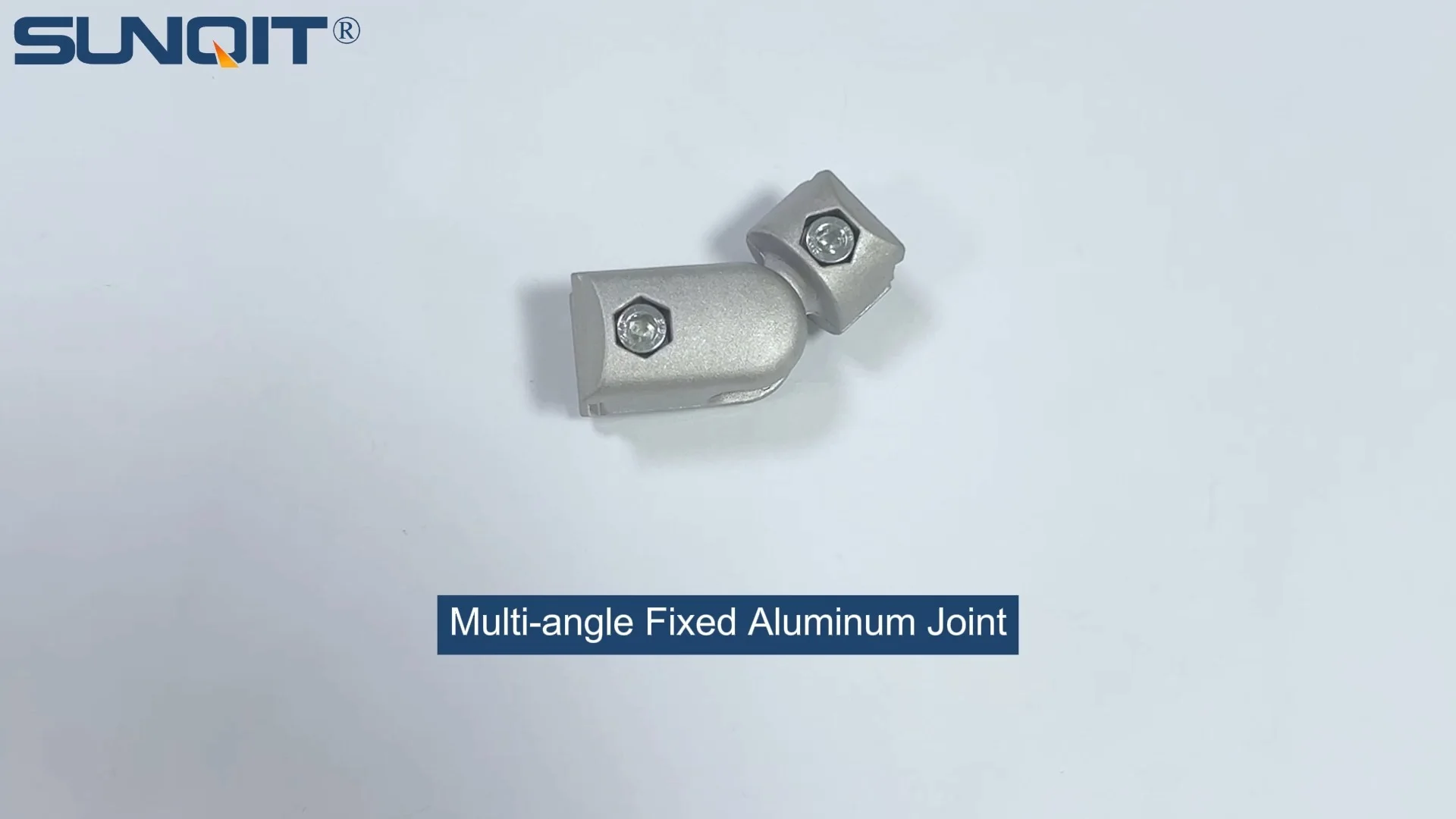
In the fast-paced world of communication equipment manufacturing, where precision meets adaptability, the backbone of efficient production lies not just in advanced machinery but in the often-overlooked components that hold everything together. From routers and switches to fiber optic transceivers, every device demands a assembly line that can keep up with evolving designs, strict ESD (Electrostatic Discharge) requirements, and the need for rapid reconfiguration. Enter the multi-angle fixed aluminum joint—a unassuming yet transformative element that has quietly revolutionized how assembly lines are built, modified, and optimized. In this article, we'll explore how this small but mighty component, paired with aluminum extrusion profiles and modular accessories, addresses the unique challenges of communication equipment assembly, making workflows smoother, more flexible, and ultimately more human-centric.
The Unique Hurdles of Communication Equipment Assembly
Communication devices are marvels of miniaturization and complexity. A single 5G router, for example, may contain hundreds of tiny components—capacitors, resistors, microchips—each sensitive to static electricity and misalignment. This creates a set of challenges that traditional assembly setups often struggle to meet:
1. Precision and Flexibility in Workstation Design
Assembly technicians need workbenches that adapt to different device sizes, from compact modems to large server units. Fixed steel workbenches, once the industry standard, force teams into rigid layouts, making it hard to reposition tools, test equipment, or adjust workflows for new product lines. A technician assembling a fiber optic switch, for instance, might need a shelf for a microscope at a 45° angle one day and a flat surface for soldering the next—static setups can't keep up.
2. ESD Protection and Material Compatibility
Static electricity is the enemy of sensitive electronics. Assembly lines must use ESD-safe materials to prevent damage to components. Traditional steel frames, while durable, often require additional coatings or grounding straps, adding complexity and cost. Worse, they're prone to corrosion in humid manufacturing environments, compromising both safety and longevity.
3. Rapid Reconfiguration for Evolving Product Lines
Telecom manufacturers rarely stick to one product for long. A shift from 4G to 5G technology, or a new government regulation on device dimensions, can render an entire assembly line obsolete overnight. Tearing down and rebuilding steel-based systems eats up valuable time—time that could be spent producing revenue-generating devices.
4. Lightweight yet Durable Material Handling
Components like circuit boards and antennas need to move smoothly from one workstation to the next, often via roller tracks or conveyors. Heavy steel racks and tracks not only strain floor load limits but also make it hard to adjust flow paths when bottlenecks emerge. A material rack that takes two people to reposition is a bottleneck in itself.
Aluminum Extrusion Profiles: The Foundation of Modern Assembly
Enter aluminum extrusion profiles—a game-changer for modular manufacturing. Made by forcing heated aluminum through a die to create consistent, customizable shapes (think T-slots, grooves, and channels), these profiles are lightweight, strong, and inherently compatible with modular accessories. Unlike steel, aluminum resists corrosion naturally, and its smooth surface can be anodized for extra protection or treated for ESD safety. But the real magic lies in how these profiles connect: via multi-angle fixed aluminum joints.
Aluminum extrusion profiles come in standard sizes (2020, 3030, 4040, 4080) that align with common device dimensions, making them easy to source and integrate. For communication equipment assembly, where precision is key, their uniformity ensures that workbenches, racks, and conveyors built from these profiles meet strict tolerance requirements—no more "eyeballing" alignments or dealing with warped steel parts.

Multi-Angle Fixed Aluminum Joints: The Unsung Heroes of Modular Assembly
At first glance, a multi-angle fixed aluminum joint might look like a simple connector. But its design solves all the challenges listed above—and more. Let's break down what makes it indispensable:
What Are Multi-Angle Fixed Aluminum Joints?
These joints are engineered to connect aluminum extrusion profiles at multiple angles (30°, 45°, 90°, 135°, and even 180°) without welding or drilling. Made from high-grade aluminum alloy (typically 6063-T5, known for strength and machinability), they feature internal or external rotation mechanisms that lock securely in place with hand-tightened bolts or levers. Some models, like the "internal rotatory aluminum joint," allow for on-the-fly angle adjustments, while others, such as the "90° aluminum crossing joint," are fixed for permanent, high-stability connections.
Key Features That Solve Communication Assembly Challenges
Lightweight yet Strong: A Perfect Balance
Aluminum joints weigh up to 60% less than steel equivalents, making workstation reconfiguration a one-person job. A technician can adjust a workbench shelf angle or reposition a roller track without calling for backup. Yet, don't let the weight fool you—these joints boast impressive load capacities: a standard 90° aluminum joint can support up to 150kg, enough for heavy test equipment or stacked material boxes.
Tool-Less Assembly: Speed Without Sacrifice
Gone are the days of hauling out welding torches or power drills. Multi-angle joints use T-slot bolts or cam levers that tighten by hand, cutting assembly time from hours to minutes. A team setting up a new ESD workbench, for example, can connect aluminum profiles, attach a honeycomb panel top, and mount a monitor arm using just a hex key—no specialized training required.
Corrosion Resistance and ESD Compatibility
Anodized aluminum joints resist rust and wear, even in humid or chemical-exposed environments. For ESD-sensitive tasks, joints can be treated with conductive coatings that dissipate static electricity, eliminating the need for separate grounding straps. This is a lifesaver for assembling components like 5G radio modules, where a single static discharge can ruin a $500 part.
Reusability: Sustainable and Cost-Effective
Unlike welded steel joints, aluminum joints are reusable. When a product line changes, teams can disassemble the old setup, sort the joints and profiles, and rebuild something entirely new. This not only reduces waste but also cuts material costs—over time, the savings from reusing components can offset the initial investment in aluminum systems.
Compatibility with a Universe of Accessories
The true power of multi-angle joints lies in their compatibility with aluminum profile accessories. Need to add casters to a workbench for mobility? Screw a "caster installation base" into the joint. Want to mount a roller track for material flow? Attach "roller track placon mount brackets" to the T-slots. From "aluminum guide rails" for aligning circuit boards to "swivel roller balls" for smooth part movement, these joints turn simple profiles into fully functional systems.

Real-World Applications: How Multi-Angle Joints Transform Communication Assembly
To understand the impact of multi-angle fixed aluminum joints, let's look at how they're used in key areas of communication equipment assembly:
1. ESD Workstations: Precision Meets Protection
ESD workbenches are the heart of electronics assembly, and multi-angle joints make them infinitely adaptable. Take the "Workbench E (Single Deck—Without Caster)," a popular model in telecom facilities. Using 4040 aluminum profiles and 90°/135° joints, technicians can add:
- A 30° angled shelf for a magnifying lamp, reducing eye strain during microchip soldering.
- A 45° side arm for holding ESD-safe tool organizers, keeping tweezers and soldering irons within arm's reach.
- Adjustable height legs (via "aluminum pipe adjustable leveling feet") to match each technician's ergonomic needs, cutting down on back pain and fatigue.
When a new router model with a larger circuit board comes in, the team can loosen the joints, reposition the shelves, and tighten them back—all in under 20 minutes. No more waiting for maintenance to cut new steel brackets.
2. Material Racks: Smooth Flow, Smart Storage
Material racks like "Material Rack B (3 Row and 3 Floor)" rely on multi-angle joints to balance storage density with accessibility. By using 45° and 90° joints, manufacturers can angle shelves to reduce bending (for heavy component boxes) or keep them flat for stackable items. Adding "roller track placon mount for aluminum profile flat" to the shelves turns static storage into dynamic flow—components glide forward as the front ones are removed, eliminating the need to reach to the back of deep racks.
For fiber optic cables, which are easily tangled, racks with "swivel roller balls 1 inch" (mounted via 30° joints) allow gentle, 360° movement, reducing damage during handling. And since the joints are corrosion-resistant, even racks in humid fiber optic cleanrooms stay functional for years.
3. Roller Tracks and Conveyors: Flexible Material Flow
Communication assembly lines thrive on smooth material flow, and roller tracks are the arteries that keep components moving. Multi-angle joints connect track sections at 45° or 90° angles, allowing teams to design custom paths around workstations. For example, a "40 steel roller track yellow wheel" section can be joined to a "38 aluminum roller track black ESD with side guide" using a 135° joint, creating a gentle curve that prevents jamming of sensitive circuit boards.
Even better, joints like "roller track placon mount joint" let teams add support brackets or end stops exactly where needed. If a bottleneck forms at the testing station, simply loosen the joints, reposition the track to bypass the jam, and tighten—no need to shut down the entire line.
4. Mobile Workstations and Trolleys
For tasks like in-line testing or final inspection, mobility is key. Trolleys built with aluminum profiles and multi-angle joints (paired with "flat swivel castor wheels with brake") are lightweight enough for one person to push but sturdy enough to hold 50kg of test equipment. The joints allow for custom shelving angles—tilting a shelf at 60° makes it easier to read test displays, while a flat shelf holds tools. When not in use, the trolley can be disassembled and stored, saving floor space.

Case Study: How XYZ Telecom Cut Downtime by 40% with Aluminum Joints
To put these benefits into perspective, let's look at XYZ Telecom, a mid-sized manufacturer of 5G base stations. In 2023, the company faced a crisis: a new 5G standard required their base station units to shrink by 20%, rendering their steel assembly line—with fixed workbenches and welded racks—obsolete. Rebuilding with steel would take 6 weeks and cost $150,000. Instead, they turned to aluminum extrusion profiles and multi-angle fixed aluminum joints.
The Old Setup: Rigid, Slow, and Costly
XYZ's old line relied on steel workbenches with welded shelves, each bolted to the floor. To adjust a shelf height, technicians needed a grinder and welding torch, a process that took 2 hours per workstation. Material racks were heavy steel units that required a forklift to reposition, and ESD protection meant wrapping shelves in conductive tape that peeled off monthly. When the new base station design launched, the team estimated it would take 120 hours (over 15 workdays) to reconfigure the line—time they couldn't afford.
The New Setup: Modular, Fast, and ESD-Safe
XYZ partnered with a supplier to install aluminum extrusion profiles (4040 and 3030 series) and multi-angle joints. Here's what changed:
- Workstations: ESD workbenches with aluminum honeycomb tops, assembled using 90° and 45° joints. Shelves and tool holders could be repositioned in 10 minutes with a hex key.
- Material Racks: "Material Rack B" units with 3 rows and 3 floors, using 45° joints to angle shelves, and "swivel roller balls 0.5 inch" for easy component access. The racks weighed 60% less than steel versions, so technicians could move them by hand.
- Roller Tracks: A modular system of "38 aluminum roller track yellow with wheel flange" sections, connected by 45° and 90° joints. The line could be reconfigured around bottlenecks in under an hour.
The Results: Faster, Safer, and More Profitable
Within 3 weeks, XYZ's new line was operational—half the time of a steel rebuild. The benefits piled up quickly:
- 40% Less Downtime: Reconfiguring for new product runs dropped from 2 hours to 30 minutes per workstation.
- 25% Fewer ESD Incidents: Anodized aluminum joints and ESD-safe roller wheels eliminated static damage, saving $20,000 in component costs annually.
- 30% More Floor Space: Disassembled racks and trolleys were stored compactly, freeing up space for a new testing station.
- Happier Technicians: Teams reported less fatigue from lighter setups and faster workflows, reducing turnover by 15%.
"We used to dread product launches because of the line rebuilds," said Maria Gonzalez, XYZ's Production Manager. "Now, with these joints, we can adapt on the fly. It's like having a assembly line that thinks as fast as our engineers do."
Multi-Angle Aluminum Joints vs. Traditional Steel Joints: A Clear Winner
Still on the fence about switching from steel to aluminum? Let's compare the two side by side:
| Feature | Traditional Steel Joints | Multi-Angle Fixed Aluminum Joints |
|---|---|---|
| Material | Mild steel, prone to rust | Anodized aluminum alloy (6063-T5), corrosion-resistant |
| Weight (per joint) | 2.5kg (heavy, requires tools to move) | 0.8kg (light enough for hand assembly) |
| Angle Adjustment | Fixed (welded), no adjustment | 30°, 45°, 90°, 135°, 180° (tool-less adjustment) |
| Assembly Time | 60–90 minutes (welding, drilling) | 5–10 minutes (hand-tightened bolts) |
| Reusability | Low (welded joints weaken when cut) | High (disassemble and rebuild repeatedly) |
| ESD Compatibility | Requires additional coatings/straps | Anodized or conductive coatings available |
| Compatibility with Accessories | Limited (requires custom brackets) | Wide (works with T-slot accessories, caster wheels, roller tracks) |
| Long-Term Cost | High (replacement, maintenance, downtime) | Low (reusable, minimal maintenance) |
Technical Specs: What to Look for in Multi-Angle Aluminum Joints
Not all aluminum joints are created equal. When choosing joints for communication equipment assembly, prioritize these specs:
Load Capacity
Look for joints rated to support at least 100–150kg per connection. For heavy equipment like test chambers, opt for reinforced joints (e.g., "heavy duty split foot seat" bases) that distribute weight evenly.
Angle Range
Most communication assembly tasks require 30°, 45°, 90°, and 135° angles. Ensure the joint can lock securely at these positions—loose joints lead to wobbly workbenches and damaged components.
Material Thickness
Aluminum walls should be 1.5–2.0mm thick for durability. Thinner joints may save money upfront but bend under heavy loads, compromising safety.
Finish
Anodized finishes (clear, black, or silver) offer the best corrosion resistance. For ESD-sensitive areas, choose joints with a conductive anodize (surface resistance 10⁶–10⁹ ohms).
Compatibility with Profiles
Check that the joint fits your aluminum profile size (e.g., 2020, 3030). Most suppliers list compatible profiles, but it's wise to test-fit a sample before ordering in bulk.
The Future of Communication Assembly: Modular, Human-Centric, and Ready to Adapt
Communication equipment manufacturing isn't slowing down. 6G is on the horizon, IoT devices are multiplying, and consumer demand for faster, smaller tech is insatiable. In this environment, rigid assembly lines are liabilities, not assets. Multi-angle fixed aluminum joints, paired with aluminum extrusion profiles, offer a path forward—one where lines adapt as quickly as products do, technicians work smarter (not harder), and every component, from a tiny resistor to a heavy test rig, moves with purpose.
For manufacturers still clinging to steel, the message is clear: modularity isn't a trend—it's a survival strategy. XYZ Telecom's story isn't unique; it's a preview of what's possible when you replace welds with joints, rigidity with flexibility, and frustration with efficiency. The multi-angle fixed aluminum joint may be small, but its impact on communication assembly is nothing short of revolutionary.