- Company Articles
- Products and Technology
- Product knowledge
- Multi-Angle Fixed Aluminum Joint in Consumer Electronics Assembly: Precision Needs

Multi-Angle Fixed Aluminum Joint in Consumer Electronics Assembly: Precision Needs
Related Product
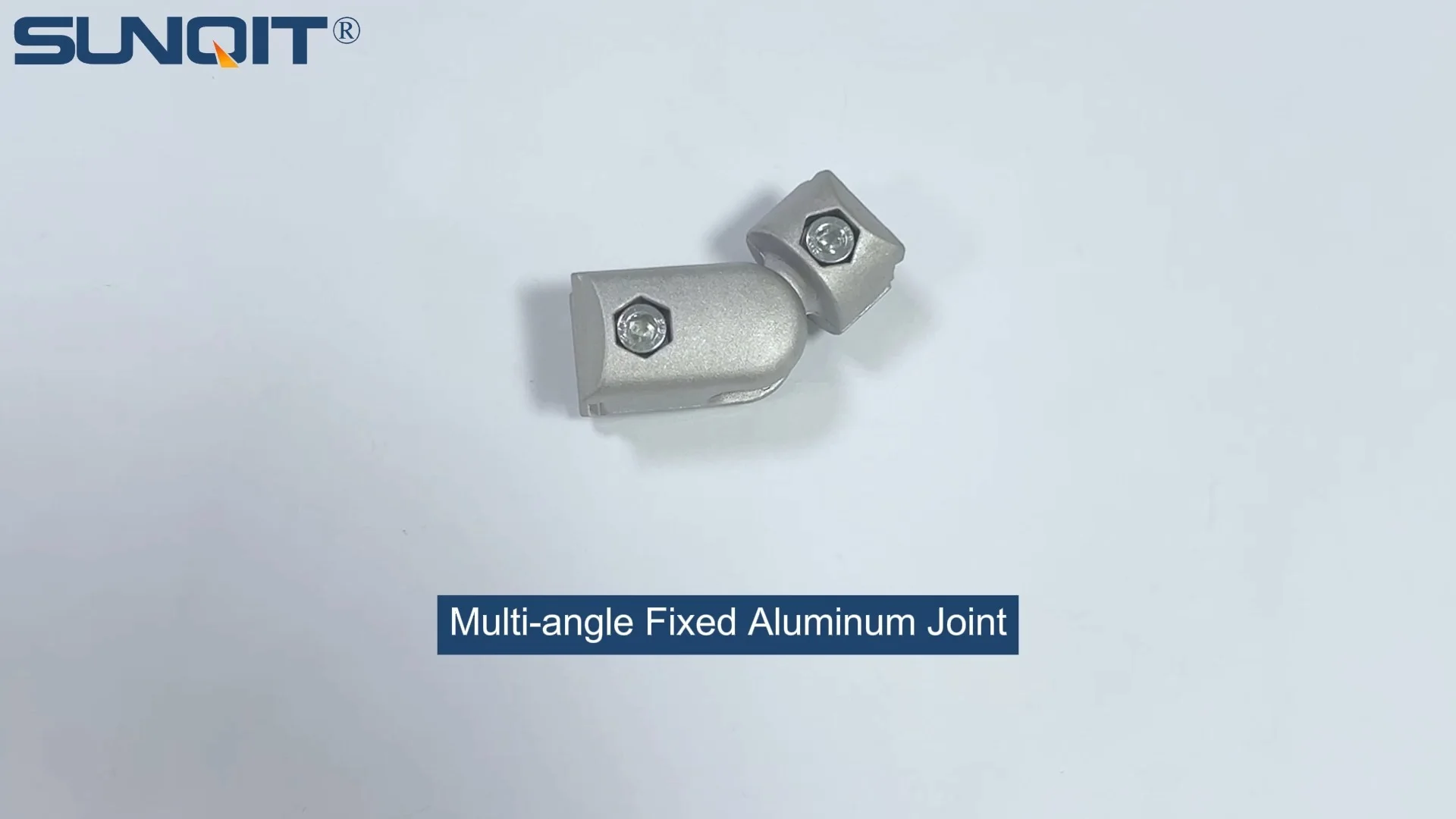
Multi-angle Fixed Aluminum Joint
Aluminum joint pipe connection for two pipe connection and work in mutiple angle.
In the fast-paced world of consumer electronics, where a single smartphone may contain over 3,000 components and laptop motherboards are packed with microscopic circuits, the assembly line is more than just a production space—it's a stage where precision and pressure collide. Every second counts, every millimeter matters, and the line between a flawless device and a costly defect often hinges on components that hold the operation together. Today, we shine a light on one such unsung hero: the multi-angle fixed aluminum joint. This small but mighty hardware piece plays a pivotal role in keeping assembly lines flexible, accurate, and ready to adapt to the ever-shrinking, ever-more-complex world of gadgets we rely on.
The Precision Paradox in Modern Electronics Assembly
Step into any consumer electronics factory, and you'll encounter a symphony of whirring machines, humming conveyors, and focused workers hunched over workbenches, placing chips or soldering wires. What you might miss at first glance is the invisible battle between two opposing forces: precision and flexibility. On one hand, as devices grow smaller and more advanced—think foldable phones with hinges thinner than a credit card or smartwatches with sensors measuring heart rate to the beat—assembly demands pinpoint accuracy. A misalignment of just 0.1mm can ruin a circuit board, causing short circuits, dead pixels, or worse. On the other hand, consumer electronics trends shift rapidly. A factory might produce a mid-range smartphone this month and switch to a high-end tablet next, requiring assembly lines to reconfigure quickly without sacrificing speed or precision.
This is the precision paradox: building a system rigid enough for micron-level accuracy yet flexible enough to adapt to new products, layouts, and demands. For years, factories relied on heavy steel frames and fixed plastic joints. Steel offered strength but was cumbersome to move; plastic was lightweight but lacked durability. Add electrostatic discharge (ESD) concerns—static charges frying sensitive microchips—and the challenge grew. Enter aluminum: a material balancing strength, lightness, and conductivity (or ESD resistance with coatings). Paired with innovative joints, aluminum profiles became the backbone of modern lean systems—modular setups prioritizing efficiency, adaptability, and waste reduction. At the heart of these systems? The multi-angle fixed aluminum joint, solving the precision paradox.
Meet the Multi-Angle Fixed Aluminum Joint: Small Part, Big Impact
At first glance, a multi-angle fixed aluminum joint seems unremarkable—a small metallic connector with holes and screws. Look closer, and you'll see why it's a staple in electronics assembly. Unlike traditional fixed joints limited to 90-degree angles or flexible joints sacrificing stability, this joint connects aluminum profiles at multiple angles (30°, 45°, 60°, 90°, etc.) while locking securely. Think of it as a Swiss Army knife of connectors—versatile for tight corners, strong for heavy workbenches, and precise enough to keep shelves, conveyors, and tool holders exactly where they need to be.
What makes it "fixed" despite angle adjustments? Once set, it locks tight—no wiggling, shifting, or movement during production. Critical in electronics assembly, where a tilting workbench can misplace components or a sagging flow rack slows material delivery. High-grade aluminum alloy (often 6061-T6, prized for strength-to-weight ratio) and precision-machined threads create a secure grip. Some models include rubber gaskets or ESD-safe coatings to prevent static buildup, addressing that key concern.
Compatibility with aluminum profiles—long, T-slot extrusions forming assembly systems' skeleton—is another win. Lightweight, easy to cut, and T-slot ready for quick accessory attachment (tool hooks, monitor mounts, ESD mats), aluminum profiles with multi-angle joints become a factory engineer's blank canvas. Need a sloped workbench to reduce neck strain? Angle the profile at 15°. Want a curved flow rack around a conveyor? Connect profiles at 135° with a few wrench turns. Adaptability makes the joint indispensable in fast-paced factories.

From Workbenches to Flow Racks: Where the Joint Shines
To grasp the joint's impact, step onto a smartwatch assembly line—stations for component sorting, circuit board assembly, display attachment, testing, and packaging. Each relies on unique tools and layouts, with the joint playing a role in nearly all.
Take circuit board assembly: technicians use microscopes and tweezers to place tiny surface-mount components (some 0.4mm x 0.2mm) onto PCBs. Their workbench needs stability, height adjustability, and angle to reduce eye strain. Multi-angle joints customize the frame: main surface level, microscope section tilted 10°, tool tray angled 45° for access. Secure locking prevents wobbling during component placement—critical for accuracy.
Next, the flow rack delivering PCBs to testing. Gravity slides materials along roller tracks; design ensures steady flow—too steep, PCBs collide; too shallow, they stick. Multi-angle joints let engineers fine-tune angle by degrees, adjusting flow rate. They also fit tight spaces: curve around pillars by connecting profiles at 120°, keeping production moving without wasted floor space.
In lean systems—minimizing waste, maximizing efficiency—modularity is key. Reconfiguring with steel joints took hours/days of welding; with aluminum joints, it's loosening/tightening screws. Switching from 42mm to 46mm smartwatch production? Reconfigure workbenches in a morning, cutting downtime and keeping production on track.

How Does It Stack Up? A Quick Comparison
To see the joint's value, compare it to traditional steel fixed joints and plastic lean pipe joints:
| Feature | Multi-Angle Fixed Aluminum Joint | Traditional Steel Fixed Joint | Plastic Lean Pipe Joint |
|---|---|---|---|
| Angle Flexibility | Multiple angles (30°, 45°, 90°, etc.) | Typically 90° only | Limited (90° or 180°) |
| Load Capacity | High (up to 200kg per joint) | Very high (up to 300kg per joint) | Low (up to 50kg per joint) |
| Weight | Light (50-100g) | Heavy (200-300g) | Light (30-60g) |
| Corrosion Resistance | Excellent (aluminum alloy) | Good (coated), but rust-prone if scratched | Excellent (plastic) |
| ESD Compatibility | Yes (with ESD coating) | Yes (needs grounding) | Limited (insulating, static buildup risk) |
| Reconfiguration Time | Fast (5-10 minutes) | Slow (welding, cutting) | Moderate (15-20 minutes) |
The aluminum joint balances flexibility, strength, and practicality. Not the strongest (steel wins), but sufficient for most tasks. Not the lightest (plastic is lighter), but rigidity outweighs weight. In adaptability and ESD safety, it's unmatched.

"It Changed How We Build Lines": A Factory Manager's Story
Carlos Mendez, production manager at a Mexican electronics manufacturer (wireless earbuds, tablet chargers), has 15+ years in the industry. "Five years ago, steel frames and plastic joints dominated. Reconfiguring a workbench meant a welding crew and a day of downtime. Now, with aluminum profiles and multi-angle joints, my team reconfigures stations during lunch. Night and day."
He recalls a foldable Bluetooth speaker contract requiring curved flow racks to avoid casing damage. "With multi-angle joints, we built curved racks by connecting profiles at 160° angles. Two days vs. two weeks, and the racks are rock-solid—no jamming, no casing damage. Defect rates dropped 12% from that alone."
Worker morale improved too. "Before, reconfigurations meant dust, noise, delays—workers grumbled. Now, they help design layouts, knowing best angles for their tasks. More involvement means better focus and fewer mistakes."
Looking Ahead: Joints in the Age of Smart Factories
As consumer electronics evolve, assembly lines face new demands. Smart factories—IoT sensors, AI analytics, automation optimizing production—need precise, adaptable systems. The multi-angle fixed aluminum joint is ready.
Future "smart workbenches" with vibration/temperature sensors need odd-angle mounting for accurate data. Multi-angle joints attach sensors precisely without stability compromise. Collaborative robots (cobots) working with humans will need custom arms/tool holders, supported by the joint's precision.
Integration with digital tools is coming. Manufacturers use 3D models to design lines, ordering pre-cut profiles and exact joints. This "digital twin" approach reduces waste and speeds setup, enabled by the joint's standardized design and angle options.
Wrapping Up: The Precision Partner We Can't Overlook
In consumer electronics, it's easy to marvel at cameras or processors. But behind breakthrough devices are small, unnoticed components enabling production. The multi-angle fixed aluminum joint—quietly balancing flexibility/stability, strength/lightness, adaptability/reliability—is one such component.
For workers, it means less rework and safer, comfortable spaces. For managers, faster changeovers, lower costs, and happier teams. For consumers, devices that work flawlessly. Next time you unbox a gadget, appreciate the precision—including the little aluminum joint holding it all together.