- Company Articles
- Products and Technology
- Product knowledge
- Multi-Angle Fixed Aluminum Joint in Lean Management Accessories: Practical Uses

Multi-Angle Fixed Aluminum Joint in Lean Management Accessories: Practical Uses
Related Product
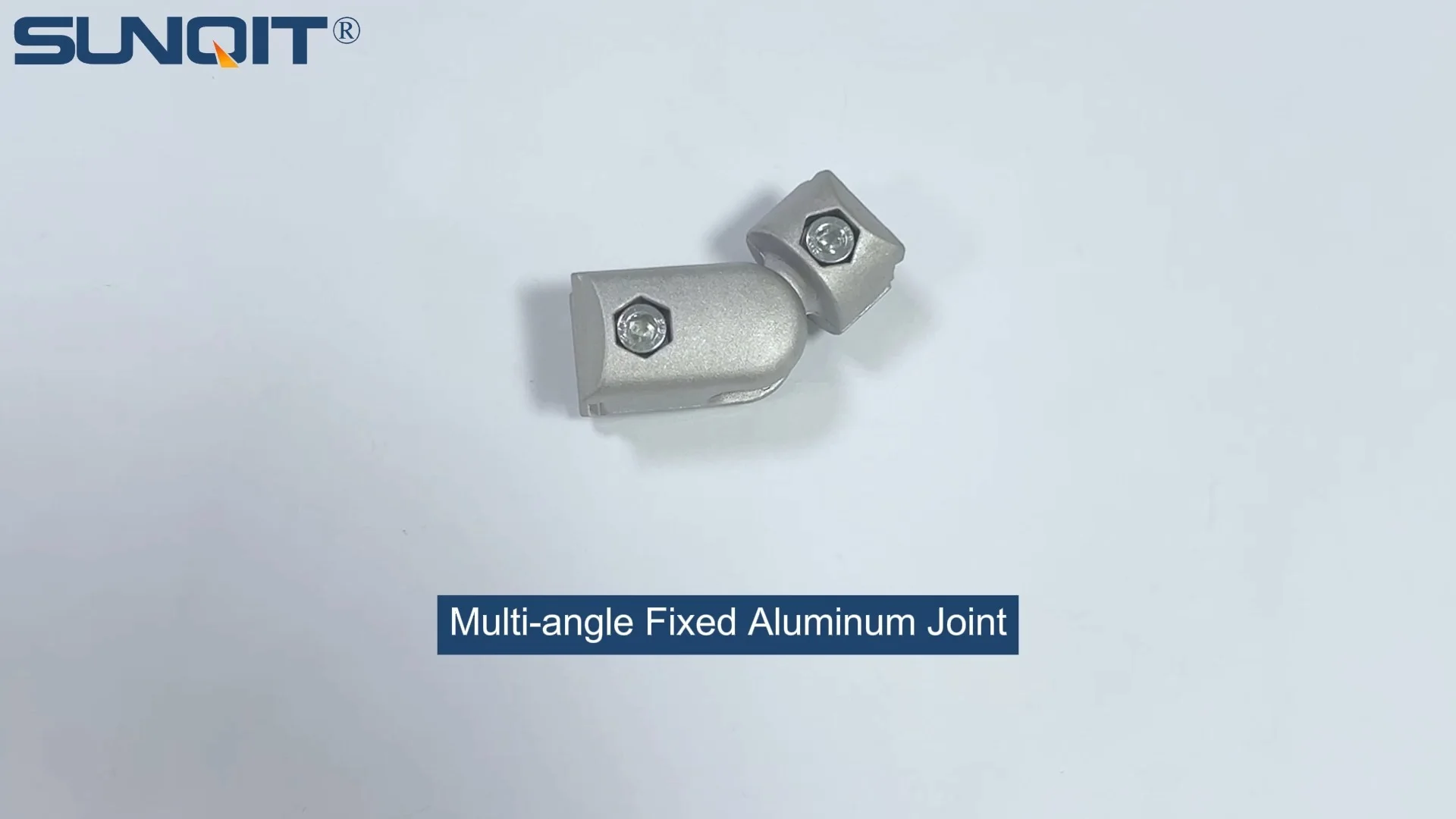
Multi-angle Fixed Aluminum Joint
Aluminum joint pipe connection for two pipe connection and work in mutiple angle.
Introduction: The Unsung Heroes of Lean Efficiency
In the world of manufacturing and production, lean management isn't just a buzzword—it's a philosophy that shapes every corner of the workshop, from the layout of assembly lines to the tools workers use daily. At its core, lean is about eliminating waste, streamlining processes, and creating systems that adapt as needs change. But here's the thing: you can't build a lean operation on vague ideas alone. You need tangible, physical infrastructure that works as hard as your team does. That's where lean management accessories come into play—components like workbenches, flow racks, roller tracks, and trolleys that form the backbone of a productive workspace. And if these accessories are the "body" of lean infrastructure, then joints are its "joints"—the critical connections that hold everything together, enable flexibility, and turn basic parts into powerful, customized solutions. Among these, the multi-angle fixed aluminum joint stands out as a quiet game-changer, offering a level of adaptability and durability that traditional joints simply can't match. Let's dive into why this unassuming component has become indispensable in modern lean environments.
What Is a Multi-Angle Fixed Aluminum Joint, Anyway?
Let's start with the basics. A multi-angle fixed aluminum joint is exactly what it sounds like: a connector made from aluminum that allows two or more components (think pipes, profiles, or rails) to be joined at various angles—all while maintaining a secure, stable hold. Unlike fixed-angle joints that lock you into 90-degree or 45-degree connections, these joints are designed to adjust. Picture this: you're building a workbench, and instead of being stuck with a straight, flat surface, you need a section that tilts slightly to prevent tools from sliding off. Or maybe you're setting up a flow rack where materials need to glide down at a 15-degree angle to feed into an assembly line. A multi-angle fixed aluminum joint makes that possible. It's like having a universal adapter for your production line's infrastructure—one that bends (literally) to your needs without sacrificing strength.
But why aluminum? Aluminum is the unsung hero of industrial materials. It's lightweight, so it doesn't add unnecessary bulk to structures. It's corrosion-resistant, which means it holds up in dusty, humid, or even slightly damp workshop environments—no rust eating away at the joints over time. And it's strong, with a strength-to-weight ratio that outperforms many traditional materials like steel (which is heavier) or plastic (which lacks durability). When you combine that with precision engineering, you get a joint that can handle the daily wear and tear of a busy production floor, from the constant vibration of machinery to the occasional bump from a forklift.
But why aluminum? Aluminum is the unsung hero of industrial materials. It's lightweight, so it doesn't add unnecessary bulk to structures. It's corrosion-resistant, which means it holds up in dusty, humid, or even slightly damp workshop environments—no rust eating away at the joints over time. And it's strong, with a strength-to-weight ratio that outperforms many traditional materials like steel (which is heavier) or plastic (which lacks durability). When you combine that with precision engineering, you get a joint that can handle the daily wear and tear of a busy production floor, from the constant vibration of machinery to the occasional bump from a forklift.

Aluminum Profile: The Perfect Partner for Multi-Angle Joints
To truly understand the value of multi-angle fixed aluminum joints, you need to talk about their most common partner: aluminum profile. Aluminum profiles are extruded aluminum pieces with a specific cross-sectional shape—often with T-slots or grooves that make them easy to connect with joints, brackets, and other accessories. Think of them as the "building blocks" of lean infrastructure. They're used to build everything from workbenches to machine guards to material racks. And when paired with multi-angle fixed aluminum joints, they become infinitely customizable.
Here's why this pairing works so well: aluminum profiles are designed for modularity. Their T-slots allow joints to be attached at any point along the length, not just at pre-drilled holes. Combine that with a joint that can adjust angles, and suddenly you're not limited by standard sizes or shapes. Need a workbench that's 1.2 meters long on one side and 80 centimeters on the other, with a corner that bends at 135 degrees? No problem. Want a flow rack with shelves that angle downward at 10 degrees on the left and 5 degrees on the right to accommodate different-sized boxes? The multi-angle joint and aluminum profile make it possible. It's like playing with an advanced set of Lego bricks—only these bricks are strong enough to support heavy tools, boxes of components, or even small machinery.
Here's why this pairing works so well: aluminum profiles are designed for modularity. Their T-slots allow joints to be attached at any point along the length, not just at pre-drilled holes. Combine that with a joint that can adjust angles, and suddenly you're not limited by standard sizes or shapes. Need a workbench that's 1.2 meters long on one side and 80 centimeters on the other, with a corner that bends at 135 degrees? No problem. Want a flow rack with shelves that angle downward at 10 degrees on the left and 5 degrees on the right to accommodate different-sized boxes? The multi-angle joint and aluminum profile make it possible. It's like playing with an advanced set of Lego bricks—only these bricks are strong enough to support heavy tools, boxes of components, or even small machinery.
Example: A electronics manufacturer in Guangdong recently reconfigured their assembly line using aluminum profiles and multi-angle fixed joints. They needed workstations that could adapt to both large circuit board assembly (requiring flat, stable surfaces) and small component sorting (needing tilted shelves to reduce eye strain). By swapping out a few joints and adjusting angles, they transformed the same basic profiles into two entirely different workstations—saving time and money that would have been spent buying new furniture.

Practical Uses: Where Multi-Angle Joints Shine in Lean Accessories
Now, let's get into the real-world applications. Multi-angle fixed aluminum joints aren't just theoretical—they're hard at work in workshops around the world, solving specific problems and making lean principles a reality. Let's break down their most common uses:
1. Lean Pipe Workbench: Customization That Grows With Your Team
A lean pipe workbench is the heart of many production lines. It's where assembly happens, tools are stored, and workers spend most of their shifts. But not all workbenches are created equal. A generic, one-size-fits-all bench might work for a while, but as production needs change—new products, new tools, new processes—it quickly becomes a bottleneck. That's where multi-angle fixed aluminum joints come in.
Imagine a workbench used for assembling small appliances. On one side, a worker needs a flat surface to lay out circuit boards. On the other side, they need a raised, angled shelf to hold instruction manuals so they don't have to bend down to read them. With traditional joints, you'd need two separate benches or a custom-built Frankenstein's monster of a bench that's hard to modify. With multi-angle joints and aluminum profile, you can build a single bench that does both. The joints let you adjust the angle of the shelf—tilt it up for manuals, flatten it for extra workspace when needed. And if next month you need to add a tool rail above the bench? Just attach a new aluminum profile to the back using the same joints. No welding, no drilling new holes—just loosen a few bolts, adjust, and tighten. It's customization without the hassle.
But it's not just about adjustability. Workbenches take a beating. Workers lean on them, tools get dropped, heavy components are placed and moved constantly. Multi-angle fixed aluminum joints ensure the bench stays stable. The aluminum construction resists bending, and the precision fit of the joint prevents wobbling—no more shaky surfaces that make delicate assembly work a nightmare. Even better, if a joint does wear out (after years of use), it's easy to replace—just swap it out with a new one, and the bench is as good as new. No need to replace the entire bench.
Imagine a workbench used for assembling small appliances. On one side, a worker needs a flat surface to lay out circuit boards. On the other side, they need a raised, angled shelf to hold instruction manuals so they don't have to bend down to read them. With traditional joints, you'd need two separate benches or a custom-built Frankenstein's monster of a bench that's hard to modify. With multi-angle joints and aluminum profile, you can build a single bench that does both. The joints let you adjust the angle of the shelf—tilt it up for manuals, flatten it for extra workspace when needed. And if next month you need to add a tool rail above the bench? Just attach a new aluminum profile to the back using the same joints. No welding, no drilling new holes—just loosen a few bolts, adjust, and tighten. It's customization without the hassle.
But it's not just about adjustability. Workbenches take a beating. Workers lean on them, tools get dropped, heavy components are placed and moved constantly. Multi-angle fixed aluminum joints ensure the bench stays stable. The aluminum construction resists bending, and the precision fit of the joint prevents wobbling—no more shaky surfaces that make delicate assembly work a nightmare. Even better, if a joint does wear out (after years of use), it's easy to replace—just swap it out with a new one, and the bench is as good as new. No need to replace the entire bench.
2. Flow Rack: Making Material Flow Smoother Than Ever
Flow racks are all about efficiency. They use gravity to move materials from the "load" end to the "pick" end, so workers don't have to walk to a storage area—materials come to them. But for gravity to work, the rack's shelves need to be angled just right. Too steep, and materials slide too fast, risking damage. Too shallow, and they don't move at all, leading to stagnant inventory and wasted time. Enter the multi-angle fixed aluminum joint.
Flow racks are typically built with roller track—rows of small wheels that let boxes or totes glide smoothly. The roller track is mounted on aluminum profiles, and the angle of those profiles determines how fast materials flow. With multi-angle joints, you can (fine-tune) that angle. Let's say you're storing plastic totes filled with small electronic parts—they're lightweight, so you might need a steeper angle (maybe 12 degrees) to get them moving. But if you switch to heavier cardboard boxes of metal components, you'd want a shallower angle (8 degrees) to prevent them from slamming into the end stop. Instead of building two separate racks, you can adjust the joints on a single rack to handle both. It's like having a flow rack that adapts to your inventory, not the other way around.
And it's not just about the angle of the shelves. Flow racks often need to fit into tight spaces—between machines, along walls, or around corners. Multi-angle joints let you build racks that wrap around obstacles. Maybe there's a support column in the middle of your warehouse; instead of building two separate straight racks on either side, you can build a single L-shaped rack with a 90-degree joint around the column. No wasted space, no extra materials—just a seamless flow of materials right where your team needs them.
Flow racks are typically built with roller track—rows of small wheels that let boxes or totes glide smoothly. The roller track is mounted on aluminum profiles, and the angle of those profiles determines how fast materials flow. With multi-angle joints, you can (fine-tune) that angle. Let's say you're storing plastic totes filled with small electronic parts—they're lightweight, so you might need a steeper angle (maybe 12 degrees) to get them moving. But if you switch to heavier cardboard boxes of metal components, you'd want a shallower angle (8 degrees) to prevent them from slamming into the end stop. Instead of building two separate racks, you can adjust the joints on a single rack to handle both. It's like having a flow rack that adapts to your inventory, not the other way around.
And it's not just about the angle of the shelves. Flow racks often need to fit into tight spaces—between machines, along walls, or around corners. Multi-angle joints let you build racks that wrap around obstacles. Maybe there's a support column in the middle of your warehouse; instead of building two separate straight racks on either side, you can build a single L-shaped rack with a 90-degree joint around the column. No wasted space, no extra materials—just a seamless flow of materials right where your team needs them.
3. Roller Track: Keeping Materials Moving Without a Hitch
Roller track is the unsung hero of material handling. It's used in flow racks, conveyor systems, and even workbench extensions to move materials from point A to point B with minimal effort. But roller track is only as good as the system holding it in place. If the track is misaligned, materials get stuck. If the supports are wobbly, the track sags, causing jams. Multi-angle fixed aluminum joints solve both problems.
Roller track is usually mounted on aluminum profiles, and the joints secure those profiles to the rack or frame. With multi-angle joints, you can ensure the track is perfectly level (or angled, for gravity flow) across its entire length. Even if the floor isn't perfectly flat (and let's be real, few workshop floors are), you can adjust the angle of individual supports to compensate. No more "dips" in the track that trap boxes. And because the joints are made of aluminum, they won't bend or warp over time, so the track stays aligned for years.
Another bonus? Roller track often needs to connect to other components, like conveyor belts or workbench surfaces. Multi-angle joints make those transitions smooth. For example, you might have a roller track feeding into a conveyor that's slightly higher—you can angle the end of the roller track up using a joint to create a gentle ramp, so materials glide onto the conveyor without getting stuck. It's these small, precise adjustments that turn a good material handling system into a great one.
Roller track is usually mounted on aluminum profiles, and the joints secure those profiles to the rack or frame. With multi-angle joints, you can ensure the track is perfectly level (or angled, for gravity flow) across its entire length. Even if the floor isn't perfectly flat (and let's be real, few workshop floors are), you can adjust the angle of individual supports to compensate. No more "dips" in the track that trap boxes. And because the joints are made of aluminum, they won't bend or warp over time, so the track stays aligned for years.
Another bonus? Roller track often needs to connect to other components, like conveyor belts or workbench surfaces. Multi-angle joints make those transitions smooth. For example, you might have a roller track feeding into a conveyor that's slightly higher—you can angle the end of the roller track up using a joint to create a gentle ramp, so materials glide onto the conveyor without getting stuck. It's these small, precise adjustments that turn a good material handling system into a great one.

How Multi-Angle Joints Solve Common Lean Headaches
Let's talk about the problems manufacturers and warehouse managers face daily—and how multi-angle fixed aluminum joints fix them.
Problem 1: "Our production line changes every month, and we're stuck with rigid equipment." Solution: Multi-angle joints and aluminum profile are modular. You can disassemble and reconfigure structures in hours, not days. Need to shrink a workbench to make space for a new machine? Take it apart, remove a few profiles, and rebuild it smaller. No need to buy a new bench.
Problem 2: "Our flow rack keeps jamming because the angle is wrong for our new heavier boxes." Solution: Loosen the joints, adjust the angle of the roller track, retighten. Done. No more jams, no more wasted time unclogging the rack.
Problem 3: "We spent a fortune on steel racks, but they're so heavy we can't move them when we rearrange the floor." Solution: Aluminum is lightweight. A rack built with aluminum profiles and multi-angle joints is easy to disassemble and move—even by hand. No need for forklifts or heavy machinery.
Problem 4: "Our workbenches are rusting in our humid workshop, and the joints keep seized up." Solution: Aluminum is corrosion-resistant. No rust, no seized joints. Even in damp environments, the joints stay smooth and easy to adjust.
Problem 1: "Our production line changes every month, and we're stuck with rigid equipment." Solution: Multi-angle joints and aluminum profile are modular. You can disassemble and reconfigure structures in hours, not days. Need to shrink a workbench to make space for a new machine? Take it apart, remove a few profiles, and rebuild it smaller. No need to buy a new bench.
Problem 2: "Our flow rack keeps jamming because the angle is wrong for our new heavier boxes." Solution: Loosen the joints, adjust the angle of the roller track, retighten. Done. No more jams, no more wasted time unclogging the rack.
Problem 3: "We spent a fortune on steel racks, but they're so heavy we can't move them when we rearrange the floor." Solution: Aluminum is lightweight. A rack built with aluminum profiles and multi-angle joints is easy to disassemble and move—even by hand. No need for forklifts or heavy machinery.
Problem 4: "Our workbenches are rusting in our humid workshop, and the joints keep seized up." Solution: Aluminum is corrosion-resistant. No rust, no seized joints. Even in damp environments, the joints stay smooth and easy to adjust.
Comparing Joints: Why Multi-Angle Aluminum Beats the Rest
To really drive home the value, let's compare multi-angle fixed aluminum joints with other common joint types. Here's a quick breakdown:
As you can see, multi-angle fixed aluminum joints offer the best balance of flexibility, durability, and practicality for lean environments. They're not the cheapest option upfront, but their reusability and longevity mean they save money in the long run—no more replacing entire structures when your needs change.
| Joint Type | Angle Flexibility | Material | Weight | Corrosion Resistance | Reusability |
|---|---|---|---|---|---|
| Multi-Angle Fixed Aluminum | Adjustable (15°-180°) | Aluminum | Light | High | High (easily disassembled/reused) |
| Fixed Steel Joint | Fixed (90°/45° only) | Steel | Heavy | Low (prone to rust) | Low (welding may be required) |
| Plastic Snap Joint | Limited (fixed angles) | Plastic | Very light | High | Medium (prone to breakage with reuse) |
| Welded Joint | Fixed (permanent angle) | Steel/Aluminum | Heavy | Depends on material | None (permanent) |
Maintenance: Keeping Your Joints in Top Shape
Like any piece of equipment, multi-angle fixed aluminum joints need a little TLC to last. But don't worry—it's minimal. Here are a few tips:
Keep them clean: Wipe joints down with a dry cloth occasionally to remove dust and debris. In really dusty environments, a quick spray with compressed air can dislodge particles from the threads or adjustment mechanisms.
Check tightness: Over time, vibrations from machinery or heavy use can loosen the bolts on the joints. Do a quick visual inspection monthly—if a joint is wobbly, tighten the bolts with a hex key. It takes 30 seconds and prevents bigger issues down the line.
Lubricate moving parts (if applicable): Some multi-angle joints have adjustable pins or sliding mechanisms. A drop of light machine oil on these parts once a year keeps them moving smoothly. Avoid heavy grease, which can attract dust.
replace worn parts: If a joint's threads are stripped or the adjustment mechanism breaks (rare, but possible after years of heavy use), replace it. Most suppliers sell replacement joints at a fraction of the cost of a new structure.
Keep them clean: Wipe joints down with a dry cloth occasionally to remove dust and debris. In really dusty environments, a quick spray with compressed air can dislodge particles from the threads or adjustment mechanisms.
Check tightness: Over time, vibrations from machinery or heavy use can loosen the bolts on the joints. Do a quick visual inspection monthly—if a joint is wobbly, tighten the bolts with a hex key. It takes 30 seconds and prevents bigger issues down the line.
Lubricate moving parts (if applicable): Some multi-angle joints have adjustable pins or sliding mechanisms. A drop of light machine oil on these parts once a year keeps them moving smoothly. Avoid heavy grease, which can attract dust.
replace worn parts: If a joint's threads are stripped or the adjustment mechanism breaks (rare, but possible after years of heavy use), replace it. Most suppliers sell replacement joints at a fraction of the cost of a new structure.
Conclusion: The Small Joint That Makes a Big Difference
In the grand scheme of lean management, multi-angle fixed aluminum joints might seem small. They're not flashy like a new automated robot or a high-tech software system. But as any seasoned production manager will tell you, the difference between a good lean operation and a great one lies in the details—the tools, the infrastructure, the "little things" that make daily work smoother, faster, and less frustrating.
Multi-angle fixed aluminum joints are exactly those "little things." They turn rigid, one-size-fits-all infrastructure into adaptable, customizable systems that grow with your business. They save time by letting you reconfigure instead of replace. They save money by lasting longer and reducing waste. And they make workers' lives easier by providing stable, comfortable, and efficient workspaces.
So the next time you walk through a well-run production line—one where materials flow smoothly, workstations fit workers like a glove, and nothing feels like a waste of space—take a closer look. Chances are, there's a multi-angle fixed aluminum joint holding it all together. And that, in a nutshell, is the power of lean accessories: building a better, more efficient world, one joint at a time.
Multi-angle fixed aluminum joints are exactly those "little things." They turn rigid, one-size-fits-all infrastructure into adaptable, customizable systems that grow with your business. They save time by letting you reconfigure instead of replace. They save money by lasting longer and reducing waste. And they make workers' lives easier by providing stable, comfortable, and efficient workspaces.
So the next time you walk through a well-run production line—one where materials flow smoothly, workstations fit workers like a glove, and nothing feels like a waste of space—take a closer look. Chances are, there's a multi-angle fixed aluminum joint holding it all together. And that, in a nutshell, is the power of lean accessories: building a better, more efficient world, one joint at a time.