- Company Articles
- Products and Technology
- Product knowledge
- Multi-Angle Fixed Aluminum Joint in Lean Pipe Workbenches: Stability Secrets

Multi-Angle Fixed Aluminum Joint in Lean Pipe Workbenches: Stability Secrets
Related Product
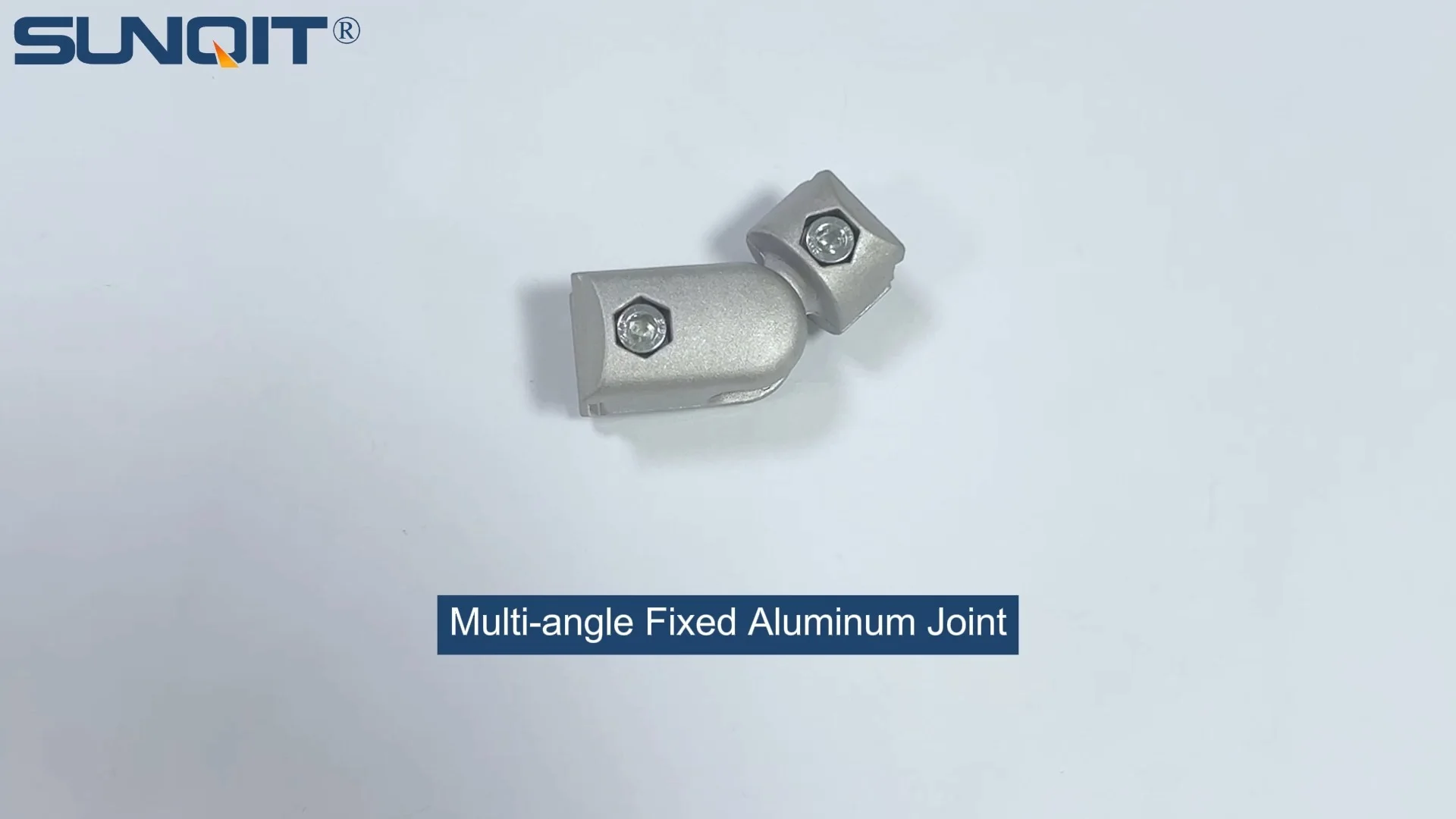
Multi-angle Fixed Aluminum Joint
Aluminum joint pipe connection for two pipe connection and work in mutiple angle.
The Backbone of Efficient Production: Lean Pipe Workbenches
Walk into any manufacturing facility, and you'll likely spot them: sturdy, versatile workbenches where operators assemble components, sort parts, or test products. These are lean pipe workbenches—unassuming yet critical pillars of production assemble lines. Built from lightweight yet durable materials like lean pipe (or aluminum lean pipe) and connected by a variety of joints and accessories, they're designed to adapt to the unique needs of almost any workflow. But here's the thing: not all workbenches are created equal. While some hum along quietly, supporting heavy tools and delicate parts with unwavering stability, others wobble, creak, or even shift under pressure—turning what should be a smooth process into a daily battle with inefficiency.
At first glance, a wobbly workbench might seem like a minor annoyance. Maybe a screwdriver rolls off the edge, or a circuit board slides out of alignment. But over time, these small disruptions add up. They slow down operators, increase the risk of errors, and even compromise safety. The root cause? More often than not, it's the joints holding the workbench together. Joints that flex, loosen, or fail to distribute weight evenly can turn a well-designed workbench into a liability. And in a world where every second counts, that's a problem no production manager can afford to ignore.
The Hidden Cost of a "Wobbly" Workbench
Meet Raj: A night-shift operator at a automotive parts plant. For months, he's worked at a lean pipe workbench that never quite felt "right." Whenever he tightens a bolt with his torque wrench, the entire surface shakes. Last week, he was assembling a sensor module when the bench wobbled mid-twist, causing him to overtighten a screw and crack the plastic housing. The module was scrapped, and Raj spent 20 minutes tracking down a replacement part. Multiply that by 10 operators across three shifts, and suddenly, a "minor" stability issue is costing the plant hours of productivity—and thousands of dollars—in wasted materials and downtime.
Raj's story isn't unique. Instability in lean pipe workbenches manifests in ways that go beyond frustration. Here's how it impacts your operation:
- Slower Workflows: Operators compensate for wobble by moving more cautiously. Reaching for tools, placing parts, or using precision equipment takes extra time when the surface beneath them isn't steady.
- Quality Control Issues: In delicate tasks—like electronics assembly or medical device production—even a small shift can misalign components, leading to defects that require rework or scrapping.
- Safety Risks: A workbench that shifts unexpectedly increases the chance of slips, trips, or falls. Heavy tools or sharp objects falling from an unstable surface can cause injuries.
- Frequent Repairs: Loose joints require constant tightening. Over time, this wear and tear shortens the lifespan of the entire workbench, forcing early replacements.
The good news? There's a solution hiding in plain sight: the multi-angle fixed aluminum joint. This unassuming component is quietly revolutionizing how lean pipe workbenches are built, turning instability from a daily headache into a thing of the past.

Introducing the Multi-Angle Fixed Aluminum Joint: Stability Redefined
Let's get technical—without the jargon. The multi-angle fixed aluminum joint is exactly what it sounds like: a connector, crafted from high-grade aluminum alloy, designed to join lean pipes (or aluminum pipes) at multiple angles while locking them into a rigid, immovable position. Unlike generic plastic joints that flex or single-angle steel joints that limit your design, this joint is a master of versatility and strength.
What Makes It Different?
First, the material: Aluminum. Not just any aluminum, but a corrosion-resistant alloy that balances lightweight flexibility with impressive tensile strength. This means the joint can handle heavy loads without adding unnecessary bulk to your workbench. Second, the design: Inside the joint, precision-machined grooves and teeth grip the lean pipe tightly when secured with a bolt. It's like a vice that never loosens—once locked, the pipes stay aligned, even under repeated stress.
But the real magic is in the "multi-angle" part. Traditional joints often limit you to 90° angles, forcing workbenches into boxy, one-size-fits-all shapes. The multi-angle fixed aluminum joint, however, accommodates angles from 30° to 135°, letting you build workbenches with sloped surfaces (for easier part sliding), angled shelves (to maximize vertical space), or custom bends (to fit around machinery). And because it's fixed, there's no play or rotation—unlike rotatory joints, which are great for adjustable structures but risky for stationary workbenches.
Imagine building a workbench with a 45° angled shelf for tools, a 60° slope for rolling parts onto the main surface, and a 90° frame for stability. With a standard joint, this would require hacksawing pipes to fit or using fragile adapters. With the multi-angle fixed aluminum joint? It's as simple as sliding the pipes into the joint, tightening the bolts, and knowing they'll stay put.

How It Solves the Stability Crisis: Engineering Behind the Strength
Stability isn't just about "feeling solid"—it's about physics. When you place a 50kg tool on a workbench, the weight travels through the pipes and into the joints. If a joint can't distribute that weight evenly, stress (concentrates) at weak points, causing bending or loosening. The multi-angle fixed aluminum joint addresses this with three key engineering features:
1. Load Distribution: Spreading the Weight, Not the Stress
Unlike plastic joints that compress under load or single-point steel joints that transfer weight to a single bolt, the multi-angle aluminum joint uses a multi-point contact system. The internal teeth grip the pipe at multiple points around its circumference, spreading the load evenly. This means even if you place a heavy object off-center, the joint won't twist or bend—it distributes the weight across the entire connection, keeping the pipe stable.
2. Rigidity: No "Give" in the Connection
Aluminum's natural rigidity is amplified by the joint's precision manufacturing. Every groove, tooth, and bolt hole is machined to tight tolerances, ensuring a snug fit between the joint and the pipe. There's no gap for movement, no "play" that develops over time. Even after months of daily use—with operators leaning on the bench, tools being dropped, and parts sliding across the surface—the joint remains locked in place. Compare that to plastic joints, which can warp in high temperatures or degrade from chemical exposure, or low-quality steel joints that rust and loosen.
3. Resistance to Wear: Built to Outlast the Workbench
Production floors are harsh environments. Dust, oil, and constant vibration take a toll on equipment. The multi-angle fixed aluminum joint is built to withstand this abuse. Its aluminum alloy resists corrosion, so even in humid or chemical-heavy settings (like electronics manufacturing, where ESD workbenches are common), it won't rust or degrade. The bolts are made from hardened steel, preventing stripping or rounding, and the teeth on the joint's interior are designed to bite deeper into the pipe over time, not wear down. In short, this joint isn't just stable today—it will stay stable for years.

Beyond the Joint: Complementary Accessories for Maximum Stability
A great joint is just one piece of the puzzle. To build a truly stable lean pipe workbench, you need to pair the multi-angle fixed aluminum joint with high-quality aluminum profile accessories that enhance its performance. Here are a few key components that work hand-in-hand with the joint:
Aluminum Guide Rails: Keeping Parts (and Pipes) on Track
Aluminum guide rails (like aluminum guide rail A or B) are often mounted to workbench surfaces to guide parts along a specific path. When connected to the frame using multi-angle joints, they add lateral stability—preventing the workbench from swaying side-to-side. For example, if you're using a roller track to slide parts from a shelf to the assembly area, mounting the track to guide rails secured with multi-angle joints ensures the track stays aligned, even when heavy parts roll over it.
Roller Track: Smooth Movement, No Shaking
Roller track (and roller track accessories like placon mounts) is a staple in lean systems, allowing parts to glide across surfaces with minimal effort. But if the track itself is mounted to a wobbly frame, parts can get stuck or jump the rails. By using multi-angle joints to secure the track's supports, you create a rigid base that keeps the rollers aligned. This is especially critical for plastic roller track guide rails (yellow or grey), which are lightweight and prone to bending if not properly supported.
Caster Accessories: Stability Even on the Move
Some workbenches need to be mobile, using caster wheels to move between stations. But mobility often comes at the cost of stability—until now. By pairing heavy-duty casters with caster accessories like fixed plates and anti-slip leveling feet (secured with multi-angle joints), you can lock the workbench in place when stationary, preventing it from rolling or shifting. When you need to move it, simply unlock the casters—the joints keep the frame rigid, so the workbench doesn't flex during transport.
Joint Comparison: Why Multi-Angle Aluminum Beats the Rest
Not sure if the multi-angle fixed aluminum joint is right for your workbench? Let's compare it to other common joint types, so you can see the difference in stability, durability, and versatility:
| Joint Type | Material | Angles Supported | Load Capacity (kg) | Stability Rating (1-10) | Best For |
|---|---|---|---|---|---|
| Multi-Angle Fixed Aluminum Joint | Aluminum Alloy | 30°–135° | 150–200 | 9 | Stationary workbenches, heavy-load applications, custom layouts |
| Standard Lean Pipe Joint (Plastic) | ABS Plastic | 90° only | 50–80 | 5 | Light-duty, temporary structures, low-budget setups |
| Rotatory Lean Pipe Joint | Steel/Plastic | 360° (adjustable) | 80–120 | 6 | Adjustable shelves, mobile carts, variable-angle structures |
| Stainless Steel Pipe Series Joint | Stainless Steel | 90° only | 200–250 | 8 | Heavy loads, corrosive environments, fixed 90° layouts |
As the table shows, the multi-angle fixed aluminum joint balances load capacity, stability, and versatility better than most alternatives. It outperforms plastic joints in strength, beats rotatory joints in rigidity, and offers more layout flexibility than stainless steel 90° joints. For lean pipe workbenches that need to be both strong and adaptable, it's the clear winner.
Real-World Results: From Wobbly to Rock-Solid
Case Study: Precision Electronics Plant
A mid-sized electronics manufacturer was struggling with high defect rates on their circuit board assembly line. After investigating, they found that 30% of defects were caused by workbench instability—components shifting during soldering or testing. The plant replaced the plastic joints on 12 workbenches with multi-angle fixed aluminum joints, paired with aluminum guide rails and roller track secured with the same joints. Within 2 weeks, defect rates dropped by 22%, and operators reported a 15% faster assembly time. "It's like night and day," said the plant manager. "The workbenches don't move an inch, even when we're using heavy testing equipment."
This isn't an isolated success story. From automotive plants to medical device facilities, switching to multi-angle fixed aluminum joints has led to measurable improvements in productivity, quality, and operator satisfaction. And it's not just about stability—it's about peace of mind. When operators trust their workbench won't let them down, they can focus on what matters: building great products.
Choosing the Right Supplier: Quality Matters
Not all multi-angle fixed aluminum joints are created equal. To get the stability and durability you need, you'll want to partner with a reputable lean pipe supplier (or aluminum profile supplier) that prioritizes quality. Here's what to look for:
- Material Grade: Ask for joints made from 6061 or 6063 aluminum alloy—these are the gold standard for strength and corrosion resistance.
- Precision Machining: Look for suppliers that use CNC machining to ensure tight tolerances. Loose or poorly machined joints will still wobble, even if they're made of aluminum.
- Testing: Reputable suppliers test their joints for load capacity and durability, providing data to back up their claims.
- Complementary Accessories: Choose a supplier that offers aluminum profile accessories (like guide rails, roller track, and caster accessories) designed to work with their joints. Mismatched parts can undermine stability.
Remember: A cheap joint might save you money upfront, but it will cost you more in repairs, downtime, and defects down the line. Investing in high-quality components from a trusted lean pipe workbench supplier is an investment in your production line's long-term efficiency.
Conclusion: Stability as a Foundation for Lean Success
Lean manufacturing is all about eliminating waste—waste of time, waste of materials, waste of effort. And one of the biggest hidden wastes is instability in your workbenches. What seems like a minor annoyance is actually a silent productivity killer, slowing down operators, increasing defects, and risking safety.
The multi-angle fixed aluminum joint isn't just a better connector—it's a solution to this waste. By combining strength, versatility, and durability, it transforms lean pipe workbenches from wobbly liabilities into rock-solid assets. Paired with the right aluminum profile accessories, roller track, and caster components, it creates a lean system that works with your operators, not against them.
So, the next time you look at your production line, take a closer look at those workbenches. Are they supporting your team, or holding them back? With the multi-angle fixed aluminum joint, you can build a foundation that doesn't just meet your needs today—but grows with them tomorrow. After all, in lean manufacturing, stability isn't a luxury—it's the first step toward excellence.