- Company Articles
- Products and Technology
- Product knowledge
- Multi-Angle Fixed Aluminum Joint in Mechanical Manufacturing: Structural Support

Multi-Angle Fixed Aluminum Joint in Mechanical Manufacturing: Structural Support
Related Product
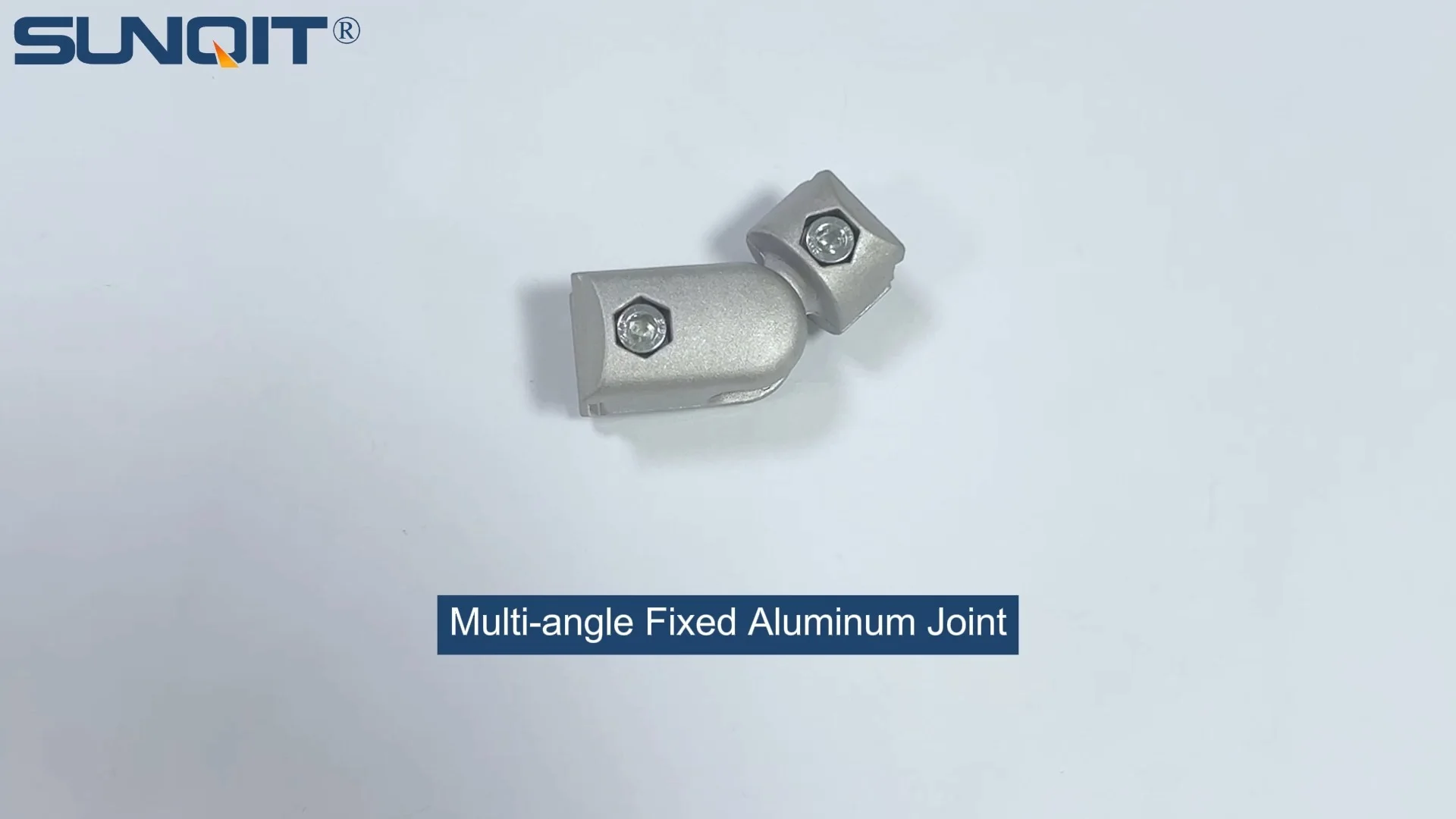
Multi-angle Fixed Aluminum Joint
Aluminum joint pipe connection for two pipe connection and work in mutiple angle.
In the bustling world of mechanical manufacturing, where precision and efficiency are the cornerstones of success, there's a silent hero working behind the scenes: structural components. From the workbench where an assembler meticulously fits parts to the conveyor belts that move materials across the factory floor, every element relies on a foundation of sturdy, reliable connections. Among these, the multi-angle fixed aluminum joint stands out as a game-changer, redefining how manufacturers build, adapt, and optimize their production systems. It's not just a piece of hardware—it's the glue that holds modern manufacturing together, blending strength, flexibility, and innovation to meet the demands of today's fast-paced industrial landscape.
Understanding Multi-Angle Fixed Aluminum Joints: More Than Just Connections
At first glance, a multi-angle fixed aluminum joint might seem like a simple component: a small, often angular piece of metal designed to link tubes or profiles. But dig deeper, and you'll discover a marvel of engineering. These joints are precision-crafted to connect aluminum extrusion profiles at various angles—30°, 45°, 90°, 135°, and more—without the need for welding, drilling, or complex tools. Their "fixed" nature ensures stability once assembled, while the "multi-angle" capability allows for the creation of intricate, custom structures tailored to specific manufacturing needs.
Imagine a workbench in an electronics factory: its frame might consist of aluminum extrusion profiles joined at 90° angles for the legs and shelves, but perhaps a 45° brace is added for extra stability, or a 135° joint to attach a side-mounted tool rack. This versatility is what makes multi-angle fixed aluminum joints indispensable. They transform rigid, one-size-fits-all structures into dynamic, adaptable systems that can evolve with changing production requirements. Whether it's a lightweight material rack in a warehouse or a heavy-duty assembly line workstation, these joints provide the flexibility to design without limits.
Design and Engineering: The Art of Balancing Form and Function
The magic of multi-angle fixed aluminum joints lies in their design. Engineers start with the end goal in mind: creating a connection that is strong enough to support heavy loads, precise enough to ensure structural alignment, and simple enough to assemble quickly. To achieve this, they focus on three key principles: material selection, geometric precision, and user-friendly assembly.
Material choice is critical. Aluminum is the star here, and for good reason. It offers an unbeatable combination of strength and lightness—strong enough to support the weight of tools, materials, and even machinery, yet light enough to make handling and assembly easy for workers. Most joints are made from high-grade aluminum alloys, such as 6061 or 6063, which are known for their corrosion resistance, durability, and machinability. This ensures the joints can withstand the harsh conditions of a manufacturing environment, from exposure to oils and coolants to the wear and tear of daily use.
Geometric precision is another cornerstone. Each joint is engineered with exact angles and tolerances, ensuring a snug fit with aluminum extrusion profiles. The internal structure often includes grooves, notches, or threaded holes that align perfectly with the T-slots found on most aluminum profiles, allowing for secure attachment with bolts or screws. This precision eliminates wobble or misalignment, which could compromise the integrity of the entire structure. For example, a 90° joint designed for a 40x40mm aluminum profile will have dimensions that match the profile's T-slot spacing exactly, ensuring a tight, rattle-free connection.
Perhaps most importantly, these joints are designed with the user in mind. Gone are the days of needing a team of welders or specialized technicians to build a simple workbench. With multi-angle fixed aluminum joints, assembly is as straightforward as sliding the joint onto the profile, aligning it to the desired angle, and tightening a few screws. This simplicity reduces setup time, minimizes labor costs, and empowers workers to make on-the-spot adjustments—key benefits in a manufacturing world that values agility.

Materials Matter: Why Aluminum Stands Out
To truly appreciate multi-angle fixed aluminum joints, it's essential to understand why aluminum is the material of choice. In manufacturing, every decision comes down to trade-offs: strength vs. weight, cost vs. durability, performance vs. ease of use. Aluminum excels in all these areas, making it ideal for structural joints.
First, strength-to-weight ratio. Aluminum is about one-third the weight of steel, yet it offers comparable strength for many applications. This means structures built with aluminum joints are easier to move, install, and reconfigure—no need for heavy lifting equipment or permanent floor fixtures. For a small manufacturing shop, this translates to lower overhead costs and greater flexibility to rearrange workflows as projects change. For larger facilities, it reduces strain on floor supports and makes it possible to create multi-level structures, like mezzanine workstations, without excessive weight.
Corrosion resistance is another advantage. Unlike steel, aluminum naturally forms a protective oxide layer when exposed to air, preventing rust and degradation. This makes aluminum joints ideal for use in environments where moisture, chemicals, or temperature fluctuations are common—think food processing plants, automotive factories with coolant systems, or outdoor storage facilities. Unlike steel, which requires painting or coating to resist corrosion, aluminum joints maintain their integrity with minimal maintenance, saving time and money in the long run.
Finally, sustainability plays a role. Aluminum is 100% recyclable, with no loss of quality during the recycling process. For manufacturers aiming to reduce their environmental footprint, this is a significant plus. When a production line is retired or reconfigured, aluminum joints and profiles can be melted down and repurposed, reducing waste and supporting a circular economy. It's a small detail, but one that aligns with the growing global focus on green manufacturing practices.

Key Features That Redefine Structural Support
What sets multi-angle fixed aluminum joints apart from traditional connection methods? Let's break down their standout features:
Tool-Free Assembly: Most multi-angle fixed aluminum joints use set screws or clamping mechanisms to attach to aluminum extrusion profiles. A simple hex key or wrench is all that's needed to secure them, eliminating the need for welding torches, drills, or specialized training. This not only speeds up assembly but also reduces the risk of errors—even a new employee can put together a sturdy structure with minimal instruction.
Modularity: Because these joints are designed to work with standard aluminum extrusion profiles, they support a modular approach to manufacturing. Need to add a shelf to a workbench? Just slide a new profile into the existing joints. Want to reconfigure a material rack to fit taller boxes? Loosen the screws, adjust the angles, and retighten. This modularity is a cornerstone of lean manufacturing, allowing teams to adapt quickly to new products, higher demand, or process improvements without rebuilding from scratch.
Load-Bearing Strength: Don't let their lightweight appearance fool you—multi-angle fixed aluminum joints are built to handle heavy loads. A typical joint can support hundreds of kilograms when paired with thick-walled aluminum extrusion profiles, making them suitable for everything from small tool carts to large assembly line workstations. Engineers test these joints rigorously, simulating years of use under varying weights to ensure they meet industry standards for safety and reliability.
Precision Alignment: In manufacturing, even a fraction of a degree of misalignment can lead to faulty products or inefficient workflows. Multi-angle fixed aluminum joints are machined to tight tolerances, ensuring that connected profiles stay perfectly aligned. This precision is especially critical in applications like conveyor systems, where misaligned rollers can cause jams, or in electronics assembly, where delicate components require stable work surfaces.

Applications Across Industries: Where These Joints Make a Difference
Multi-angle fixed aluminum joints are not limited to one type of manufacturing—their versatility allows them to shine across industries. Let's explore a few key applications where they're transforming operations:
Automotive Manufacturing: In auto plants, where production lines must handle heavy parts like engines and chassis, durability is non-negotiable. Multi-angle fixed aluminum joints are used to build robust workstations, material racks, and even custom tool holders. For example, a workstation designed to hold a car door during assembly might use 90° joints for the main frame, 45° braces for stability, and 135° joints to attach a rotating tool tray. The ability to reconfigure these workstations quickly is invaluable, as auto manufacturers frequently switch between models or update production processes.
Electronics and ESD-Protected Environments: Electronics manufacturing demands precision and protection against electrostatic discharge (ESD), which can damage sensitive components. Multi-angle fixed aluminum joints are often paired with ESD-safe aluminum extrusion profiles to build workbenches and material racks that dissipate static electricity. These joints ensure the structure remains grounded, while their modular design allows for easy integration of ESD mats, ionizers, and tool organizers—creating a safe, efficient workspace for assembling circuit boards, smartphones, or medical devices.
Logistics and Warehousing: In warehouses and distribution centers, speed and organization are key. Multi-angle fixed aluminum joints are used to build flow racks, conveyor systems, and turnover trolleys that optimize material handling. A flow rack, for instance, might use 30° joints to angle shelves downward, allowing boxes to slide forward as they're unloaded, reducing the need for manual lifting. Meanwhile, lightweight yet sturdy trolleys built with these joints can be customized to carry specific loads, from small parts bins to large pallets, improving efficiency and reducing worker fatigue.
Aerospace and Defense: In industries where precision and weight savings are critical, multi-angle fixed aluminum joints are a natural fit. Aerospace manufacturers use them to build assembly jigs, test fixtures, and storage racks for delicate components like turbine blades or avionics systems. The joints' lightweight nature helps reduce the overall weight of these structures, making them easier to move in tight spaces, while their strength ensures they can support the precise alignment needed for aerospace-grade manufacturing.
Comparing Joint Technologies: Why Multi-Angle Aluminum Joints Lead the Pack
To truly understand the value of multi-angle fixed aluminum joints, it helps to compare them with traditional connection methods. Below is a breakdown of how they stack up against common alternatives:
| Feature | Multi-Angle Fixed Aluminum Joints | Steel Welded Joints | Plastic Snap-Fit Joints | Traditional Threaded Joints |
|---|---|---|---|---|
| Installation Time | 5–10 minutes per joint (tool-free assembly) | 30–60 minutes per joint (requires welding equipment and skill) | 2–5 minutes per joint (simple snap-on, but limited strength) | 15–20 minutes per joint (requires drilling, tapping, and threading) |
| Flexibility/Reconfigurability | High—easily disassembled and reassembled at different angles | Low—permanent once welded; requires cutting to reconfigure | Medium—can be snapped apart, but may wear out with reuse | Low—threads can strip; difficult to adjust angles |
| Load Capacity | High (supports 100–500+ kg depending on size and profile) | Very high (supports 500+ kg, but adds significant weight) | Low (supports up to 50 kg; prone to breaking under stress) | Medium (supports 50–200 kg; limited by thread strength) |
| Maintenance | Low—no rust; occasional tightening of screws | High—prone to rust; requires repainting and weld repairs | Medium—prone to cracking or warping over time | Medium—threads may corrode; requires lubrication |
| Cost (Long-Term) | Moderate upfront, low over time (reusable, low maintenance) | Low upfront, high over time (expensive to reconfigure, maintain) | Low upfront, high over time (needs frequent replacement) | Moderate upfront, moderate over time (replacement parts needed) |
Real-World Impact: Case Studies in Efficiency and Reliability
Case Study 1: Automotive Supplier Cuts Assembly Time by 30% with Aluminum Joints
A mid-sized automotive parts supplier was struggling with outdated, welded steel workstations. When they introduced a new line of electric vehicle components, their existing workbenches were too rigid to accommodate the larger parts and new tools required. The company turned to multi-angle fixed aluminum joints and aluminum extrusion profiles to rebuild their workstations. The results were striking: assembly time for each workstation dropped from 8 hours (with welding) to just 2.5 hours. The modular design also allowed them to add adjustable shelves and tool holders, reducing the time assemblers spent searching for tools by 20%. Within six months, the supplier had recouped the investment in the new joints through labor savings and increased production output.
Case Study 2: Electronics Manufacturer Improves ESD Protection and Product Quality
An electronics manufacturer producing smartphone circuit boards was facing issues with static damage, leading to a 5% defect rate. Their old workbenches, made from wood and plastic, offered little ESD protection, and their material racks were difficult to clean, leading to dust buildup on sensitive components. They replaced these with ESD-safe workbenches and racks built using multi-angle fixed aluminum joints and conductive aluminum extrusion profiles. The joints ensured the structures were fully grounded, while the smooth aluminum surfaces were easy to wipe clean. Within three months, the defect rate dropped to 0.5%, saving the company hundreds of thousands of dollars in wasted materials and rework. Employees also reported that the adjustable workstations reduced fatigue, as they could now customize the height and angle of their work surfaces.
Case Study 3: Logistics Warehouse Optimizes Space with Lean System Racks
A large logistics warehouse was struggling with inefficient use of space, as their fixed steel racks couldn't be adjusted to fit varying box sizes. They implemented a lean system using material racks built with multi-angle fixed aluminum joints. The racks could be easily reconfigured—adding or removing shelves, adjusting heights, or changing angles—to accommodate different products. For example, during peak holiday seasons, they added extra shelves to hold smaller packages, then folded them down when storing larger items in slower months. The result was a 15% increase in storage capacity without expanding the warehouse footprint. Workers also noted that the lighter aluminum racks were easier to move, reducing the risk of back injuries during reconfiguration.
The Role in Lean Manufacturing: Aligning with Modern Production Principles
Lean manufacturing, with its focus on eliminating waste, continuous improvement, and customer value, is the backbone of modern production. Multi-angle fixed aluminum joints align perfectly with these principles, offering tools to support key lean practices like 5S (Sort, Set in Order, Shine, Standardize, Sustain), just-in-time (JIT) production, and kaizen (continuous improvement).
Take 5S, for example: "Set in Order" requires that tools and materials are stored in a logical, accessible way. Multi-angle fixed aluminum joints allow teams to build custom tool racks and shadow boards, ensuring every tool has a designated place. When processes change, the racks can be quickly reorganized—no need to buy new storage solutions. Similarly, JIT production relies on having materials available exactly when needed, and no earlier. Modular material racks built with these joints can be positioned right at the point of use, reducing wait times and transportation waste.
Kaizen, or continuous improvement, is perhaps where these joints shine brightest. In a traditional manufacturing setup, suggesting a change to a workstation might require approval from engineering, a budget allocation, and weeks of lead time for custom fabrication. With multi-angle fixed aluminum joints, frontline workers—who know the process best—can make small, iterative improvements themselves. A line worker might add a shelf to a workstation to reduce bending, or adjust the angle of a conveyor to prevent jams, all in a matter of hours. This empowers employees and accelerates the pace of improvement, turning the factory floor into a hub of innovation.
Future Trends: Innovations in Aluminum Joint Technology
As manufacturing evolves, so too will multi-angle fixed aluminum joints. Here are a few trends shaping their future:
Integration with Smart Manufacturing: The rise of Industry 4.0 is bringing sensors and connectivity to every corner of the factory. Future aluminum joints may include built-in load sensors that monitor weight distribution and send alerts if a structure is overloaded, preventing failures before they occur. Imagine a material rack that automatically notifies maintenance when a shelf is bearing too much weight, or a workstation that adjusts its height based on sensor data about the operator's posture.
Advanced Alloys for Higher Strength: Material science is constantly pushing the boundaries of aluminum performance. New alloys with higher tensile strength and corrosion resistance are in development, allowing joints to support even heavier loads while remaining lightweight. These alloys could open up new applications, such as using aluminum joints in heavy machinery or outdoor infrastructure.
3D Printing for Custom Joints: While most multi-angle fixed aluminum joints are mass-produced, 3D printing may soon allow for on-demand, custom joints. Manufacturers with unique angle requirements or specialized applications could design a joint, print it in aluminum using additive manufacturing, and have it ready for use in hours. This would reduce lead times and open the door to even more creative structural designs.
Sustainability Enhancements: As companies strive to reduce their carbon footprints, aluminum joint manufacturers are exploring ways to make production more eco-friendly. This includes using recycled aluminum in joint production, optimizing designs to reduce material waste, and developing biodegradable packaging for shipping. Some suppliers are even offering take-back programs, where old joints are recycled into new ones, closing the loop on sustainability.
Conclusion: The Quiet Revolution in Structural Support
Multi-angle fixed aluminum joints may not grab headlines like robotics or AI-driven manufacturing systems, but their impact is no less profound. They are the unsung heroes of the factory floor, enabling manufacturers to build stronger, more flexible, and more efficient production systems. From reducing assembly time and costs to improving product quality and worker satisfaction, these joints are transforming the way we make things—one connection at a time.
As manufacturing continues to evolve, driven by trends like automation, customization, and sustainability, the demand for versatile, reliable structural components will only grow. Multi-angle fixed aluminum joints are poised to lead this charge, blending time-tested engineering with cutting-edge innovation to meet the challenges of tomorrow. They are more than just parts—they are the foundation of a smarter, more adaptable, and more productive manufacturing future.