- Company Articles
- Products and Technology
- Product knowledge
- Multi-Angle Fixed Aluminum Joint in Mechanical Repair: Temporary Solutions

Multi-Angle Fixed Aluminum Joint in Mechanical Repair: Temporary Solutions
Related Product
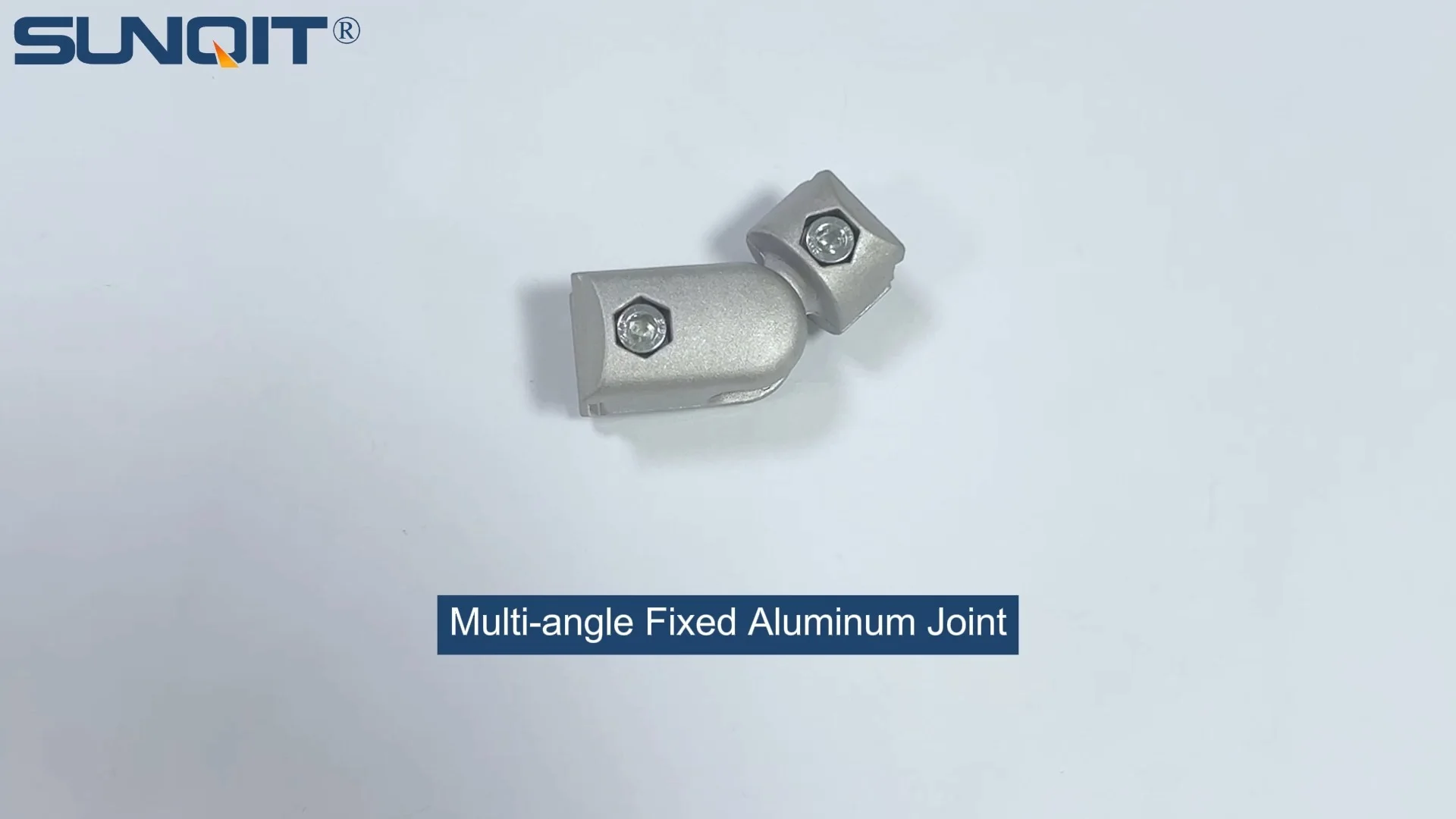
Multi-angle Fixed Aluminum Joint
Aluminum joint pipe connection for two pipe connection and work in mutiple angle.
In the world of mechanical repair—whether it's a bustling auto shop, a busy manufacturing floor, or a small workshop—downtime is the enemy. A broken workbench, a misaligned roller track, or a wobbly material rack can bring operations to a grinding halt, costing time, money, and frustration. When equipment fails unexpectedly, waiting for permanent replacements or custom fabrication simply isn't an option. That's where temporary solutions step in: quick, adaptable fixes that keep the workflow moving until a lasting repair is possible. And in this realm, one tool stands out as a quiet hero: the multi-angle fixed aluminum joint. Paired with aluminum pipe and aluminum profile, this unassuming component transforms how mechanics, technicians, and facility managers tackle temporary repairs, turning chaos into order with surprising ease.
The Frustration of "Good Enough": Why Traditional Temporary Fixes Fall Short
Let's be honest: when something breaks in the middle of a job, our first instinct is often to grab the closest "solution"—duct tape, zip ties, a handful of screws, or even a well-placed hammer. We've all been there. A workbench shelf sags under the weight of tools, so we prop it up with a scrap piece of wood. A roller track jams because a section is bent, so we yank it straight and hope for the best. But these makeshift fixes rarely hold up. Duct tape loses adhesion in heat or oil. Zip ties snap under pressure, sending parts crashing to the floor. Scrap wood splinters, leaving sharp edges that pose safety risks. And worst of all, these quick fixes often cause more damage in the long run—scratched surfaces, warped frames, or weakened structures that make permanent repairs even harder.
Take Maria, a lead technician at a mid-sized electronics assembly plant. Last quarter, a critical workbench in her production line collapsed when a weld gave way. With a rush order due in 48 hours, she didn't have time to wait for a new bench. Her team jury-rigged a replacement using plywood, cinder blocks, and zip ties. It worked—sort of. The shelf wobbled, tools slid off, and by the end of the day, one of the cinder blocks had cracked, nearly injuring a coworker. "We spent more time adjusting the 'fix' than we did on the actual assembly," Maria recalls. "I knew there had to be a better way."
Meet the Multi-Angle Fixed Aluminum Joint: Your New Go-To for Temporary Repairs
Enter the multi-angle fixed aluminum joint—a unassuming but powerful component that's changing the game for temporary mechanical repairs. At first glance, it looks like a simple metal connector, but its design is deceptively clever. Made from lightweight, corrosion-resistant aluminum, these joints are engineered to connect aluminum pipes or aluminum profiles at a range of fixed angles: 30°, 45°, 90°, 135°, even 180°. Unlike one-size-fits-all clamps or rigid brackets, they offer the flexibility to build custom structures on the fly, whether you're repairing a workbench, reinforcing a roller track, or building a temporary material rack.
What makes them stand out? Their "fixed" nature doesn't mean rigid—rather, once locked into place with a hex key, they create a sturdy, vibration-resistant connection that can handle surprising weight. And because they're made of aluminum, they're light enough to transport easily but strong enough to support tools, parts, or even small machinery. Think of them as building blocks for adults: snap them onto aluminum pipe, adjust the angle, tighten the screw, and you've got a stable framework in minutes.
But the real magic is their compatibility. Pair a multi-angle fixed aluminum joint with standard aluminum pipe (like the 2020 or 3030 series) or aluminum profile, and you've got a modular system that adapts to almost any repair scenario. Need a temporary leg for a workbench? Cut an aluminum pipe to length, attach a 90° joint, and bolt it to the frame. Have a bent roller track? Use 45° joints to realign the sections and reinforce with cross-braces made from aluminum profile. The possibilities are as endless as the angles these joints can handle.

Why Aluminum Pipe and Aluminum Profile Are the Perfect Partners
A great joint is only as good as the materials it connects, and that's where aluminum pipe and aluminum profile shine. Aluminum is a dream for temporary repairs: it's lightweight (so you can carry pieces to the repair site without a forklift), strong (able to support 50-100kg per linear meter, depending on the pipe thickness), and resistant to rust and corrosion—critical in messy workshop environments where oil, coolant, or moisture is common.
Aluminum pipe, often used in lean manufacturing setups, comes in standard diameters (16mm, 28mm, 40mm) that fit perfectly with multi-angle joints. It's easy to cut with a simple pipe cutter or hacksaw, so you can customize lengths on-site. And unlike steel pipe, it won't dent or bend permanently under moderate stress—meaning if your temporary fix takes a knock, you can bend it back into shape and reuse it later.
Aluminum profile, on the other hand, is ideal for more complex structures. With its T-slot design, it lets you attach accessories like brackets, shelves, or roller track guides directly to the profile, no drilling required. Imagine repairing a workbench: use aluminum profile for the frame, connect with multi-angle joints, and slide in a plywood top using T-slot nuts. Done. Need to add a tool rail? Snap on a bracket with a few screws. It's like building with Legos, but for industrial repair.
Together, multi-angle fixed aluminum joints, aluminum pipe, and aluminum profile form a trifecta of versatility. They're not just for temporary fixes, either—many workshops keep a stock of these components on hand for quick reconfigurations, from adjusting a production line layout to building a custom jig for a one-off project. "We used to order custom brackets for every odd job," says Tom, a maintenance supervisor at a furniture factory. "Now, with joints and aluminum pipe, we can build what we need in 20 minutes. It's saved us thousands in fabrication costs."

Case Study: How a Broken Workbench Became a Win for Efficiency
Let's walk through a real-world example of how these components come together. Last year, a mid-sized automotive parts manufacturer faced a crisis: their main assembly workbench—a custom-built steel structure—collapsed when a support beam cracked. With a production deadline looming, the plant manager, Raj, needed a temporary solution fast. Here's how he and his team used multi-angle fixed aluminum joints, aluminum profile, and aluminum pipe to get back on track:
- Assessment: The workbench top was still intact, but the steel frame was beyond repair. They needed a stable base to support the 150kg top and the tools/parts on it.
- Materials Gathered: 4 pieces of 3030 aluminum profile (1.2m long, for legs), 8 multi-angle fixed aluminum joints (90° and 135°), 2 pieces of aluminum pipe (cross-braces), hex keys, and a rubber mallet.
-
Assembly:
- Cut the aluminum profile to match the height of the original bench legs (80cm).
- Attach 90° joints to the top of each leg, facing inward, to support the bench top.
- Add 135° joints midway up the legs, then connect them with aluminum pipe cross-braces for stability (this prevented wobbling).
- Lift the bench top onto the aluminum frame and secure it with T-slot bolts through the joints.
- Result: Total assembly time? 1 hour and 15 minutes. The temporary frame supported the bench top and tools with no sagging, and the team met their deadline. Best of all, when the new steel bench arrived a week later, Raj's team disassembled the aluminum frame and reused the joints and profile to build a temporary material rack in the warehouse.
"I was skeptical at first—aluminum seems too light for heavy work," Raj admits. "But that frame held up for a week with no issues. Now, we keep a kit of joints and pipe in the maintenance closet. It's our secret weapon for emergencies."

How Do Multi-Angle Joints Stack Up Against Traditional Fixes? Let's Compare
Still not convinced these joints are better than your trusty zip ties or duct tape? Let's break down the numbers. The table below compares multi-angle fixed aluminum joints with common temporary repair methods across key factors like load capacity, adjustability, and reusability:
| Repair Method | Max Load Capacity (kg) | Adjustable Angles? | Reusable? | Installation Time (min) | Risk of Damaging Equipment? |
|---|---|---|---|---|---|
| Multi-Angle Fixed Aluminum Joint + Aluminum Pipe | 150-200 (per joint) | Yes (30°-180°) | Unlimited times | 10-15 (simple setup) | Low (no adhesives or sharp edges) |
| Zip Ties | 10-15 (per tie) | No (fixed straight line) | Single-use | 5-10 | High (can cut into surfaces; snap under stress) |
| Duct Tape | 5-10 (depending on tape quality) | Limited (bends but weakens) | Single-use (loses adhesion) | 5 | Medium (residue left behind; fails in heat/oil) |
| Makeshift Clamps | 50-75 (per clamp) | Limited (fixed angles) | Yes, but wear over time | 20-30 (alignment issues) | Medium (can scratch or dent surfaces) |
The data speaks for itself. Multi-angle fixed aluminum joints outperform traditional methods in almost every category, especially when it comes to load capacity and reusability. And while they take a few extra minutes to install, that time is offset by the reduced need for constant readjustments (looking at you, duct tape!).
Pro Tips for Installing Multi-Angle Fixed Aluminum Joints Like a Pro
Even the best tools need the right technique. Here are some insider tips to get the most out of your multi-angle fixed aluminum joints:
- Match Pipe Sizes: Joints are designed for specific pipe/profiles (e.g., 20mm pipe fits 20-series joints). Mismatched sizes lead to loose connections—always check the label!
- Clean the Pipe Ends: Aluminum pipe can have burrs or debris from cutting. A quick wipe with a rag (or a pass with sandpaper) ensures the joint seats snugly.
- Don't Overtighten: Use a hex key to tighten the joint screw until it's snug, but stop before you feel resistance. Overtightening can strip the threads or warp the joint.
- Test Before Trusting: After assembly, give the structure a gentle shake or apply light pressure. If it shifts, check the joint tightness or add cross-braces.
- Label Your Joints: If you're building a complex structure (like a multi-tiered rack), label joints with angles (e.g., "90° front left") to avoid confusion during disassembly/reassembly.
And remember: safety first. Always wear gloves when handling aluminum pipe (edges can be sharp), and never exceed the joint's load capacity. Most standard joints are rated for 100-150kg per connection—check the manufacturer's specs to be sure.
Beyond Temporary: How These Joints Are Shaping the Future of Repair
Multi-angle fixed aluminum joints aren't just for emergencies—they're part of a larger shift toward modular, adaptable manufacturing and repair. In today's fast-paced workshops, where production needs change overnight, the ability to quickly reconfigure workspaces or repair equipment without waiting for custom parts is a competitive advantage. These joints bridge the gap between "temporary" and "permanent," offering solutions that are sturdy enough for long-term use but flexible enough to be repurposed when needs change.
Sustainability is another bonus. Unlike single-use zip ties or disposable clamps, aluminum joints and pipe can be reused dozens of times, reducing waste. "We used to throw away so much scrap wood and broken clamps," says Maria, the electronics plant technician. "Now, our repair kit is like a set of building blocks—we just rearrange them for each new problem."
Looking ahead, as more workshops adopt lean manufacturing and Industry 4.0 principles, modular tools like multi-angle joints will become even more critical. Imagine a production line that can be reconfigured in hours (not days) using these joints, or a repair team that can 3D-print custom brackets to pair with aluminum profiles—all while keeping operations running. The future of mechanical repair isn't just about fixing what's broken; it's about building systems that adapt before breakdowns happen.
Final Thoughts: When "Temporary" Needs to Be Trustworthy
In the world of mechanical repair, downtime isn't just inconvenient—it's costly. Whether you're fixing a workbench in an auto shop, realigning a roller track in a warehouse, or building a temporary material rack in a factory, you need solutions that are quick, strong, and reliable. Multi-angle fixed aluminum joints, paired with aluminum pipe and aluminum profile, deliver on all three counts. They're the quiet heroes that turn chaos into productivity, one angle at a time.
So the next time your equipment breaks and you reach for the duct tape, pause. Ask yourself: Is this fix going to last the shift? Or will it cost me more time in the long run? With a kit of multi-angle joints and aluminum pipe in your corner, you'll never have to settle for "good enough" again. After all, in mechanical repair, the best temporary solution is the one that feels permanent—until you need to build something new.