- Company Articles
- Products and Technology
- Product knowledge
- Multi-Angle Fixed Aluminum Joint in Pharmaceutical Manufacturing: Cleanliness

Multi-Angle Fixed Aluminum Joint in Pharmaceutical Manufacturing: Cleanliness
Related Product
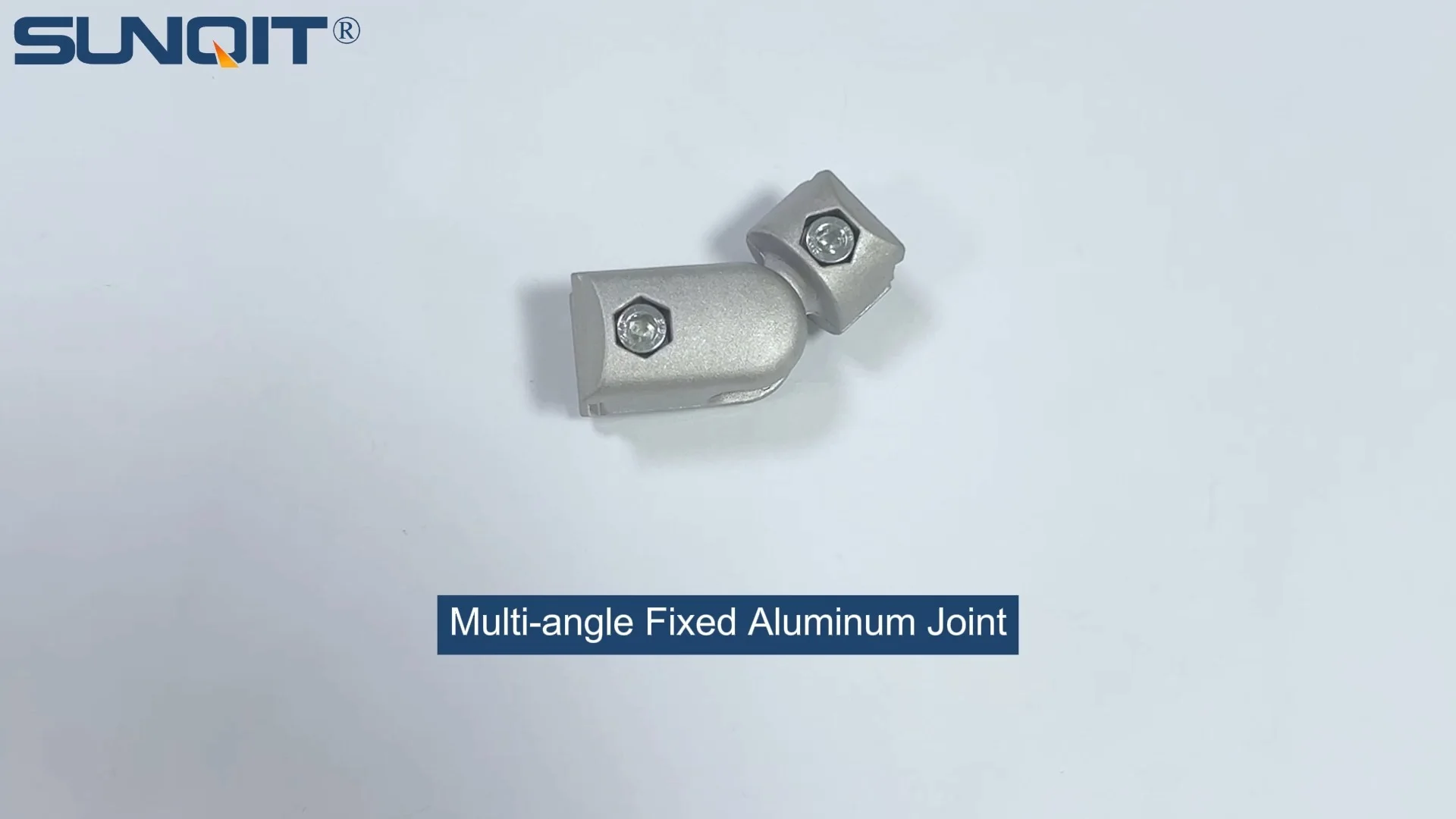
Multi-angle Fixed Aluminum Joint
Aluminum joint pipe connection for two pipe connection and work in mutiple angle.
Introduction: The Critical Role of Cleanliness in Pharma Manufacturing
In the world of pharmaceutical manufacturing, where the smallest particle or microbial contaminant can compromise a batch of life-saving medications, cleanliness isn't just a priority—it's a non-negotiable. Every surface, every piece of equipment, and every workflow must adhere to stringent regulatory standards set by bodies like the FDA, EMA, and WHO. From sterile production lines to contamination-free packaging areas, the quest for a "cleanroom-ready" environment drives every decision, including the tools and systems that form the backbone of daily operations.
But here's the challenge: pharmaceutical facilities are also dynamic spaces. Production needs shift, new drugs require specialized workflows, and lean principles demand efficiency without waste. Traditional fixed equipment—welded steel workbenches, rigid material racks, or cumbersome conveyor systems—often falls short. These systems are hard to reconfigure, prone to harboring dirt in weld seams or crevices, and can become breeding grounds for bacteria if not meticulously maintained. So, how do manufacturers balance the need for flexibility with the uncompromising standards of cleanliness?
Enter the world of modular lean systems, built on components like aluminum profiles, aluminum pipe accessories, and precision-engineered joints. Among these, the multi-angle fixed aluminum joint stands out as a quiet hero. Designed to connect aluminum pipes and profiles at various angles without welding, this unassuming component plays a pivotal role in creating workspaces that are both adaptable and inherently clean. In this article, we'll explore how this joint transforms pharmaceutical manufacturing floors, ensuring that cleanliness and efficiency coexist seamlessly.
Lean Systems in Pharma: Beyond Efficiency—A Foundation for Cleanliness
Lean manufacturing isn't just about cutting costs or speeding up production—it's about creating systems that eliminate waste, including waste from contamination, rework, or inefficient cleaning. In pharmaceutical settings, lean principles take on an added layer of importance: a disorganized workstation with cluttered surfaces or hard-to-reach corners isn't just slow; it's a compliance risk. Auditors don't just check for proper documentation—they inspect the tools and environments where drugs are made.
This is where modular lean systems shine. Unlike traditional fixed infrastructure, these systems use interchangeable components—think aluminum profiles, workbenches, and material racks—that can be reconfigured in hours, not days. Need to adjust a workbench height for a new production line? Swap out a few joints. Expand a material rack to accommodate larger batches? Add a section of aluminum pipe with compatible accessories. This flexibility reduces downtime and ensures that the workspace evolves with production needs.
But flexibility alone isn't enough. For these systems to thrive in pharma, they must also be inherently clean. That's where material choice becomes critical. Steel, while strong, is prone to rust if not properly coated, and welded joints create tiny crevices where dust, moisture, and microbes can hide. Plastic, though lightweight, may degrade under harsh cleaning chemicals or high temperatures. Aluminum, however, checks both boxes: it's corrosion-resistant, non-porous, and its smooth surface leaves nowhere for contaminants to cling. When paired with the right joints—like the multi-angle fixed aluminum joint—aluminum-based lean systems become a cornerstone of clean manufacturing.

Aluminum Profiles and Accessories: Why Material Matters for Cleanliness
Aluminum has long been a favorite in industries where cleanliness is paramount—think food processing, semiconductor manufacturing, and now pharmaceuticals. Its popularity stems from a unique set of properties that make it ideal for clean environments. First, aluminum is naturally resistant to corrosion. Unlike steel, it doesn't rust when exposed to moisture or cleaning agents, which is essential in facilities where daily sanitization is routine. Second, it's non-porous. Unlike wood or some plastics, aluminum doesn't absorb liquids or harbor bacteria, making it easier to disinfect thoroughly.
But aluminum's true power in lean systems lies in its versatility, especially when paired with aluminum pipe accessories. Extruded aluminum profiles, for example, come in standardized shapes with T-slots that allow for quick attachment of shelves, panels, or tools—no drilling or welding required. This modularity means that surfaces remain smooth and seamless, with no gaps or protrusions to trap debris. Aluminum pipe, too, is a workhorse: lightweight yet strong, it can be cut to length and connected with joints to form everything from workbenches to conveyor frames.
Of course, even the best materials are only as good as the components that hold them together. This brings us to the unsung hero of the system: the joint. In traditional setups, joints are often the weakest link for cleanliness. Welded joints create rough, uneven surfaces; threaded steel joints can loosen over time, creating gaps; plastic joints may warp under heat or chemical exposure. The multi-angle fixed aluminum joint, however, is engineered to address these flaws. Let's take a closer look at what makes this joint a game-changer for pharmaceutical cleanliness.

Multi-Angle Fixed Aluminum Joint: Designing for Cleanliness
At first glance, a multi-angle fixed aluminum joint might seem like a simple piece of hardware. But its design is the result of careful engineering, with every curve and contour optimized for both functionality and cleanliness. Let's break down its key features and how they contribute to a contamination-free environment.
Crevice-Free Construction : Traditional joints—whether welded, bolted, or clamped—often leave tiny gaps between connected components. These crevices are magnets for dust, lint, and moisture, which can harbor bacteria or fungi. The multi-angle fixed aluminum joint eliminates this risk. Its precision-machined design ensures a tight, seamless fit between aluminum pipes or profiles. The joint's internal structure uses smooth, rounded edges instead of sharp corners, and its connection points are engineered to press-fit or lock into place without leaving gaps. When assembled, the result is a continuous, uninterrupted surface that's easy to wipe down.
Chemical and Heat Resistance : Pharmaceutical cleanrooms rely on aggressive cleaning agents—alcohols, hydrogen peroxide, and quaternary ammonium compounds—to sanitize surfaces. The multi-angle fixed aluminum joint, made from high-grade aluminum alloy (often 6063-T5, known for its corrosion resistance), stands up to these chemicals without degrading. Unlike plastic joints, which can become brittle or discolored over time, aluminum maintains its integrity, ensuring that the joint remains smooth and gap-free even after years of daily cleaning. It also holds up to high-temperature sanitization methods, such as steam cleaning, which is critical for aseptic processing areas.
Modularity Without Compromise : One of the joint's most valuable traits is its ability to connect components at multiple angles—90 degrees, 45 degrees, 135 degrees, and more—without welding. This modularity means that workbenches, material racks, and conveyor systems can be built to exact specifications, with no unnecessary joints or overhangs. For example, a workbench designed for vial filling might need a 45-degree angle to mount a label printer overhead; the multi-angle joint allows this without adding extra hardware that could collect dust. When production needs change, the joint can be disassembled, cleaned, and reused, reducing waste and ensuring that the new configuration is just as clean as the old one.
Compatibility with Aluminum Profiles : The joint isn't a standalone component—it's part of a larger ecosystem. It's designed to work seamlessly with standard aluminum profiles, which feature T-slots for attaching accessories like shelves, hooks, or bins. This integration means that the entire system—from the profile to the joint to the accessory—has a uniform, smooth surface. There are no mismatched components or protruding fasteners to catch debris. Even the joint's external surface is typically anodized, a process that adds a thin, protective layer to aluminum, making it even smoother and more resistant to staining.

Comparing Joint Types: Why Aluminum Stands Out for Cleanliness
To truly appreciate the multi-angle fixed aluminum joint's impact on cleanliness, it helps to compare it with other common joint types used in manufacturing. Below is a breakdown of how it stacks up against traditional steel welded joints and plastic injection-molded joints in key areas that matter for pharmaceutical environments.
| Joint Type | Material | Cleanliness Features | Ease of Cleaning (1-5, 5=Best) | Durability in Harsh Environments |
|---|---|---|---|---|
| Multi-Angle Fixed Aluminum Joint | Aluminum Alloy (6063-T5) | Crevice-free design, smooth anodized surface, chemical/heat resistance | 5 | High (resists corrosion, no rust, withstands repeated cleaning) |
| Traditional Steel Welded Joint | Mild Steel (often painted or galvanized) | Weld seams create crevices; paint can chip, exposing steel to moisture | 2 | Medium (prone to rust if coating is damaged; welds may weaken over time) |
| Plastic Injection-Molded Joint | Polypropylene or Nylon | Smooth but may have mold lines; can degrade in high heat/chemicals | 3 | Low (susceptible to cracking, warping, or discoloration with harsh cleaners) |
The table tells a clear story: when it comes to cleanliness, the multi-angle fixed aluminum joint outperforms traditional options. Its crevice-free design and chemical resistance make it the safest choice for environments where even a single contaminant can have serious consequences. But don't just take the table's word for it—let's look at how this plays out in real-world pharmaceutical applications.
Real-World Applications: From Workbenches to Material Racks
The multi-angle fixed aluminum joint isn't just a theoretical solution—it's a practical tool that transforms everyday pharmaceutical workflows. Let's explore three key applications where it makes a tangible difference in maintaining cleanliness.
1. Cleanroom Workbenches : Workbenches are the heart of pharmaceutical production, where operators handle everything from raw materials to finished products. A typical workbench might need to support scales, mixers, or labeling machines, all while remaining easy to sanitize. Using aluminum profiles and multi-angle fixed aluminum joints, manufacturers can build workbenches that are custom-tailored to their needs. For example, a bench for tablet compression might feature a flat, seamless aluminum honeycomb panel top (attached via T-slot accessories) and 90-degree joints to support side rails for tool storage. The joints' smooth surfaces and tight connections mean there's nowhere for powder residue or spills to hide. When cleaning, operators can simply wipe the entire surface—top, sides, and joints—with a disinfectant wipe, no need for specialized tools to reach crevices.
2. Material Racks and Storage Systems : Storing raw materials, intermediates, and finished goods requires racks that are both sturdy and easy to clean. A material rack built with aluminum profiles and multi-angle fixed aluminum joints offers several advantages. For instance, a 3-row, 3-floor material rack (common in pharmaceutical warehouses) can be assembled using 90-degree and 180-degree joints, ensuring that each shelf is level and secure. The aluminum shelves, supported by joints that don't protrude, create a smooth, continuous surface that's simple to vacuum or wipe down. Unlike steel racks with welded corners, there's no risk of rust forming in hidden areas, and the modular design allows for quick adjustments if shelf heights need to change for different container sizes.
3. Conveyor and Roller Track Systems : Moving materials between production stages—vials from filling to capping, blister packs from sealing to packaging—requires conveyor systems that are not only reliable but also contamination-free. Roller tracks, often used in these systems, rely on joints to connect sections and maintain alignment. The multi-angle fixed aluminum joint ensures that roller tracks are installed with precision, with no gaps between sections where small parts or debris could get stuck. For example, a plastic roller track guide rail (yellow or grey, as seen in many pharma facilities) can be mounted to aluminum profiles using these joints, creating a smooth path for materials. The joint's resistance to chemicals means that even if a spill occurs—say, a cleaning solution drips onto the track—the joint won't degrade, ensuring the system remains aligned and clean.
Maintenance and Long-Term Cleanliness: Keeping Systems in Compliance
Even the cleanest systems require regular maintenance to stay that way. The good news is that multi-angle fixed aluminum joints simplify upkeep, reducing the time and effort needed to keep lean systems in compliance. Here's how:
Simple Cleaning Protocols : Unlike welded steel joints that require scrubbing with brushes to dislodge debris from crevices, aluminum joints can be cleaned with basic tools. A soft microfiber cloth dampened with 70% isopropyl alcohol or a quaternary ammonium solution is usually sufficient. For more thorough cleaning, a low-pressure spray with warm water and mild detergent (followed by a disinfectant rinse) works well, as aluminum's corrosion resistance prevents water damage. No special solvents or abrasive pads are needed, reducing the risk of scratching the joint's surface (which could create new crevices for contamination).
Durability That Reduces Replacement Needs : High-quality aluminum joints are built to last. Their anodized finish resists wear from repeated cleaning, and the aluminum alloy maintains its strength even after years of use. This durability means fewer replacements, which is critical in pharmaceutical settings—frequent disassembly and reassembly of joints could introduce contaminants or lead to misalignment. With proper care, a multi-angle fixed aluminum joint can last the lifetime of the lean system, ensuring consistent cleanliness and reliability.
Easy Inspection and Validation : During regulatory audits, proving that equipment is properly maintained is as important as keeping it clean. Aluminum joints simplify this process. Their smooth, uniform appearance makes it easy to visually inspect for signs of wear, corrosion, or loosening. Because there are no hidden crevices, auditors can quickly verify that the joint is contamination-free. Additionally, since the joints are modular, maintenance records can track when they were last cleaned, inspected, or adjusted—providing clear documentation to support compliance.
Conclusion: Small Joints, Big Impact on Cleanliness
In the high-stakes world of pharmaceutical manufacturing, where every detail matters, the multi-angle fixed aluminum joint may seem like a small component. But its impact on cleanliness, efficiency, and compliance is anything but minor. By combining modular flexibility with a design that prioritizes smooth, crevice-free surfaces and chemical resistance, this joint helps manufacturers build lean systems that don't just meet regulatory standards—they exceed them.
As pharmaceutical companies continue to evolve, embracing new drugs, technologies, and production methods, the need for adaptable, clean infrastructure will only grow. Lean systems built on aluminum profiles, aluminum pipe accessories, and multi-angle fixed aluminum joints offer a future-proof solution. They allow facilities to pivot quickly to new workflows, reduce waste from contamination, and maintain the highest levels of cleanliness with minimal effort.
So, the next time you walk through a pharmaceutical cleanroom, take a moment to look at the workbenches, racks, and conveyors around you. Chances are, they're held together by these unassuming joints—quietly ensuring that the medications produced there are safe, pure, and ready to heal. In the end, it's the attention to details like these that separates good manufacturing from great, compliant manufacturing.