- Company Articles
- Products and Technology
- Solution
- Multi-Angle Fixed Aluminum Joint in Warehouse Logistics: Storage Solutions

Multi-Angle Fixed Aluminum Joint in Warehouse Logistics: Storage Solutions
Related Product
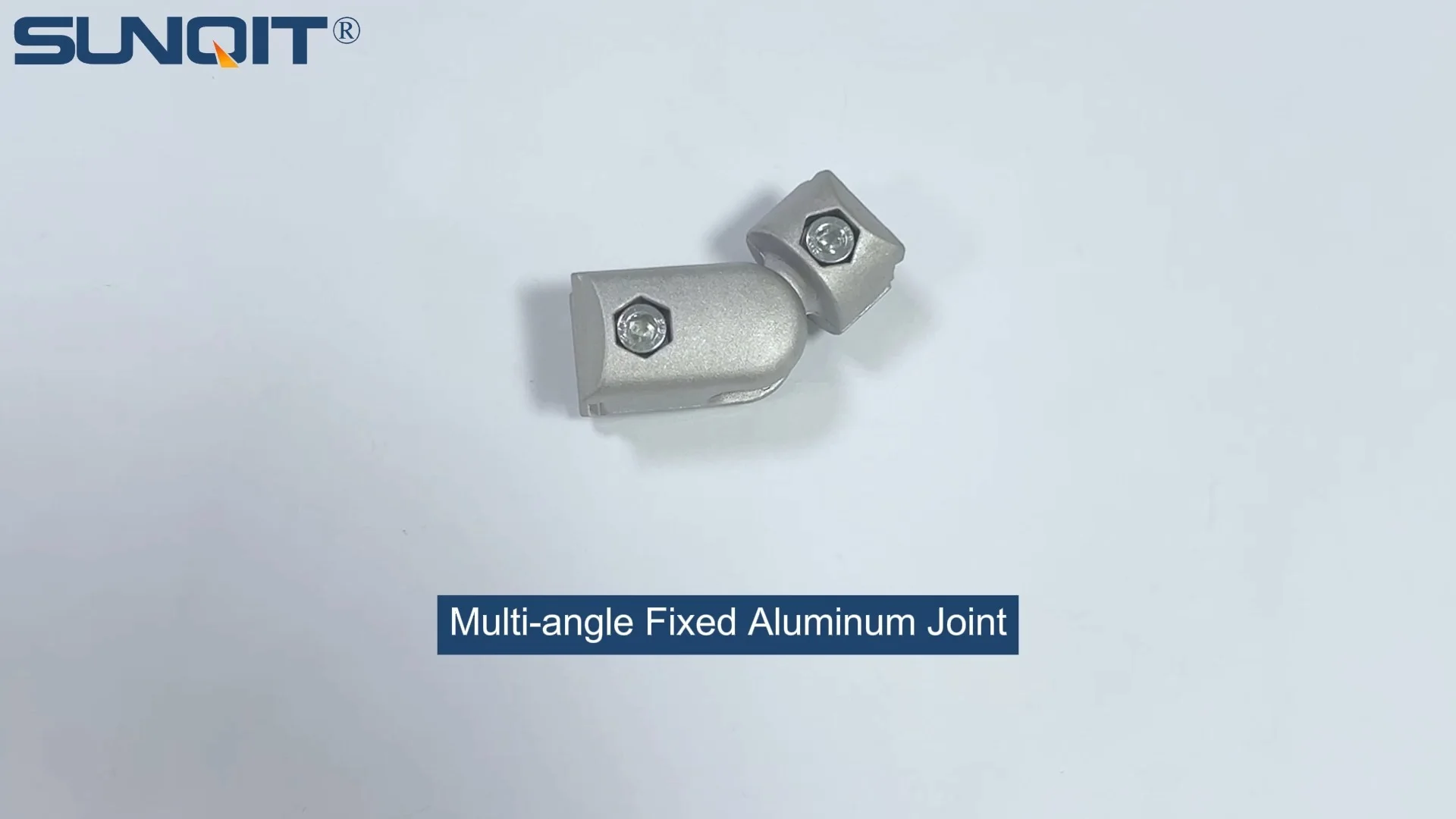
Multi-angle Fixed Aluminum Joint
Aluminum joint pipe connection for two pipe connection and work in mutiple angle.
Walk into any modern warehouse, and you'll quickly realize: the game has changed. Gone are the days of static, one-size-fits-all storage systems. Today's logistics operations face a relentless tide of change—fluctuating inventory levels, new product lines, shifting customer demands, and the constant pressure to do more with less space. In this fast-paced environment, adaptability isn't just a nice-to-have; it's the difference between falling behind and staying ahead. That's where the multi-angle fixed aluminum joint comes in. Paired with aluminum profiles and a range of accessories, these unassuming components are quietly revolutionizing how warehouses design, build, and reconfigure their storage solutions. Let's dive into how they work, why they matter, and the real-world impact they're having on workbenches, flow racks, and beyond.
What Are Multi-Angle Fixed Aluminum Joints, Anyway?
At first glance, a multi-angle fixed aluminum joint might look like a simple metal connector—and in many ways, that's the beauty of it. But don't let its simplicity fool you. These joints are the unsung heroes of flexible storage systems, designed to solve a critical problem: how to connect aluminum profiles at multiple angles quickly, securely, and without permanent modifications like welding or drilling. Think of them as the "Swiss Army knife" of warehouse design—versatile, reliable, and ready to adapt to whatever you throw at them.
Here's how they work: Each joint is precision-engineered with multiple threaded holes and connection points, allowing aluminum profiles (those sleek, lightweight metal rails you see in modern workstations) to be joined at angles ranging from 30 degrees to 180 degrees. Want a 90-degree corner for a workbench? Done. Need a 45-degree incline for a flow rack? No problem. Even complex 135-degree bends for custom material racks are possible. And the best part? You don't need a team of engineers or heavy tools to make it happen. A basic hex key is often all that's required to tighten or loosen the joint, making assembly and reconfiguration a one-person job.
But it's not just about angles. These joints are built to last. Made from high-grade aluminum alloy, they're resistant to corrosion, lightweight enough to handle without strain, yet strong enough to support heavy loads—think hundreds of pounds of inventory on a flow rack or the daily wear and tear of a busy workbench. They're also designed to minimize "play" or wobble, ensuring that once a structure is built, it stays stable. No more shaky shelves or wobbly work surfaces that compromise safety or efficiency.
Aluminum Profiles: The Perfect Partner for Multi-Angle Joints
You can't talk about multi-angle fixed aluminum joints without talking about their sidekick: the aluminum profile . If joints are the connectors, profiles are the building blocks—the backbone of any flexible storage system. These extruded aluminum rails come in a variety of shapes, sizes, and t-slot configurations (the grooves that run along their length), making them ideal for attaching accessories, shelves, bins, and, of course, multi-angle joints.
Why aluminum? For starters, it's lightweight. Compared to steel, aluminum profiles are up to 40% lighter, which means easier handling during assembly and less strain on floors and structures. But don't mistake lightness for weakness—aluminum alloys offer impressive strength-to-weight ratios, easily supporting the demands of warehouse use. They're also naturally resistant to rust and corrosion, a huge plus in environments where spills, humidity, or cleaning chemicals are common. And unlike wood, they won't warp, splinter, or degrade over time, ensuring your storage systems look and perform like new for years.
The real magic, though, is in the t-slot design. Those narrow grooves running along the profile's length act as built-in attachment points for accessories—no drilling required. Need to add a shelf to a workbench? Slide a bracket into the t-slot and secure it with a bolt. Want to mount a tool holder on a material rack? Clip it into place. This compatibility with aluminum profile accessories (think end caps, gusset plates, cable management clips, and more) turns a basic set of profiles and joints into a fully customizable system. It's like building with Legos for adults—only sturdier and designed for real-world work.

From Workbenches to Flow Racks: Real-World Applications That Deliver Results
Enough theory—let's talk about how these systems actually work on the warehouse floor. Two of the most impactful applications are workbenches and flow racks —core components of any logistics operation. Let's break down how multi-angle fixed aluminum joints and aluminum profiles transform these everyday tools into powerhouses of efficiency.
Workbenches: Where Ergonomics Meets Adaptability
A workbench is more than just a table—it's where the magic happens. It's where employees assemble products, pack orders, inspect goods, and collaborate. But here's the problem with traditional workbenches: they're usually one-and-done. Built from wood or steel, they're heavy, fixed in size, and nearly impossible to reconfigure without major modifications. If your team needs a taller bench for standing work, or a wider surface for a new product line, you're often stuck buying a whole new bench—or worse, making do with a subpar setup that hurts productivity and employee morale.
Enter aluminum profile workbenches with multi-angle fixed joints. These systems are designed to grow with your needs. Need a 6-foot workbench today? Start with four aluminum profiles and a few 90-degree joints. Six months later, when you launch a larger product, add two more profiles and extend it to 8 feet—no saws, no welding, no downtime. Want to add a shelf underneath for tools? Screw a few brackets into the t-slots. Need a tilt-top surface for better visibility? Swap out the fixed top for an adjustable one using 45-degree joints. The possibilities are endless, and the changes happen in hours, not weeks.
Ergonomics matter too. With traditional benches, you're stuck with a fixed height, which can lead to back pain and fatigue for employees of different sizes. Aluminum profile workbenches solve this by letting you adjust the height using extendable legs and multi-angle joints. Raise it for taller team members, lower it for shorter ones, or even create a split-level surface for multi-step tasks. It's a small change that makes a big difference in employee satisfaction—and when employees are comfortable, they're more productive.
Flow Racks: Smoothing the Path for Material Handling
If workbenches are where products get built, flow racks are where they get moving. These sloped racks use gravity to feed inventory from the back (where it's stored) to the front (where it's picked), reducing the need for manual lifting and cutting down on order fulfillment time. But traditional flow racks have a flaw: they're often built with fixed steel frames and rigid shelving, making it hard to adjust for different product sizes or inventory volumes. A rack that works for small boxes might be useless for larger items, and adding more lanes usually means buying a whole new unit.
Multi-angle fixed aluminum joints and aluminum profiles change the game here, too. With these systems, flow racks become infinitely adjustable. Need to widen a lane to fit bulkier products? Loosen the joints, slide the aluminum profiles apart, and retighten—done. Want to increase the slope for faster product flow? Adjust the angle of the side profiles using 30-degree or 45-degree joints. Even adding new levels or extending the rack's length is simple, thanks to the modular design.
Take, for example, a warehouse that handles seasonal inventory—say, holiday decorations. In Q4, they need more flow rack lanes to keep up with demand. In Q1, those lanes sit empty, wasting space. With an aluminum profile flow rack, they can disassemble the extra lanes in January, store the profiles and joints, and reassemble them in September when needed. No more cluttered floors or wasted square footage. It's logistics efficiency at its finest.

Traditional vs. Aluminum Joint Systems: A Side-by-Side Comparison
Still on the fence about whether multi-angle fixed aluminum joints are worth the investment? Let's put them head-to-head with traditional storage systems (wood, steel, or welded metal) to see how they stack up.
| Feature | Traditional Storage Systems | Aluminum Profile with Multi-Angle Joints |
|---|---|---|
| Installation Time | Days to weeks (requires welding, drilling, or heavy assembly) | Hours (simple hand tools, no specialized skills needed) |
| Flexibility | Fixed design; reconfiguration often requires replacement | Infinitely adjustable (change angles, lengths, and layouts in minutes) |
| Durability | Steel is strong but prone to rust; wood warps over time | Corrosion-resistant aluminum; no warping or degradation |
| Weight | Heavy (requires forklifts or multiple people to move) | Lightweight (easily moved by one person during reconfiguration) |
| Customization | Limited (custom designs require expensive engineering) | Unlimited (mix and match profiles, joints, and accessories) |
| Long-Term Cost | Higher (replacement costs for outdated systems add up) | Lower (one-time investment that adapts to changing needs) |

The Ripple Effect: How These Systems Boost Your Bottom Line
At this point, you might be thinking, "This all sounds great, but does it really impact the numbers?" The short answer: yes. The benefits of multi-angle fixed aluminum joints and aluminum profiles go far beyond just "looking modern"—they translate to tangible improvements in efficiency, cost savings, and operational resilience.
Let's start with efficiency. When you can reconfigure a workbench or flow rack in hours instead of days, you minimize downtime. That means your team stays productive, and projects stay on schedule. For example, a warehouse that switches to aluminum profile workbenches might reduce setup time for new product lines by 70%, freeing up employees to focus on value-adding tasks instead of rearranging furniture. Similarly, adjustable flow racks can cut order picking time by 20-30% by ensuring products are always within easy reach.
Then there's space optimization. Warehouses pay a premium for square footage, so wasting space on rigid, underutilized storage systems is costly. Aluminum profile systems let you make the most of every inch. A flow rack that can be scaled up or down with seasonal demand, or a workbench that folds away when not in use, means you're using your space strategically—not paying for empty air. Over time, this can reduce the need for expensive warehouse expansions, saving you tens of thousands of dollars.
And let's not forget employee satisfaction. A workspace that adapts to your team's needs shows you care about their well-being, which boosts morale and reduces turnover. High turnover is a huge cost for warehouses—recruiting, training, and lost productivity add up fast. By investing in tools that make employees' jobs easier, you're investing in a more stable, motivated workforce.
Choosing the Right Partner: What to Look for in a Supplier
Now that you're sold on the benefits, the next step is finding the right supplier. Not all aluminum profile and joint systems are created equal, and choosing a low-quality provider can lead to wobbly structures, corroded joints, or limited customization options. Here's what to look for:
- Quality Materials: Ensure the aluminum profiles are made from high-grade alloy (like 6063-T5, a common choice for structural applications) and that joints are precision-machined for a tight fit.
- Range of Accessories: A good supplier should offer more than just profiles and joints. Look for a full line of aluminum profile accessories —end caps to protect against sharp edges, cable clips to manage wires, casters for mobile workbenches, and more. The more accessories available, the more customizable your system will be.
- Technical Support: Even the most intuitive systems can benefit from expert guidance. Choose a supplier that offers design support, CAD drawings, or sample configurations to help you plan your layout.
- Scalability: As your warehouse grows, your storage needs will too. Make sure the supplier can accommodate larger orders or custom profiles if needed.
The Future of Warehouse Logistics: Built to Adapt
The warehouse of tomorrow won't just be bigger—it will be smarter, more flexible, and more responsive than ever before. In a world where customer expectations change overnight and supply chains are constantly shifting, rigid systems simply can't keep up. Multi-angle fixed aluminum joints and aluminum profiles aren't just a trend; they're a glimpse into that future—a future where warehouses are built to adapt, not just to survive, but to thrive.
So, whether you're setting up a new warehouse from scratch or looking to upgrade your existing storage systems, don't underestimate the power of these small but mighty components. They might not grab headlines, but they're the unsung heroes working behind the scenes to make your operations smoother, your team happier, and your bottom line healthier. After all, in logistics, the best solutions are the ones that grow with you—and with multi-angle fixed aluminum joints, the possibilities are endless.