- Company Articles
- Products and Technology
- Product knowledge
- Multi-Angle Fixed Aluminum Joint: Material Benefits of Aluminum Alloy

Multi-Angle Fixed Aluminum Joint: Material Benefits of Aluminum Alloy
Related Product
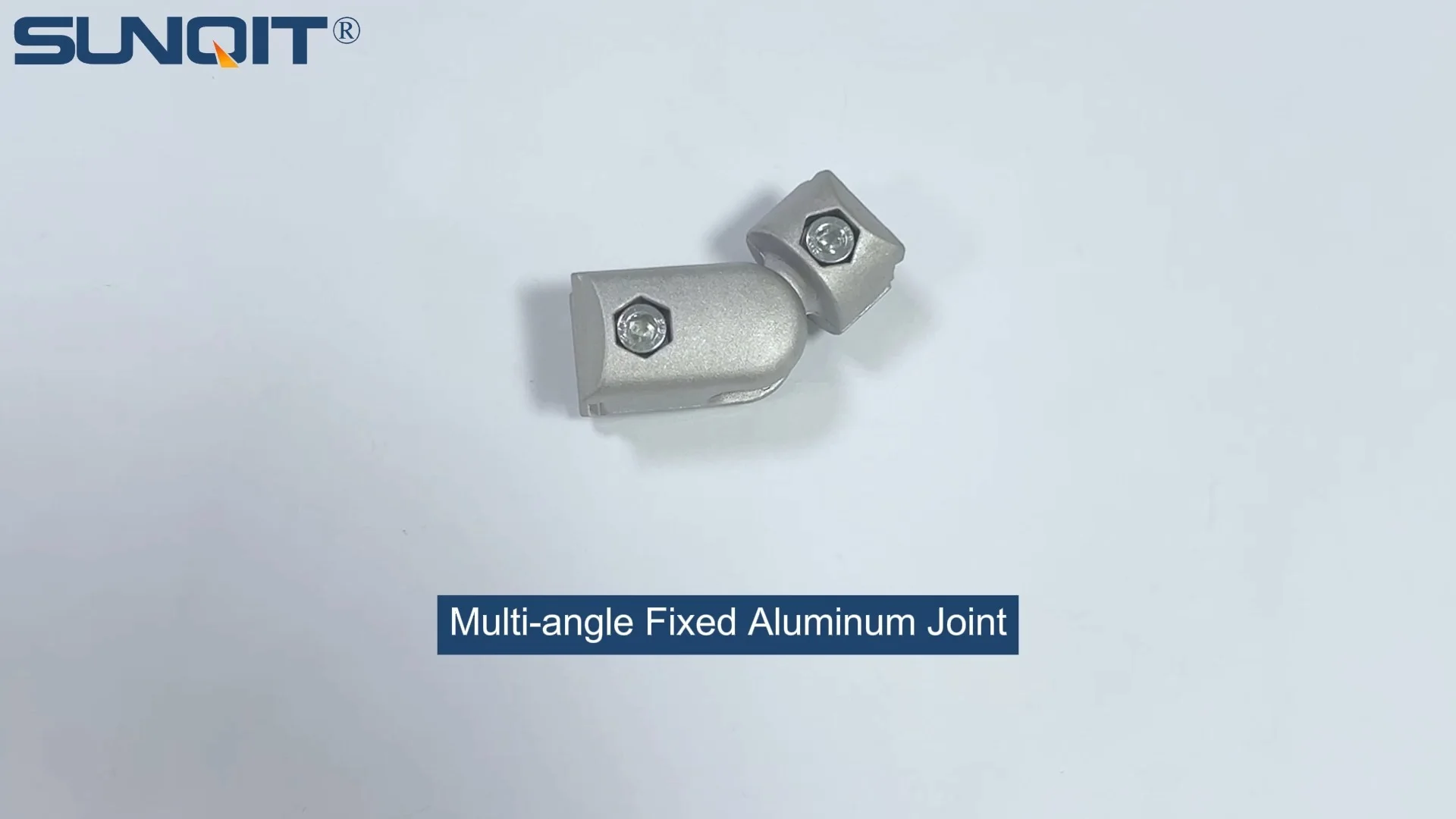
Multi-angle Fixed Aluminum Joint
Aluminum joint pipe connection for two pipe connection and work in mutiple angle.
Walk into any modern manufacturing facility, warehouse, or electronics assembly line today, and you'll notice a quiet transformation underway. Workbenches adjust seamlessly to new tasks, material racks reconfigure in minutes to fit changing inventory, and conveyor systems glide with precision—all while looking sleek, durable, and surprisingly lightweight. Behind much of this flexibility lies a component so integral yet often overlooked: the multi-angle fixed aluminum joint. More than just a connector, this small but mighty piece of hardware embodies the innovation of aluminum alloy, blending strength, adaptability, and sustainability to redefine how we build and optimize industrial workspaces. In this article, we'll dive into the material benefits of aluminum alloy that make these joints indispensable, explore their role in lean systems, and see how they elevate everything from aluminum workbenches to complex material handling setups.
What Is a Multi-Angle Fixed Aluminum Joint?
Before we unpack its benefits, let's start with the basics: What exactly is a multi-angle fixed aluminum joint? At its core, it's a precision-engineered connector designed to join aluminum pipes, profiles, or tubes at various angles—90°, 45°, 135°, and everything in between—without the need for welding, drilling, or permanent fasteners. Unlike traditional steel joints, which are heavy, rigid, and limited to fixed angles, these aluminum alloy joints are lightweight, modular, and built for adaptability. Think of them as the "Swiss Army knife" of industrial hardware: one joint can replace multiple specialized connectors, simplifying inventory and reducing setup time.
Crafted from high-grade aluminum alloy (typically 6063 or 6061, known for their strength and machinability), these joints feature internal threads, grooves, or clamping mechanisms that grip aluminum profiles tightly. Some designs include rotating components for angles, while others lock into place for stability—hence the "fixed" in their name. Whether you're building a workbench, a flow rack, or a turnover trolley, these joints act as the backbone, holding everything together while allowing for future modifications. It's this balance of rigidity and flexibility that makes them a favorite among manufacturers aiming to stay agile in a fast-paced market.
The Material Edge: Why Aluminum Alloy Makes All the Difference
Aluminum alloy isn't just a material choice for these joints—it's a strategic advantage. Let's break down the key benefits that set aluminum alloy apart, making multi-angle fixed joints a game-changer in industrial design.
1. Lightweight Yet Remarkably Strong
One of the first things you'll notice when handling a multi-angle fixed aluminum joint is how surprisingly light it is. Aluminum has a density of just 2.7 g/cm³, about one-third that of steel. This lightness isn't just a convenience—it transforms how workspaces operate. For assembly line workers tasked with reconfiguring a material rack or adjusting a workbench height, a lighter joint means less strain, fewer injuries, and faster setup times. At a automotive parts plant in Michigan, for example, workers reported cutting workstation reconfiguration time by 40% after switching from steel to aluminum joints, simply because they could lift and adjust components without needing extra help.
But don't mistake lightness for weakness. Aluminum alloy, especially when heat-treated, boasts an impressive strength-to-weight ratio. A well-designed multi-angle joint can support loads of up to 500kg when paired with sturdy aluminum profiles—more than enough for heavy tools, stacked inventory, or even machinery. This combination of lightness and strength is a win-win: it reduces the physical toll on workers while ensuring the structures they build are rock-solid.
2. Corrosion Resistance: Built to Last in Tough Environments
Manufacturing floors are rarely pristine. From oil spills in automotive shops to humidity in food processing plants, industrial environments can be harsh on equipment. Here, aluminum alloy's natural corrosion resistance shines. When exposed to air, aluminum forms a thin, invisible oxide layer (aluminum oxide) that acts as a protective barrier, preventing further rust or degradation. Unlike steel, which requires painting or galvanizing to resist corrosion, aluminum joints hold up naturally—even in damp or chemical-exposed areas.
Take ESD workstations, critical in electronics manufacturing where static electricity can damage sensitive components. These workstations often require frequent cleaning with alcohol-based solutions to maintain ESD safety. Steel joints might rust or degrade over time with such exposure, but aluminum joints? They stay bright, clean, and functional for years. A semiconductor factory in Taiwan recently shared that their aluminum joint-equipped ESD workbenches showed no signs of corrosion after five years of daily cleaning—saving them the cost of replacing rusted steel components every 18 months.
3. Precision and Consistency: A Perfect Fit Every Time
In manufacturing, precision is everything. A wobbly workbench or misaligned conveyor can lead to errors, delays, or even product defects. Aluminum alloy's properties make it ideal for creating joints with tight tolerances. Aluminum extrusion—the process used to shape aluminum profiles—produces consistent, uniform dimensions, ensuring that every multi-angle joint fits perfectly with its matching aluminum pipe or profile. No more hammering to force a steel joint into place or dealing with gaps that cause instability.
This precision translates to smoother workflows. At a medical device assembly facility in California, engineers noted a 25% reduction in product defects after upgrading to aluminum joint-based workbenches. The reason? The stable, level surfaces eliminated micro-movements that had previously caused misalignments in tiny component placements. When every joint fits like a puzzle piece, the entire system works in harmony.
4. Aesthetic and Functional: More Than Just Hardware
Industrial spaces are no longer just about function—they're about creating environments that boost morale and reflect a brand's commitment to quality. Aluminum alloy joints contribute here, too. With their sleek, modern finish (often anodized or powder-coated in neutral tones like silver, black, or gray), they complement the clean lines of aluminum profiles, creating workspaces that look as good as they perform. This is especially valuable in customer-facing areas, like R&D labs or demo facilities, where appearance matters.
But aesthetics meet function: the smooth surface of aluminum joints is easy to clean, a must in industries like pharmaceuticals or food packaging where hygiene is non-negotiable. Unlike steel joints with crevices that trap dirt, aluminum joints can be wiped down quickly, reducing the risk of contamination. It's a small detail that makes a big difference in maintaining compliance with strict industry standards.
5. Sustainability: Aligning with Lean and Green Goals
Today's manufacturers aren't just focused on efficiency—they're prioritizing sustainability, too. Aluminum alloy checks this box with flying colors. It's 100% recyclable, and recycling aluminum uses just 5% of the energy required to produce new aluminum from raw materials. For companies aiming to reduce their carbon footprint, choosing aluminum joints is a tangible step forward.
Consider the lifecycle of a typical steel joint: it might rust after a few years, end up in a landfill, and require new steel to be mined and manufactured for replacement. Aluminum joints, by contrast, can be disassembled, recycled, and turned into new joints or profiles with minimal environmental impact. This aligns perfectly with lean system principles, which emphasize waste reduction at every stage. A furniture manufacturer in Denmark even reports using recycled aluminum joints in their lean production lines, cutting waste by 15% and earning them green certifications that appeal to eco-conscious clients.

Powering Lean Systems: Flexibility That Drives Efficiency
Lean systems are all about eliminating waste, streamlining processes, and adapting quickly to change. Multi-angle fixed aluminum joints are tailor-made for this philosophy. Let's see how they support key lean principles in action.
First, they enable "just-in-time" workspace design. In traditional setups, building a new material rack or reconfiguring a production line might take days—waiting for custom steel fabrication, welding, or painting. With aluminum joints, it's a matter of hours. Components are modular: aluminum profiles, joints, and accessories (like clamps or end caps) are pre-made and readily available from suppliers, so teams can assemble, disassemble, and reassemble structures as needed. This agility is critical for lean's "continuous improvement" (kaizen) mindset, where small, frequent adjustments lead to big efficiency gains.
Take flow racks, for example. A flow rack using multi-angle aluminum joints can be adjusted to hold different-sized bins by simply repositioning the crossbars—no tools required. If a new product line requires taller shelves, workers can swap out shorter profiles for longer ones and lock them in place with the same joints. At a logistics hub in Texas, this flexibility allowed the facility to handle seasonal inventory spikes without investing in new racks, saving over $50,000 in equipment costs last year.
Aluminum joints also reduce "motion waste"—a common lean target. Heavy steel joints require workers to use forklifts or extra to move, but aluminum's lightness lets a single person adjust a workstation. This not only speeds up tasks but also reduces fatigue, leading to happier, more productive teams. As one plant manager in Illinois put it: "Our workers used to dread 'reorg days.' Now, with aluminum joints, they can reconfigure their own workbenches during breaks—no more waiting for the maintenance crew. It's empowered them to take ownership of their space, and that's boosted morale across the board."

Real-World Impact: Aluminum Workbenches and Beyond
To truly appreciate these joints, let's look at a concrete example: the aluminum workbench. A staple in factories, labs, and workshops, the modern workbench relies heavily on multi-angle fixed aluminum joints to deliver the stability, flexibility, and durability that workers demand.
Consider Workbench E, a single-deck model without casters often used in electronics assembly. Its frame is built from aluminum profiles connected by multi-angle joints at 90° angles for the legs and crossbars, and 45° angles for diagonal bracing that adds stability. The joints ensure the bench doesn't wobble, even when technicians lean on it while soldering or testing components. But what if the team needs to add a shelf halfway up for tools? No problem—simply slide a few more joints onto the vertical profiles, lock them in place, and attach a shelf panel. It's that easy.
Or take material racks, like the Material Rack B (3 row and 3 floor) mentioned in supplier catalogs. This rack uses multi-angle joints to connect horizontal and vertical aluminum pipes, creating levels for storing bins of parts. The joints allow the rack to be adjusted if parts sizes change—say, switching from small electronic components to larger mechanical parts. Instead of buying a new rack, the team can widen the spacing between levels by loosening the joints, sliding them up or down, and tightening again. This adaptability is why aluminum joint-based racks are a favorite in lean environments: they grow and change with the business, rather than becoming obsolete.
Even specialized equipment benefits. Roller tracks, used to move materials smoothly along assembly lines, depend on joints to connect aluminum guide rails (like Aluminum Guide Rail A or B) and support brackets. Multi-angle joints ensure the rails are perfectly aligned, so rollers glide without jamming—critical for maintaining the steady flow that lean systems thrive on. A beverage bottling plant in Mexico upgraded to aluminum joint-equipped roller tracks and saw a 15% reduction in line stoppages, simply because the joints kept the tracks aligned even under the constant vibration of moving bottles.

How Aluminum Joints Stack Up: A Quick Comparison
| Feature | Multi-Angle Fixed Aluminum Joint | Traditional Steel Joint | Plastic Joint |
|---|---|---|---|
| Weight | Light (1/3 the weight of steel) | Heavy | Very light, but less durable |
| Strength | High strength-to-weight ratio; supports up to 500kg | High strength but overkill for most light-to-medium loads | Low; not suitable for heavy loads |
| Corrosion Resistance | Excellent (natural oxide layer) | Poor (requires painting/galvanizing) | Good, but prone to cracking in extreme temps |
| Flexibility | Multi-angle; easy to reconfigure | Fixed angles; requires welding to modify | Limited angles; may warp under stress |
| Sustainability | 100% recyclable; low energy to recycle | Recyclable but high energy cost | Often non-recyclable; short lifespan |
The Bottom Line: Small Joints, Big Impact
Multi-angle fixed aluminum joints may be small in size, but their impact on modern manufacturing is enormous. By leveraging the unique benefits of aluminum alloy—lightweight strength, corrosion resistance, precision, and sustainability—these joints empower businesses to build workspaces that are efficient, adaptable, and built to last. They're not just hardware; they're enablers of lean systems, champions of worker well-being, and partners in the push toward greener, more agile manufacturing.
Whether you're setting up a new aluminum workbench, reconfiguring a flow rack, or building a custom conveyor system, the choice of joint matters. Aluminum alloy joints offer a rare combination of form and function, proving that sometimes the smallest components make the biggest difference. So the next time you walk through a smoothly running factory or a sleek workshop, take a closer look—you might just spot the quiet hero holding it all together: the multi-angle fixed aluminum joint.