- Company Articles
- Products and Technology
- Product knowledge
- Multi-Angle Fixed Aluminum Joint Material Science: Alloy Composition Benefits

Multi-Angle Fixed Aluminum Joint Material Science: Alloy Composition Benefits
Related Product
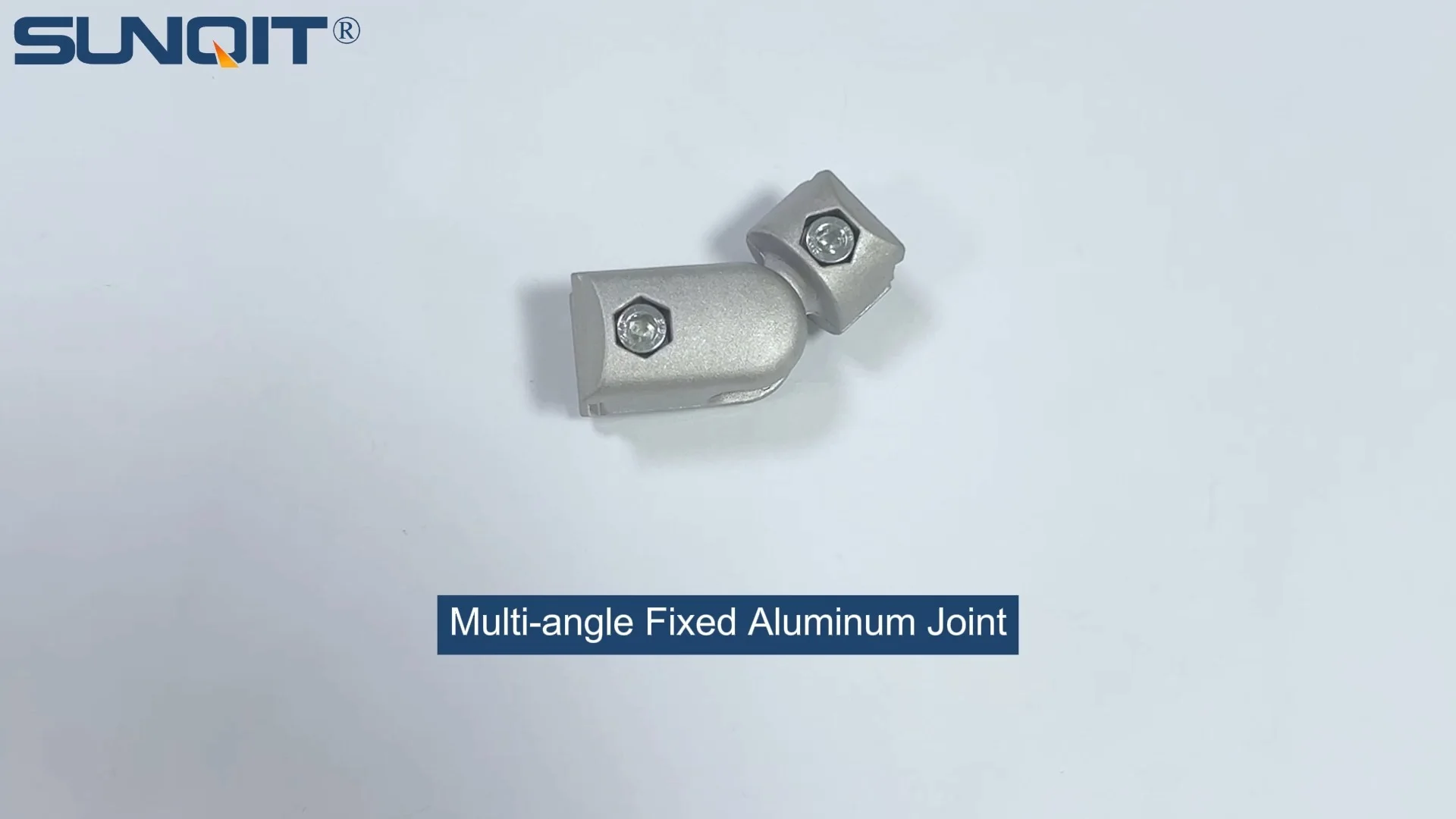
Multi-angle Fixed Aluminum Joint
Aluminum joint pipe connection for two pipe connection and work in mutiple angle.
Introduction: The Unsung Heroes of Modern Manufacturing
In the fast-paced world of manufacturing and lean production, every component plays a role—but some work quietly behind the scenes, holding everything together while enabling flexibility and efficiency. Enter the multi-angle fixed aluminum joint: a small but mighty part that connects aluminum lean pipes, aluminum profiles, and other components to build workbenches, flow racks, material trolleys, and entire production lines. These joints aren't just metal pieces; they're the backbone of adaptable, cost-effective, and durable lean systems. But what makes them so reliable? The answer lies in their material science—specifically, the alloy composition that gives aluminum its unique blend of strength, lightness, and versatility.
In this article, we'll dive deep into the material science of multi-angle fixed aluminum joints, exploring how alloying elements like magnesium, silicon, and copper transform raw aluminum into a material that can withstand the rigors of daily manufacturing. We'll also uncover the real-world benefits of these alloys, from reducing worker fatigue to enhancing corrosion resistance, and why they've become the go-to choice for industries ranging from automotive to electronics. Along the way, we'll connect these scientific insights to practical applications, showing how the right alloy composition turns a simple joint into a cornerstone of lean manufacturing success.
Aluminum as a Base: Why It's More Than Just "Light Metal"
Pure aluminum is a curious material: soft, malleable, and lightweight, but far too weak for most industrial applications. Imagine trying to build a workbench with pure aluminum pipes—they'd bend under the weight of tools, let alone heavy components. That's where alloys come in. By mixing aluminum with small amounts of other elements, engineers create materials with tailored properties: stronger, more durable, and better suited to specific tasks. For multi-angle fixed aluminum joints, which need to support weight, resist wear, and maintain structural integrity across countless assembly and disassembly cycles, the right alloy is everything.
Aluminum's natural advantages already set it apart. It's abundant (the most common metal in the Earth's crust), highly recyclable (recycling uses 95% less energy than producing new aluminum), and naturally corrosion-resistant thanks to a thin oxide layer that forms on its surface. But to make it suitable for joints that connect aluminum extrusion profiles and aluminum lean pipes, alloying takes these benefits to the next level. Let's break down the key alloying elements and how they work their magic.

Alloy Composition: The Recipe for Strong, Flexible Joints
Most multi-angle fixed aluminum joints are made from 6000-series alloys, a family known for their excellent extrudability, strength, and affordability. These alloys primarily combine aluminum with magnesium (Mg) and silicon (Si), which form intermetallic compounds that strengthen the material. Let's focus on two of the most common types: 6061 and 6063, each with a slightly different "recipe" and unique benefits.
6061 Aluminum Alloy: The Workhorse
6061 is often called the "workhorse" of aluminum alloys, and for good reason. Its composition typically includes 0.4-0.8% silicon, 0.8-1.2% magnesium, 0.15-0.4% copper, and small amounts of chromium. Here's how these elements contribute:
- Magnesium (Mg) and Silicon (Si): Together, these form Mg₂Si, a hard compound that precipitates out of the aluminum matrix during heat treatment (a process called "age hardening"). This gives 6061 its impressive strength—tensile strength of around 310 MPa (45,000 psi) and yield strength of 276 MPa (40,000 psi)—making it ideal for joints that need to support heavy loads, like those in material racks or conveyor systems.
- Copper (Cu): Adds extra strength and hardness, though it slightly reduces corrosion resistance. This trade-off is manageable in indoor manufacturing environments, where joints are less exposed to harsh elements.
- Chromium (Cr): Improves corrosion resistance and helps control grain structure during heat treatment, ensuring consistent properties across the joint.
For multi-angle fixed aluminum joints used in high-stress applications—think workbenches supporting heavy machinery or flow racks carrying bulk materials—6061 is a top choice. Its strength ensures the joint won't deform, even under repeated stress.
6063 Aluminum Alloy: The Precision Extruder
If 6061 is the workhorse, 6063 is the "craftsman" of alloys. With a higher silicon content (0.2-0.6%) and lower magnesium (0.45-0.9%), it's designed for optimal extrudability—the process of forcing heated aluminum through a die to create complex shapes like aluminum extrusion profiles and intricate joint designs. Here's why this matters for multi-angle fixed joints:
- Better Formability: The higher silicon content makes 6063 more ductile when heated, allowing it to take on precise, detailed shapes without cracking. This is crucial for multi-angle joints, which often have intricate geometries (e.g., 90° bends, threaded holes, or grooves for attaching aluminum lean pipes).
- Smooth Surface Finish: Extruded 6063 parts have a clean, uniform surface, reducing the need for post-processing like sanding or polishing. This not only saves time and cost but also ensures a snug fit when connecting to aluminum profiles or pipes, minimizing wobble in the final assembly.
- Moderate Strength, High Corrosion Resistance: While 6063 has lower tensile strength than 6061 (around 215 MPa, or 31,000 psi), it offers superior corrosion resistance—thanks to less copper and a purer aluminum base. This makes it ideal for joints used in humid environments or near liquids, like in electronics manufacturing where spills are possible.
For multi-angle fixed joints that require complex shapes or a sleek finish—such as those in ESD workstations or cleanroom environments—6063 is often the preferred alloy. Its ability to hold tight tolerances ensures that aluminum profile accessories, like brackets or connectors, fit perfectly every time.

Alloy Composition Benefits: Beyond Strength
The right alloy composition does more than just make joints strong—it transforms how manufacturing systems perform, from reducing worker fatigue to cutting long-term costs. Let's explore the key benefits in action.
Lightweight Design: Easing Worker Strain and Boosting Flexibility
Aluminum alloys have a strength-to-weight ratio that outperforms steel, and this matters in lean systems where components are often assembled, disassembled, or reconfigured by hand. A multi-angle fixed aluminum joint made from 6061 or 6063 weighs roughly 1/3 as much as a steel joint of the same size. For workers building or reconfiguring a production line, this translates to less physical strain—reducing the risk of injuries and improving productivity. Imagine a team needing to move a workbench: with aluminum joints, the entire structure is lighter, making adjustments faster and easier. This lightness also reduces shipping costs, as more joints can be transported in a single shipment, lowering the carbon footprint of the supply chain.
Corrosion Resistance: Longevity in Harsh Environments
Aluminum naturally forms a thin oxide layer (Al₂O₃) that protects it from corrosion, but alloying elements like chromium (in 6061) or the low copper content (in 6063) enhance this protection. In manufacturing facilities where humidity, oils, or coolants are present, this resistance ensures joints won't rust or degrade over time. Unlike steel, which requires painting or coating to prevent corrosion, aluminum joints maintain their integrity with minimal maintenance. This longevity reduces replacement costs and downtime—critical for lean systems where every minute of production counts.
Recyclability: Sustainability Without Sacrifice
Sustainability is no longer a buzzword in manufacturing—it's a business imperative. Aluminum alloys are 100% recyclable, and recycling them uses just 5% of the energy required to produce new aluminum. For companies aiming to reduce their environmental impact, choosing multi-angle fixed aluminum joints means contributing to a circular economy. Even better, recycled aluminum retains the same mechanical properties as virgin material, so there's no trade-off in performance. When a production line is retired or reconfigured, the joints can be melted down and reused, closing the loop on waste.

Alloy Comparison: 6061 vs. 6063 for Multi-Angle Joints
To help manufacturers choose the right alloy for their needs, let's compare 6061 and 6063 side by side, focusing on properties that matter most for multi-angle fixed aluminum joints:
| Property | 6061 Aluminum Alloy | 6063 Aluminum Alloy | Best For |
|---|---|---|---|
| Tensile Strength | 310 MPa (45,000 psi) | 215 MPa (31,000 psi) | 6061: Heavy-load applications (e.g., material racks, workbenches with machinery) |
| Yield Strength | 276 MPa (40,000 psi) | 172 MPa (25,000 psi) | 6061: Joints under constant stress |
| Extrudability | Good | Excellent (superior formability for complex shapes) | 6063: Intricate joint designs, aluminum extrusion profiles |
| Corrosion Resistance | Good (moderate due to copper) | Very Good (lower copper, purer base) | 6063: Humid or damp environments (e.g., food processing, electronics assembly) |
| Surface Finish | Acceptable (may require post-processing) | Excellent (smooth, uniform, minimal post-processing) | 6063: Aesthetic or precision applications (e.g., ESD workstations, cleanrooms) |
| Cost | Slightly higher (due to copper and chromium) | More economical for high-volume extrusion | 6063: Large-scale production lines with standard joint designs |
The takeaway? There's no "one-size-fits-all" alloy. For heavy-duty, load-bearing joints, 6061 delivers unmatched strength. For complex shapes, smooth finishes, or corrosion-prone environments, 6063 is the smarter choice. Many manufacturers even blend the two, using 6061 for structural joints and 6063 for decorative or precision components—creating a system that's both strong and efficient.
Applications: How Alloy Benefits Translate to Real-World Use
Alloy composition isn't just a technical detail—it directly impacts how multi-angle fixed aluminum joints perform in real manufacturing settings. Let's look at a few common applications and how the right alloy makes all the difference:
Workbenches and Assembly Stations
Workbenches are the heart of any production line, and their joints must withstand daily use: tools being dropped, components being clamped, and workers leaning on them. A 6061 multi-angle joint ensures the bench stays stable, even when loaded with heavy equipment. Meanwhile, 6063 joints might be used for the bench's edge rails or accessory holders, where precise extrusion allows for slots to hold tools or ESD mats—enhancing organization and safety.
Flow Racks and Material Handling
Flow racks rely on gravity to move materials from storage to the production line, and their joints must maintain alignment to keep items rolling smoothly. 6063's excellent formability allows for joints with precise angles (e.g., 15° or 30° inclines), ensuring consistent flow. For racks holding heavy parts like automotive components, 6061 joints add the necessary strength to prevent sagging over time.
Lean Tube Systems (Aluminum Lean Pipe Assemblies)
Aluminum lean pipes are the building blocks of flexible lean systems, and multi-angle fixed joints are what make them modular. Whether constructing a temporary storage rack or a custom trolley, 6063 joints excel here: their lightweight design makes assembly easy, and their corrosion resistance ensures the system lasts in busy factories. Plus, since lean systems are often reconfigured, the joints' durability means they can be disassembled and reused without losing strength.
Conclusion: The Alloy Advantage in Lean Manufacturing
Multi-angle fixed aluminum joints may be small, but their impact on manufacturing efficiency, flexibility, and sustainability is huge. By understanding the science behind their alloy composition—how magnesium, silicon, and other elements work together to create strength, formability, and corrosion resistance—manufacturers can make informed choices that boost productivity and reduce costs.
Whether it's the workhorse 6061 alloy for heavy loads or the precision 6063 for intricate designs, the right aluminum alloy ensures that joints don't just connect components—they empower teams to build better, adapt faster, and work smarter. In a world where lean manufacturing is key to staying competitive, these unsung heroes of material science are more than just parts: they're partners in progress.
So the next time you walk through a factory, take a moment to look at the workbenches, flow racks, and trolleys around you. Chances are, they're held together by multi-angle fixed aluminum joints—quietly proving that great things really do come in small, alloyed packages.