- Company Articles
- Products and Technology
- Procurement Guidelines
- Multi-Angle Fixed Aluminum Joint Price Guide: Budgeting for Buyers

Multi-Angle Fixed Aluminum Joint Price Guide: Budgeting for Buyers
Related Product
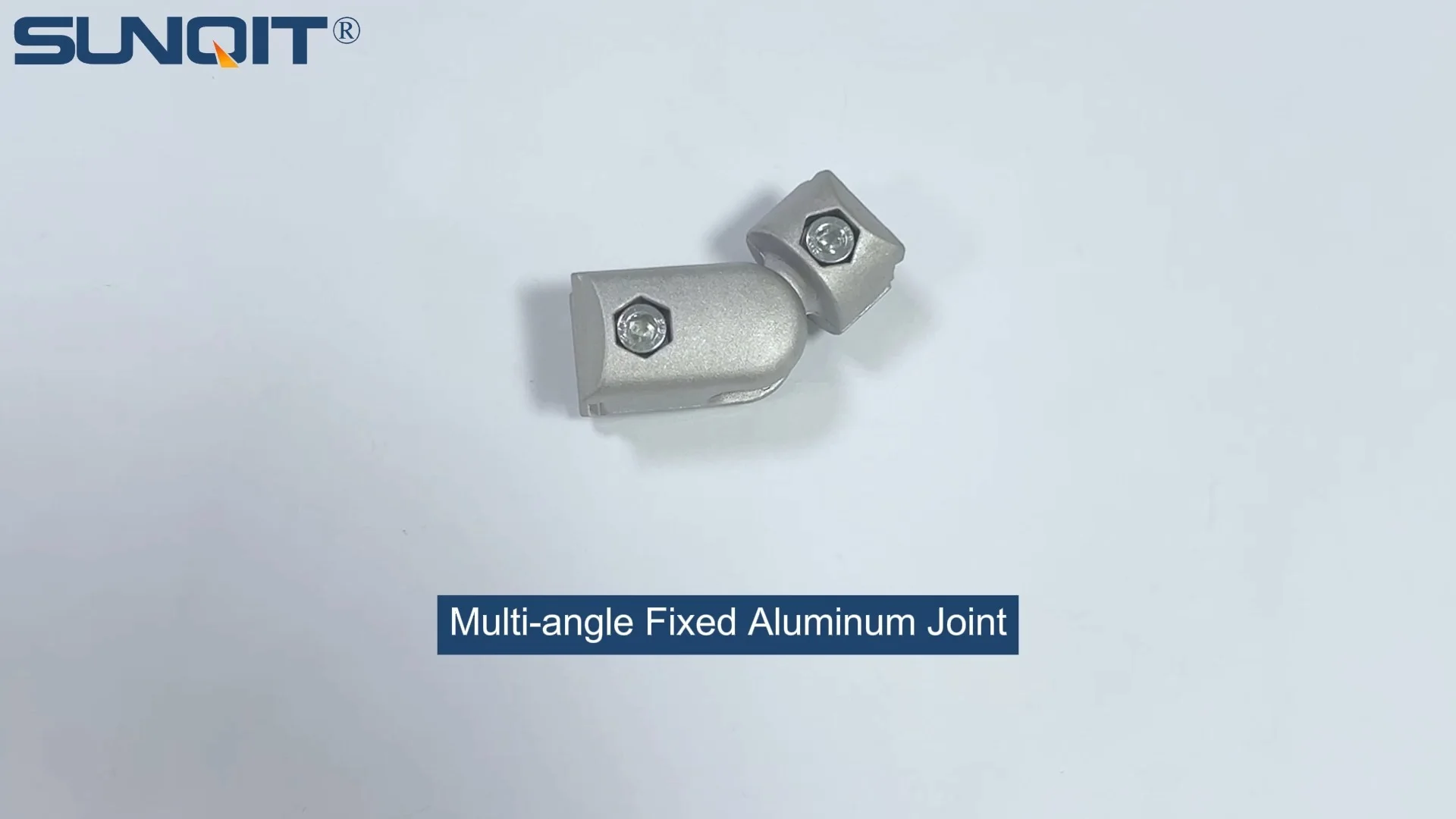
Multi-angle Fixed Aluminum Joint
Aluminum joint pipe connection for two pipe connection and work in mutiple angle.
If you've ever walked through a busy workshop, a sleek manufacturing line, or even a well-organized warehouse, you've probably admired the efficiency of the setup—neat workbenches, streamlined material racks, and smoothly flowing conveyor systems. What you might not notice, though, is the unsung hero holding it all together: the multi-angle fixed aluminum joint. These small but mighty components are the backbone of modular lean systems, allowing teams to build, adjust, and expand workspaces with precision. But if you're in the market for these joints, you've likely realized one thing quickly: their prices can vary wildly. From budget-friendly basics to premium-grade options, navigating the cost landscape can feel overwhelming. That's why we've put together this guide—to break down what influences multi-angle fixed aluminum joint prices, how to budget wisely, and why investing in the right ones matters for your operations.
What Drives the Price of Multi-Angle Fixed Aluminum Joints?
Before diving into numbers, it's critical to understand the factors that shape how much you'll pay for these joints. Like any industrial component, their cost isn't arbitrary—it's a reflection of quality, design, and practicality. Let's break down the key drivers:
1. Material Quality: Not All Aluminum Is Created Equal
Aluminum is the go-to material here, but its grade and processing make a world of difference. Most joints are made from aluminum alloys, with 6061-T6 and 6063 being the most common in industrial settings. Why? These alloys offer a winning combo of strength, corrosion resistance, and machinability. A joint made from 6061-T6, for example, can handle heavier loads and resist wear better than one from a lower-grade alloy. Unsurprisingly, higher-grade aluminum translates to a higher price tag. Cheaper joints might use recycled or lower-purity aluminum, which can bend, crack, or corrode faster—costing you more in replacements down the line.
2. Size, Angle, and Customization
Multi-angle fixed aluminum joints come in a variety of shapes to fit different needs: 90-degree bends for corners, 45-degree angles for slopes, three-way splits for branching structures, and even five-way designs for complex setups. The more specialized the angle or the larger the joint (to fit thicker aluminum profiles), the higher the cost. Custom angles—say, a 135-degree joint for a unique workstation layout—will also bump up the price, as they require tailored tooling and production runs.
3. Quantity: Bulk Discounts Add Up
This one's straightforward: the more you buy, the less you'll pay per unit. Most suppliers, especially lean system suppliers who specialize in these components, offer tiered pricing. For example, buying 100 joints might cost $5 each, but ordering 500 could drop the per-unit price to $3.50. If you're planning a large project—say, outfitting an entire production line with new workbenches and material racks—buying in bulk can lead to significant savings.
4. Supplier Type: Wholesale vs. Retail, Specialized vs. General
Where you buy matters. A general hardware store might stock basic aluminum joints, but they'll charge retail prices (and likely have limited options). On the flip side, a lean system supplier or aluminum profile specialist focuses on these components, offering wholesale pricing, bulk options, and expertise. They'll also understand how joints pair with other parts—like aluminum pipe accessories, roller tracks, or workbench frames—often bundling items for extra value. For example, a supplier might offer a "workbench starter kit" with joints, aluminum profiles, and caster wheels at a discounted rate compared to buying each part separately.
5. Accessories and Add-Ons
Sometimes, the joint itself is just part of the package. Some suppliers include small accessories like locking bolts, washers, or anti-slip gaskets, which can save you from buying them separately. Others might charge extra for these add-ons. For example, a joint with a built-in thread locker (to prevent loosening over time) will cost more than a basic version, but it adds durability. Always check what's included in the price to avoid hidden costs later.
Common Multi-Angle Fixed Aluminum Joint Types and Their Price Ranges
To give you a clearer picture, let's look at some of the most popular multi-angle fixed aluminum joint types and their typical price ranges. Keep in mind that these are estimates—actual costs will vary based on the factors above (material, quantity, supplier, etc.). All prices are for standard, off-the-shelf joints compatible with common aluminum profiles (like 2020, 3030, or 4040 series).
| Joint Type | Key Features | Price Range (Per Unit, Small Quantity) | Price Range (Per Unit, Bulk Order) |
|---|---|---|---|
| 90° Internal Aluminum Joint | Fits inside aluminum profile corners; low-profile design for tight spaces | $4.50 – $7.00 | $2.80 – $4.20 |
| 45° External Aluminum Joint | Mounts externally for angled structures (e.g., sloped material racks) | $5.00 – $8.50 | $3.20 – $5.00 |
| Three-Way Multi-Angle Joint | Connects three aluminum profiles at 90°/45° angles (ideal for workbench corners) | $7.50 – $11.00 | $4.80 – $7.00 |
| Five-Way Straight Joint | Central hub with five connection points; used for complex modular setups | $12.00 – $18.00 | $7.50 – $11.00 |
| Reinforced 90° Crossing Joint | Heavy-duty design for intersecting profiles (e.g., conveyor supports) | $9.00 – $14.00 | $5.50 – $8.50 |
*Note: Prices are in USD and based on mid-grade aluminum (6063 alloy) from reputable lean system suppliers. Premium grades (e.g., 6061-T6) or custom angles may add 20–50% to these ranges.

Budgeting Tips: How to Get the Most Value
Now that you know what affects prices, let's talk about how to budget effectively. The goal isn't just to find the cheapest joints—it's to find the right balance of cost, quality, and functionality for your needs. Here's how:
1. Start by Mapping Your Needs (Avoid Overbuying)
Before you start shopping, take time to outline exactly what you need. How many workbenches, material racks, or conveyor sections are you building? What angles and loads will the joints need to support? For example, a lightweight parts trolley might only require basic 90° joints, while a heavy-duty assembly workbench with a 500-pound load capacity will need reinforced, high-grade joints. Overbuying premium joints for simple projects is a waste of money; underspending on critical joints can lead to wobbly structures and safety risks.
2. Compare Quotes from 3–5 Suppliers
Don't settle for the first quote you get. Reach out to multiple suppliers—ideally a mix of lean system suppliers, aluminum profile specialists, and general industrial wholesalers. Ask for detailed quotes that include the joint type, material grade, quantity, and any accessories. Be upfront about your needs: if you're unsure about the right joint for your aluminum profile, a specialized supplier can guide you (and might even offer free samples to test fit). Comparing quotes also helps you spot outliers—if one supplier's price is 30% lower than others, ask why. It could be a bulk discount, but it might also signal lower quality.
3. Prioritize Long-Term Durability Over Short-Term Savings
It's tempting to go for the cheapest joint to cut costs, but this can backfire. A low-quality joint might save you $2 per unit today, but if it bends under load or corrodes in a humid workshop, you'll end up replacing it (and possibly repairing damage to the aluminum profile or workbench). For high-use areas—like assembly lines or material handling zones—invest in mid-to-premium joints. Look for suppliers who specify the aluminum alloy and offer warranties (e.g., "1-year guarantee against defects"). A slightly higher upfront cost often pays off in fewer replacements and less downtime.
4. Bundle with Aluminum Pipe Accessories for Extra Savings
Many suppliers offer discounts when you buy joints alongside other aluminum pipe accessories, like brackets, end caps, or T-slot nuts. For example, if you need 200 three-way joints for workbenches, ask if you can get a deal by adding 50 aluminum guide rails or 100 roller track connectors to your order. This not only saves money but also ensures compatibility—you won't end up with joints that don't fit your accessories.

Why Choosing the Right Supplier Matters
We've mentioned "lean system supplier" a few times, and for good reason: these suppliers specialize in the components that make lean manufacturing and modular workspaces possible. Unlike general hardware stores, they understand the nuances of how joints, aluminum profiles, and accessories work together. Here's what to look for when vetting a supplier:
- Reputation: Check reviews or ask for references. A supplier with a track record of delivering on time and honoring warranties is worth the investment.
- Certifications: Look for ISO 9001 certification, which indicates quality management standards. This is especially important if you're using joints in regulated industries (e.g., aerospace or medical device manufacturing).
- Technical Support: Can they help you choose the right joint for your aluminum profile? Do they offer design assistance for complex setups? Good support can save you from costly mistakes.
- Minimum Order Quantities (MOQs): If you only need a small number of joints, make sure the supplier's MOQ aligns with your needs. Some wholesale suppliers have high MOQs, but many will work with small businesses for a slightly higher per-unit price.

Real-World Example: Budgeting for a Small Workshop Upgrade
Let's put this all into practice with a hypothetical scenario. Imagine you run a small electronics assembly workshop and need to build 8 new workbenches. Each workbench requires: 4x 90° internal joints (for the frame corners), 2x three-way joints (for shelf supports), and 1x 45° external joint (for a sloped tool tray). That's 4+2+1=7 joints per workbench, or 56 joints total. You also need aluminum profiles (4040 series) and basic accessories like bolts and end caps.
Here's how the budget might break down:
- Joints (small quantity, retail supplier): 56 joints at $6.50 average = $364
- Joints (bulk, lean system supplier): 56 joints at $3.80 average = $212.80 (saves $151.20)
- Aluminum profiles + accessories (bundled with joints): $450 (vs. $520 if bought separately)
- Total project cost: ~$662.80 (vs. $884 with retail suppliers)
By choosing a lean system supplier and buying in bulk, you save over $220—enough to invest in higher-quality caster wheels for the workbenches, making them more mobile. That's the power of smart budgeting.
Final Thoughts: Invest in What Holds You Together
Multi-angle fixed aluminum joints might seem like small components, but they play a huge role in the safety, efficiency, and flexibility of your workspace. When budgeting, remember that price is just one piece of the puzzle—quality, compatibility, and supplier reliability matter just as much. By understanding what drives costs, comparing options, and prioritizing long-term value, you'll not only save money upfront but also build a workspace that grows with your needs. After all, a sturdy workbench or a smoothly flowing material rack starts with the right joint.