- Company Articles
- Products and Technology
- Product knowledge
- Multi-Angle Fixed Aluminum Joint Reusability: Sustainable Manufacturing

Multi-Angle Fixed Aluminum Joint Reusability: Sustainable Manufacturing
Related Product
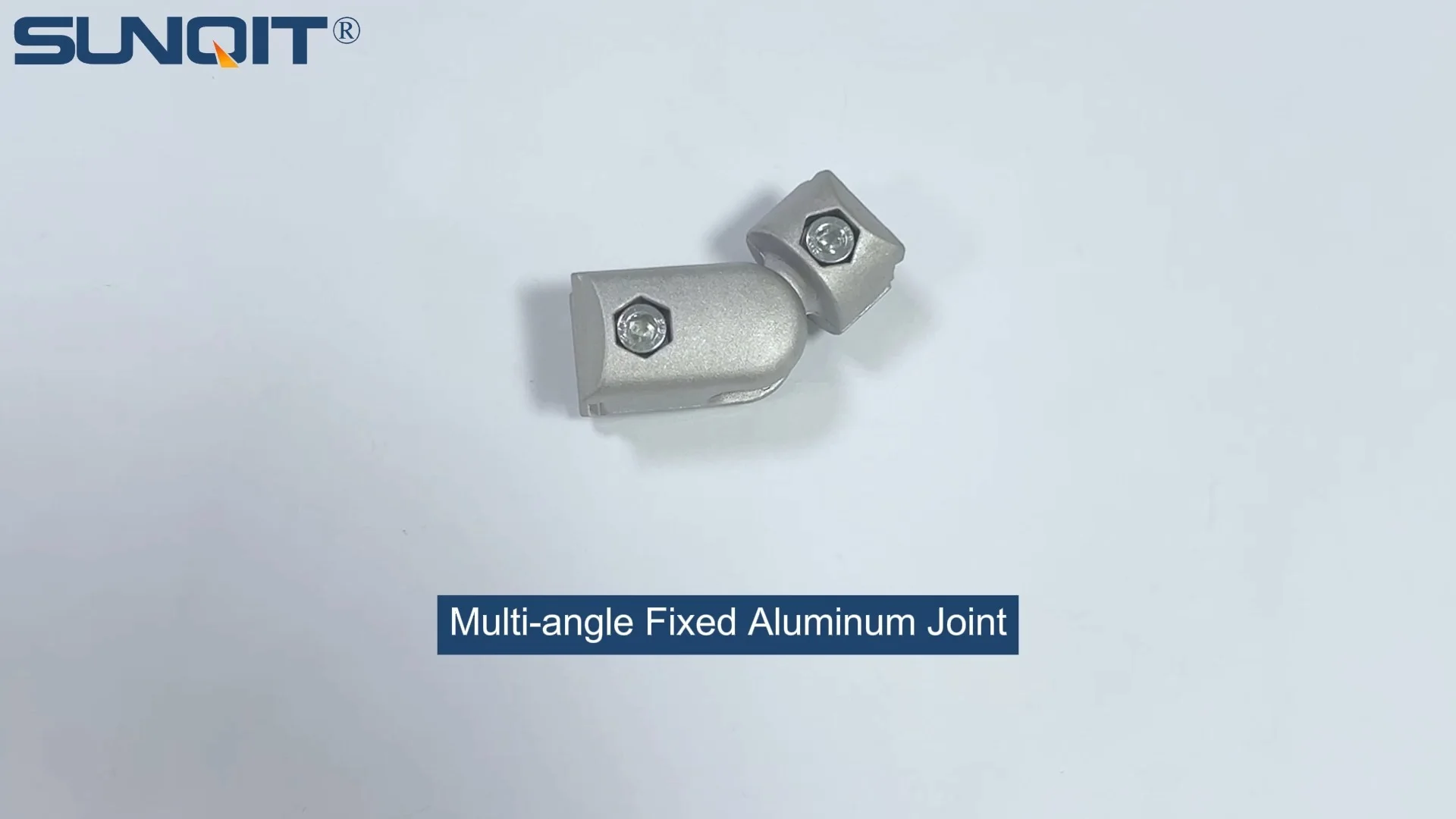
Multi-angle Fixed Aluminum Joint
Aluminum joint pipe connection for two pipe connection and work in mutiple angle.
In the fast-paced world of manufacturing, where efficiency and cost-effectiveness often take center stage, there's a growing realization that sustainability can no longer be an afterthought. Factories and production facilities worldwide are grappling with the dual challenge of meeting increasing demand while reducing their environmental footprint. From excess waste in material usage to the carbon emissions tied to frequent equipment replacements, the industry's traditional practices have left a significant ecological mark. But what if there was a component that could bridge the gap between operational agility and sustainability? Enter the multi-angle fixed aluminum joint—a small but mighty innovation that's quietly revolutionizing how manufacturers build, adapt, and reuse their production setups. In this article, we'll explore how this unassuming piece of hardware is driving sustainable manufacturing by prioritizing reusability, compatibility with aluminum lean pipe and aluminum profile systems, and long-term value for businesses.
The Hidden Cost of "One-and-Done" Manufacturing Setups
Walk into any traditional manufacturing facility, and you'll likely encounter workbenches bolted to the floor, material racks welded into fixed shapes, and conveyor systems that seem permanently frozen in place. These setups are designed for stability, but they come with a hidden cost: inflexibility. When a production line needs to be reconfigured for a new product, or when demand shifts and workflows change, these rigid structures become liabilities. Welded steel frames, glued components, and one-time-use fasteners mean that disassembling old setups often results in broken parts, bent metal, and piles of waste destined for landfills. It's a cycle that repeats itself every time a factory adapts—and it's one that's increasingly unsustainable.
Consider the numbers: A 2023 report by the Manufacturing Sustainability Council found that the average factory discards 15-20% of its material handling equipment every year due to reconfiguration needs. For a mid-sized facility, that translates to thousands of pounds of steel, plastic, and metal waste annually. Not only does this waste harm the environment, but it also hits manufacturers where it hurts most: the bottom line. Replacing custom-built workbenches, racks, and conveyors costs time, money, and resources—resources that could be better invested in innovation or employee development.
This is where the multi-angle fixed aluminum joint steps in. Unlike traditional welded joints or single-angle fasteners, this component is designed with adaptability in mind. Its core purpose? To connect aluminum lean pipe and aluminum profile systems in ways that are both strong and reversible. But reusability isn't just a buzzword here—it's a design philosophy that's changing how manufacturers think about their production infrastructure.
Multi-Angle Fixed Aluminum Joints: The Basics of a Sustainable Solution
At first glance, a multi-angle fixed aluminum joint might look like any other industrial connector. But upon closer inspection, its genius lies in its simplicity and intentionality. Made from high-grade aluminum alloy, these joints are lightweight yet surprisingly durable—capable of supporting heavy loads without compromising on flexibility. What truly sets them apart, though, is their ability to pivot, lock, and reposition across multiple angles (hence the name), all while maintaining a secure hold on aluminum lean pipe and aluminum profile components.
Let's break down how they work. Imagine a production team needs to build a material rack for incoming components. Using aluminum lean pipe (a lightweight, corrosion-resistant alternative to traditional steel pipe) and multi-angle fixed aluminum joints, they can assemble the rack in hours, not days. The joints slide onto the pipes, lock into place with a simple twist or bolt, and can be adjusted to form 30°, 45°, 90°, or even 135° angles as needed. When the product line changes six months later, instead of cutting the rack apart or leaving it to collect dust, the team can disassemble the joints, reuse the aluminum lean pipe, and reconfigure the entire structure into a new workbench or conveyor support—all without generating waste.
But the magic doesn't stop at disassembly. These joints are engineered to withstand repeated use. Unlike plastic fasteners that crack after a few cycles or steel bolts that rust and seize up, aluminum joints resist corrosion, maintain their structural integrity, and keep their locking mechanisms intact over time. This durability is key to their reusability: a single multi-angle fixed aluminum joint can be part of dozens of configurations over its lifetime, dramatically reducing the need for new components.
Compatibility: The Glue That Binds Sustainable Systems
A joint is only as useful as the system it connects, and multi-angle fixed aluminum joints excel here too. They're designed to work seamlessly with two of the most sustainable building blocks in modern manufacturing: aluminum lean pipe and aluminum profile. Let's take a closer look at why this compatibility matters.
Aluminum lean pipe, often referred to as "lean tube," is a hollow aluminum pipe that's lightweight, strong, and infinitely recyclable. Unlike steel pipe, which is heavy and prone to rust, aluminum lean pipe can be easily transported, cut to length, and reused without degradation. When paired with multi-angle fixed aluminum joints, it becomes the backbone of modular production setups—think workbenches, turnover trolleys, and flow racks that can be adjusted on the fly.
Aluminum profile, on the other hand, is a more rigid, extruded aluminum component with T-slots for attaching accessories like shelves, brackets, or panels. Used in everything from machine guards to assembly line stations, aluminum profile systems are known for their precision and strength. Multi-angle fixed aluminum joints bridge the gap between lean pipe and profile systems, allowing manufacturers to mix and match components based on their needs. For example, a workbench might use aluminum profile for the frame (for stability) and aluminum lean pipe for the shelving (for flexibility), all connected by multi-angle joints. This versatility means fewer specialized parts, less waste, and more opportunities to reuse existing inventory.
| Feature | Traditional Welded Steel Joints | Multi-Angle Fixed Aluminum Joints |
|---|---|---|
| Reusability | Once welded, joints are permanent; disassembly results in damage or waste. | 100% reusable; can be disassembled, adjusted, and reused in new configurations. |
| Compatibility | Limited to specific steel pipe sizes; no cross-compatibility with other materials. | Works with aluminum lean pipe, aluminum profile, and accessories (e.g., caster wheels, roller tracks). |
| Installation Time | Requires welding equipment and skilled labor; hours to days per setup. | Tool-free or minimal tools needed; assemblies completed in hours. |
| Environmental Impact | High waste from disposal; high carbon footprint from steel production and welding. | Low waste (reusable); low carbon footprint (aluminum is highly recyclable). |
| Cost Over Time | Low upfront cost, but high long-term costs due to frequent replacements. | Slightly higher upfront cost, but 50-70% savings over time due to reusability. |

Reusability in Action: Real-World Benefits for Lean Systems
Lean manufacturing—a philosophy centered on minimizing waste and maximizing value—has been a cornerstone of efficient production for decades. But even lean systems can fall short when it comes to sustainability if they rely on disposable infrastructure. Multi-angle fixed aluminum joints align perfectly with lean principles by eliminating three types of waste: material waste (from discarded setups), time waste (from rework), and energy waste (from manufacturing new components).
Take, for example, a electronics manufacturer that produces both smartphones and tablets. Their assembly lines need to switch between products weekly, requiring quick changes to workbench heights, conveyor angles, and component racks. In the past, they used custom-built steel workbenches with welded joints. Each switch meant hiring a contractor to cut and reweld the benches, generating metal shavings, scrap steel, and downtime. Today, they've replaced those steel setups with aluminum lean pipe workbenches connected by multi-angle fixed aluminum joints. Now, when the line needs to switch, two workers can disassemble the workbench in 30 minutes, adjust the joint angles to the new height, and reassemble it—no contractors, no waste, no downtime.
Another example comes from a automotive parts supplier. They used to rely on wooden pallets and plastic bins for material handling, which would crack, warp, or break after a few uses. Switching to aluminum lean pipe turnover trolleys (built with multi-angle joints) transformed their process. The trolleys are lightweight enough for workers to move by hand, durable enough to withstand daily use, and when they need to be resized for new parts, the joints are simply repositioned. Over three years, the supplier estimates they've saved $120,000 on material handling equipment and reduced waste by 80%—all while improving workflow efficiency.
Beyond the Factory Floor: Environmental Impact
The environmental benefits of multi-angle fixed aluminum joints extend far beyond the factory walls. Let's start with aluminum itself: it's one of the most recyclable materials on the planet, with a recycling rate of over 95% in the industrial sector. When an aluminum joint or pipe reaches the end of its usable life (which, with reusability, can take decades), it can be melted down and reformed into new components with 95% less energy than producing new aluminum. Compare that to steel, which loses strength when recycled, or plastic, which often ends up in landfills even after "recycling."
Then there's the reduction in carbon emissions. The Manufacturing Carbon Footprint Institute estimates that for every ton of aluminum components reused (instead of replaced), factories reduce their carbon output by approximately 2.5 tons of CO2. For a large manufacturer using thousands of joints annually, this adds up to significant emissions savings. And because multi-angle joints reduce the need for shipping new components (since old ones are reused), there's an added bonus: fewer trucks on the road, less fuel burned, and lower transportation-related emissions.
Waste reduction is perhaps the most tangible benefit. A single multi-angle fixed aluminum joint might replace 5-10 traditional fasteners over its lifetime, and each of those fasteners would have required raw materials, manufacturing energy, and packaging. By keeping joints in circulation, manufacturers are effectively cutting down on the "extraction-to-disposal" cycle that plagues the industry.

Overcoming the Myths: Why Skeptics Are Converting
Despite their benefits, some manufacturers remain hesitant to adopt multi-angle fixed aluminum joints. Common myths include concerns about strength ("Aluminum isn't as strong as steel!"), cost ("They're more expensive upfront!"), and complexity ("Will my team know how to use them?"). Let's address these head-on.
Myth #1: "Aluminum joints aren't strong enough for heavy loads." While it's true that steel is denser than aluminum, modern aluminum alloys (like the ones used in these joints) are engineered for strength. A multi-angle fixed aluminum joint can support up to 500 pounds per connection, which is more than enough for most material handling, workbench, and light conveyor applications. For heavier loads, joints can be reinforced with additional brackets or paired with thicker aluminum profile systems—still avoiding the need for welding.
Myth #2: "The upfront cost is too high." It's true: aluminum joints cost more than basic steel bolts or plastic fasteners. But when you factor in reusability, the math shifts dramatically. A $10 aluminum joint that's reused 10 times costs $1 per use, while a $2 steel bolt that's used once costs $2 per use. Over time, aluminum joints are not just cost-effective—they're cheaper. Plus, many suppliers offer bulk discounts, and the labor savings from faster assembly/disassembly further offset the initial investment.
Myth #3: "My team won't know how to use them." On the contrary, multi-angle fixed aluminum joints are designed for simplicity. Most require no special tools—just a wrench or even a hand-tightened knob. Suppliers often provide free training materials, and assembly is intuitive enough that a team can learn the basics in an hour. In fact, many manufacturers report that workers prefer using aluminum systems because they're lighter and easier to adjust than steel setups.

Looking Ahead: The Future of Sustainable Manufacturing
As sustainability regulations tighten and consumers demand greener products, manufacturers are under increasing pressure to innovate. Multi-angle fixed aluminum joints are just one piece of the puzzle, but they're a critical one. They represent a shift from "take-make-waste" to "reduce-reuse-recycle"—a circular economy model that's becoming essential for long-term success.
What does the future hold? We're already seeing suppliers develop smart joints with embedded sensors that track usage, wear, and load capacity—helping manufacturers optimize reusability and prevent failures. There's also growing interest in combining aluminum systems with renewable energy-powered factories, creating closed-loop ecosystems where waste is virtually eliminated. And as 3D printing technology advances, we may soon see custom aluminum joint designs tailored to specific applications, further enhancing their versatility.
But perhaps the most exciting trend is the cultural shift. Younger engineers and production managers are entering the workforce with a stronger focus on sustainability, and they're demanding tools that align with their values. Multi-angle fixed aluminum joints aren't just tools—they're symbols of a manufacturing industry that's finally growing up, recognizing that efficiency and sustainability can go hand in hand.
Conclusion: Small Joints, Big Impact
In the grand scheme of manufacturing, multi-angle fixed aluminum joints are small components. But their impact is anything but minor. By prioritizing reusability, compatibility with aluminum lean pipe and aluminum profile systems, and environmental responsibility, these joints are helping factories reduce waste, cut costs, and build a more sustainable future. They're proof that sustainability doesn't have to mean sacrificing efficiency—in fact, it often enhances it.
For manufacturers ready to take the leap, the message is clear: the future of production isn't about building things that last forever. It's about building things that can be remade, repurposed, and reused—one joint at a time. And in that future, multi-angle fixed aluminum joints will be at the center of it all.