- Company Articles
- Products and Technology
- Product knowledge
- Multi-Angle Fixed Aluminum Joint Sizing Chart: Choosing the Right Fit

Multi-Angle Fixed Aluminum Joint Sizing Chart: Choosing the Right Fit
Related Product
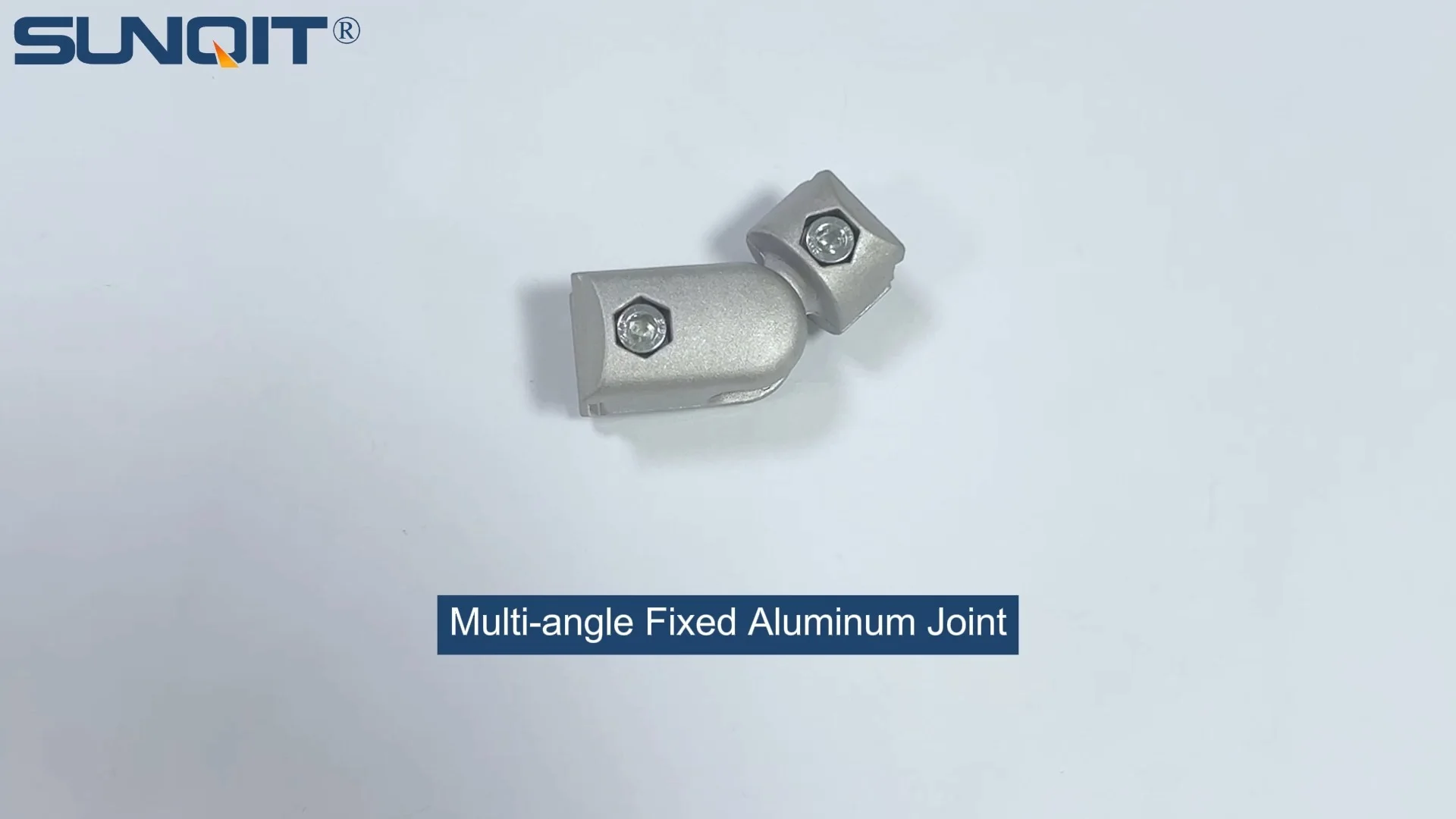
Multi-angle Fixed Aluminum Joint
Aluminum joint pipe connection for two pipe connection and work in mutiple angle.
The Unsung Hero of Your Workshop: Why Joints Matter More Than You Think
Let's start with a scenario we've all seen (or maybe even experienced). Picture this: A busy production floor where a team is assembling electronics. The workbench they're using wobbles slightly every time someone leans on it. A material rack nearby, loaded with heavy components, creaks when a operator pulls a bin off the shelf. By midday, a small part of the rack has started to bend—just enough to make everyone glance nervously at it. Sound familiar?
More often than not, these issues trace back to one tiny but critical component: the joints holding everything together. In particular, multi-angle fixed aluminum joints are the silent workhorses of lean manufacturing setups, connecting aluminum pipes, profiles, and accessories into stable, functional structures like workbenches, material racks, and conveyor systems. But here's the catch: if these joints aren't sized correctly for your specific aluminum pipes and profiles, even the sturdiest materials become unreliable. Loose joints lead to instability; tight joints warp pipes or strip threads. Either way, you're looking at downtime, safety risks, and unnecessary costs.
That's why getting the sizing right isn't just about "following specs"—it's about building a workshop that runs smoothly, safely, and efficiently. In this guide, we'll break down everything you need to know about multi-angle fixed aluminum joints, from why sizing matters to how to measure your pipes and profiles, and even a handy sizing chart to take the guesswork out of your next project.
What Even Is a Multi-Angle Fixed Aluminum Joint?
Before we dive into sizing, let's make sure we're all on the same page. A multi-angle fixed aluminum joint is a specialized connector designed to join aluminum pipes or profiles at (you guessed it) multiple angles—think 30°, 45°, 90°, or even 135°. Unlike adjustable joints, these are "fixed," meaning once you lock them in place, they stay put—no wiggle room, no unexpected shifts.
These joints are typically made from high-grade aluminum alloy, anodized to resist corrosion (perfect for busy workshops where spills or humidity are common). They come with clamping mechanisms—usually screws or bolts—that tighten around the aluminum pipe or profile, creating a secure bond. Some even have reinforced edges for extra strength, especially for heavy-duty applications like material racks or workbenches supporting heavy machinery.
But here's the key detail: every joint is engineered to fit specific pipe diameters, profile thicknesses, and load capacities. You wouldn't use a wrench meant for a 10mm bolt on a 15mm bolt, right? The same logic applies here. A joint sized for a 20mm aluminum pipe will never work properly with a 30mm pipe—even if you force it, the connection will be weak and short-lived.
Quick Tip:
Multi-angle fixed aluminum joints are often sold alongside "aluminum pipe accessories," like end caps, clamps, or foot bases. While these accessories enhance functionality, they won't fix a poorly sized joint. Always prioritize joint sizing first!

The Cost of Getting It Wrong: Why Sizing Isn't Optional
Let's talk about the real-world impact of mismatched joints. It's not just about a wobbly workbench—though that's annoying enough. The consequences can ripple through your entire operation:
Safety Risks:
A loose joint on a material rack could lead to a collapse, injuring workers or damaging expensive inventory. On a workbench, instability might cause tools or parts to fall, leading to accidents or defective products.
Wasted Time:
When joints fail, you're not just stopping production to fix them—you're also spending time disassembling, returning incorrect parts, and reordering. In lean manufacturing, where every minute counts, this is a major setback.
Premature Wear:
Forcing a joint onto a pipe that's too large can warp the pipe or strip the joint's threads. Conversely, a joint that's too big for the pipe will slip and grind against the material, wearing both down faster. Either way, you're replacing parts sooner than you should.
Compromised Efficiency:
A stable workspace isn't just about safety—it's about productivity. When workers don't trust their equipment, they move more slowly, double-checking stability instead of focusing on tasks. A rickety material rack might mean storing fewer parts to avoid overloading it, leading to more trips to fetch supplies.
The good news? These issues are entirely preventable. All it takes is understanding how to size your multi-angle fixed aluminum joints correctly. And that starts with knowing your pipes and profiles inside out.
Real-Life Example:
A local manufacturer once reached out to us after repeatedly replacing their workbenches every 6–8 months. The problem? They were using 30mm aluminum pipes with joints designed for 25mm pipes. The joints couldn't clamp tightly enough, so the workbenches wobbled, stressing the pipes until they bent. After switching to correctly sized joints, their workbenches lasted over 3 years—saving them thousands in replacement costs and downtime.

Know Your Materials: Aluminum Pipes, Profiles, and What to Measure
To size a joint properly, you first need to know your aluminum pipes and profiles like the back of your hand. Let's break down the key measurements you'll need:
1. Aluminum Pipe Outer Diameter (OD):
This is the most critical measurement. Joints are designed to clamp around the outside of the pipe, so you need the outer diameter (not the inner diameter). Common sizes include 20mm, 28mm, 30mm, and 40mm, but always measure your specific pipes—manufacturers sometimes have slight variations.
2. Aluminum Profile Thickness:
If you're using aluminum extrusion profiles (like the T-slot profiles common in workbenches), the wall thickness matters. Thicker profiles (e.g., 2mm vs. 1.5mm) require joints with deeper clamping grooves to ensure a secure grip.
3. Load Capacity:
How much weight will the structure hold? A small workbench for light assembly might need a joint rated for 50kg, while a material rack holding heavy tools could require 150kg or more. Always check the joint's max load rating—this is usually listed by the supplier.
4. Angle Requirements:
Multi-angle joints can connect pipes at fixed angles (30°, 45°, 90°, etc.). Make sure the joint's angle matches your project—using a 90° joint where a 45° angle is needed will create stress points.
Pro tip: Invest in a good pair of digital calipers. They're affordable and will give you precise measurements, avoiding the guesswork of using a tape measure.

Multi-Angle Fixed Aluminum Joint Sizing Chart: Your Go-To Reference
To take the guesswork out of sizing, we've created a detailed chart for the most common multi-angle fixed aluminum joints, compatible aluminum pipes, profiles, and applications. Keep in mind that specific brands may have slight variations, so always cross-check with your supplier's specs. But this will give you a solid starting point:
| Joint Type | Compatible Aluminum Pipe OD (mm) | Compatible Profile Thickness (mm) | Max Load Capacity (kg) | Common Angles | Typical Applications |
|---|---|---|---|---|---|
| Multi-Angle Fixed Joint - Light Duty (Type A) | 20mm, 25mm | 1.0mm - 1.5mm | 30 - 50kg | 45°, 90°, 135° | Small workbenches (e.g., Workbench E - Single Deck), lightweight material racks, turnover trolleys |
| Multi-Angle Fixed Joint - Medium Duty (Type B) | 28mm, 30mm | 1.5mm - 2.0mm | 50 - 100kg | 30°, 45°, 90°, 135° | Standard workbenches, Material Rack B (3 Row/3 Floor), aluminum guide rails, roller track systems |
| Multi-Angle Fixed Joint - Heavy Duty (Type C) | 30mm, 40mm | 2.0mm - 3.0mm | 100 - 200kg | 90°, 135° (reinforced) | Heavy-duty material racks, conveyor supports, workbenches with mounted machinery |
| Multi-Angle Fixed Joint - Profile-Specific (Type D) | N/A (for T-slot profiles) | 2020, 3030, 4040 aluminum profiles | 80 - 150kg | 45°, 90°, 135° | Aluminum profile workbenches (e.g., Aluminum Workbench A), modular conveyor systems, custom racks |
Pro Tip:
Notice that some joints are labeled "profile-specific"? These are designed for T-slot aluminum profiles (like 2020 or 4040 profiles), which have grooves for accessories. They clamp into the profile's slots instead of around the pipe, so pipe diameter isn't the key measurement here—profile size (e.g., 2020 = 20mm x 20mm) is.
Step-by-Step: How to Measure for Your Perfect Joint
Now that you have the chart, let's walk through the process of finding the right joint for your project. It's easier than you think—just follow these steps:
Step 1: Identify Your Project's Needs
Start by defining what you're building. Is it a workbench for assembly? A material rack for heavy parts? A conveyor roller track? This will determine the load capacity and angle requirements. For example, a roller track that slopes downward to feed parts to a workstation will need joints that can handle both the weight of the track and the constant motion of parts.
Step 2: Measure Your Aluminum Pipe or Profile
For pipes: Use calipers to measure the outer diameter (OD). Measure at multiple points—pipes can sometimes be slightly oval, especially if they've been stored improperly. For profiles: If using T-slot profiles, note the profile size (e.g., 3030 = 30mm x 30mm) and wall thickness (usually listed by the supplier).
Step 3: Check the Load Rating
Estimate the maximum weight the structure will hold. For a workbench, this includes the weight of tools, parts, and workers leaning on it. For a material rack, calculate the weight of the heaviest bin plus the rack itself. Add 20% to this estimate to be safe—you never know when you might need to store something heavier than expected.
Step 4: Match to the Chart
Use the sizing chart above to find a joint with compatible pipe diameter/profile size, thickness, and load capacity. If your project requires multiple angles (e.g., a workbench with a shelf at 90° and a side rail at 45°), make sure the joint lists those angles.
Step 5: Test Before Full Assembly
Before building the entire structure, test the joint with a short section of pipe or profile. Tighten it to the recommended torque (usually listed in the joint's specs) and check for movement. If it wobbles, double-check your measurements—you might need a different size.
Scenario: Building a Material Rack B (3 Row/3 Floor)
Let's say you're assembling a Material Rack B, which has 3 rows and 3 floors for storing bins. The aluminum pipes you're using are 30mm OD with a 1.8mm wall thickness. The rack will hold bins weighing up to 40kg each, and there are 3 bins per floor (9 total), so total load is around 360kg. Divided across the joints (each corner has 2-3 joints), each joint should handle at least 100kg. From the chart, a Medium Duty (Type B) joint, compatible with 30mm OD pipes and 1.5-2.0mm thickness, with a 50-100kg load rating, would work perfectly here.
Beyond the Basics: Special Cases and Accessories
While the chart covers most common cases, every workshop has unique needs. Here are a few special scenarios to keep in mind:
Corrosive Environments:
If your workshop deals with liquids, chemicals, or high humidity, opt for joints with stainless steel components or extra anodization. Some suppliers offer "stainless steel pipe series" joints that resist rust better than standard aluminum.
High-Temperature Areas:
For workshops with heat (e.g., near ovens or welding stations), check the joint's heat resistance. Most aluminum joints handle up to 100°C, but extreme heat can weaken the clamping mechanism.
Accessories Matter Too:
Even with the right joint, accessories like caster wheels or roller track connectors can affect stability. For example, if you're adding casters to a workbench, make sure the joint where the caster attaches is rated for the extra movement and load.
Custom Angles:
If your project needs an angle not listed (e.g., 60°), look for "multi-angle" joints that allow for adjustable angles before locking. These are less common but essential for unique setups.
Final Thoughts: Invest in the Right Joint, Invest in Your Workshop
At the end of the day, multi-angle fixed aluminum joints might seem like small parts, but they're the foundation of your workshop's efficiency and safety. Taking the time to measure your aluminum pipes, check your profiles, and match them to the right joint isn't just "being careful"—it's smart business. It reduces downtime, prevents accidents, and extends the life of your equipment.
So, the next time you're planning a new workbench, material rack, or conveyor system, start with the joints. Use the sizing chart above as a guide, measure twice, and don't hesitate to ask your supplier for help if you're unsure. After all, a workshop is only as strong as the joints holding it together.
Here's to stable workbenches, creak-free racks, and a production floor that runs like clockwork—one well-sized joint at a time.