- Company Articles
- Products and Technology
- Procurement Guidelines
- Multi-Angle Fixed Aluminum Joint Supplier Comparison: Quality vs. Cost

Multi-Angle Fixed Aluminum Joint Supplier Comparison: Quality vs. Cost
Related Product
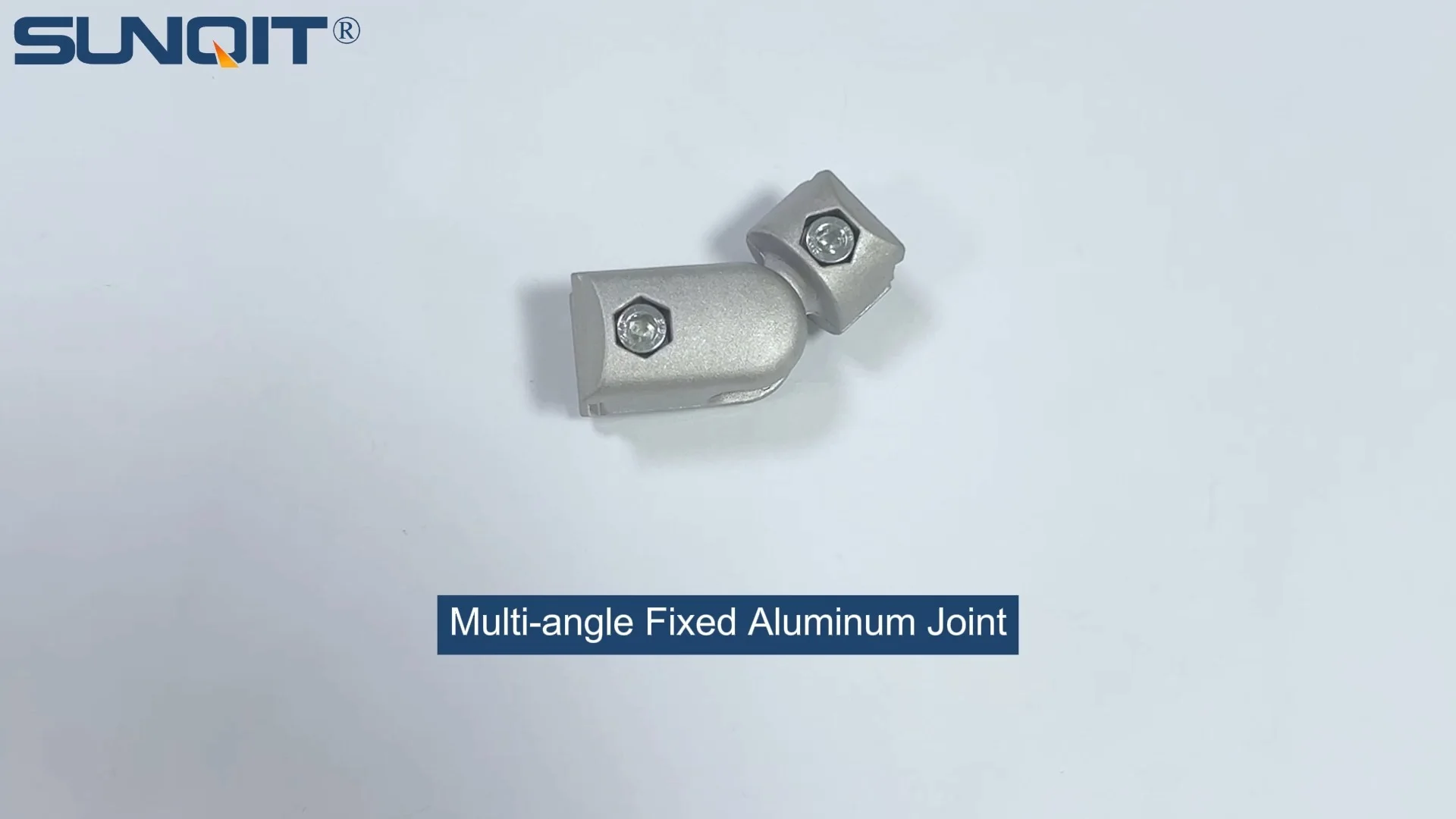
Multi-angle Fixed Aluminum Joint
Aluminum joint pipe connection for two pipe connection and work in mutiple angle.
Walk into any modern manufacturing facility, and you'll likely spot them: workbenches with seamless corners, material racks with precisely aligned shelves, and assembly lines where every component flows like clockwork. Behind that precision often lies a small but critical component: the multi-angle fixed aluminum joint . These unassuming connectors are the unsung heroes of lean manufacturing, holding together aluminum pipes, profiles, and accessories to create everything from workstations to flow racks. But not all joints are created equal—and choosing the right supplier can mean the difference between a production line that hums and one that sputters with downtime, repairs, and inefficiencies.
In this guide, we'll dive deep into the world of multi-angle fixed aluminum joint suppliers, focusing on the eternal tug-of-war between quality and cost. We'll explore what makes a supplier stand out, how to evaluate their offerings beyond the price tag, and why cutting corners on these tiny but vital parts can end up costing your business far more in the long run. Along the way, we'll touch on related components like aluminum pipe accessories and aluminum profile systems, showing how the right joint can elevate your entire lean setup. Whether you're a small workshop upgrading your first workbench or a large manufacturer scaling your production lines, this comparison will help you make a decision that balances durability, performance, and budget.
Why Multi-Angle Fixed Aluminum Joints Matter More Than You Think
Let's start with the basics: what even is a multi-angle fixed aluminum joint? Picture this: you're building a custom workbench using aluminum pipes. You need to connect a vertical leg to a horizontal beam at a 90-degree angle, but also add a diagonal brace at 45 degrees for stability. A multi-angle fixed joint is the piece that lets you do that—securely, precisely, and without welding. Unlike rigid plastic connectors that crack under stress or flimsy steel joints that rust, these aluminum joints are designed to handle the daily grind of manufacturing: the weight of tools, the vibration of machinery, and the constant adjustments that come with lean process improvements.
The stakes here are higher than you might realize. A poorly made joint can lead to wobbly workbenches that throw off assembly precision, causing product defects. It can mean material racks that sag under the weight of components, leading to damaged inventory or even workplace accidents. And when joints fail, they don't just require replacement—they disrupt workflows, delay production, and eat into your team's time as they stop to make repairs. For lean system suppliers, this isn't just about selling a part; it's about selling reliability. A joint that lasts 10 years instead of 2 doesn't just save you money on replacements—it saves you the hidden costs of downtime and inefficiency.
Real-World Impact: A mid-sized electronics manufacturer in Ohio once shared with us that switching to high-quality multi-angle joints reduced their workbench repair costs by 62% in a single year. Their old plastic joints would crack every 3–4 months, requiring 2–3 hours of downtime per repair. The new aluminum joints? They've been in use for over 3 years with zero failures.
Key Criteria for Evaluating Suppliers: Quality First, Cost Second
When comparing suppliers, it's easy to fixate on the per-unit price. But smart buyers know that "cost" is more than just the number on the invoice. It's the total cost of ownership: how long the joint lasts, how well it performs under stress, and how easy it is to install and maintain. Let's break down the critical quality factors to consider, then see how they stack up against cost.
1. Material Quality: Not All Aluminum Is Created Equal
Aluminum comes in different grades, and the grade used in your joint directly impacts its strength and durability. The best suppliers use 6061 or 6063 aluminum alloys—both known for their excellent strength-to-weight ratios and resistance to corrosion. 6061, often called "aircraft-grade aluminum," has higher tensile strength (around 45,000 psi) and is ideal for heavy-duty applications like industrial workbenches or material racks. 6063, while slightly less strong, offers better extrudability, making it perfect for intricate joint designs with precise angles.
Beware of suppliers using recycled or low-grade aluminum. These materials often have impurities that weaken the joint, making it prone to bending or snapping under load. Ask suppliers for material certificates—reputable ones will happily provide test reports showing the alloy grade, tensile strength, and corrosion resistance. If a supplier hesitates to share this info, that's a red flag.
2. Manufacturing Precision: Tolerances That Make a Difference
Imagine buying a joint advertised as "90-degree fixed," only to find that when you attach your aluminum pipe, it's actually at an 88-degree angle. That tiny 2-degree error might not seem like much, but over the length of a workbench, it can create a misalignment that throws off your entire setup. Precision manufacturing is key here, and it starts with the tools: computer numerical control (CNC) machines that cut angles to within 0.1 degrees, and automated inspection systems that check every joint before it leaves the factory.
Look for suppliers who invest in advanced manufacturing tech. A supplier with outdated machinery might offer lower prices, but their joints will have inconsistent tolerances. This leads to frustration during assembly—you'll spend extra time adjusting pipes to fit, or worse, end up with a structure that's never truly stable. Ask about their quality control process: Do they inspect 100% of joints, or just a sample? Do they have a warranty for defects in manufacturing?
3. Coating and Finish: Protection Against the Elements
Aluminum naturally resists corrosion, but that doesn't mean it's invincible—especially in harsh environments. Manufacturing facilities with high humidity, exposure to chemicals, or frequent cleaning (like food processing or pharmaceutical plants) need joints with extra protection. Anodized finishes are the gold standard here: an electrochemical process that creates a hard, protective layer on the aluminum surface. Anodized joints are scratch-resistant, fade-resistant, and far more durable than those with just a painted or powder-coated finish.
The thickness of the anodized layer matters too. A thin layer (below 5 microns) might look good initially but will wear off quickly in high-traffic areas. Top suppliers offer anodization layers of 10–15 microns, which can withstand years of scrubbing, impacts, and exposure to moisture. If your facility uses coolants, oils, or cleaning agents, ask suppliers if their coatings are chemical-resistant—some cheaper finishes can degrade when exposed to common industrial fluids.
4. Compatibility: Playing Well With Others
Unless you're building a completely custom system from scratch, your multi-angle joints need to work with existing aluminum pipe accessories and profiles. This includes things like pipe diameters, bracket styles, and even fastener types. A joint that only fits a specific brand's proprietary pipes might lock you into a single supplier down the line, limiting your options and driving up costs. Look for suppliers who design their joints to industry standards—for example, compatible with 28mm or 40mm aluminum pipes, which are common in lean manufacturing setups.
Compatibility also extends to installation tools. Some joints require special wrenches or adapters, which can be a hassle if your team doesn't have them on hand. The best suppliers design joints to work with standard tools, reducing the learning curve and making assembly faster. After all, time saved during setup is another hidden cost saver—your team shouldn't have to attend a training session just to install a joint.

Supplier Spotlight: Comparing 4 Leading Providers
To make this tangible, let's compare four hypothetical but representative suppliers. We'll call them Supplier A (Budget-Focused), Supplier B (Mid-Range), Supplier C (Premium Quality), and Supplier D (Niche Specialist). Each has its own strengths and weaknesses, and by examining their offerings, we can see how quality and cost intersect in real-world scenarios.
| Evaluation Criteria | Supplier A (Budget) | Supplier B (Mid-Range) | Supplier C (Premium) | Supplier D (Specialist) |
|---|---|---|---|---|
| Aluminum Alloy | Recycled 1100 (low strength) | 6063 (standard strength) | 6061-T6 (high strength) | 6082-T6 (ultra-high strength) |
| Manufacturing Tolerance | ±1.5 degrees (inconsistent) | ±0.5 degrees (reliable) | ±0.1 degrees (precision) | ±0.05 degrees (aerospace-grade) |
| Coating/Finish | Powder-coated (3-micron thickness) | Anodized (8-micron thickness) | Anodized (15-micron thickness + sealant) | Hard anodized (20-micron thickness) |
| Load Capacity (Per Joint) | Up to 50 lbs | Up to 200 lbs | Up to 400 lbs | Up to 600 lbs |
| Price Per Joint | $2.50–$3.50 | $5.00–$7.00 | $12.00–$15.00 | $20.00–$25.00 |
| Lead Time | 2–3 weeks (imported) | 5–7 days (domestic warehouse) | 3–5 days (local manufacturing) | 7–10 days (custom production) |
| Warranty | 90 days | 2 years | 10 years | 5 years (limited to industrial use) |
| Customer Support | Email-only, 48-hour response | Phone/email, 24-hour response | Phone/chat/on-site, 12-hour response | Technical consultant assigned, 8-hour response |
Breaking Down the Options
Supplier A (Budget): At first glance, Supplier A's $2.50 joints seem like a steal. But look closer: their recycled 1100 aluminum alloy has a tensile strength of just 13,000 psi—less than a third of Supplier C's 6061-T6. Their powder coating chips easily, and with a 90-day warranty, you're essentially on your own if joints fail after three months. This might work for a hobbyist or a temporary setup, but for a production environment, the low upfront cost will be erased by frequent replacements and downtime.
Supplier B (Mid-Range): Supplier B hits the sweet spot for many small to mid-sized businesses. Their 6063 alloy and 0.5-degree tolerance ensure stability, while the 2-year warranty offers peace of mind. The anodized finish is thick enough to handle standard manufacturing environments, and their 5–7 day lead time means you won't be waiting months for stock. At $5–$7 per joint, they're not the cheapest, but they're a reliable choice for workbenches, light-duty material racks, and other non-critical applications.
Supplier C (Premium): Supplier C's $12–$15 joints are an investment, but one that pays off for high-stakes environments. Their 6061-T6 alloy can handle 400 lbs per joint, making them ideal for heavy material racks or workbenches with mounted machinery. The 10-year warranty isn't just a marketing gimmick—it's a testament to their confidence in the product. We've seen automotive plants use these joints on assembly lines where vibration and weight are constant issues, and they hold up impressively. The tradeoff? The higher upfront cost might be tough for businesses with tight immediate budgets, but the total cost of ownership is often lower over time.
Supplier D (Specialist): Supplier D caters to niche industries like aerospace or medical device manufacturing, where precision is non-negotiable. Their 6082-T6 alloy and 0.05-degree tolerance are overkill for most general manufacturing, but if you're building a workbench that assembles surgical tools or airplane components, that precision matters. The $20–$25 price tag reflects their specialized production process, which includes extra quality checks and custom testing. Unless your application requires this level of precision, though, you're probably paying for features you don't need.

Beyond the Joint: How Suppliers Support Your Entire Lean System
A great multi-angle fixed aluminum joint supplier isn't just selling a component—they're selling a partnership. The best ones understand that your lean system is more than just joints and pipes; it's a network of parts working together to boost efficiency. That's why many also offer aluminum pipe accessories like brackets, clamps, and end caps, ensuring compatibility across your entire setup. For example, if you buy a joint from Supplier C, their aluminum profile systems are designed to work seamlessly with it, reducing the risk of mismatched parts.
Customer support is another area where top suppliers shine. Lean manufacturing is all about continuous improvement, and your supplier should be able to help you adapt as your needs change. Maybe you need to reconfigure a material rack to accommodate a new product line—can your supplier provide design advice? Or perhaps you're expanding to a new facility and need help scaling your lean setup—do they offer on-site consultations? Supplier C, for instance, provides free design templates for common workbench and rack configurations, saving your team hours of planning time.
Sustainability is also becoming a key factor. Aluminum is inherently recyclable, but some suppliers go further by using renewable energy in production or offering take-back programs for old joints. This matters not just for environmental responsibility, but for brand reputation—more and more customers are asking about supply chain sustainability, and using eco-friendly components can be a selling point for your own products.

Making Your Decision: Aligning with Your Unique Needs
So, how do you choose? It starts with a clear assessment of your priorities. Ask yourself:
- What's the application? A workbench for small electronics assembly has different needs than a material rack holding 500-lb pallets. Higher weight or stress means you need a higher-quality joint.
- What's your environment like? High humidity, chemicals, or temperature fluctuations call for better coatings and corrosion resistance.
- How long do you need it to last? If you're planning to expand or reconfigure in 2 years, a mid-range joint might suffice. If this is a long-term setup, invest in premium.
- What's your tolerance for downtime? If a joint failure would halt production for hours, pay extra for reliability.
Remember, the cheapest option is rarely the best value. We've worked with countless manufacturers who started with budget joints, only to switch to mid-range or premium suppliers after realizing how much they were spending on repairs and downtime. As one plant manager put it: "I used to think $15 for a joint was crazy. Then I calculated that each joint failure was costing me $300 in lost production. Now $15 seems like a bargain."
If you're still unsure, request samples. Most suppliers will send a few joints for testing—mount them, stress them, see how they hold up. It's a small investment of time that can save you from a costly mistake. And don't underestimate the power of references—ask suppliers for case studies or customer testimonials from businesses similar to yours. A supplier might look great on paper, but hearing from someone who's used their joints for years will give you the real story.
Final Thoughts: Investing in the Foundation of Your Lean System
Multi-angle fixed aluminum joints might be small, but they're the foundation of your lean manufacturing setup. They're what turn a collection of pipes and profiles into a system that drives efficiency, reduces waste, and supports your team's best work. Choosing the right supplier isn't just about buying a part—it's about investing in the reliability of your entire operation.
Whether you opt for a mid-range supplier like B or a premium provider like C, the key is to look beyond the price tag and focus on total cost of ownership. Consider the strength of the material, the precision of manufacturing, the durability of the finish, and the support the supplier offers. In the end, the best joint is the one that works so well you forget it's there—letting you focus on what really matters: making great products and growing your business.
So, the next time you're scrolling through supplier catalogs, remember: you're not just buying a joint. You're buying peace of mind. And in lean manufacturing, peace of mind is priceless.