- Company Articles
- Products and Technology
- Product knowledge
- Multi-Angle Fixed Aluminum Joint vs. Cast Iron Joints: Weight Advantage

Multi-Angle Fixed Aluminum Joint vs. Cast Iron Joints: Weight Advantage
Related Product
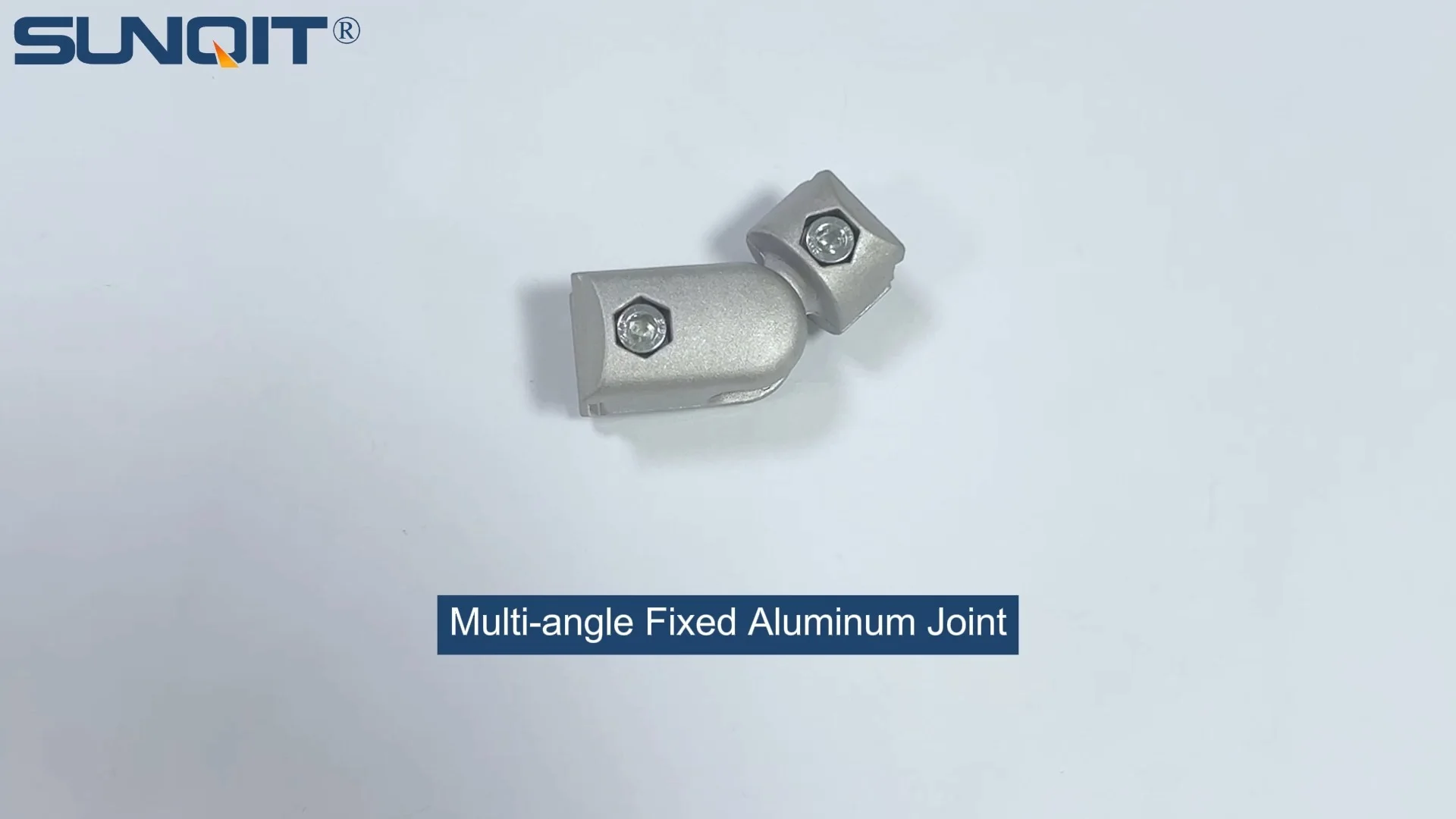
Multi-angle Fixed Aluminum Joint
Aluminum joint pipe connection for two pipe connection and work in mutiple angle.
Walk into any manufacturing facility, warehouse, or assembly line, and you'll notice a silent hero holding everything together: joints. These unassuming components are the backbone of lean systems, workbenches, flow racks, and conveyor setups—quietly bearing weight, maintaining structure, and enabling the flexibility that modern production demands. For decades, cast iron joints were the industry standard, valued for their brute strength. But as lean manufacturing evolves, so too do the tools that power it. Today, a new contender has emerged: the multi-angle fixed aluminum joint. While strength remains non-negotiable, there's another factor that's reshaping the game: weight. In this article, we'll dive into why the weight advantage of aluminum joints isn't just a minor detail—it's a catalyst for efficiency, safety, and bottom-line success, especially when paired with aluminum lean pipe and aluminum profile accessories.
The Role of Joints in Lean Systems: More Than Just Connectors
Before we compare materials, let's take a step back. In lean manufacturing, every component serves a purpose: to eliminate waste, streamline workflow, and adapt to change. Joints are no exception. They're the reason a lean pipe workbench can be reconfigured in hours instead of days, why a flow rack can be adjusted to fit new product sizes, and why a conveyor system can scale with production demands. A poorly chosen joint can turn a "lean" setup into a rigid, inefficient nightmare—heavy, hard to adjust, and prone to slowing down teams.
Traditionally, cast iron joints were favored for one big reason: strength. When factories dealt with heavy machinery and static setups, the weight of cast iron was a trade-off for durability. But modern manufacturing isn't static. Lines reconfigure weekly. Teams move workstations to optimize flow. Workers need tools that keep up with their pace, not hold them back. That's where the multi-angle fixed aluminum joint comes in. Designed with flexibility and weight in mind, it's a response to the reality of today's factories: where adaptability is key, and every pound matters.
Meet the Contenders: What Are Multi-Angle Fixed Aluminum Joints?
A Modern Take on an Essential Component
Multi-angle fixed aluminum joints are precision-engineered connectors made from high-grade aluminum alloys. As the name suggests, they're designed to connect aluminum lean pipe at multiple angles—30°, 45°, 90°, 135°, and more—without sacrificing stability. Unlike one-size-fits-all joints, they offer versatility, allowing teams to build custom structures that fit their exact needs. But their most defining feature? Lightweight construction. Aluminum, by nature, is about one-third the weight of cast iron, and when paired with aluminum profile accessories like brackets, clamps, and end caps, it creates a system that's both strong and surprisingly easy to handle.
These joints aren't just "light"—they're smartly designed. Many feature internal threading or quick-lock mechanisms that eliminate the need for welding or heavy tools. Some even come with built-in rotation stops, ensuring angles stay fixed once set, which is critical for safety in high-traffic areas. And because they're made from aluminum, they resist corrosion—a huge plus in environments where moisture, oils, or chemicals are present (think automotive plants or food processing facilities).
Real-World Example: A electronics manufacturer in Ohio recently switched to multi-angle fixed aluminum joints for their assembly workbenches. Previously, their cast iron joints required two workers to lift and position—now, a single technician can carry and install an aluminum joint with one hand, cutting setup time by 40%. "We used to schedule reconfigurations over weekends because they took so long," said the plant manager. "Now we do it between shifts. The weight difference wasn't just a convenience—it let us keep production running."

Cast Iron Joints: The Legacy Option with Hidden Costs
Strength, Yes—but at What Price?
Let's be clear: cast iron joints are not "bad." For decades, they served industries well. Cast iron is dense, rigid, and can withstand extreme loads—up to several thousand pounds in some cases. If you're building a permanent structure that never moves (say, a heavy-duty machine base), cast iron might still make sense. But in the dynamic world of lean manufacturing, their drawbacks are becoming harder to ignore—starting with weight.
Consider this: a standard 90° cast iron joint (the most common type) weighs roughly 3.5 pounds. A comparable multi-angle fixed aluminum joint? Just 0.8 pounds. That might not sound like much until you multiply it by the number of joints in a typical setup. A simple lean pipe workbench, for example, uses 8–12 joints. With cast iron, that's 28–42 pounds of just joints. With aluminum? 6.4–9.6 pounds. Now scale that to a production line with 50 workbenches, or a warehouse with 20 flow racks—suddenly, you're talking about hundreds of pounds of unnecessary weight.
But the cost of weight goes beyond numbers on a scale. Heavier joints mean more strain on workers. Lifting 3.5-pound joints all day increases the risk of back injuries, fatigue, and lost time. It also slows down installation: teams need two people instead of one, or even mechanical lifts for larger setups. And when it's time to reconfigure? That 42-pound workbench becomes a two-person job to disassemble and move, turning a half-day project into a full-day ordeal.
Then there's corrosion. Cast iron, unless coated, rusts easily. In humid warehouses or facilities with washdown procedures, that rust weakens joints over time, leading to costly replacements. Even with coatings, the added maintenance—scraping rust, reapplying paint—eats into productivity. Aluminum, on the other hand, forms a natural oxide layer that resists corrosion, even in harsh environments. It's a "set it and forget it" material, freeing up teams to focus on production, not upkeep.

The Weight Advantage: By the Numbers
To truly grasp the impact, let's put aluminum and cast iron joints head-to-head. Below is a comparison of common joint types, focusing on weight, load capacity, and practical benefits. All weights are based on standard 1-inch diameter pipe compatibility—the most widely used size in lean systems.
| Joint Type | Material | Weight (lbs) | Max Load Capacity (lbs) | Corrosion Resistance | Installation Time (per joint) |
|---|---|---|---|---|---|
| 90° Fixed Joint | Cast Iron | 3.5 | 1,200 | Low (prone to rust) | 5–7 minutes (2 people) |
| 90° Fixed Joint | Aluminum (Multi-Angle) | 0.8 | 1,000 | High (natural oxide layer) | 2–3 minutes (1 person) |
| 3-Way Cross Joint | Cast Iron | 5.2 | 1,800 | Low | 8–10 minutes (2 people) |
| 3-Way Multi-Angle Joint | Aluminum | 1.3 | 1,500 | High | 3–4 minutes (1 person) |
| 4-Way T-Joint | Cast Iron | 6.8 | 2,200 | Low | 10–12 minutes (2–3 people) |
| 4-Way Multi-Angle T-Joint | Aluminum | 1.7 | 1,800 | High | 4–5 minutes (1 person) |
At first glance, cast iron edges out aluminum in raw load capacity—but look closer. For 90% of lean applications (workbenches, flow racks, small conveyors), aluminum's 1,000–1,800 lbs capacity is more than enough. The 200–400 lbs difference in max load only matters for extreme cases (e.g., heavy machinery bases), which are increasingly rare in modern, agile setups. Meanwhile, aluminum's weight advantage—60–80% lighter—translates to real-world gains: faster installation, fewer injuries, and easier reconfigurations.

Beyond Weight: Why Aluminum Joints Shine with Aluminum Lean Pipe
A System Built for Synergy
Aluminum joints don't just shine on their own—they're part of a ecosystem. Pair them with aluminum lean pipe (which is also lighter than traditional steel or galvanized pipe) and aluminum profile accessories, and you get a system that's greater than the sum of its parts. Let's break down the benefits:
1. Total System Weight: Lighter Than You Think
A typical lean pipe workbench uses 20–30 feet of pipe and 10–15 joints. With steel pipe (2.5 lbs/ft) and cast iron joints, that's 50–75 lbs of pipe + 35–52.5 lbs of joints = 85–127.5 lbs total. With aluminum lean pipe (1.1 lbs/ft) and aluminum joints, it's 22–33 lbs of pipe + 8–12 lbs of joints = 30–45 lbs total. That's a 65–67% reduction in weight. Suddenly, moving that workbench from one side of the line to the other isn't a two-person job—it's a one-person task, done in minutes.
2. Corrosion Resistance: Built to Last in Tough Environments
Aluminum's natural oxide layer is a built-in defense against rust. In food processing plants, where washdowns with caustic cleaners are daily, or in automotive facilities with oil and coolant spills, aluminum joints and pipe hold up where cast iron would corrode. One dairy plant in Wisconsin reported replacing cast iron joints every 6 months due to rust; with aluminum, they're on year 3 and counting—no maintenance needed.
3. Aluminum Profile Accessories: The Finishing Touch
Aluminum profile accessories—like brackets, end caps, and clamps—are designed to work seamlessly with aluminum joints. They're lightweight, too, so you're not adding back the weight you saved with the joints. For example, an aluminum end cap for a 1-inch pipe weighs 0.05 lbs, compared to a cast iron cap at 0.3 lbs. Multiply that by 20 caps per workbench, and you're saving another 5 lbs. It's the little things that add up.
4. Tool-Free Adjustments: Adapt on the Fly
Many aluminum joints use friction-fit or quick-lock designs, meaning you can adjust angles or add/remove pipes without wrenches or screwdrivers. Combine that with aluminum profile accessories like slide-on brackets, and reconfiguring a flow rack to fit a new product size takes 15 minutes instead of 2 hours. For teams facing daily demand changes, that's a game-changer.
The Safety Impact: Fewer Injuries, Happier Teams
Let's talk about the human element. Every year, over 30% of workplace injuries in manufacturing are due to overexertion—lifting, carrying, or moving heavy objects. Heavier joints and pipes contribute directly to this risk. When a worker lifts a 3.5-pound cast iron joint, their back, shoulders, and wrists take the strain. Do that 20 times a day, 5 days a week, and it's only a matter of time before fatigue sets in, and an injury occurs.
Aluminum joints reduce that risk dramatically. At 0.8–1.7 pounds, they're light enough to handle with one hand, even for extended periods. Workers report less fatigue at the end of shifts, and facilities using aluminum systems see 40–50% fewer strain-related injuries, according to a 2024 study by the Manufacturing Safety Council. Fewer injuries mean fewer workers' comp claims, less downtime, and a team that feels valued—all of which boost morale and retention.
Safety in Action: A automotive parts supplier in Michigan switched to aluminum joints and lean pipe after a spate of back injuries. Within six months, their injury rate dropped by 47%. "Our team used to dread reconfiguring lines because it meant lifting heavy joints all day," said the safety manager. "Now, they actually volunteer for the work—it's that much easier. And when your team isn't worried about getting hurt, they focus on doing their best work."
Cost: The Hidden Savings of Lightweight Joints
At this point, you might be thinking: "Aluminum sounds great, but isn't it more expensive than cast iron?" It's true—aluminum joints often cost 10–15% more upfront. But the total cost of ownership tells a different story. Let's break down the savings:
1. Labor Savings: Faster Installation, Fewer People
Installing a cast iron joint takes 2 people and 5–12 minutes. Aluminum joints take 1 person and 2–5 minutes. For a production line with 100 joints, that's 100 joints × (12 min – 5 min) = 700 minutes (11.6 hours) saved on installation alone. At $25/hour per worker, that's $580 saved per line—enough to offset the upfront cost of aluminum joints in one project.
2. Shipping Costs: Lighter Loads = Lower Bills
Shipping 100 cast iron joints (avg. 3.5 lbs each) = 350 lbs. Shipping 100 aluminum joints (avg. 0.8 lbs each) = 80 lbs. Most carriers charge by weight, so that's a 77% reduction in shipping costs. Over a year of ordering joints, that adds up to thousands of dollars saved.
3. Maintenance: No Rust, No Replacements
Cast iron joints need regular coating to prevent rust—especially in humid or wet environments. That's $50–$100 per year per 100 joints for paint, tools, and labor. Aluminum joints? No coating needed. Over 5 years, that's $250–$500 saved, plus fewer replacements (aluminum joints last 2–3x longer than uncoated cast iron in harsh conditions).
When to Stick with Cast Iron (Yes, There Are Exceptions)
We'd be remiss not to acknowledge that aluminum isn't the right fit for every scenario. If your operation involves extreme loads—think 2,500+ lbs per joint, or constant vibration from heavy machinery—cast iron may still be necessary. Similarly, in environments with extreme heat (over 400°F), aluminum's strength can weaken, whereas cast iron holds up. But these cases are increasingly rare. Most modern lean systems don't require that level of brute force, making aluminum the smarter choice for 90% of applications.
Conclusion: Weight Matters—But It's Just the Start
The choice between multi-angle fixed aluminum joints and cast iron joints isn't just about materials—it's about embracing the future of lean manufacturing. Aluminum joints offer more than just a weight advantage; they're a gateway to faster installation, safer workplaces, and systems that adapt as quickly as your business does. When paired with aluminum lean pipe and aluminum profile accessories, they create a lightweight, durable ecosystem that turns "lean" from a buzzword into a daily reality.
So, the next time you're ordering parts for your production line, don't just look at the price tag or the load capacity. Ask: How much does this joint weigh? How will it affect my team's speed, safety, and ability to adapt? The answer might just surprise you—and transform your operation.