- Company Articles
- Products and Technology
- Product knowledge
- Multi-Angle Fixed Aluminum Joint vs. Composite Joints: Industrial Performance

Multi-Angle Fixed Aluminum Joint vs. Composite Joints: Industrial Performance
Related Product
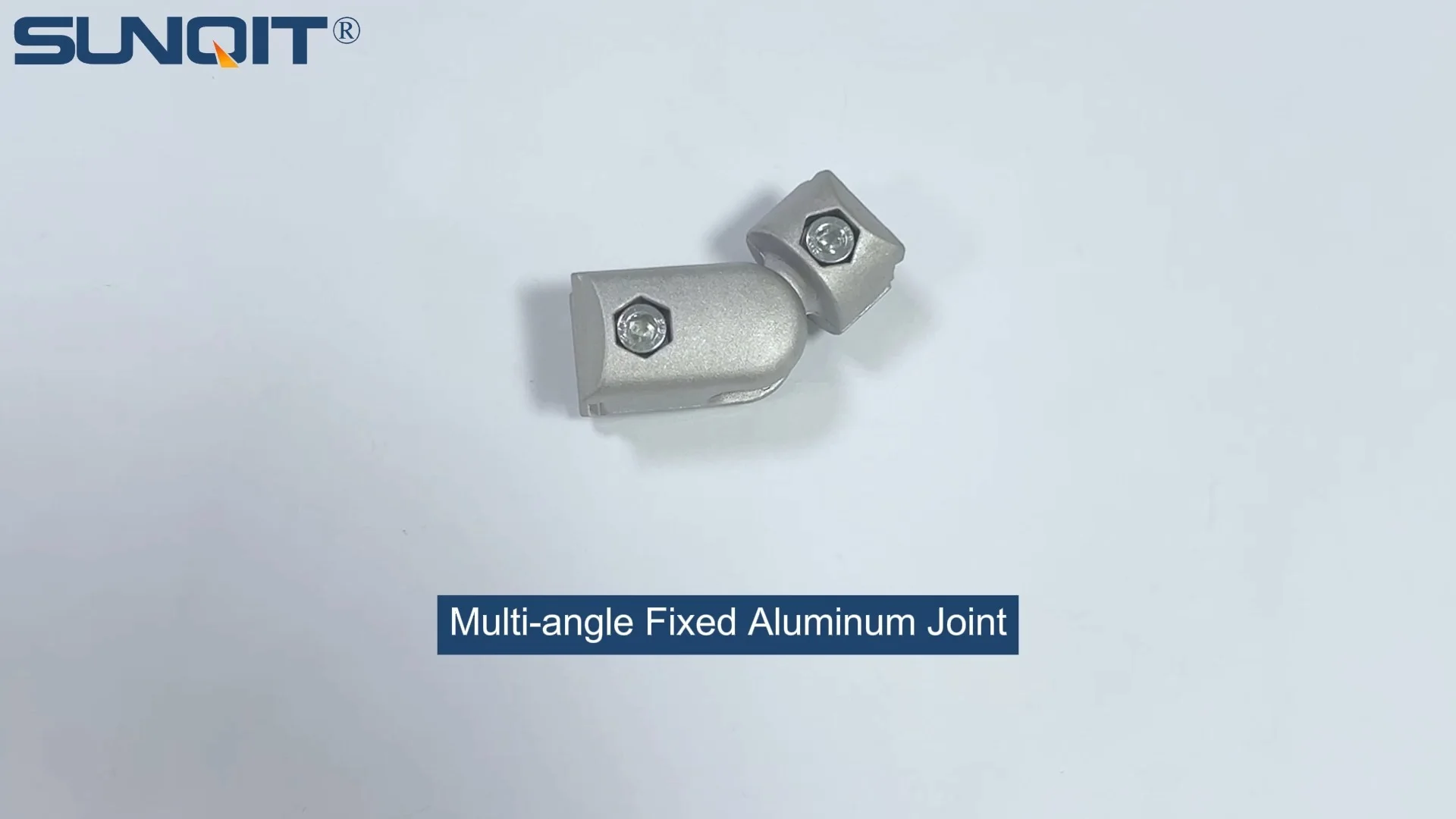
Multi-angle Fixed Aluminum Joint
Aluminum joint pipe connection for two pipe connection and work in mutiple angle.
Walk into any busy manufacturing plant, and you'll see the unsung heroes of industrial efficiency: the structures that hold everything together. From the workbench where an assembler tightens bolts to the roller track feeding parts down the line, these systems rely on one critical component often overlooked—joints. These small, unassuming connectors are the backbone of lean manufacturing, determining how well a workspace adapts, endures, and performs. Today, we're diving into two of the most common joint types in industrial settings: multi-angle fixed aluminum joints and composite joints. By the end, you'll understand which one deserves a spot in your next workbench, roller track, or assembly line setup.
The Basics: What Are We Comparing?
Before we jump into performance, let's clarify what we're talking about. Multi-angle fixed aluminum joints are precision-engineered connectors made from aluminum alloy, designed to link aluminum lean pipe, aluminum profile, and other industrial components at specific angles (think 30°, 45°, 90°, or 135°). They're built for rigidity, with tight tolerances that ensure stability in even the most demanding setups. On the other side, composite joints are typically made from plastic, resin, or a mix of materials like fiberglass and polymer. They're often marketed as lightweight, flexible, and budget-friendly alternatives.
Both have their place, but in industrial environments—where downtime costs money and safety is non-negotiable—the difference between "good enough" and "reliable" can make or break a production line. Let's start by breaking down the star of the aluminum corner: multi-angle fixed aluminum joints.
Multi-Angle Fixed Aluminum Joints: The Industrial Workhorse
If industrial joints were superheroes, multi-angle fixed aluminum joints would be the ones with a utility belt full of tools—and the strength to lift a car. Let's unpack why they're a staple for lean pipe suppliers, workbench manufacturers, and anyone serious about durable infrastructure.
Material Matters: Aluminum's Hidden Strengths
Aluminum might seem lightweight, but don't let that fool you. These joints are crafted from high-grade aluminum alloy, often reinforced with elements like magnesium or silicon to boost tensile strength. When paired with aluminum lean pipe or aluminum profile, they create a system that's both light enough to reconfigure (hello, lean manufacturing!) and tough enough to handle heavy loads. Unlike steel, aluminum also resists corrosion naturally—thanks to a thin oxide layer that forms on its surface—making it ideal for humid factories, dusty warehouses, or even cleanrooms where rust is a no-go.
Precision Angles for Perfect Alignment
The "multi-angle" in their name isn't just a gimmick. These joints are machined to lock into specific angles with microscopic precision. Need a 45° tilt on your workbench shelf? A 90° corner for a roller track? A 135° bend for a material rack? Aluminum joints deliver consistency, ensuring every connection is tight and true. This precision isn't just about looks—it's about safety and efficiency. A workbench with misaligned joints wobbles, leading to errors in assembly. A roller track with uneven angles jams, slowing down production. Aluminum joints eliminate that risk, keeping surfaces level and material flow smooth.
Modularity Meets Durability
Lean manufacturing thrives on adaptability, and aluminum joints play ball. They're designed to work seamlessly with aluminum profile, aluminum lean pipe, and a range of accessories—think aluminum pipe clamps, end caps, and support brackets. This modularity means you can build a workbench today, reconfigure it into a turnover trolley next month, and expand it into a full material rack later—all without replacing the joints. And unlike some flimsy connectors, aluminum joints hold their shape over time. Tighten them once with a hex key, and they'll stay put through years of vibrations, tool impacts, and daily use.

Composite Joints: The Budget-Friendly Contender
Composite joints enter the ring with a clear selling point: cost. Made from plastics, resins, or fiber-reinforced polymers, they're often half the price of aluminum joints. But affordability comes with trade-offs, and it's critical to understand where composite joints shine—and where they fall short.
Flexibility (and Its Limits)
Composite joints are prized for their flexibility, both in design and installation. Many snap into place without tools, making them a favorite for quick, temporary setups. They're also less rigid than aluminum, which can be a plus if you need a little give in non-critical applications (like a lightweight parts bin or a temporary workstation). However, that flexibility becomes a liability under stress. Over time, composite joints can warp or creep—slowly deforming under constant weight—leading to loose connections and wobbly structures.
Material: When "Lightweight" Becomes "Weak"
Composite joints are light, but that lightness often comes from sacrificing density. While they work for small loads—think a few pounds of screws or small electronics—they struggle with heavy-duty tasks. A workbench holding a 50-pound power tool? A roller track carrying metal components? Composite joints may crack or snap under the pressure, especially in high-vibration environments. They're also prone to environmental damage: UV light can make them brittle, humidity can cause swelling, and chemicals (like cleaning agents) might degrade their structure over time.
The Cost of "Cheap" Over Time
At first glance, composite joints seem like a steal. Why pay $10 for an aluminum joint when a composite one costs $3? But industrial equipment isn't a one-time purchase—it's an investment. Composite joints often need replacement every 6–12 months in busy settings, adding up to more than the cost of a single aluminum joint over time. Factor in downtime from loose connections, repairs, and rework, and the "budget" option quickly becomes the expensive one.

Head-to-Head: Performance Comparison
To cut through the noise, let's put these joints side by side. The table below breaks down their key performance metrics, from load capacity to ideal use cases. Whether you're a lean pipe supplier building custom workbenches or a plant manager upgrading your roller track, this comparison will guide your choice.
| Performance Metric | Multi-Angle Fixed Aluminum Joints | Composite Joints |
|---|---|---|
| Material Composition | High-grade aluminum alloy (often 6061 or 6063) | Plastic, resin, or fiber-reinforced polymer (e.g., nylon, polypropylene) |
| Typical Load Capacity | 500kg+ per joint (when paired with aluminum lean pipe/profiles) | 200–300kg per joint (max; decreases in humid/heavy-use environments) |
| Angular Precision | Fixed angles (30°, 45°, 90°, 135°) with ±0.5° tolerance | Adjustable, but imprecise (±3–5° tolerance); prone to shifting over time |
| Corrosion Resistance | Excellent (natural oxide layer resists rust, chemicals, and humidity) | Moderate (varies by material; plastic may degrade in UV light or harsh cleaners) |
| Installation Complexity | Requires basic tools (hex key, wrench) for secure, permanent connections | Tool-free (snap-fit or adhesive); quick to install but less secure |
| Maintenance Needs | Low: Occasional tightening (every 6–12 months) with no degradation | High: Regular checks for cracks/warping; replacement every 6–18 months in heavy use |
| Upfront Cost (Per Unit) | Higher: $8–$15 (depending on size/angle) | Lower: $3–$8 (depending on material quality) |
| Long-Term Value | Superior: Lasts 5–10+ years with minimal upkeep | Limited: Total cost of ownership higher due to frequent replacement |
| Ideal Applications | Heavy workbenches, roller tracks, material racks, cleanrooms, outdoor/harsh environments | Light assembly, temporary setups, dry environments, low-load tasks (e.g., small parts trolleys) |

Real-World Results: Case Studies
Numbers tell a story, but real-world use tells the truth. Let's look at two scenarios where the choice between aluminum and composite joints made all the difference.
Case Study 1: Automotive Plant Eliminates Downtime with Aluminum Joints
A mid-sized automotive parts manufacturer was struggling with their assembly line workbenches. They'd installed composite joints to save costs, but within six months, the issues began: joints loosened, workbench surfaces tilted, and tools slid off. Worse, the roller track feeding parts to the line—also using composite joints—jammed weekly, halting production for 15–20 minutes at a time. The maintenance team was spending 10+ hours monthly tightening or replacing joints.
The solution? They switched to multi-angle fixed aluminum joints paired with aluminum lean pipe frames. The results were dramatic: after 12 months, maintenance calls for joint issues dropped by 70%. The roller track, now supported by aluminum joints, ran jam-free. The plant manager noted, "We paid more upfront, but the aluminum joints paid for themselves in downtime saved. Our assemblers even commented that the workbenches feel 'solid as a rock'—no more wobbly surfaces, no more errors in part alignment."
Case Study 2: Small Workshop Finds Balance with Composite Joints
A small electronics workshop with 10 employees needed lightweight turnover trolleys for moving circuit boards between stations. They opted for composite joints, reasoning that the trolleys only carried 10–15kg per load and were used in a climate-controlled room. For two years, the composite joints worked perfectly: they were easy to assemble, lightweight for employees to push, and kept costs low. The workshop even reconfigured the trolleys twice as production needs changed—no issues there.
The catch? When they tried to use composite joints for a new roller track (to feed heavier circuit board panels), the joints failed within three months. The constant weight of the panels caused the composite to warp, creating uneven sections that trapped parts. They replaced the roller track joints with aluminum, keeping the composite joints for the trolleys. "It's a mix-and-match approach," the workshop owner said. "For light, temporary stuff, composite is fine. But for anything critical or heavy? Aluminum is non-negotiable."
When to Choose Aluminum (and When to Stick with Composite)
So, which joint is right for you? It boils down to three questions: How heavy is the load? How long do you need it to last? and What's the environment like?
Choose Multi-Angle Fixed Aluminum Joints If…
- You're building heavy-duty structures: workbenches, material racks, or roller tracks handling 300kg+ loads.
- Precision matters: your setup requires level surfaces, tight angles, or consistent material flow.
- Durability is key: you need joints that last 5+ years with minimal maintenance.
- The environment is harsh: humid, dusty, or exposed to chemicals/UV light.
- You value modularity: you plan to reconfigure or expand the system over time.
Choose Composite Joints If…
- Loads are light: you're building temporary workstations, small parts bins, or trolleys carrying <200kg.
- The setup is short-term: you need something quick to assemble and disassemble.
- The environment is controlled: dry, temperature-stable, and free from harsh chemicals.
- Budget is the top priority: you can't justify aluminum's upfront cost for low-stakes applications.
The Future of Industrial Joints: Why Aluminum is Leading the Way
As manufacturing evolves, so do the demands on industrial infrastructure. Lean manufacturing, smart factories, and sustainability are driving trends—and aluminum joints are keeping pace.
First, modularity is king. Modern plants need to adapt fast, and aluminum joints' compatibility with aluminum profile, aluminum lean pipe, and accessories makes them perfect for rapid reconfiguration. A single joint can connect to a workbench today and a robot mounting bracket tomorrow, reducing waste and cutting setup time.
Second, sustainability matters. Aluminum is 100% recyclable, with no loss in quality. When a joint finally reaches the end of its life (after decades of use), it can be melted down and repurposed—unlike composite joints, which often end up in landfills. For companies aiming for net-zero goals, aluminum is the greener choice.
Finally, precision engineering is advancing. New aluminum joint designs offer even tighter tolerances and enhanced load capacities, thanks to computer-aided machining and advanced alloys. Some manufacturers now offer custom angles for specialized setups, ensuring aluminum joints meet the unique needs of industries like aerospace and medical device manufacturing.
Final Verdict: Aluminum Joints for Industrial Excellence
Composite joints have their place—light loads, temporary setups, tight budgets. But when it comes to industrial performance, multi-angle fixed aluminum joints are the clear winner. They're stronger, more precise, and more durable, turning your workbench, roller track, or material rack into a long-term asset rather than a recurring expense. As one lean pipe supplier put it: "We don't sell joints—we sell reliability. And aluminum joints deliver that, day in and day out."
So, the next time you're planning a workspace upgrade, remember: the joints you choose aren't just connectors. They're the foundation of your efficiency, safety, and success. Choose wisely—and choose aluminum.