- Company Articles
- Products and Technology
- Product knowledge
- Multi-Angle Fixed Aluminum Joint vs. Plastic Joints: Durability in Industry

Multi-Angle Fixed Aluminum Joint vs. Plastic Joints: Durability in Industry
Related Product
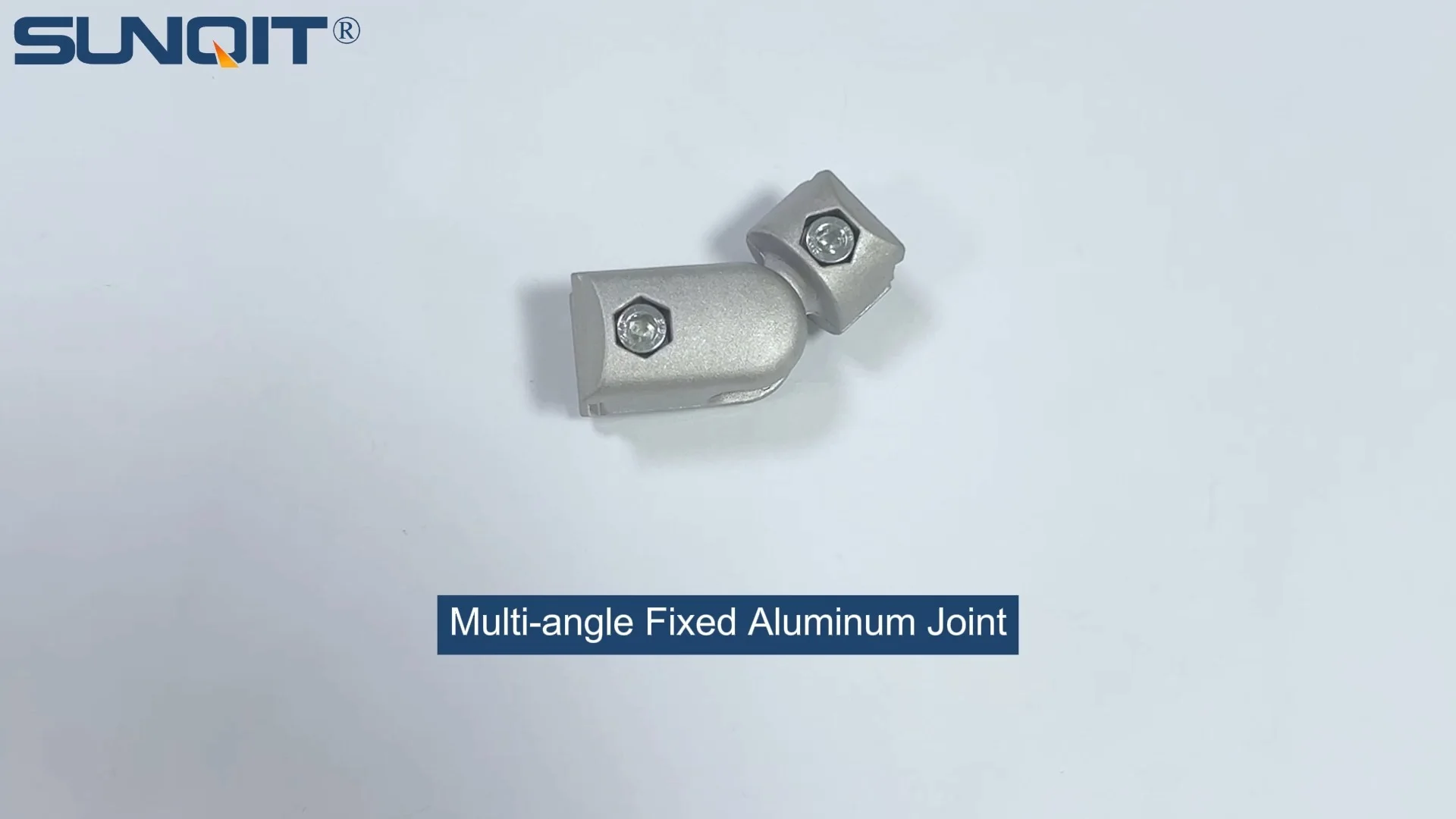
Multi-angle Fixed Aluminum Joint
Aluminum joint pipe connection for two pipe connection and work in mutiple angle.
Walk into any manufacturing plant, warehouse, or assembly facility, and you'll notice a hidden backbone holding everything together: the unassuming joints that connect pipes, profiles, and rails into functional structures. From the lean pipe workbench where technicians assemble circuit boards to the roller tracks that shuttle components across the factory floor, these joints are the quiet architects of efficiency. But not all joints are created equal. When it comes to durability—the kind that resists wear, handles heavy loads, and stands up to the chaos of daily industrial use—two options often go head-to-head: the multi-angle fixed aluminum joint and the humble plastic joint. In this article, we'll dive into what makes each tick, how they perform under pressure, and why choosing the right one can mean the difference between smooth operations and costly downtime.
The Unsung Heroes: Why Joints Matter in Industrial Setups
Before we get into the nitty-gritty of materials, let's take a step back. Imagine a factory without reliable joints: pipes would wobble, workbenches would collapse, and roller tracks would jam. Joints aren't just connectors—they're the glue that turns individual components into cohesive, functional systems. A flimsy joint can turn a well-designed workflow into a nightmare: a roller track that tilts because its joints can't handle the weight of passing bins, or a workbench that shakes so much during assembly that parts misalign. For plant managers and operations teams, joint failure isn't just an inconvenience; it's a drain on productivity, a risk to worker safety, and a hit to the bottom line.
That's why choosing between joint types isn't a trivial decision. Plastic joints have long been favored for their low cost and lightweight design, while aluminum joints—especially multi-angle fixed ones—are gaining ground for their robustness. But which is better? To answer that, we need to understand what each brings to the table.
Meet the Contenders: Multi-Angle Fixed Aluminum Joints
Let's start with the heavyweight: the multi-angle fixed aluminum joint. If you've ever seen a modular workstation or a custom material rack that seems to bend and connect at precise angles—30°, 45°, 90°, or even 135°—chances are it's held together by one of these. Made from high-grade aluminum alloys (often 6061 or 6063, known for their strength and corrosion resistance), these joints are engineered for precision and durability.
What sets the multi-angle fixed aluminum joint apart is its design. Unlike basic joints that lock into a single angle, these are built to accommodate multiple configurations. Picture a joint with several pre-drilled holes or slots, allowing it to connect to aluminum lean pipe or profiles at almost any angle you need. This flexibility is a game-changer for facilities that need custom setups—think a workbench with a sloped shelf for tool storage or a material rack with tiered levels for different-sized parts. And "fixed" here doesn't mean rigid to the point of inflexibility; it means once you set the angle, it stays put, no wobbling or shifting, even under stress.
Manufacturing these joints is no small feat. Most start as aluminum billets, which are heated and extruded into rough shapes, then precision-machined to cut threads, drill holes, and smooth edges. The result? A joint with tight tolerances—meaning parts fit together snugly—and a surface that resists scratches and corrosion. Some are even anodized, adding a protective layer that makes them stand up to oils, coolants, and humidity common in industrial environments.

The Underdog: Plastic Joints in Industrial Use
Now, let's turn to plastic joints. If aluminum joints are the workhorses, plastic joints are the sprinters—light, cheap, and quick to deploy. Made from materials like nylon, polypropylene, or ABS, they're injection-molded into simple shapes: T-joints, L-joints, or straight connectors. You'll find them in lightweight setups: temporary storage racks, mobile carts for small parts, or DIY workbenches in low-traffic areas.
Plastic's appeal is obvious: cost. A basic plastic L-joint might cost $2–$5, while an aluminum equivalent could be $8–$15. They're also lightweight, making them easy to transport and assemble—no need for heavy tools; often, you can twist or snap them into place. For small-scale operations or projects with a short lifespan (like a seasonal inventory rack), plastic joints make sense. They're also corrosion-resistant by nature, which sounds good on paper, but there's a catch: they're not as tough as they look.
Plastic joints have limits. Their strength depends on the type of plastic and its thickness. Thin-walled plastic joints, for example, can crack under constant pressure, especially at the corners where stress. They're also sensitive to temperature: too hot, and they soften; too cold, and they become brittle. UV light from sunlight or fluorescent bulbs can degrade them over time, causing them to fade, crack, or lose flexibility. And while they're lightweight, that lightness comes from lower density—which means they can't handle the same loads as aluminum.

Durability Face-Off: Aluminum vs. Plastic
Now, the moment of truth: how do these two stack up when durability is on the line? Let's break it down by the factors that matter most in industrial settings.
Load-Bearing Capacity: Can They Handle the Weight?
In a factory, "load" isn't just about static weight—it's about dynamic stress, too. A lean pipe workbench might hold 50kg of tools and parts day in, day out, but it also has to withstand the occasional bump from a forklift or the vibrations of nearby machinery. Aluminum joints, with their dense, rigid structure, excel here. A typical multi-angle fixed aluminum joint can handle loads of 200kg or more at the connection point, depending on the design. Their metal construction distributes weight evenly, so there's no single weak spot.
Plastic joints, on the other hand, max out much lower—often 50–100kg for heavy-duty plastic, and less for thinner models. Over time, even within their rated capacity, plastic can "creep"—slowly deforming under constant pressure. Imagine a plastic joint holding up a shelf with 80kg of boxes: after a few months, you might notice the shelf tilting slightly as the joint bends. That tilt isn't just annoying; it can cause boxes to slide, tools to fall, or, in worst cases, the entire structure to collapse.
Resistance to Wear and Tear: The Daily Grind
Industrial environments are tough on equipment. Joints get bumped by carts, sprayed with cleaning chemicals, and exposed to dust, oil, and moisture. Aluminum joints laugh this off. Aluminum's natural oxide layer acts as a shield against rust, and anodized finishes take it a step further, resisting scratches and chemical damage. Even if a joint gets nicked, the underlying metal won't corrode easily—unlike steel, which can rust through in months.
Plastic joints? Not so much. Scratches create weak points where moisture can seep in, and chemicals like degreasers or solvents can eat away at the plastic, making it soft or brittle. UV light is another enemy: leave a plastic-jointed rack near a window, and within a year, the joints might start cracking. And while plastic doesn't rust, it can degrade in other ways—nylon, for example, absorbs moisture, which can make it swell or warp in humid climates.
Temperature and Impact: When Things Get Extreme
Factories aren't climate-controlled labs. Some operate in freezing cold (think food processing plants), others in sweltering heat (foundries or plastic molding shops). Aluminum joints thrive in both. Aluminum conducts heat, but it doesn't weaken at high temperatures (it starts to lose strength around 200°C, which is hotter than most industrial environments). In cold weather, it stays rigid—no brittleness, no cracking.
Plastic joints? They're temperature-sensitive. Nylon becomes stiff and brittle below 0°C, making it prone to snapping if bumped. Polypropylene softens at around 100°C, so near ovens or heat lamps, it might warp. Even moderate temperature swings—like a warehouse that's hot during the day and cool at night—can cause plastic to expand and contract, loosening the joint over time.
Impact resistance is another area where aluminum shines. drop a metal tool on an aluminum joint, and you might get a dent, but the joint will still hold. Do the same to a plastic joint, and you'll likely crack it. That's a big deal in busy facilities where accidents happen—one misstep with a pallet jack, and a plastic-jointed rack could come crashing down.

A Side-by-Side Comparison: Key Metrics
Feature
Plastic Joint
Load Capacity
200kg+ per joint (varies by design)
50–100kg per joint (max for heavy-duty plastic)
Expected Lifespan
5–10 years (with minimal maintenance)
1–3 years (shorter in harsh environments)
Resistance to Chemicals/Oils
Excellent (anodized finishes resist corrosion)
Poor to fair (varies by plastic; solvents can degrade)
Impact Resistance
High (dents but doesn't crack under impact)
Low (prone to cracking or shattering)
Cost (Per Unit)
$8–$15
$2–$5
Real-World Applications: Where Each Joint Shines
To understand why durability matters, let's look at how these joints perform in real settings. Take lean pipe workbench setups, a staple in electronics manufacturing. These workbenches need to stay stable during precision tasks—soldering, wiring, or assembling small components. A wobbly workbench can lead to misaligned parts, rework, and even defective products.
A manufacturer in Taiwan switched to multi-angle fixed aluminum joints for their workbenches after years of using plastic. "We were replacing plastic joints every 6–8 months," says their operations manager. "The workbenches would start shaking, and our defect rate on circuit boards went up 12%. After switching to aluminum, we haven't replaced a single joint in three years. The workbenches are rock-solid, and defects are back to normal."
Now, consider roller track systems, which move heavy bins of parts between stations. Roller tracks rely on joints to keep the rails aligned; if a joint shifts, the track tilts, and bins get stuck. A automotive parts supplier in Michigan learned this the hard way. They used plastic joints on a roller track feeding their assembly line, but during peak production, the weight of metal parts caused the joints to flex. Bins started jamming 2–3 times a day, halting the line for 15–20 minutes each time. After upgrading to aluminum joints, jams dropped to zero, and line efficiency improved by 9%.
Plastic joints do have their place, though. A small bakery in Oregon uses plastic-jointed racks to store baking supplies. "We only use them seasonally, and the loads are light—flour bags, mixing bowls," explains the owner. "For us, plastic is perfect. It's cheap, easy to set up, and we don't need it to last forever."
Case Study: From Plastic Headaches to Aluminum Solutions
The Problem: A mid-sized electronics assembly plant in Texas relied on plastic-jointed lean pipe workbench stations for assembling smartphone components. Each workbench held tools, circuit boards, and small parts, with a daily load of ~40kg per bench. After 8 months of use, workers reported the workbenches were "wobbly," especially when using heavy soldering irons. Inspections revealed plastic joints were cracking at the corners, and some had deformed under the constant pressure of tool racks mounted to the benches.
The Cost of Failure: The wobble led to misaligned circuit board placements, increasing rework time by 20%. Each workbench required monthly tightening of plastic joints, taking 2 hours per bench (10 benches total = 20 hours of maintenance monthly). Additionally, 3 workbenches had to be taken out of service entirely after joints failed, forcing workers to share stations and slowing production.
The Switch: The plant replaced all plastic joints with multi-angle fixed aluminum joints. Installation took 1 day per 2 workbenches, and the total cost was ~$1,200 (vs. ~$300 for plastic joints initially).
The Result: After 18 months, no joint failures or cracks. Maintenance time dropped to 1 hour per bench quarterly (total 5 hours/year). Rework time decreased by 18%, and production output increased by 5% due to fewer disruptions. The plant manager estimates the aluminum joints paid for themselves in 10 months, factoring in saved maintenance time and reduced rework.
Beyond Durability: Maintenance and Long-Term Value
Durability isn't just about how long a joint lasts—it's about how much effort you put into keeping it alive. Aluminum joints are low-maintenance. Wipe them down with a dry cloth to remove dust, and if they're exposed to moisture, a quick once-over with a damp rag is enough. Since aluminum is rigid, bolts rarely loosen, but if they do, a quick tighten with a wrench does the trick. No special cleaners, no replacement schedules—just set it and forget it.
Plastic joints demand more attention. You'll need to check them regularly for cracks, especially at stress points like T-joints or corners. If a joint looks deformed or feels soft, it needs to be replaced immediately—delaying could lead to collapse. And forget about using harsh cleaners; even a strong degreaser can weaken the plastic. For outdoor use, you'll need UV-resistant plastic, which costs more and still won't last as long as aluminum.
When it comes to total cost of ownership (TCO), aluminum joints win hands down. Let's crunch the numbers: A plastic joint costs $5 and lasts 8 months. Over 5 years (60 months), you'll need 60/8 = 7.5 replacements—let's call it 8—totaling $40. An aluminum joint costs $12 and lasts 5 years, so $12 total. But TCO includes more than just the joint itself: labor to replace joints, downtime during replacement, and costs from failures (like defective products or damaged parts). If each plastic joint replacement takes 30 minutes (at $30/hour labor), that's 8 * 0.5 * $30 = $120 in labor. Add downtime—if a workbench is out of commission for an hour, and that hour costs $100 in lost production, 8 replacements = $800. Total TCO for plastic: $40 + $120 + $800 = $960. For aluminum: $12 + minimal labor ($10 over 5 years) + $0 downtime = $22. The difference is staggering.
Looking Ahead: The Future of Industrial Joints
As industries push for sustainability and efficiency, aluminum joints are gaining ground. Aluminum is 100% recyclable, with no loss in quality—unlike plastic, which often ends up in landfills after a single use. Factories aiming for green certifications are increasingly choosing aluminum for its eco-friendly credentials.
Innovation is also on aluminum's side. Manufacturers are developing multi-angle fixed aluminum joints with integrated features: built-in cable management channels, quick-release mechanisms for faster assembly, or even sensors that alert teams when a joint is loosening. These smart joints could revolutionize predictive maintenance, catching issues before they cause failures.
Plastic joints will stick around for lightweight, short-term uses, but their role is shrinking. As aluminum production costs drop and manufacturing techniques improve, aluminum joints are becoming more accessible to small and medium businesses—not just large corporations.
Conclusion: Choosing the Right Joint for Your Needs
At the end of the day, the choice between multi-angle fixed aluminum joints and plastic joints comes down to one question: What do you need from your joints? If you're building a temporary, lightweight structure with minimal load, plastic might work. But for anything that matters—stability, durability, long-term performance—aluminum is the clear winner.
Multi-angle fixed aluminum joints aren't just connectors; they're investments in efficiency, safety, and peace of mind. They handle heavy loads, shrug off harsh environments, and save you time and money in the long run. From lean pipe workbench stations to roller tracks, they're the backbone of modern, resilient industrial setups. So the next time you're planning a workspace upgrade, remember: the joints you choose today will shape your operations tomorrow.