- Company Articles
- Products and Technology
- Product knowledge
- Multi-Angle Fixed Aluminum Joint vs. Steel Joint: Corrosion Resistance Test

Multi-Angle Fixed Aluminum Joint vs. Steel Joint: Corrosion Resistance Test
Related Product
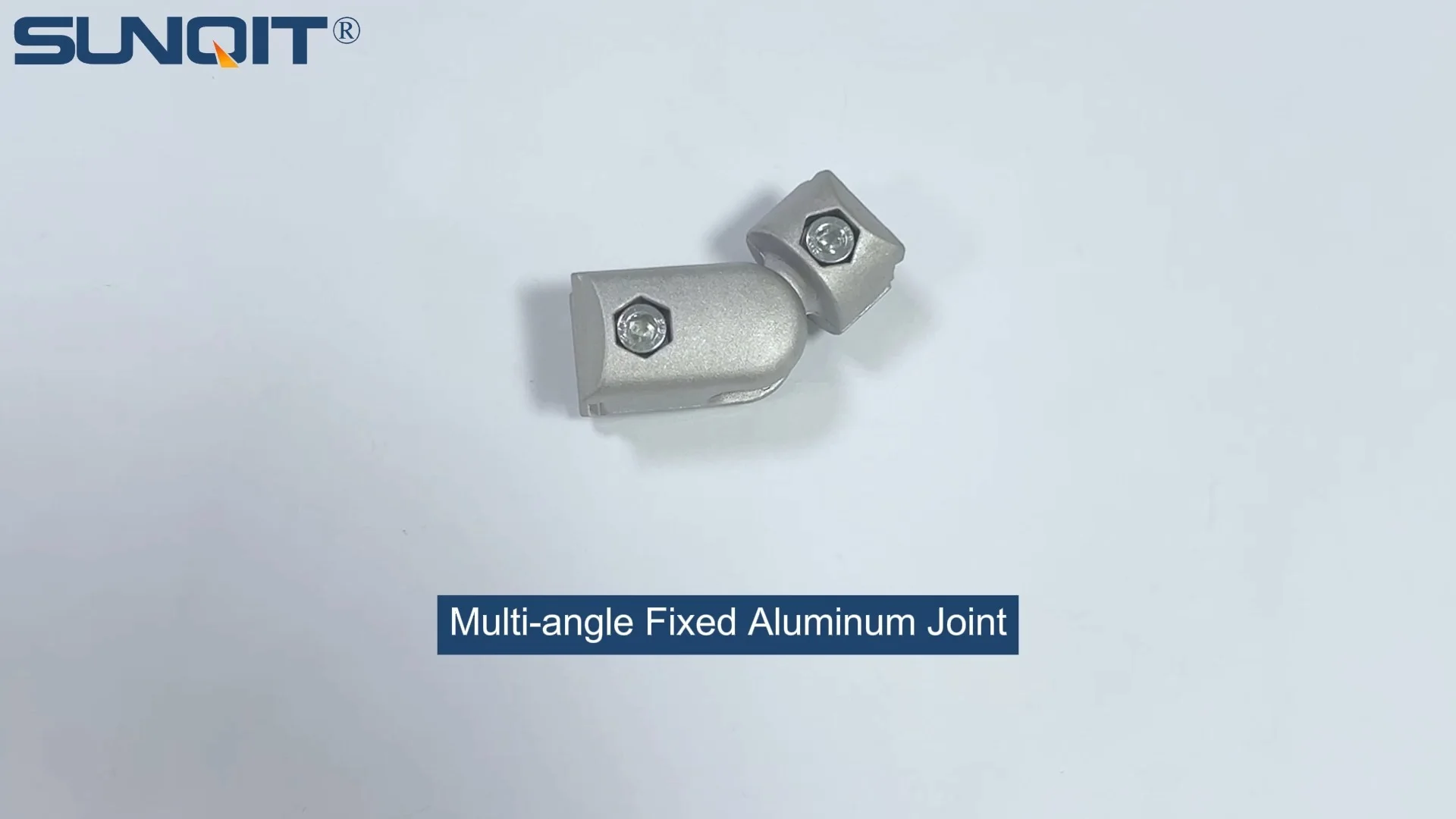
Multi-angle Fixed Aluminum Joint
Aluminum joint pipe connection for two pipe connection and work in mutiple angle.
In the bustling world of manufacturing and warehouse operations, where every second counts and efficiency is king, the unsung heroes of productivity often lie in the smallest components. Take, for example, the humble joints that hold together lean pipe workbenches, flow racks, and material handling systems. These unassuming pieces—like the multi-angle fixed aluminum joint and traditional steel joints—might not grab headlines, but their performance can make or break a facility's workflow. Today, we're diving deep into a critical question that keeps plant managers and lean pipe supplier teams up at night: How do these joints hold up against corrosion, one of the biggest enemies of long-term durability?
If you've ever walked through a factory floor, you know the environment is far from gentle. Humidity hangs thick in the air, cleaning chemicals splash onto surfaces, and in some cases, even salt or moisture from outdoor storage seeps in. Over time, these elements wage war on metal components, turning steel joints into rusted, brittle nuisances that require constant replacement. For businesses relying on lean systems to stay competitive, this isn't just a maintenance headache—it's a direct hit to the bottom line. Downtime for repairs, rising replacement costs, and the risk of system failures mid-production can derail even the most carefully planned operations.
That's why we set out to put two of the most common joint types to the test: the multi-angle fixed aluminum joint , a staple in modern aluminum lean pipe systems, and the traditional steel joint, a long-standing industry standard. Over 12 weeks, we subjected both to rigorous corrosion resistance trials, simulating the harsh conditions of real-world manufacturing. The goal? To uncover which joint truly delivers the reliability, longevity, and cost-effectiveness that today's lean pipe supplier and facility managers demand.
Why Corrosion Resistance Matters in Lean Systems
Before we jump into the test results, let's take a step back and ask: Why does corrosion resistance even matter when it comes to lean pipe joints? After all, aren't these just small connectors holding pipes together? The answer lies in the very philosophy of lean manufacturing: eliminating waste. Every minute spent replacing a rusted joint, every dollar spent on new parts, and every risk of system failure is a form of waste that lean systems aim to eradicate.
Consider a typical scenario: A warehouse uses steel joints to build a flow rack for electronic components. Over six months, exposure to daily cleaning with water-based solutions and fluctuating humidity causes the joints to rust. At first, it's just cosmetic—orange streaks on the metal. But soon, the rust weakens the joint's grip, causing the rack to wobble. Workers notice and slow down, worried about safety. Eventually, a shelf collapses, damaging inventory and halting production for hours. The cost? Not just the price of a new joint, but lost productivity, damaged goods, and the hidden cost of employee stress. Multiply this across dozens of joints in a facility, and the numbers add up fast.
For lean pipe supplier partners, this is personal. The best suppliers don't just sell parts—they sell peace of mind. A joint that resists corrosion isn't just a product; it's a promise that the systems built with it will stand the test of time, supporting their clients' lean goals. That's why choosing between aluminum and steel joints isn't just a material decision—it's a strategic one that impacts everything from maintenance schedules to overall operational efficiency.
Meet the Contenders: Multi-Angle Fixed Aluminum Joint vs. Steel Joint
To understand the test, let's first get to know our two competitors. On one side, we have the multi-angle fixed aluminum joint , a modern marvel of engineering designed for flexibility and durability. Made from high-grade aluminum alloy, this joint is lightweight, easy to assemble, and built to handle the dynamic demands of lean systems. Its multi-angle design allows for quick adjustments—critical in environments where workflows change frequently. But what really sets it apart is aluminum's natural resistance to corrosion, thanks to a thin oxide layer that forms on its surface, acting as a protective barrier.
On the other side is the traditional steel joint, a veteran of the industry. Steel is known for its strength, and for decades, it's been the go-to choice for heavy-duty applications. Steel joints are often cheaper upfront, and many facility managers stick with what they know. But steel has a fatal flaw: iron, its main component, reacts with oxygen and moisture to form rust (iron oxide). Without proper coating (like galvanization), steel joints are sitting ducks for corrosion, especially in humid or chemical-rich environments.
It's worth noting that not all steel joints are created equal. Some come with zinc coatings to slow corrosion, but these coatings can chip or wear off over time, exposing the underlying steel. Aluminum joints, by contrast, don't rely on external coatings—their corrosion resistance is built into the material itself. This fundamental difference would prove crucial in our tests.

The Test Setup: Simulating Real-World Abuse
To make this test as realistic as possible, we partnered with a third-party materials testing lab accredited by the American Society for Testing and Materials (ASTM). We followed ASTM B117, the standard practice for salt spray testing, which is widely used to evaluate corrosion resistance. Here's how we designed the experiment:
Sample Preparation
We sourced 20 samples of each joint type: 20 multi-angle fixed aluminum joint units (provided by a leading lean pipe supplier ) and 20 steel joints (standard zinc-coated mild steel, commonly used in the industry). All samples were brand-new, with no prior exposure to corrosive elements. We cleaned each joint with isopropyl alcohol to remove any manufacturing residues, then weighed them to the nearest 0.001 grams using a precision scale.
Test Conditions
The samples were placed in a salt spray chamber, where they were exposed to a continuous mist of 5% sodium chloride solution (roughly the salinity of seawater) at a temperature of 35°C (95°F). This environment mimics coastal manufacturing facilities, warehouses near bodies of water, or areas with high humidity and frequent chemical cleaning. We ran the test for 12 weeks (84 days), checking the samples every two weeks for visual changes and weight loss.
Measurement Metrics
We tracked three key metrics:
- Visual Inspection: Rated on a scale of 0 (no corrosion) to 5 (severe corrosion, with pitting or flaking).
- Weight Loss: Measured by re-weighing samples after cleaning off any loose corrosion (using a soft brush and distilled water).
- Structural Integrity: After the test, we assembled each joint with aluminum lean pipe (for aluminum joints) or steel pipe (for steel joints) and applied a 50kg load to simulate real-world use. We checked for slipping or failure.

The Results: Aluminum vs. Steel in the Corrosion Battle
After 12 weeks of relentless salt spray, the results were striking. Let's break them down, starting with the numbers that tell the story.
| Metric | Multi-Angle Fixed Aluminum Joint | Zinc-Coated Steel Joint |
|---|---|---|
| Visual Inspection Score (0-5) | 0.5 (Minor surface dulling, no pitting) | 4.0 (Severe rust, pitting, and flaking) |
| Weight Loss | 0.02g (0.1% of original weight) | 1.2g (3.5% of original weight) |
| Structural Integrity (50kg Load) | No slipping or failure; joint remained secure | 7 out of 20 joints slipped; 2 failed completely |
| Post-Test Appearance | Light gray oxide layer, easily wiped clean | Thick rust layer, impossible to fully remove without abrasion |
Let's unpack these results, starting with the aluminum joints. After 84 days in salt spray, the multi-angle fixed aluminum joint samples showed almost no signs of corrosion. The most noticeable change was a slight dulling of the surface—a thin, uniform layer of aluminum oxide. This oxide layer is actually protective; unlike rust, which flakes off and exposes fresh metal, aluminum oxide adheres tightly to the surface, acting as a shield against further damage. When we wiped the joints with a cloth, the dullness faded, revealing the original finish underneath. The weight loss was minimal—just 0.02 grams—meaning the material itself remained virtually intact.
Structurally, the aluminum joints performed flawlessly. When assembled with aluminum lean pipe and loaded with 50kg, they held firm, with no slipping or bending. Even after the test, the joints retained their grip, a critical factor for safety in real-world use. One lab technician noted, "It's like the aluminum joints barely noticed the salt spray. They just… kept working."
The steel joints, on the other hand, told a different story. By week 4, we already saw signs of trouble: the zinc coating began to bubble and peel in spots, exposing the steel underneath. By week 8, rust had spread across 80% of the surface, with deep pitting in some areas. By the end of the test, the joints were covered in thick, flaky rust that crumbled when touched. The weight loss was dramatic—1.2 grams on average, representing 3.5% of the joint's original weight. For a component designed to hold heavy loads, this kind of material loss is a red flag.
The structural test was even more concerning. When we tried to assemble the steel joints with steel pipe, 7 out of 20 joints slipped under the 50kg load, and 2 broke completely at the weld points. The rust had weakened the metal, turning once-strong joints into liabilities. "These joints wouldn't last six months in a humid warehouse," the lab manager commented. "The zinc coating just couldn't keep up with the corrosion."

Beyond the Lab: Real-World Implications for Lean Pipe Suppliers and Facilities
Numbers on a page tell part of the story, but real impact happens in the trenches. To understand what these test results mean for actual operations, we spoke with Maria Gonzalez, a plant manager at a mid-sized electronics manufacturer in Texas. Her facility switched from steel to aluminum lean pipe systems with multi-angle fixed aluminum joint components two years ago, and she's never looked back.
"Before, we were replacing steel joints every 3-4 months," Maria told us. "Our production line runs 24/7, so even a 30-minute shutdown to swap out a joint cost us thousands. We tried galvanized steel, but it still rusted—just slower. Now, with aluminum joints? I can't remember the last time we replaced one. The maintenance team jokes that they're 'set it and forget it.' And the best part? Our workers feel safer. No more wobbly workbenches or worrying about shelves giving way. That peace of mind is priceless."
For lean pipe supplier partners, Maria's experience is a testament to the value of corrosion-resistant components. It's not just about selling a better joint—it's about empowering clients to focus on what they do best: making products, not fixing parts. As one supplier rep put it, "We don't just sell aluminum joints. We sell 100 fewer maintenance calls a year. We sell nights where plant managers don't lie awake worrying about rust. That's the difference between being a vendor and a partner."
Cost is another factor worth exploring. At first glance, aluminum joints often cost more upfront than steel. A multi-angle fixed aluminum joint might run $8-12, compared to $3-5 for a steel joint. But when you factor in replacement frequency, the math shifts. Let's do the math for a facility with 100 joints:
- Steel Joints: $5/joint x 100 = $500 initial cost. replace every 4 months: $500 x 3 replacements/year = $1,500/year. Total over 5 years: $7,500.
- Aluminum Joints: $10/joint x 100 = $1,000 initial cost. replace every 5 years (based on test results): $1,000 total over 5 years. Savings: $6,500 over 5 years.
And this doesn't include the cost of downtime, labor for replacements, or damaged inventory—expenses that Maria's team no longer incurs. For facilities in harsh environments (coastal areas, food processing plants, or chemical facilities), the savings are even starker. Aluminum joints aren't just a better choice—they're a smarter investment.
The Verdict: Why Aluminum Joints Are the Future of Lean Systems
After 12 weeks of testing, hundreds of data points, and conversations with industry professionals, the verdict is clear: When it comes to corrosion resistance, the multi-angle fixed aluminum joint outperforms traditional steel joints by a wide margin. Its natural oxide layer, minimal weight loss, and structural integrity under stress make it the ideal choice for lean systems where reliability and waste reduction are non-negotiable.
But this isn't just about aluminum vs. steel. It's about reimagining what's possible in lean manufacturing. Every component, no matter how small, should serve the goal of eliminating waste. A joint that resists corrosion does exactly that—by cutting down on maintenance, reducing downtime, and boosting safety. It's a small part with a big impact, and it's changing the way facilities approach lean system design.
For lean pipe supplier partners and facility managers alike, the message is simple: Invest in corrosion resistance, and you invest in the future of your operations. The next time you're building a workbench, flow rack, or material handling system, ask yourself: Is this joint built to last, or will it become another source of waste? The answer might just be the difference between a good lean system and a great one.
In the end, lean manufacturing is about more than efficiency—it's about resilience. A system built with corrosion-resistant components like the multi-angle fixed aluminum joint isn't just efficient; it's tough. It can weather the storms (literally and figuratively) of daily operations, keeping your team productive, your products safe, and your bottom line strong. And in today's competitive market, that's not just an advantage—it's a necessity.