- Company Articles
- Products and Technology
- Product knowledge
- Multi-Angle Fixed Aluminum Joint vs. Swivel Joints: Angle Locking Comparison

Multi-Angle Fixed Aluminum Joint vs. Swivel Joints: Angle Locking Comparison
Related Product
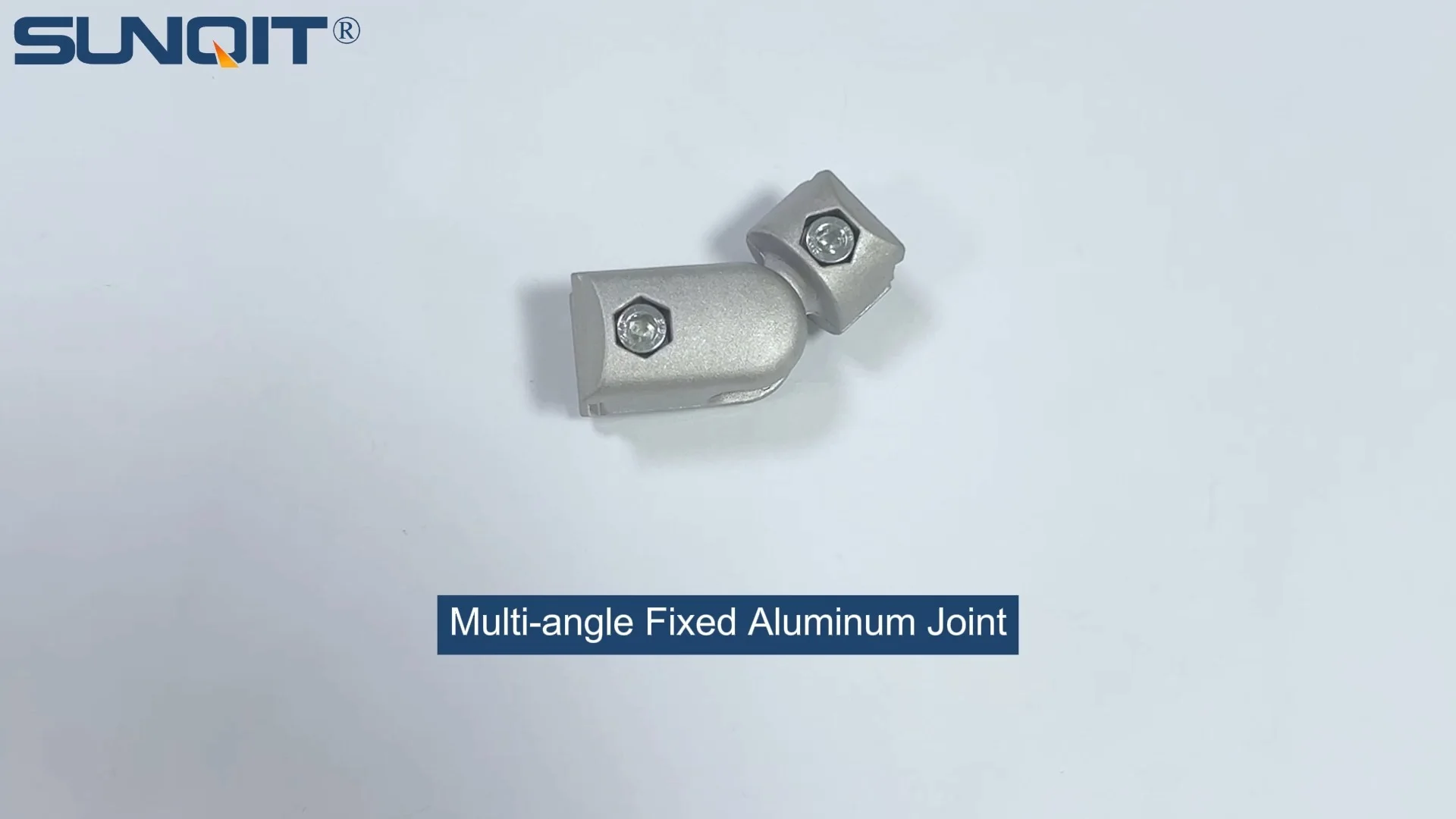
Multi-angle Fixed Aluminum Joint
Aluminum joint pipe connection for two pipe connection and work in mutiple angle.
Walk into any modern manufacturing facility, warehouse, or assembly plant, and you'll quickly spot the backbone of efficient operations: modular structures built from aluminum lean pipe. These systems—whether workbenches, flow racks, or conveyors—don't just appear out of thin air. They're pieced together with precision, and at the heart of that precision lie the joints that connect every pipe and component. Today, we're focusing on two critical joint types that define stability and flexibility in these setups: multi-angle fixed aluminum joints and swivel joints. Their ability to lock into specific angles isn't just a technicality; it's the foundation of a workflow that runs like clockwork. Let's break down how they work, when to use each, and why their angle-locking capabilities matter more than you might think.
Understanding the Basics: What Are Aluminum Lean Pipe Joints?
Before diving into the specifics of fixed and swivel joints, let's ground ourselves in the basics. Aluminum lean pipe systems are the workhorses of lean manufacturing, designed to be lightweight, durable, and adaptable. They rely on aluminum lean pipe —hollow, corrosion-resistant tubes—and a range of aluminum pipe accessories to create everything from simple material racks to complex assembly lines. But without reliable joints, these systems would be little more than a pile of pipes. Joints are the connectors that turn individual tubes into functional structures, and their ability to lock at specific angles determines whether a setup stays rigid, pivots, or adjusts to new needs.
In short, joints are the "glue" of aluminum lean pipe systems. And when it comes to angle locking, not all joints are created equal. Multi-angle fixed aluminum joints and swivel joints represent two ends of the spectrum: one prioritizes unwavering stability, the other prioritizes dynamic flexibility. Let's start with the former.
Multi-Angle Fixed Aluminum Joints: The Epitome of Stability
Multi-angle fixed aluminum joints are exactly what their name suggests: joints engineered to lock into pre-determined angles and stay there. Think of them as the "set-it-and-forget-it" option for structures that need to stand firm, no matter the conditions. These joints are typically made from high-grade aluminum alloy, chosen for its strength-to-weight ratio and resistance to rust—critical in environments where moisture or chemicals might be present.
How Do They Lock?
The magic of multi-angle fixed joints lies in their locking mechanism. Most designs feature a series of notches, grooves, or detents that align with corresponding tabs on the joint's housing. When you insert an aluminum lean pipe into the joint, you rotate it to your desired angle (common options include 30°, 45°, 90°, 135°, and 180°), then tighten a screw, lever, or pin to lock it in place. Once secured, the joint acts like a welded connection—no movement, no shifting, just pure rigidity.
Take, for example, a workbench used in electronics assembly. Technicians rely on a perfectly level surface to prevent tiny components from rolling off or misaligning during soldering. A multi-angle fixed joint here ensures the bench's legs and frame stay locked at 90°, even when heavy tools or circuit boards are placed unevenly. Loose joints would lead to a wobbly surface, increasing the risk of errors or damaged parts. Fixed joints eliminate that risk entirely.
Common Applications: When Rigidity Rules
Multi-angle fixed joints shine in scenarios where stability is non-negotiable. Here are a few real-world examples:
- Static Workbenches: Whether it's a single-deck Workbench E (without casters) or a heavy-duty assembly station, fixed joints ensure the bench top stays level and the frame doesn't twist under load.
- Material Racks: Structures like Material Rack B (3 rows, 3 floors) need to hold stacked boxes or components without sagging. Fixed joints at the corners and supports lock the rack into a rigid cube, preventing collapse even with maximum weight.
- Stationary Conveyor Sections: In conveyor systems, some segments—like loading zones or straightaways—don't need to move. Fixed joints here keep the roller track aligned, ensuring materials glide smoothly without veering off course.
Pros and Cons of Multi-Angle Fixed Joints
Pros:
- Unmatched Stability: Once locked, they don't budge—even under vibration, heavy loads, or frequent use.
- High Load Capacity: Designed to handle significant weight (often 500kg or more per joint), making them ideal for industrial settings.
- Durable and Low-Maintenance: Aluminum alloy resists wear and corrosion, and the simple locking mechanism means little upkeep beyond occasional tightening of screws.
- Compatible with Standard Accessories: They pair seamlessly with most aluminum pipe accessories , from end caps to pipe clamps, making them easy to integrate into existing systems.
Cons:
- Limited Flexibility: Adjusting the angle requires disassembling the joint—no quick pivots or on-the-fly changes.
- Fixed Angle Options: They only lock at pre-set angles, so custom angles (e.g., 27° or 110°) are often off the table unless you use a specialty joint.
- Heavier Than Some Alternatives: The robust locking mechanism adds a bit of weight, though this is negligible in most setups.

Swivel Joints: Flexibility in Motion
If multi-angle fixed joints are the "rock" of aluminum lean pipe systems, swivel joints are the "water"—fluid, adaptable, and ready to change direction at a moment's notice. Swivel joints are designed to rotate freely within a range (often 360°) and lock at any angle along that range, not just pre-determined ones. They're the go-to choice when your structure needs to pivot, tilt, or reconfigure without a complete overhaul.
How Do They Lock?
Swivel joints use a different locking mechanism than fixed joints, prioritizing adjustability over rigidity. Many feature a ball-and-socket design or a rotating collar with a friction-based lock. To use one, you insert the aluminum lean pipe, rotate the joint to your desired angle (say, 47° for a tilted flow rack), then tighten a locking screw or lever to clamp down on the rotating component. Unlike fixed joints, which "click" into notches, swivel joints rely on friction to hold their position—meaning you can lock them at any angle, not just specific increments.
A common example is a conveyor system in a warehouse. Imagine a section of roller track that feeds packages to different sorting stations. With a swivel joint at the end, workers can pivot the conveyor 30° to the left for Station A or 60° to the right for Station B, then lock it in place. When the workflow changes next month, they simply unlock, reposition, and relock—no tools, no disassembly, just quick adaptation.
Common Applications: When Flexibility is Key
Swivel joints thrive in dynamic environments where change is the only constant. Here are a few scenarios where they outshine fixed joints:
- Adjustable Flow Racks: In e-commerce fulfillment centers, product sizes vary daily. Swivel joints let workers tilt flow rack shelves to steepen or flatten the angle, ensuring boxes (whether small envelopes or large parcels) glide smoothly to pickers.
- Mobile Trolleys: Turnover trolleys used to transport materials between stations often have swivel joints on their handles or shelves, allowing operators to adjust the angle for better ergonomics or to fit through tight doorways.
- Conveyor Transfers: Where two conveyors meet at an angle, swivel joints with roller track connectors ensure materials transition smoothly, even if the angle needs (fine-tuning) based on product weight or size.
- Workstations with Pivoting Components: Think of a workbench with a side shelf that folds down when not in use—swivel joints make that movement possible, locking the shelf upright when needed and flat when stored.
Pros and Cons of Swivel Joints
Pros:
- Unlimited Angle Adjustment: Lock at any angle within their rotation range (e.g., 0° to 360°), making them perfect for custom setups.
- Quick Reconfiguration: No disassembly required—just unlock, pivot, and relock. Ideal for facilities with changing production needs.
- Ergonomic Benefits: Adjust angles on the fly to reduce worker strain, whether tilting a work surface or repositioning a material rack.
- Compatible with Dynamic Systems: Pair well with moving components like casters, roller tracks, and roller track connectors , enhancing the adaptability of entire systems.
Cons:
- Lower Load Capacity: Friction-based locking means they typically handle less weight than fixed joints (often 200–300kg per joint, depending on design).
- Vibration Sensitivity: In high-vibration environments (e.g., near heavy machinery), swivel joints may slowly loosen over time, requiring periodic re-tightening.
- Complexity in Installation: Getting the locking mechanism just right takes practice—too loose, and the joint slips; too tight, and it's hard to adjust.
- Higher Cost: The moving parts and precision engineering make swivel joints slightly more expensive than basic fixed joints.

Head-to-Head: Fixed vs. Swivel Joints (Angle Locking Comparison)
To make the choice clearer, let's put multi-angle fixed aluminum joints and swivel joints side by side in a comparison table. We'll focus on the features that matter most when evaluating angle-locking performance:
| Feature | Multi-Angle Fixed Aluminum Joint | Swivel Joint |
|---|---|---|
| Angle Locking Range | Pre-determined angles (e.g., 30°, 45°, 90°, 180°) | Continuous range (e.g., 0°–360°, lockable at any point) |
| Load Capacity (per joint) | High (typically 400–600kg, depending on size) | Moderate (typically 200–350kg, depending on design) |
| Locking Mechanism | Notches/grooves + set screws/pins (rigid, mechanical lock) | Friction-based (collar clamp, ball-and-socket with brake) |
| Adjustment Ease | Low (requires disassembly and re-alignment) | High (unlock, pivot, relock—no disassembly) |
| Best For | Static structures (workbenches, fixed material racks, rigid frames) | Dynamic setups (adjustable flow racks, mobile trolleys, pivoting conveyors) |
| Environmental Suitability | Excellent for high vibration, heavy loads, or corrosive environments | Better for low-to-moderate vibration; requires periodic maintenance in harsh conditions |
| Compatibility with Aluminum Pipe Accessories | Works with most standard accessories (end caps, clamps, brackets) | Compatible with dynamic accessories (e.g., roller track connectors , caster wheels) |

Real-World Scenarios: When to Choose Which Joint
Theory is helpful, but nothing beats real-world examples. Let's look at two case studies where the choice between fixed and swivel joints directly impacted workflow efficiency.
Case Study 1: Automotive Parts Manufacturer (Fixed Joints for Stability)
The Challenge: A manufacturer of engine components needed workbenches for assembling cylinder heads. These workbenches would hold heavy tools (up to 200kg) and precision measuring equipment, requiring a perfectly level surface to ensure component alignment. Any wobble or tilt could lead to costly errors.
The Solution: The facility opted for multi-angle fixed aluminum joints to build the workbench frames. They locked the legs at 90° for vertical stability and the cross-braces at 45° for added rigidity. The result? Workbenches that stayed level even when technicians leaned on them or placed tools unevenly. Over three years of use, there were zero reports of joint failure or misalignment.
Why Fixed Joints Worked: The setup was static—no need to reconfigure the workbenches once installed. Stability was critical, and the fixed joints' high load capacity ensured the benches could handle daily wear and tear.
Case Study 2: E-Commerce Fulfillment Center (Swivel Joints for Adaptability)
The Challenge: A large e-commerce warehouse needed flow racks to store packages during peak seasons (e.g., Black Friday). The packages varied drastically in size—from small jewelry boxes (5cm x 5cm) to large electronics (50cm x 50cm). The racks needed to tilt to adjust the "flow rate" of packages, ensuring smaller items didn't get stuck and larger items didn't slide too quickly.
The Solution: The warehouse installed swivel joints at the base of each flow rack shelf. Workers could unlock the joints, tilt the shelf to a steeper angle (15°) for small packages or a shallower angle (5°) for large ones, then relock. During off-peak seasons, they even folded some shelves flat to save space.
Why Swivel Joints Worked: The ability to adjust angles on demand eliminated bottlenecks. Workers spent less time unjamming packages and more time picking orders, boosting throughput by 25% during peak periods.
Choosing the Right Joint: Key Factors to Consider
Now that we've covered how fixed and swivel joints work, how do you decide which is right for your project? Here are the critical factors to weigh:
1. Workflow Type: Static vs. Dynamic
Start by asking: Will your structure stay in one place and configuration, or will it need to change? If it's static (e.g., a permanent assembly workbench), multi-angle fixed joints are the safe bet. If it's dynamic (e.g., a conveyor that feeds multiple stations), swivel joints will save you time and frustration.
2. Load Requirements
Check the weight of the materials or equipment your structure will hold. If you're supporting heavy loads (e.g., 500kg metal components), fixed joints are non-negotiable. For lighter loads (e.g., 100kg boxes), swivel joints offer flexibility without sacrificing safety.
3. Adjustment Frequency
How often will you need to change the angle? If it's once a year (or never), fixed joints are fine. If it's weekly (or daily), swivel joints will pay for themselves in reduced downtime.
4. Environmental Conditions
High vibration, moisture, or dust? Fixed joints are more resilient in harsh environments. Swivel joints, with their moving parts, may need extra maintenance (e.g., lubrication, tightening) in these settings.
5. Budget
Fixed joints are generally cheaper upfront, but swivel joints can save money long-term if they reduce the need for new structures when workflows change. Factor in both initial cost and future adaptability.
6. Compatibility with Existing Systems
If you're adding to an existing aluminum lean pipe setup, check what's already there. Fixed joints play nice with standard accessories, while swivel joints may require specialized roller track connectors or mounting brackets. Mixing and matching is possible, but compatibility ensures a smoother build.
Final Thoughts: Stability and Flexibility—Two Sides of the Same Coin
Multi-angle fixed aluminum joints and swivel joints aren't rivals—they're partners in building efficient, lean systems. Fixed joints provide the rock-solid foundation for structures that need to stay put, while swivel joints add the adaptability to keep up with changing demands. The key is to match each joint type to its ideal use case: static stability for fixed joints, dynamic flexibility for swivel joints.
At the end of the day, the best joint is the one that makes your workflow easier. Whether you're assembling a workbench that needs to last a decade or a flow rack that adjusts with the seasons, understanding angle-locking capabilities ensures you're not just building a structure—you're building a system that works for you. And with aluminum lean pipe and the right accessories, the possibilities are nearly endless.