- Company Articles
- Products and Technology
- Product knowledge
- 10 Tips for Maximizing Efficiency with 38 Aluminum Roller Track Black with Wheel Flange

10 Tips for Maximizing Efficiency with 38 Aluminum Roller Track Black with Wheel Flange
Related Product
38 Aluminum Roller Track Black with Wheel Flange
Heavy duty roller tracks with flanged plastic rollers for use in processing, logistics and materials handling operations. Ideal for transporting goods quickly and easily as well as for installing on shelving to aid in picking operations.
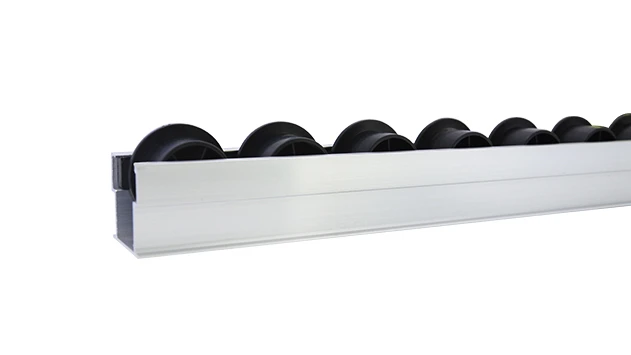
If you've ever walked through a well-oiled manufacturing line or a streamlined warehouse, chances are you've seen the 38 Aluminum Roller Track Black with Wheel Flange hard at work. This unsung hero of lean systems is everywhere—from flow racks that keep materials moving to conveyors that connect production stages. But owning this track isn't enough to unlock its full potential. To get the most out of it, you need to know how to choose the right accessories, optimize its layout, and maintain it properly. Let's dive into 10 practical tips that will help you boost efficiency, reduce downtime, and make your operations smoother than ever.
1. Match with Compatible Aluminum Profile Accessories
The 38 Aluminum Roller Track Black with Wheel Flange doesn't work in isolation—it relies on the right aluminum profile accessories to hold it together and function as part of a larger system. For example, using a 90° aluminum crossing joint lets you connect two tracks at a right angle without compromising stability, while a parallel aluminum joint a keeps tracks aligned perfectly for linear flow.
Let's say you're building a flow rack for 3C assembly parts. Pairing the roller track with an aluminum profile 3 way connector allows you to create a multi-level rack where each level uses the 38mm track to feed small components like screws or circuit boards to workers. This not only saves space but also ensures that parts are always within easy reach, cutting down on time spent searching for materials.
Key Insight: Always check that accessories are designed for 38mm tracks—using ill-fitting parts can lead to wobbling, material jams, or even safety hazards.
2. Optimize Layout for Smooth Material Flow
The way you arrange your 38mm roller tracks has a direct impact on how efficiently materials move through your facility. For flow racks, a common mistake is to place tracks in a straight line that forces workers to reach across long distances. Instead, consider a U-shaped layout where materials come in one end and exit the other, keeping workers in the center of the action.
Take a warehouse logistics scenario: if you're using the track in flow racks to store and distribute consumer electronics boxes, arranging the racks in a zig-zag pattern can reduce bottlenecks at picking stations. Each rack level uses the 38mm track to slide boxes toward the picker, who can grab them without moving from their spot. This simple layout change can increase picking speed by up to 25%—a huge win for busy warehouses.
| Layout Type | Best For | Efficiency Boost |
|---|---|---|
| Linear | Long-distance material transfer (e.g., conveyor lines) | 15-20% |
| U-Shaped | Picking stations & small assembly lines | 25-30% |
| Zig-Zag | Flow racks in warehouses | 20-25% |

3. Integrate with Conveyor Systems for Seamless Transfer
The 38 Aluminum Roller Track Black with Wheel Flange shines when paired with conveyor systems like belt or chain conveyors. This integration creates a continuous flow of materials from one stage to the next, eliminating the need for manual handling and reducing the risk of damage.
For example, in a medical device production line, you can use the roller track to feed small parts (like syringes or sensor components) into a belt conveyor. The conveyor then carries these parts to an ESD workstation where workers assemble them into finished products. The black wheel flange on the track ensures that parts stay aligned as they move onto the conveyor, preventing jams and ensuring that each part reaches the workstation in perfect condition. This seamless transfer not only speeds up production but also protects sensitive medical components from static electricity—critical for maintaining product quality.
Key Insight: When connecting to conveyors, use roller track placon mount connectors to ensure a tight, secure fit between the track and the conveyor belt. This prevents gaps that could cause parts to get stuck.

4. Calculate Load Capacity to Avoid Overloading
Every 38mm roller track has a maximum load capacity, and ignoring this can lead to premature wear, broken wheels, or even safety accidents. Before installing the track, you need to know the weight of the materials you'll be moving—whether it's a 5kg box of consumer electronics or a 50kg automotive part.
Let's take an automotive manufacturing example: if you're using the track to move heavy engine components, you need to ensure that each track section can handle the weight. If the standard track isn't enough, you can add heavy-duty split foot seats to distribute the load more evenly across the floor. On the flip side, underloading the track (using it for very light materials) wastes space—consider using a narrower track if you're only moving small parts.
| Material Weight | Recommended Accessory | Notes |
|---|---|---|
| 0-10kg | Standard 38mm track | Ideal for consumer electronics & small 3C parts |
| 10-30kg | Track with reinforced wheel flanges | Good for medical devices & medium-sized boxes |
| 30-50kg | Track + heavy-duty split foot seats | Perfect for automotive parts & heavy components |
5. Perform Regular Maintenance to Extend Lifespan
Even the most durable roller tracks need regular care to keep them running smoothly. Simple maintenance steps can extend the lifespan of your 38mm track by years and reduce downtime significantly.
Here are some easy maintenance tasks you can do monthly:
- Clean debris from the wheel flanges: Dust, dirt, and small parts can get stuck in the flanges, slowing down material flow. Use a soft brush or compressed air to remove them.
- Lubricate the wheels: Apply a small amount of silicone lubricant to the wheel bearings to reduce friction. Avoid oil-based lubricants—they can attract more dirt.
- Check joints and connectors: Make sure all aluminum profile accessories are tight and secure. Loose joints can cause the track to wobble or shift.
- Inspect wheel flanges for wear: If the black flanges are cracked or worn down, replace them immediately to prevent materials from slipping off the track.
A logistics center in the 3C industry started doing monthly maintenance on their 38mm roller tracks and saw a 30% reduction in downtime. That's a huge saving in terms of time and money!
6. Customize Wheel Flange Spacing for Different Material Sizes
The black wheel flange on the 38mm track is designed to guide materials and prevent them from falling off. But to get the most out of this feature, you need to adjust the spacing between tracks to fit the size of the materials you're moving.
For example, in a consumer electronics factory, you might need to move both small product boxes (like smartphone cases) and larger boxes (like laptop packaging). By adjusting the spacing between the 38mm tracks, you can create a setup that fits both sizes. For small boxes, reduce the spacing so the flanges hold the box securely. For larger boxes, increase the spacing to accommodate the wider dimensions. This flexibility means you don't need to invest in separate tracks for different materials—saving you money and space.
Key Insight: Use parallel fixation aluminum pipe joints to adjust the spacing between tracks. These joints let you move the tracks closer or farther apart without disassembling the entire system.
7. Use Anti-Slip Accessories for Stability on Uneven Floors
Uneven floors are a common problem in many manufacturing facilities and warehouses. If your 38mm roller track is placed on an uneven surface, it can shift or wobble during operation—leading to material jams or even accidents. To fix this, use anti-slip accessories like suction cup anti-slip foot adjusters.
These foot adjusters have a suction cup base that sticks to the floor, keeping the track steady. They also let you level the track on uneven surfaces by adjusting the height of each foot. For example, in a workshop with concrete floors that have small cracks or bumps, using these feet ensures that the track stays in place even when heavy materials are moving across it. This not only improves safety but also ensures that materials flow smoothly without any interruptions.
8. Combine with Lean Workbench for Integrated Workstations
The 38mm roller track isn't just for flow racks and conveyors—it can also be integrated into lean workbenches to create a fully functional workstation. This setup lets workers access materials directly from the track without having to reach across the bench, saving time and reducing fatigue.
Let's take a 3C assembly line example: a lean workbench (like Workbench E) with a 38mm roller track attached to the front. The track feeds small components (like circuit boards or batteries) directly to the worker, who can pick them up and assemble them into finished products. The black wheel flange ensures that the components stay on the track and don't fall off, while the lean workbench provides a stable surface for assembly. This integrated setup reduces the time workers spend reaching for materials by 20%—a big boost to productivity.
You can also add other accessories to the workstation, like an aluminum honeycomb panel for storage or a t-slot rubber seal cover to protect sensitive components from dust. The possibilities are endless!
9. Integrate ESD Protection for Sensitive Components
Many industries—like 3C assembly, medical devices, and electronics manufacturing—deal with sensitive components that are prone to static damage. The 38mm roller track black with wheel flange can be part of an ESD-safe setup to protect these components.
For example, in a computer peripheral factory, you can use the track to feed circuit boards into an ESD workstation. The track itself is made of materials that resist static buildup, and the black wheel flange ensures that the boards move smoothly without rubbing against other surfaces (which can generate static). You can also add ESD-safe accessories like anti-slip foot adjusters and aluminum pipe clamps to the setup to further reduce static risk.
This ESD integration is critical for maintaining product quality. A single static discharge can damage a circuit board beyond repair, leading to costly reworks and delays. By using the 38mm track in an ESD-safe setup, you can minimize this risk and ensure that your products meet the highest quality standards.
10. Choose Reputable Lean Pipe Suppliers for Consistent Quality
Last but not least, the quality of your 38mm roller track depends on the supplier you choose. A reputable lean pipe supplier will provide tracks that are made of high-quality aluminum, have consistent dimensions, and are compatible with standard aluminum profile accessories.
Why is this important? If your track has inconsistent dimensions, it won't fit properly with other accessories—leading to wobbling, jams, and safety hazards. A good supplier will also offer custom solutions if you need a track with specific features (like a thicker wheel flange or higher load capacity).
For example, a 3C assembly factory switched to a reputable lean pipe supplier for their 38mm roller tracks and saw a 15% reduction in assembly errors. That's because the new tracks were consistent in size and fit perfectly with their existing accessories. The factory also saved money by not having to replace faulty tracks as often.
Key Insight: When choosing a supplier, look for one that offers a warranty on their products and has experience in your industry. This ensures that you get the right track for your needs and that you have support if something goes wrong.
Final Thoughts
The 38 Aluminum Roller Track Black with Wheel Flange is a versatile and essential tool for any lean system. By following these 10 tips—from choosing the right accessories to performing regular maintenance—you can maximize its efficiency and get the most out of your investment. Whether you're in 3C assembly, medical devices, or warehouse logistics, this track can help you streamline your operations, reduce downtime, and boost productivity.
Remember, the key to success with any lean tool is to use it wisely and maintain it properly. So take the time to implement these tips, and you'll see a big difference in how your facility operates. Happy optimizing!