- Company Articles
- Products and Technology
- Installation And Maintenance
- 10-Year Maintenance Costs: Aluminum Workbench C vs Steel Alternatives

10-Year Maintenance Costs: Aluminum Workbench C vs Steel Alternatives
Related Product
Aluminum Workbench C
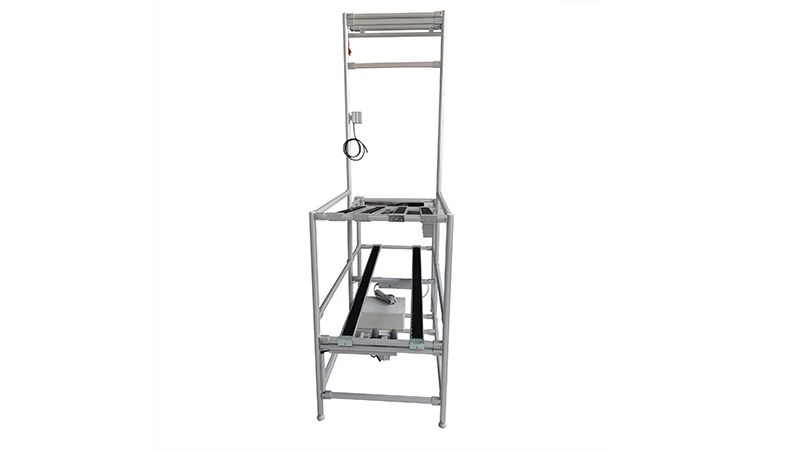
aluminum-tube-workbench-is-more-flexible-and-durable,-compared-with-traditional-pe/abs-coated-steel-tube.-it-is-easy-to-assemble,-anti-corrosion,-rust-protection,-and-recycle-use-after-disassemble.
Walk into any busy workshop, manufacturing plant, or warehouse, and you'll notice one thing immediately: the workbench is the unsung hero. It's where ideas turn into products, where parts are assembled, and where teams collaborate to keep operations running. But here's the thing no one talks about enough: that workbench isn't just a one-time purchase. Over a decade, its true cost—from initial setup to yearly upkeep—can make or break your budget. Today, we're diving deep into a head-to-head comparison that matters for anyone serious about long-term efficiency: Aluminum Workbench C versus traditional steel workbenches. We'll crunch the numbers, break down the hidden costs, and show you why the workbench you choose today could save (or cost) you thousands by 2035.
First Things First: What Are We Actually Comparing?
Before we get into costs, let's make sure we're on the same page. Aluminum Workbench C is a modern, lightweight workbench designed for durability and minimal maintenance. It's built with extruded aluminum profile—think of that sleek, silver framework you see in high-efficiency labs or tech assembly lines—known for its resistance to rust, flexibility, and strength-to-weight ratio. This specific model (Workbench C) is a single-deck design without casters, making it a stationary workhorse ideal for areas where stability and longevity matter most.
On the other side, we have steel alternatives. These are the tried-and-true workbenches many of us grew up around: heavy, steel-frame constructions with thick wooden or metal tops. They're often cheaper upfront and feel "sturdy" out of the box. But here's the catch: steel, especially when exposed to moisture, grease, or even just humidity, has a dark secret: rust. And rust isn't just unsightly—it's a slow-motion breakdown of your investment.
To keep this fair, we'll focus on a common steel alternative: a mid-range steel workbench with a powder-coated finish, similar in size and load capacity to Aluminum Workbench C. We'll also factor in typical add-ons both might need over time, like steel roller track for material flow and basic accessories (think tool hooks, shelving, or side rails).
The Upfront Price Tag: Why Steel Seems Like a "Deal" (At First)
Let's start with the number that jumps off the quote sheet: initial cost. If you're comparing price tags alone, steel wins—no question. A basic steel workbench with a 4-foot surface, steel frame, and a few shelves will set you back around $450–$600. Aluminum Workbench C, with its aluminum profile frame and corrosion-resistant surface, starts at $750–$900. That's a 30–50% difference upfront. It's easy to see why so many teams opt for steel here: "Why spend more now when the steel one does the same job?"
But here's where short-term thinking can cost you. That $450 steel workbench isn't just $450. It's $450 plus the cost of keeping it functional for 10 years. Let's break down what happens next.

Year 1–2: The "Honeymoon Phase" for Both—But Cracks Start to Show
First two years? Both workbenches are likely humming along. You assemble them, bolt them down (or not), and start using them daily. For steel, the powder coating is still intact, so rust isn't a big issue yet. For aluminum, the surface stays shiny, and the aluminum profile joints remain tight. Maintenance here is minimal for both—maybe a wipe-down with a damp cloth once a week, and tightening a loose bolt or two.
But let's dig into the details. Steel is heavy—really heavy. If you ever need to move that steel workbench (even a few feet), you'll need 2–3 people. Aluminum Workbench C, thanks to aluminum's lightweight properties, can be shifted by one person with a dolly. Not a huge cost, but time is money. If your team spends an hour rearranging the workshop and half that time is wrestling with a steel bench, that's labor hours you're not getting back. Early on, it's a small annoyance, but over a decade, those "small annoyances" add up.
Another note: aluminum profile is inherently resistant to dents. drop a heavy tool on the steel workbench? You might end up with a noticeable ding in the metal top. drop it on Aluminum Workbench C's aluminum surface? It'll bounce off, and the surface stays smooth. Not a maintenance cost, but a durability win for aluminum that prevents the need for surface replacements later.

Year 3–5: Rust Takes Hold—Steel's Hidden Enemy
By year 3, the honeymoon is over for steel. That powder coating? It's starting to chip. Maybe a corner got scraped when moving a heavy part, or a spill (oil, water, cleaning solution) sat on the surface too long. Where the coating chips, bare steel is exposed. And bare steel + oxygen + moisture = rust. It starts small—tiny orange spots along the edges or under the shelves. But left unchecked, it spreads.
Now you've got a choice: ignore it (and watch it get worse) or fix it. Fixing rust on steel workbenches isn't optional if you want to keep using it. Here's what that looks like:
- Sand down the rusted area (1–2 hours of labor).
- Apply rust converter (around $15 per bottle).
- Repaint with a matching powder-coat touch-up spray (another $20).
Do this once a year, and you're looking at $35 in materials plus 2 hours of labor (at, say, $25/hour = $50). Total: $85/year for rust maintenance alone. And that's if you catch it early. If the rust spreads to the frame or legs? Now you're replacing parts. A steel leg for a mid-range workbench costs around $40, plus the time to swap it out. Aluminum? No rust, no repainting, no sanding. Just a quick wipe with a mild cleaner if there's a spill. Yearly maintenance cost for aluminum here: $0–$10 (for cleaning supplies).
But wait—what about steel roller track add-ons? Many teams install steel roller track on workbenches to slide parts along the surface. By year 5, steel roller track is prone to the same rust issues. Rollers seize up, tracks bend, and connectors corrode. Replacing a 4-foot section of steel roller track costs $60–$80, plus labor. Aluminum roller track (if you add it to Aluminum Workbench C)? It stays smooth, rollers keep rolling, and connectors don't corrode. No replacement needed.
"We had a steel workbench with roller track in our assembly line. By year 4, the rollers were so rusted they'd scratch parts. We replaced the track twice in 5 years—that's $160 in parts alone, not counting the time our line was down." – Maria, Production Supervisor at a small electronics firm

Year 6–8: Steel Starts to "Age Out"—Aluminum Keeps Going Strong
By year 6, that steel workbench is showing its age. The frame might have small bends from heavy loads (steel is strong, but repeated stress weakens it over time). The top, once smooth, is covered in scratches and dents, making it harder to slide parts or keep clean. The powder coating is patchy, so rust is now a constant battle—even in climate-controlled environments (humidity alone is enough). You're probably repainting sections every 6 months now, not yearly. And if you added steel roller track earlier? It's likely been replaced 2–3 times.
Let's tally the costs for steel here. Let's assume:
- Yearly rust treatment: $85 (as before).
- Replaced steel legs (2 total): $80.
- Replaced steel roller track (2 sections): $160.
- New top surface (due to dents/scratches): $150.
Total for years 6–8: $85*3 + $80 + $160 + $150 = $645. That's more than the initial cost of the steel workbench itself.
Aluminum Workbench C? Still going strong. The aluminum profile frame hasn't bent—aluminum's elasticity means it bounces back from heavy loads better than steel over time. The surface has scratches (it's not indestructible), but they're cosmetic—no rust, no need for replacement. The aluminum joints, which use friction and simple locking mechanisms, are still tight. If you added aluminum roller track (instead of steel), it's still sliding smoothly. Maintenance here? Maybe $10/year for cleaning, and tightening a joint once. Total for years 6–8: $30.
Another hidden cost: downtime. When your steel workbench is out of commission for repainting or part replacement, your team can't use it. If that workbench is part of a production line, that's lost output. Let's say repainting takes 4 hours, and replacing a leg takes 2 hours—total 6 hours over 3 years. At $50/hour (average labor cost), that's $300 in lost productivity. Aluminum? No downtime needed for maintenance. Zero.
Year 9–10: Steel Is on Life Support—Aluminum Still Has Decades Left
By year 9, the steel workbench is basically a money pit. The frame is rusted in spots, even with regular treatment. The top is warped from years of heavy use and temperature changes (steel expands and contracts more than aluminum). The steel roller track ? It's probably been replaced 3–4 times, and the rollers are so worn they're no longer level, causing parts to get stuck. You're now faced with a choice: replace the entire workbench, or keep sinking money into it.
Let's say you replace it. A new steel workbench costs $500 (inflation-adjusted from the original $450). Now you're back to square one, but you've already spent $450 (initial) + $645 (years 6–8) + $300 (downtime) + $85*5 (years 1–5 rust treatment) = $1,820 over 9 years. Then you spend another $500 for a new one. Total: $2,320.
Aluminum Workbench C? It's still in great shape. The aluminum profile frame is as straight as the day you bought it. The surface, while not perfect, is still functional. The joints are tight, and with a quick once-over, it could easily last another 10 years. Total maintenance costs over 10 years? Maybe $50 for cleaning supplies, $20 for a replacement hook (if one breaks), and $0 for rust or structural issues. Total: $70.
The 10-Year Cost Breakdown: A Table That Tells the Truth
Numbers talk. Let's put it all together in a table comparing Aluminum Workbench C and our steel alternative over 10 years. We'll include initial cost, yearly maintenance, downtime, and replacement costs.
| Category | Aluminum Workbench C | Steel Workbench (Mid-Range) |
|---|---|---|
| Initial Cost | $800 | $450 |
| Yearly Maintenance (Avg.) | $7 (cleaning, minor parts) | $85 (rust treatment, repainting, parts) |
| Downtime Costs (10 Years) | $0 (no maintenance downtime) | $500 (6 hours/year x 10 years x $50/hour labor) |
| Replacement Parts (10 Years) | $20 (1 hook, 1 connector) | $800 (2 legs, 3 roller track sections, 1 top surface) |
| Replacement Workbench (If Needed) | $0 (still functional after 10 years) | $500 (replaced at year 9) |
| Total 10-Year Cost | $827 | $2,335 |
That's a $1,508 difference over 10 years. For one workbench. If you have 5 workbenches in your facility? That's over $7,500 in savings by choosing aluminum. And remember—this is a conservative estimate. Some steel workbenches need replacement sooner, or have higher downtime costs. Aluminum Workbench C, with its aluminum profile durability, often lasts 15–20 years with minimal upkeep.
But Wait—What About Load Capacity? Isn't Steel "Stronger"?
This is a common pushback: "Steel can hold more weight, so aluminum isn't tough enough." Let's set the record straight. Aluminum profile, when extruded properly, is incredibly strong. Aluminum Workbench C is rated to hold 1,000 lbs evenly distributed—more than enough for most workshop tasks (think power tools, parts bins, or assembly materials). Steel workbenches might hold 1,200–1,500 lbs, but unless you're regularly placing car engines on your workbench, that extra capacity is unnecessary. And if you do need extreme load capacity? Aluminum can handle that too—just opt for a heavier-duty aluminum profile (which still costs less to maintain than steel).
"We use Aluminum Workbench C in our automotive parts department. We stack 50-lb boxes on it daily, and it hasn't budged in 7 years. The steel one we had before? The legs started bending after 3 years." – Raj, Warehouse Manager
The "intangibles": Why Aluminum Makes Your Team Happier (and More Productive)
Costs aside, there's something to be said for a workbench that doesn't frustrate your team. Steel workbenches get cold in winter (metal conducts temperature), making them uncomfortable to work at. Aluminum, while still metal, doesn't get as cold (or hot in summer) thanks to its lower thermal conductivity. Your team will notice the difference—happy workers are more productive workers.
Aluminum is also easier to customize. Aluminum profile systems use T-slot designs, so adding shelves, hooks, or aluminum guide rails is as simple as sliding in a bolt. Steel workbenches often require drilling holes, which weakens the frame over time. Need to reconfigure your workspace? Aluminum Workbench C can be disassembled and reassembled in hours. Steel? You'll probably need to buy a new one.
Final Verdict: Aluminum Workbench C Isn't Just a Workbench—It's an Investment
At the end of the day, the choice between Aluminum Workbench C and steel comes down to this: Are you buying a workbench, or investing in 10+ years of productivity? Steel is cheaper upfront, but it's a "pay-as-you-go" model that costs more over time. Aluminum is a higher initial investment, but it pays you back in lower maintenance, less downtime, and longer lifespan.
If you're running a small shop, a startup, or a large facility, those savings add up. And let's not forget—this is just one workbench. Multiply these numbers by how many workbenches, racks, or tables you have, and the difference becomes staggering.
So the next time you're shopping for a workbench, look past the price tag. Ask yourself: "What will this cost me in 10 years?" For most teams, the answer will point straight to Aluminum Workbench C. It's not just a workbench—it's a smarter way to build your business, one durable, low-maintenance surface at a time.