- Company Articles
- Products and Technology
- Product knowledge
- 2020 Aluminum Profile End Caps: Compatibility with Inner Rotating Aluminum Joints

2020 Aluminum Profile End Caps: Compatibility with Inner Rotating Aluminum Joints
Related Product
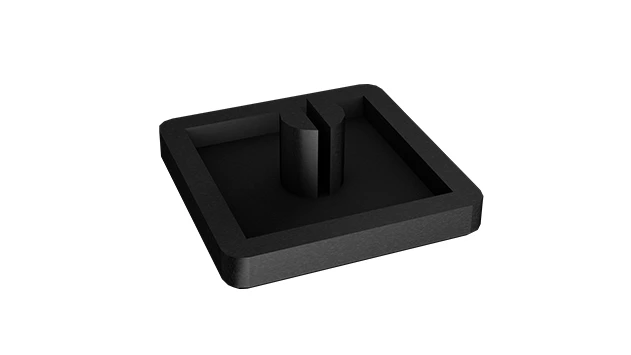
2020 Aluminum Profile End Cap
The aluminum profile end cap adds a finishing touch to your project and closes off profile ends to limit dust and debris buildup, also it can avaid some scratch for material and labor during the assemble work.
Walk into any modern manufacturing facility, warehouse, or even a tech startup's workshop, and you'll likely spot a common backbone holding everything together: aluminum profiles. These unassuming metal structures—sleek, lightweight, and infinitely adaptable—are the unsung heroes of efficient workspace design. From assembly lines to material racks, from workbenches to conveyor systems, aluminum profiles form the skeleton that keeps operations running smoothly. But here's the thing: even the strongest skeleton needs the right "joints" and "protectors" to function at its best. Today, we're diving into two critical components that often fly under the radar but make a world of difference: 2020 aluminum profile end caps and internal rotatary aluminum joints . More specifically, we're exploring how their compatibility can make or break the performance of your aluminum lean pipe systems.
Understanding the 2020 Aluminum Profile: A Workhorse in Modern Design
First, let's get acquainted with the star of the show: the 2020 aluminum profile. If you're new to the world of industrial design, you might be wondering, "What's with the numbers?" The "2020" refers to its cross-sectional dimensions: 20mm by 20mm. It's a compact, lightweight profile that punches way above its weight class. Unlike bulkier profiles (think 4040 or 8080), the 2020 is the Goldilocks of the aluminum profile family—not too big, not too small, but just right for a wide range of applications.
Why is it so popular? For starters, its size makes it incredibly versatile. Need a small parts rack in a tight corner? 2020 profiles can handle that. Building an adjustable workbench for a lab? 2020's got you. Even in larger systems, it often serves as a secondary support structure, adding stability without adding unnecessary heft. Its T-slot design—those grooves running along its length—lets you slide in accessories like brackets, shelves, or even wheels, turning a simple length of metal into a fully customizable tool. And because it's aluminum, it's resistant to rust, easy to clean, and surprisingly strong for its weight. No wonder it's a favorite among manufacturers, DIY enthusiasts, and lean pipe suppliers alike.
The Role of 2020 Aluminum Profile End Caps: More Than Just "Caps"
Now, let's talk about the first of our dynamic duo: the 2020 aluminum profile end cap. At first glance, you might think, "It's just a plastic or rubber cover—how important can it be?" But anyone who's ever nicked their hand on a sharp metal edge or watched dust clog up a T-slot will tell you: end caps are non-negotiable. They're the unsung protectors of your aluminum profiles, and their job goes way beyond aesthetics.
First and foremost, safety. Raw aluminum profile ends can be surprisingly sharp—think of a freshly cut piece of metal with burrs or rough edges. In a busy workspace, where hands are constantly moving, a single misstep could lead to a cut or scrape. End caps smooth out those edges, turning a potential hazard into a harmless finish. Then there's protection from the elements. Dust, dirt, and even moisture love to sneak into open T-slots, especially in warehouses or outdoor workshops. Over time, that buildup can corrode the metal from the inside or jam up accessories when you try to slide them in. End caps act as a barrier, keeping the gunk out and extending the life of your profiles.
But end caps aren't one-size-fits-all. There are snap-on caps, which pop into place with a satisfying "click" and are great for quick setups. Screw-on caps, on the other hand, offer a tighter seal—ideal for environments where vibration (like near a conveyor belt) might dislodge a snap-on cap. Some are made of rigid plastic for durability, others of flexible rubber for a snug fit on slightly irregular profile ends. And yes, they even come in different colors—though let's be honest, most people stick to neutral tones like black or gray to blend in. The key takeaway? Choosing the right end cap isn't just about slapping something on the end; it's about matching it to your profile, your environment, and—crucially—any joints that might be attached nearby.

Internal Rotating Aluminum Joints: The "Flexible Elbows" of Your System
If 2020 profiles are the bones of your structure, then internal rotating aluminum joints are the elbows and wrists—they add movement and flexibility. Imagine building a workbench where you need a shelf that can swing out of the way when not in use, or a material rack that tilts to feed parts onto a conveyor. That's where internal rotating joints shine. These clever little components let two pieces of aluminum profile connect at an angle and rotate smoothly, turning a static structure into a dynamic, adaptable one.
So, how do they work? Unlike fixed joints (which lock profiles at 90° or 45° angles), internal rotating joints have a hollow, cylindrical design that fits inside the end of an aluminum profile. A pin or bolt runs through the joint and the profile, acting as an axle. This allows the connected profile to rotate around that axis—sometimes 180°, sometimes a full 360°, depending on the joint's design. Some even have built-in stops to limit rotation, preventing over-swinging in sensitive setups. They're typically made of high-strength aluminum or steel, with a smooth bearing surface to ensure friction-free movement over time.
Why are they so valuable? In lean manufacturing, adaptability is everything. A production line that can reconfigure in minutes (not days) to handle a new product is a production line that stays competitive. Internal rotating joints make that adaptability possible. Need to adjust the height of a tool holder? Rotate the joint. Want to swing a component out for maintenance? Rotate the joint. They reduce the need for multiple fixed structures, saving space and cutting costs. But here's the catch: for that rotation to be smooth, safe, and long-lasting, the joint needs to fit perfectly with the profile it's attached to. And that's where the 2020 aluminum profile end cap comes back into play.

Compatibility 101: Why It Matters More Than You Think
Let's say you've ordered your 2020 profiles, picked out some snazzy internal rotating joints, and grabbed a bag of end caps from the local hardware store. You assemble everything, step back, and… something's off. The joint feels wobbly. When you try to rotate it, there's a grinding noise. Worse, the end cap keeps popping off every time you move the joint. What went wrong? Chances are, it's a compatibility issue.
Compatibility between end caps and internal rotating joints isn't just about "fitting together"—it's about ensuring the entire system works in harmony. Here's why it's critical:
- Smooth rotation: If the end cap is too thick, it might rub against the joint as it rotates, causing friction and wear. If it's too loose, the joint might shift inside the profile, leading to wobble.
- Safety: A loose end cap could fall off, leaving a sharp metal edge exposed. A misaligned joint might fail under load, putting workers or equipment at risk.
- Durability: Incompatible parts wear out faster. The constant friction from a poorly fitting end cap can scratch the joint or profile, leading to corrosion over time. A wobbly joint strains the T-slots, weakening the entire structure.
- Cost efficiency: Replacing worn-out parts or fixing damaged structures costs time and money. Getting compatibility right the first time saves both.
Think of it like a puzzle: each piece has to interlock perfectly to create a solid picture. In this case, the "picture" is a workspace that's safe, efficient, and built to last. So, how do you ensure your 2020 end caps and internal rotating joints are compatible? Let's break it down step by step.
How to Check Compatibility: A Practical Guide
Checking compatibility doesn't have to be rocket science. With a few simple steps, you can avoid the headaches of wobbly joints and popping end caps. Here's what to do:
1. Know Your Profile's Inner Diameter
First, measure the inner diameter of your 2020 aluminum profile. While most 2020 profiles have standard outer dimensions (20x20mm), the inner diameter can vary slightly depending on the wall thickness. Some have thicker walls for added strength, which reduces the inner space. Internal rotating joints are designed to fit snugly inside the profile, so even a 1mm difference in inner diameter can cause a loose fit. Check the manufacturer's specs or grab a caliper and measure it yourself—it's time well spent.
2. Match End Cap Design to Joint Type
Not all end caps are created equal, and some designs play nicer with rotating joints than others. For example:
- Snap-on end caps: These are the most common—they're easy to install (just push them into the profile end) and affordable. But if your internal rotating joint protrudes slightly from the profile end, a snap-on cap might not fit over it. The cap could get caught on the joint during rotation, causing it to pop off.
- Screw-on end caps: These have a small screw that tightens the cap against the profile's inner wall, creating a secure fit. They're bulkier than snap-on caps but more stable. However, the screw head might interfere with the joint's rotation if not positioned correctly.
- Low-profile end caps: These are designed to sit flush with the profile end, with minimal protrusion. They're ideal for use with rotating joints because they leave more space for the joint to move without interference.
3. Test the Fit Before Full Assembly
Here's a pro tip: always test compatibility with a single profile, joint, and end cap before assembling your entire system. Slide the internal rotating joint into the profile end, then try fitting the end cap over it. Rotate the joint back and forth—does the cap stay in place? Is there any rubbing or resistance? If the cap pops off or the joint feels stuck, it's time to try a different cap or joint model. Most reputable aluminum profile suppliers will even send you sample parts for testing—don't hesitate to ask!
A Closer Look: Compatibility Table for 2020 End Caps and Internal Rotating Joints
To make this easier, we've put together a quick reference table comparing common 2020 aluminum profile end cap styles and their compatibility with internal rotating joints. Use this as a starting point, but always verify with your specific parts!
| End Cap Type | Design Features | Compatibility with Internal Rotating Joints | Best For |
|---|---|---|---|
| Snap-on (Standard) | Thin plastic, push-fit, 1-2mm protrusion from profile end | Low: Risk of popping off during rotation; may rub against joint | Static structures (no rotating joints) |
| Snap-on (Low-Profile) | Thin plastic, flush-fit, <1mm protrusion | High: Minimal interference; stays in place during rotation | Light-duty rotating setups (e.g., swing-out shelves) |
| Screw-on (Standard) | Thicker plastic/metal, screw-fastened, 3-4mm protrusion | Medium: Secure fit but may require screw adjustment to avoid joint contact | Heavy-duty rotating setups (e.g., tilting material racks) |
| Rubber (Shock-Absorbing) | Flexible rubber, push-fit, 2-3mm protrusion | Medium: Absorbs vibration but can wear quickly if rubbing against joint | Setups with mild vibration (e.g., near conveyor belts) |
Real-World Impact: How Compatibility Boosts Efficiency (and Saves Sanity)
Let's step out of the theory and into the workshop with a real example. A small electronics manufacturer we worked with recently reached out with a problem: their assembly line workbenches, built with 2020 profiles and internal rotating tool holders, were constantly breaking down. The tool holders kept jamming, and the end caps on the profiles were popping off, leaving sharp edges that scratched workers' arms. After inspecting their setup, we quickly pinpointed the issue: they were using standard snap-on end caps with their rotating joints. The caps were getting caught on the joints during rotation, causing them to dislodge. Without the end caps, dust and debris were getting into the joint mechanisms, leading to jams.
The solution? Switching to low-profile snap-on end caps. These sat flush with the profile ends, leaving the joints free to rotate without interference. We also recommended a quick weekly check to ensure caps were secure—a 2-minute task that saved them hours of downtime. Within a month, their assembly line efficiency was up by 15%, and worker complaints about scratches dropped to zero. All because of a tiny change in end cap style. That's the power of compatibility.
Beyond the Basics: Other Aluminum Profile Accessories to Consider
While end caps and rotating joints are critical, they're just two pieces of the puzzle. To build a truly robust aluminum lean pipe system, you'll need other aluminum profile accessories that work in harmony with your setup. Here are a few to keep in mind:
- Corner codes: These reinforce 90° joints between profiles, adding stability to your structure. Look for models that don't interfere with T-slot access.
- Gussets: Triangular brackets that add strength to joints, perfect for heavy-load setups. They should be slim enough to fit alongside rotating joints without blocking movement.
- Casters: Wheels that attach to the bottom of profiles, turning static racks into mobile trolleys. Ensure caster mounting plates fit the profile's T-slots and don't protrude too far, which could tip the structure.
Remember, compatibility isn't just about end caps and joints—it's about the entire ecosystem of parts. A reliable lean pipe supplier will offer not just individual components but systems where all parts are designed to work together. They'll have spec sheets that list which end caps pair with which joints, which accessories fit which profiles, and even provide assembly guides to take the guesswork out of setup.
Common Mistakes to Avoid (Because We've All Been There)
Even with the best intentions, it's easy to slip up when choosing parts. Here are a few common mistakes we've seen (and fixed!) over the years:
- Buying "universal" end caps: Spoiler alert: "universal" is rarely universal. A cap that fits a 2020 profile from Brand A might be loose on a 2020 profile from Brand B, thanks to minor differences in wall thickness. Stick to caps designed for your specific profile brand.
- Ignoring material compatibility: If your internal rotating joint is steel, and your end cap is plastic, friction during rotation can cause the plastic to wear down faster. Opt for metal end caps in high-friction setups.
- Overlooking environmental factors: In dusty or humid environments, standard end caps might not seal tight enough, letting debris into the profile. Look for caps with rubber gaskets or IP-rated seals for these conditions.
Final Thoughts: The Small Parts That Make a Big Difference
At the end of the day, 2020 aluminum profile end caps and internal rotating aluminum joints might seem like minor details. But in the world of lean manufacturing and efficient workspace design, details matter. A system where every part works in harmony—where end caps stay put, joints rotate smoothly, and profiles hold strong—isn't just more efficient; it's safer, more durable, and ultimately, more cost-effective. It's the difference between a workshop that feels like a well-oiled machine and one that's constantly breaking down, frustrating workers, and eating into profits.
So, the next time you're designing a new structure or upgrading an old one, take a moment to think about these small but mighty components. Measure twice, test your parts, and don't be afraid to ask your supplier for help. After all, a successful aluminum lean pipe system isn't just built with profiles—it's built with care, attention to detail, and a little thing called compatibility.
And who knows? Those 2020 end caps and internal rotating joints might just be the secret to unlocking the full potential of your workspace. Here's to smoother rotations, tighter fits, and a whole lot less frustration—one profile at a time.