- Company Articles
- Products and Technology
- Product knowledge
- 2020 Aluminum Profile End Caps: From Design to Production Process

2020 Aluminum Profile End Caps: From Design to Production Process
Related Product
2020 Aluminum Profile End Cap
The aluminum profile end cap adds a finishing touch to your project and closes off profile ends to limit dust and debris buildup, also it can avaid some scratch for material and labor during the assemble work.
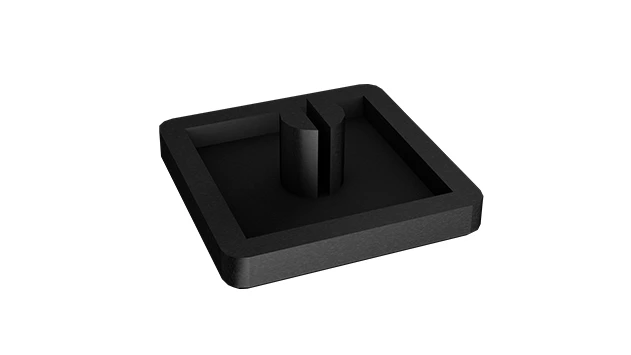
When you think about aluminum extrusion profiles – those versatile, T-slot wonders that form the backbone of everything from factory workstations to modular furniture – it's easy to overlook the small but mighty components that make them truly functional. Among these unsung heroes are aluminum profile accessories, and today, we're shining a spotlight on one that's often but critically important: the 2020 aluminum profile end cap. These small caps, designed to fit the 20mm x 20mm cross-section of standard aluminum extrusion profiles, play a pivotal role in protecting, finishing, and enhancing the usability of the profiles they seal. In this article, we'll take a deep dive into their journey – from the initial design sketch to the final product rolling off the production line – and explore why they matter more than you might think.
The Design Phase: Balancing Form, Function, and Fit
Designing a 2020 aluminum profile end cap might seem straightforward at first glance – after all, it's just a "cap" for the end of a tube, right? But anyone who's worked in manufacturing or engineering knows that even the simplest components demand careful consideration. The design process starts with a clear understanding of the problem the end cap needs to solve, and for 2020 profiles, that list is longer than you'd expect.
Understanding User Needs: More Than Just a "Plug"
The first step in designing a 2020 aluminum profile end cap is talking to the people who'll use it. Manufacturers, assembly line workers, and even end-users of products built with aluminum extrusion profiles all have input. For example, a factory manager might prioritize durability – the end caps need to withstand bumps from forklifts or heavy tools being set down nearby. An interior designer, on the other hand, might care more about aesthetics – the end caps should match the profile's finish and not draw attention away from the overall design. And an engineer working on a precision machine? They'll focus on fit: the end cap must seal tightly enough to prevent dust or debris from entering the profile, which could jam moving parts or corrode internal aluminum profile fixings over time.
These varied needs translate into a set of core design requirements. First, the end cap must protect : shielding the open end of the aluminum extrusion profile from impacts, moisture, and contaminants. Second, it must seal : closing off the profile's interior to prevent debris buildup, which is especially critical in applications like automated conveyor systems or cleanrooms. Third, it must fit perfectly – not too loose (risking falling off) or too tight (making installation a struggle). And finally, it should complement the profile's design, whether that means blending in seamlessly or adding a subtle accent.
Navigating Design Constraints: The 20mm x 20mm Challenge
The 2020 aluminum extrusion profile gets its name from its cross-sectional dimensions: 20mm in width and 20mm in height. This standardized size is popular for light to medium-duty applications, from shelving units to small machine frames, because it strikes a balance between strength and weight. But for end cap designers, those 20mm measurements are both a guide and a constraint.
The end cap's outer dimensions must be slightly larger than 20mm to create an interference fit – that satisfying "snap" when you press it into place. Typically, designers aim for a tolerance of +0.1mm to +0.3mm, depending on the material. Too loose, and the end cap might vibrate loose in high-movement applications (like a rolling workbench). Too tight, and installers might need tools to force it on, risking damage to the profile or the cap itself. Then there's the profile's T-slot – the groove that runs along its length to accommodate fasteners and accessories. The end cap must avoid blocking this slot, as it's often used for mounting brackets or aluminum profile rubber strip for gasketing. This means the cap's interior might need notches or recesses to clear the slot, adding complexity to the design.
Modern design tools like CAD (Computer-Aided Design) software have revolutionized this process. Designers can 3D-model the end cap, test its fit against a digital replica of the 2020 profile, and even simulate how it will behave under stress – like being pulled off or exposed to temperature changes. For example, if the end cap is made of plastic, heat from a factory floor might cause it to expand; CAD simulations can predict whether this expansion would make the fit too tight or loosen it over time. This digital testing saves countless hours and resources compared to the old days of trial-and-error prototyping.
Material Selection: Choosing the Right "Skin" for the Profile
Once the design is finalized, the next big decision is material. What should the 2020 aluminum profile end cap be made of? The answer depends on the application, budget, and performance requirements, but two materials dominate the market: plastic and aluminum. Let's break down the options, their pros and cons, and when to choose one over the other.
| Material | Key Benefits | Limitations | Best For |
|---|---|---|---|
| Polypropylene (PP) | Cost-effective, lightweight, chemical-resistant | Lower impact strength than aluminum | General-purpose applications, budget projects |
| Acrylonitrile Butadiene Styrene (ABS) | Durable, good impact resistance, paintable | Less heat-resistant than some plastics | Consumer products, furniture, visible applications |
| Nylon | High strength, wear-resistant, temperature tolerant | More expensive than PP/ABS, stiffer | Industrial machinery, high-stress environments |
| Aluminum | Matches profile finish, high strength, heat-resistant | Heavier, more expensive, requires machining | Heavy-duty applications, aesthetic matching |
Plastic: The Workhorse of End Cap Materials
Plastic is by far the most common material for 2020 aluminum profile end caps, and for good reason. It's lightweight, inexpensive, and easy to mold into complex shapes – perfect for the notches and recesses needed to clear T-slots. Polypropylene (PP) is a top choice for general-purpose end caps. It's flexible enough to snap into place without cracking, resistant to oils and chemicals (important in factory settings), and affordable for high-volume production. ABS, on the other hand, offers better impact resistance, making it ideal for end caps that might get bumped or dropped, like those on retail display racks or portable workbenches. Nylon, though pricier, is the go-to for industrial applications; its high tensile strength and heat resistance (it can withstand temperatures up to 180°C) make it suitable for machinery near ovens or welding stations.
One of the biggest advantages of plastic end caps is color customization. Manufacturers can add pigments to the resin to match the profile's color – whether it's the silver of raw aluminum, the black of anodized profiles, or even bold hues for branding. This is a small detail, but it matters in applications where appearance counts, like trade show booths or office furniture.
Aluminum: When Performance and Aesthetics Collide
For applications where plastic just won't cut it, aluminum end caps step in. Made from the same aluminum extrusion process as the profiles themselves (or machined from solid stock), these end caps offer unmatched durability and a seamless aesthetic. They're often used in heavy-duty settings, like construction scaffolding or industrial machine frames, where impact resistance and load-bearing capacity are critical. Aluminum end caps also excel in environments with extreme temperatures – think outdoor enclosures or foundries – where plastic might warp or degrade over time.
The downside? Cost and weight. Aluminum end caps are significantly more expensive to produce than plastic ones, as they require machining (cutting, drilling, deburring) rather than simple molding. They also add weight to the profile, which can be a drawback in applications where portability is key (like a lightweight hand trolley). But for clients who prioritize longevity and a "matchy-matchy" look, the investment is often worth it.

Manufacturing: From Mold to Market
With design and materials locked in, it's time to turn ideas into reality. For plastic 2020 aluminum profile end caps, the manufacturing process typically revolves around injection molding – a tried-and-true method for producing high volumes of identical parts. For aluminum end caps, it's more about machining. Let's walk through both workflows, step by step.
Injection Molding: The Plastic End Cap Process
Injection molding is like making cookies with a super-precise, high-pressure cookie cutter. Here's how it works for end caps:
1. Mold Design and Creation: The first step is building the mold, which is usually made of steel or aluminum. This is a critical investment – a single mold can cost tens of thousands of dollars, but it can produce millions of end caps over its lifetime. The mold's cavity is a negative of the end cap's design, including all notches, recesses, and surface textures. Designers work closely with toolmakers to ensure the mold includes features like "draft angles" (slight tapers) to help the end cap release easily, and "vents" to let air escape during injection – without these, the part might have blemishes or incomplete filling.
2. Material Preparation: The chosen plastic resin (PP, ABS, etc.) arrives in pellet form. These pellets are fed into a hopper, where they're heated to a molten state (typically 180°C to 250°C, depending on the material). Colorants or additives (like UV stabilizers for outdoor use) are mixed in at this stage to ensure uniform color and performance.
3. Injection: The molten plastic is injected into the mold under high pressure (often 1000 to 2000 bar). This pressure ensures the plastic fills every nook and cranny of the mold, capturing even tiny details like logo engravings. The mold is clamped shut during this process to prevent the plastic from leaking out – imagine squeezing a toothpaste tube into a mold, but with far more force.
4. Cooling and Ejection: The mold is cooled with water channels to solidify the plastic quickly. Cooling time varies by material and part thickness – for a small end cap, it might take just 10 to 30 seconds. Once solid, the mold opens, and ejector pins push the end cap out. At this point, the cap might have "flash" – thin strands of plastic where the mold halves met – which is trimmed off by hand or machine.
5. Post-Processing: Depending on the design, end caps might undergo additional steps. This could include surface finishing (like sanding for a smooth texture), printing (adding part numbers or logos), or assembly (attaching a rubber O-ring for extra sealing, though this is less common for 2020 profiles). Quality control checks happen here, too – more on that later.
Machining Aluminum End Caps: Precision Cutting
Aluminum end caps are typically made from solid aluminum bar stock or pre-cut aluminum extrusion profile sections. The process starts with cutting the raw material to the desired length (usually 10mm to 15mm, depending on how deep the end cap needs to sit in the profile). Then, a CNC (Computer Numerical Control) machine drills or mills the interior to match the profile's inner dimensions, creating the recess that allows the cap to fit snugly. Deburring follows – removing sharp edges left by cutting tools – and finally, surface treatment (anodizing, powder coating, or polishing) to match the profile's finish.
CNC machining offers unmatched precision, with tolerances as tight as ±0.01mm. But it's a slower process than injection molding, making it better suited for low-volume runs or custom designs (like end caps with unique logos or threaded holes for mounting accessories).

Quality Control: Ensuring Every Cap Counts
In manufacturing, consistency is king – and that's especially true for aluminum profile accessories like end caps. A single defective cap can lead to returns, delays, or even safety issues (e.g., a loose end cap on a high-speed conveyor). That's why quality control (QC) is baked into every step of the process, from raw material inspection to final packaging.
Dimensional Checks: The "Go/No-Go" Gauge Test
The most basic QC check is dimensional: does the end cap fit the 2020 profile? Inspectors use calipers and micrometers to measure key dimensions – outer width, height, depth, and the diameter of any recesses. For high-volume production, "go/no-go" gauges are used: simple tools that mimic the profile's end. If the end cap slides onto the "go" gauge (which is 20mm) but not the "no-go" gauge (which is 19.8mm), it passes. This quick test ensures the interference fit is just right.
Material Testing: Strength and Durability
Material testing is critical to ensuring end caps hold up over time. For plastic caps, this might include tensile strength tests (pulling the cap until it breaks to measure how much force it can withstand), impact tests (dropping a weight onto the cap to check for cracking), and heat resistance tests (exposing the cap to high temperatures and checking for warping). For aluminum caps, hardness tests (like the Rockwell scale) ensure the material is strong enough to resist dents, while corrosion tests (exposing it to salt spray or chemicals) verify its longevity in harsh environments.
Real-World Simulation: "Abuse Testing"
Some manufacturers go a step further with "abuse testing" – simulating the wear and tear an end cap might face in the field. This could include shaking the capped profile in a vibration chamber to see if the cap loosens, repeatedly installing and removing the cap to test its elasticity (for plastic), or even subjecting it to a "drop test" (attaching the capped profile to a weight and dropping it from a height to mimic a fall). These tests are especially important for end caps used in critical applications, like medical equipment or aerospace components.
Applications: Where 2020 End Caps Shine
So, where do these small but essential aluminum profile accessories end up? The answer is: almost everywhere aluminum extrusion profiles are used. Let's explore a few key industries and use cases.
Manufacturing and Automation
In factories, 2020 aluminum extrusion profiles are workhorses, forming the frames of assembly workbenches, material racks, and conveyor systems. Here, end caps play a dual role: protecting workers from sharp profile edges and keeping debris out of moving parts. For example, on a lean pipe workbench, end caps prevent metal shavings or small components from falling into the profile's T-slots, which could jam the adjustment mechanisms for shelves or tool holders. In conveyor systems, they seal the ends of guide rails, ensuring smooth product flow without snags.
Furniture and Interior Design
Modern furniture designers love aluminum extrusion profiles for their sleek look and modularity. Think office desks with adjustable height frames, bookshelves that can be reconfigured on the fly, or retail displays that change with the seasons. In these settings, end caps are all about aesthetics. A black ABS end cap on a silver anodized profile adds a subtle contrast, while a color-matched aluminum end cap creates a seamless, high-end feel. They also serve a practical purpose: preventing dust from collecting in the profile's ends, which is a boon for busy café owners or homeowners who hate dusting.
Electronics and Enclosures
Aluminum extrusion profiles are a popular choice for electronics enclosures, from server racks to control panels, because they're lightweight, conductive (helping dissipate heat), and easy to customize. End caps here need to seal tightly to protect sensitive components from dust, moisture, and electromagnetic interference (EMI). Some end caps even include integrated gaskets (like aluminum profile rubber strip) to enhance sealing, ensuring the enclosure meets IP (Ingress Protection) ratings for water and dust resistance.
The Future of 2020 Aluminum Profile End Caps
As manufacturing and design trends evolve, so too do aluminum profile accessories like end caps. Looking ahead, we can expect a few key shifts:
Sustainability: With brands and consumers alike prioritizing eco-friendly products, manufacturers are exploring recycled plastics and biodegradable materials for end caps. Some are even experimenting with plant-based resins (like those made from cornstarch) that break down naturally at the end of their lifecycle. Energy-efficient manufacturing processes, like solar-powered injection molding machines, are also becoming more common.
Smart Features: While it might sound futuristic, "smart" end caps could soon be a reality. Imagine end caps with embedded RFID tags for inventory tracking, or sensors that monitor temperature, vibration, or moisture inside the profile – valuable data for predictive maintenance in industrial settings. These features would add cost, but for high-stakes applications (like medical equipment or aerospace), the benefits could be game-changing.
Customization at Scale: Thanks to advances in 3D printing, small-batch custom end caps are becoming more accessible. Designers can now create unique shapes, colors, or logos without the need for expensive molds, opening up new possibilities for branding and personalization.
Conclusion: Small Part, Big Impact
The 2020 aluminum profile end cap might not be the most glamorous component in the world of manufacturing, but it's a testament to the power of thoughtful design and precision engineering. From the initial CAD sketch to the final quality check, every step in its creation is guided by a simple goal: to make aluminum extrusion profiles safer, more functional, and more durable. Whether it's protecting a factory worker's hands, sealing a sensitive electronics enclosure, or adding a finishing touch to a modern bookshelf, this small accessory plays a big role in bringing aluminum profiles to life.
So the next time you spot a 2020 aluminum extrusion profile – in a store, a factory, or even your own home – take a moment to appreciate the end cap. It's a reminder that great things often come in small packages.