- Company Articles
- Products and Technology
- Product knowledge
- 2020 Aluminum Profile End Caps in Computer Manufacturing: Precision Matters

2020 Aluminum Profile End Caps in Computer Manufacturing: Precision Matters
Related Product
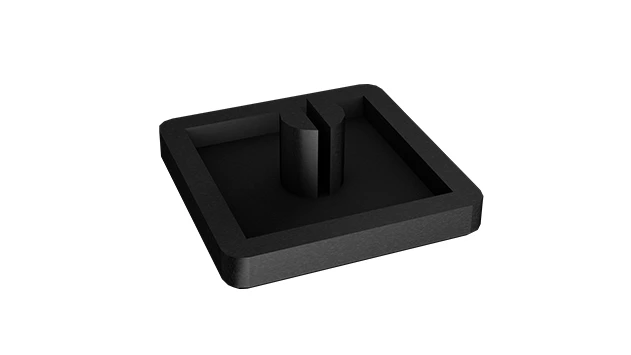
2020 Aluminum Profile End Cap
The aluminum profile end cap adds a finishing touch to your project and closes off profile ends to limit dust and debris buildup, also it can avaid some scratch for material and labor during the assemble work.
The Unseen Backbone of Tech Production: Why Small Components Matter
Walk into any modern computer manufacturing facility, and your eyes might first be drawn to the high-speed robots assembling circuit boards or the glowing screens of quality control stations. These are the stars of the show, the flashy technologies that dominate headlines. But if you pause and look closer—past the automated arms and bustling assembly lines—you'll notice the unsung heroes holding everything together: the sturdy aluminum frames supporting workbenches, the conveyor systems gliding components from station to station, and the material racks organizing tiny screws and semiconductors. These structures, often built from aluminum extrusion profiles, are the silent backbone of the production floor. And among their most critical components? A small, unassuming part called the 2020 aluminum profile end cap.
In an industry where precision is measured in microns and a single misalignment can render a $1,000 laptop useless, even the tiniest components carry enormous weight. Computer manufacturing isn't just about assembling CPUs and screens; it's about creating an ecosystem where every tool, every work surface, and every storage unit works in harmony. Aluminum profiles—lightweight, durable, and infinitely customizable—have become the go-to material for building this ecosystem. And the 2020 aluminum profile end cap? It's the finishing touch that ensures these profiles perform at their best, day in and day out.
Aluminum Profiles: The Building Blocks of Modern Manufacturing
Before diving into end caps, let's first understand the foundation they protect: aluminum profiles. Aluminum extrusion profiles are created by forcing heated aluminum alloy through a die, shaping it into consistent cross-sections—think of it like squeezing toothpaste through a tube, but with industrial precision. This process allows manufacturers to create profiles in almost any shape, from simple squares to complex T-slotted designs, tailored to specific needs.
Why Aluminum? The Material That Revolutionized Production
Aluminum's rise to dominance in manufacturing isn't accidental. It's lightweight (about a third the weight of steel), yet surprisingly strong—perfect for building structures that need to be both sturdy and movable. It's also corrosion-resistant, a must in factories where moisture or chemicals might be present. And perhaps most importantly for computer manufacturing, it's highly customizable. T-slotted aluminum profiles, for example, feature grooves along their length that allow accessories like brackets, shelves, and panels to be attached without welding or drilling. This flexibility makes them ideal for building workbenches, conveyor frames, and material racks that can adapt as production needs change.
The 2020 Profile: A Workhorse in Electronics Manufacturing
Among the hundreds of aluminum profile sizes available, the 2020 aluminum profile stands out as a workhorse in electronics and computer manufacturing. True to its name, it measures 20mm by 20mm in cross-section—a compact size that's large enough to support tools and components, but small enough to keep structures lightweight. Its versatility makes it a favorite for:
- Workbenches: Framing for assembly stations where technicians build motherboards or install screens.
- Conveyor Systems: Supporting roller tracks and guides that move components between workstations.
- Material Racks: Storing small parts like screws, capacitors, or connectors, with shelves attached via T-slots.
- Machine Guards: Enclosing moving parts of assembly equipment to protect workers.
In short, the 2020 profile is the "Swiss Army knife" of aluminum extrusion profiles—small enough to fit in tight spaces, strong enough to handle daily use, and adaptable enough to meet the ever-changing demands of computer production.

2020 Aluminum Profile End Caps: Tiny Components, Big Impact
Now, let's focus on the star of the show: the 2020 aluminum profile end cap. At first glance, it might seem like a trivial part—a small cap that slides onto the end of an aluminum profile. But in reality, it's a critical component that addresses four key challenges in manufacturing: protection, safety, precision, and longevity.
What Are 2020 Aluminum Profile End Caps?
Simply put, an end cap is a cover designed to fit snugly over the exposed end of an aluminum profile. It's typically made from plastic (like nylon or ABS) or aluminum, and its shape mirrors the profile's cross-section—for 2020 profiles, that means a square or rectangular cap with internal dimensions just slightly larger than 20mm x 20mm, ensuring a tight fit. Some end caps are flat, while others are domed; some have holes for mounting, while others are purely decorative. But regardless of design, their core purpose remains the same: to finish the profile.
The Four Critical Roles of End Caps in Computer Manufacturing
In computer manufacturing, where even minor flaws can lead to major issues, end caps play four non-negotiable roles:
1. Protecting the Profile (and the Products):
Raw aluminum profile ends are often sharp and unfinished. Without an end cap, these edges can chip, bend, or corrode over time—weakening the profile and creating debris (like aluminum shavings) that could contaminate sensitive computer components. A well-fitted end cap acts as a shield, preventing damage to the profile and keeping production areas clean.
2. Ensuring Worker Safety:
Sharp profile ends are a hazard. Technicians working on assembly lines often lean over workbenches or reach into material racks; a stray sharp edge could cause cuts or scrapes. End caps blunt these edges, turning a potential danger into a smooth, safe surface.
3. Maintaining Structural Precision:
Computer manufacturing lines rely on tight tolerances. A workbench that wobbles by even 1mm can throw off the alignment of a robotic screwdriver, leading to loose connections in laptops or desktops. End caps help stabilize profiles by preventing them from shifting or warping at the ends, ensuring structures remain level and rigid.
4. Sealing T-Slots from Debris:
T-slotted profiles are a blessing for customization, but their grooves are magnets for dust, grease, and small parts (like stray screws). If these slots get clogged, attaching accessories becomes difficult—imagine trying to slide a bracket into a slot filled with metal shavings. End caps seal the ends of T-slots, blocking debris from entering and keeping the slots functional.

Precision in Every Micron: Why Fit Matters for 2020 End Caps
In computer manufacturing, "close enough" isn't close enough. A 2020 aluminum profile end cap that's too loose might fall off during production, exposing the profile end. One that's too tight could crack the profile or damage the T-slots when forced on. That's why precision in end cap manufacturing is non-negotiable—tolerances as tight as ±0.1mm are standard.
The Cost of Poor Fit: Real-World Consequences
To understand why precision matters, consider a hypothetical scenario at a laptop assembly plant. A batch of end caps for 2020 profiles is slightly undersized—by just 0.5mm. At first, no one notices; the caps slide on easily, and the workbenches look neat. But over time, the loose caps vibrate off during production (factories are noisy, with constant machine movement). Exposed profile ends start to chip, creating aluminum dust that settles on circuit boards. A few weeks later, the plant sees a spike in defective laptops—some with short circuits caused by dust, others with misaligned screens because the workbench frame, now weakened by chipped profiles, has begun to wobble. The cost? Thousands of dollars in rework, delayed shipments, and damaged customer trust—all from a 0.5mm mistake in end cap sizing.
How End Caps Are Made: From Design to Quality Control
Creating precision end caps is a multi-step process that starts with design. Engineers use CAD software to model the end cap, ensuring its internal dimensions match the 2020 profile's exact specifications (including any variations in T-slot depth or corner radii). Next, materials are chosen: plastic end caps are typically injection-molded, while aluminum end caps are CNC-machined. For plastic caps, molten plastic is injected into a steel mold with microscopic precision; for aluminum, raw stock is carved to shape using high-speed cutting tools.
Quality control is where the rubber meets the road (or the cap meets the profile). Each batch of end caps undergoes rigorous testing: samples are fitted onto 2020 profile test pieces to check for snugness, measured with calipers to verify dimensions, and subjected to stress tests (like vibration or temperature cycling) to ensure they hold up in factory conditions. Only then are they shipped to manufacturers.
Plastic vs. Aluminum End Caps: Choosing the Right Material
Not all end caps are created equal. The two most common materials—plastic and aluminum—each have unique strengths and weaknesses, making them better suited for specific applications in computer manufacturing. Let's break down the differences:
| Material | Key Features | Best For | Pros | Cons |
|---|---|---|---|---|
| Plastic (Nylon/ABS) | Lightweight, non-conductive, available in colors | Workbenches, material racks, static-sensitive areas |
• Insulates against static electricity (critical for electronics)
• Inexpensive • Smooth, non-scratch surface • Resistant to corrosion |
• Less durable than aluminum; may crack under heavy impact
• Can degrade in high temperatures (e.g., near soldering stations) |
| Aluminum | Heavy-duty, heat-resistant, matches profile aesthetics | Conveyor frames, machine guards, high-vibration areas |
• Extremely durable; withstands impacts and high temperatures
• Seamless look with aluminum profiles • Can be anodized for extra corrosion resistance |
• Conductive (risk of static discharge in sensitive areas)
• More expensive than plastic • Sharp edges if not finished properly |
In most computer manufacturing plants, the choice comes down to location: plastic end caps for workbenches and material racks (where static protection and cost matter), and aluminum end caps for conveyor systems or areas with high heat or vibration (where durability is key). Some facilities even mix and match, using plastic caps on upper shelves and aluminum on lower, more vulnerable parts of a rack.
A Day in the Life: How End Caps Power Computer Manufacturing
To truly appreciate end caps, let's walk through a typical day at a computer manufacturing plant and see how these small components impact every step of production.
7:00 AM: Morning Setup
The first shift arrives, and technicians power up the assembly line. Maria, a lead technician, heads to her workstation—a custom-built workbench framed with 2020 aluminum profiles. She checks the end caps on the bench legs: plastic, yellow (color-coded for her team's station), and snugly fitted. "Loose caps mean the bench wobbles," she explains. "Last month, we had a cap fall off, and the bench shifted mid-assembly. We had to rework 20 motherboards because the drill was off by a millimeter." Today, the caps are secure, so she starts loading her tools—each clipped into brackets attached to the bench's T-slots, which are clean and debris-free thanks to the end caps sealing the slots.
10:00 AM: Conveyor Systems in Motion
Down the line, conveyor systems hum to life, moving partially assembled laptops from the motherboard station to the screen installation area. The conveyor frame is built from 2020 aluminum profiles with aluminum end caps—chosen for their durability, as the conveyor vibrates constantly. "Plastic caps here would crack within a week," says Raj, the maintenance supervisor, tapping an end cap. "These aluminum ones? We've had them for two years, and they still fit like new." The end caps also keep the T-slots clean, allowing Raj's team to quickly attach guides or stops when production needs change—like last week, when they added a new sensor bracket to detect misaligned laptops.
2:00 PM: Material Racks and Inventory Management
In the parts room, Carlos manages inventory for small components—screws, connectors, and ribbon cables. The material racks are built from 2020 profiles with clear plastic end caps. "The caps keep dust out of the T-slots," he says, sliding a shelf out to grab a box of screws. "Before we started using end caps, the slots would get clogged with dust and bits of plastic. Now, shelves glide in and out smoothly—no jamming. That saves me at least 10 minutes an hour, which adds up." He points to a cap with a small label: "We color-code them by part type—blue for screws, red for cables. The end caps make it easy to organize."
4:00 PM: Quality Control and End Cap Inspection
Before the shift ends, Priya, the quality control lead, inspects a batch of newly delivered 2020 aluminum profile end caps. She takes a handful and fits them onto a test profile, twisting gently to check for looseness. "We reject about 1% of batches," she says, pulling out a caliper to measure a cap. "If the inner dimension is 20.1mm instead of 20.0mm, it's too loose. If it's 19.9mm, it's too tight and could damage the profile. Precision here is everything." Today's batch passes—all caps within ±0.05mm of spec. "These will go to the new workbench line we're setting up," she adds. "No cutting corners on end caps—they're the first line of defense for our profiles."
Choosing the Right Supplier: What to Look for in an Aluminum Profile Accessories Partner
High-quality end caps don't just happen—they come from suppliers who prioritize precision, consistency, and customer support. For computer manufacturers, choosing the right aluminum profile supplier (and by extension, end cap supplier) is critical. Here's what to look for:
1. Quality Certifications: Proof of Precision
Reputable suppliers will have certifications like ISO 9001, which ensures their manufacturing processes are standardized and quality-focused. Some may also have industry-specific certifications, like ESD compliance for plastic end caps (critical for electronics manufacturing). Don't be afraid to ask for documentation—any supplier worth partnering with will happily share their certifications.
2. In-House Testing: Ensuring Consistency
The best suppliers don't just rely on third-party testing—they have in-house labs where they rigorously test end caps for fit, durability, and resistance to factory conditions (like temperature, humidity, and vibration). Ask about their testing protocols: Do they test every batch? What tolerances do they guarantee? A supplier that can answer these questions in detail is more likely to deliver consistent quality.
3. Customization Options: Tailored to Your Needs
Computer manufacturing lines are rarely "one-size-fits-all." Maybe you need end caps in a specific color for color-coding, or with a logo for branding. Or perhaps you need a custom design to fit a modified 2020 profile. The right supplier will offer customization—whether it's adjusting dimensions, changing materials, or adding features like holes for mounting. "We once worked with a supplier to create end caps with built-in RFID tags," says Maria, the assembly technician. "Now we can track which workbenches have been serviced—all from a tiny cap."
4. Reliable Lead Times: Keeping Production On Track
In manufacturing, delays are costly. A supplier that can't meet lead times can throw off your entire production schedule. Look for suppliers with a track record of on-time delivery, even during peak seasons. Some suppliers even offer just-in-time (JIT) delivery, ensuring you have end caps when you need them, without tying up inventory space.
Future Trends: Innovations in Aluminum Profile End Caps
Like all manufacturing components, end caps are evolving. As computer manufacturing becomes more automated and sustainable, end cap design is keeping pace with new innovations:
Sustainable Materials: Eco-Friendly End Caps
With sustainability becoming a priority for manufacturers, suppliers are developing end caps from recycled plastics or biodegradable materials. One supplier, for example, now offers end caps made from 30% recycled nylon, with no loss in durability. These "green" caps appeal to manufacturers looking to reduce their carbon footprint without sacrificing quality.
Smart End Caps: Integrated Technology
Imagine end caps with embedded sensors that monitor temperature, vibration, or even profile stress. Early prototypes are already in testing, designed to alert maintenance teams if a cap loosens or a profile weakens—preventing failures before they happen. For computer manufacturers, this could mean fewer production disruptions and more proactive maintenance.
Magnetic End Caps: Easy Installation and Removal
Traditional end caps are press-fit, which can make them hard to remove for maintenance. Magnetic end caps, which use strong neodymium magnets to attach to profiles, are emerging as a solution. They snap on and off easily, making it faster to access T-slots or replace caps—ideal for manufacturers who frequently reconfigure workstations.
Conclusion: The Small Component That Makes a Big Difference
In the grand scheme of computer manufacturing, 2020 aluminum profile end caps might seem insignificant. They don't power laptops, process data, or display images. But as we've explored, they play a critical role in ensuring precision, safety, and efficiency on the production floor. They protect profiles from damage, keep workers safe, maintain structural integrity, and even reduce costs by minimizing rework and downtime.
The next time you unbox a new computer, take a moment to appreciate the unseen components that brought it to life—including the tiny end caps that helped build the workbenches, conveyors, and racks where it was assembled. In an industry driven by innovation, sometimes the most important breakthroughs come in the smallest packages. And for computer manufacturers, investing in high-quality 2020 aluminum profile end caps isn't just a detail—it's a commitment to excellence.