- Company Articles
- Products and Technology
- Product knowledge
- 2020 Aluminum Profile End Caps in Medical Packaging Production Lines

2020 Aluminum Profile End Caps in Medical Packaging Production Lines
Related Product
2020 Aluminum Profile End Cap
The aluminum profile end cap adds a finishing touch to your project and closes off profile ends to limit dust and debris buildup, also it can avaid some scratch for material and labor during the assemble work.
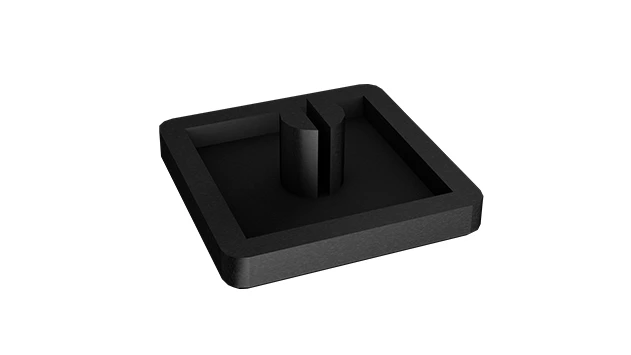
In the world of medical packaging, precision isn't just a goal—it's a lifeline. Every sterile kit, every blister pack, and every vial label must meet uncompromising standards to ensure patient safety. Behind the scenes of these critical operations lies a network of tools and systems designed to deliver consistency, efficiency, and reliability. Among these unsung heroes are the components that hold the production line together, quite literally. Today, we're shining a light on one such component: the 2020 aluminum profile end cap. While it may seem small, its role in keeping medical packaging lines running smoothly, safely, and compliantly is anything but minor.
Aluminum Profiles: The Backbone of Modern Production Lines
Before diving into the specifics of end caps, let's take a step back to understand the foundation they support: aluminum profiles. If you've ever walked through a manufacturing facility, you've likely seen these modular, T-slot extrusions in action. They're the building blocks of workbenches, material racks, conveyor frames, and even custom machinery. In medical packaging, where cleanliness, durability, and flexibility are non-negotiable, aluminum profiles stand out for several reasons. They're lightweight yet strong, resistant to corrosion (a must in environments with frequent sanitization), and infinitely adaptable—thanks to their T-slot design, which allows for easy attachment of accessories like shelves, brackets, and roller tracks.
From the workbench where operators inspect finished packages to the roller track that moves products between stations, aluminum profiles form the skeleton of the production line. But like any skeleton, they need protection at the joints—and that's where end caps come in.
The Unsung Hero: 2020 Aluminum Profile End Caps
So, what exactly is a 2020 aluminum profile end cap? Let's break it down. The "2020" refers to the profile's dimensions: 20mm by 20mm, a common size for lighter-duty applications like workbench frames, small material racks, or partition walls in medical cleanrooms. The end cap is a simple, often unassuming component designed to fit snugly over the open ends of these profiles. At first glance, it might seem like a trivial addition—after all, why worry about the end of a metal extrusion? But in medical packaging, where even the smallest flaw can lead to costly delays or, worse, compromised safety, the details matter.
Safety First: Eliminating Hazards in Cleanroom Environments
Walk up to an uncovered aluminum profile end, and the first thing you'll notice is its sharp, unfinished edge. In a busy production line, where operators are handling delicate packaging materials or leaning over workbenches for hours, that edge is an accident waiting to happen. A slight misstep, a brush of the arm, or a slip while reaching for a tool could result in a cut—putting the operator at risk and introducing the possibility of contamination if blood or debris enters the workspace. The 2020 aluminum profile end cap eliminates this hazard by covering the raw edge with a smooth, rounded finish. It turns a potential danger into a harmless surface, letting operators focus on their tasks without worrying about nicks or snags.
But the safety benefits don't stop there. In cleanroom settings, where airborne particles are strictly controlled, an open profile end is a magnet for dust, lint, and other contaminants. Over time, these particles can accumulate inside the profile, only to be dislodged during cleaning or maintenance—finding their way onto sterile packaging. The end cap acts as a barrier, sealing off the profile's interior and preventing debris from settling. This not only reduces the risk of contamination but also cuts down on cleaning time, as there's no need to vacuum or wipe out hollow profile ends.
Sealing the Deal: Protecting Profiles and Ensuring Longevity
Aluminum profiles are built to last, but they're not invincible. Exposure to moisture, chemicals, or physical impact can take a toll over time. In medical facilities, where daily cleaning routines involve harsh disinfectants, an open profile end is vulnerable to liquid seepage. Moisture trapped inside the extrusion can lead to internal corrosion, weakening the profile and shortening its lifespan. The 2020 end cap creates a watertight seal, blocking liquids and chemicals from infiltrating the profile. This simple barrier extends the life of the aluminum extrusion, reducing the need for frequent replacements and lowering long-term maintenance costs.
Physical durability is another key factor. In high-traffic areas, profile ends can get bumped by carts, tools, or even operators' hips. Without protection, these impacts can dent or bend the extrusion, compromising its structural integrity. A well-fitted end cap absorbs some of that shock, acting as a buffer to keep the profile's shape intact. For components like workbench legs or roller track frames, which bear constant weight and stress, this added protection ensures the system remains stable and reliable.

Integration with Key Components: Workbenches and Roller Tracks
The true value of the 2020 aluminum profile end cap becomes even clearer when we look at how it interacts with other critical line components. Let's start with the workbench—the heart of many medical packaging tasks. A typical workbench in this setting is constructed from 2020 or similar aluminum profiles, with a flat surface for assembling, inspecting, or labeling packages. The end caps on the bench's front, back, and side rails serve dual purposes: they protect operators from sharp edges during close-up work, and they reinforce the bench's structure. When an operator leans on the bench or places heavy equipment on it, the end caps prevent the profile ends from deforming under pressure, ensuring the bench remains level and stable. This stability is crucial when handling delicate items like glass vials or thin plastic films, where even a slight wobble could lead to spills or misalignment.
Next, consider the roller track—a staple in medical packaging lines for moving products between stations. Roller tracks are often built using aluminum profiles as their base, with rollers mounted along the T-slots to create a smooth glide path for packages. The end caps here play a vital role in maintaining alignment. Without them, the profile ends might shift or warp over time, causing the track to become uneven. An uneven track can lead to jams, where packages get stuck or tip over, halting production and risking product damage. By keeping the profile ends secure and rigid, end caps ensure the roller track stays straight and true, so packages move seamlessly from filling to sealing to labeling.
| Component | Role of 2020 Aluminum Profile End Cap | Impact on Medical Packaging Lines |
|---|---|---|
| Workbench | Covers sharp edges; reinforces structural stability | Reduces operator injuries; prevents bench wobble during delicate tasks |
| Roller Track | Maintains profile alignment; prevents warping | Ensures smooth product flow; reduces jams and downtime |
| Material Rack | Seals profile ends; blocks dust and moisture | Protects stored packaging materials from contamination; extends rack lifespan |

Supporting Lean Systems: Reducing Waste, Boosting Productivity
In today's competitive manufacturing landscape, many medical facilities adopt lean system principles to minimize waste and maximize efficiency. Lean is all about eliminating non-value-added activities—like downtime, rework, or excess inventory—and the 2020 aluminum profile end cap aligns perfectly with this philosophy. Let's break down how:
First, waste from downtime. A production line that stops because of a jammed roller track or a broken workbench rail costs time and money. End caps reduce this risk by keeping components like tracks and benches in good working order, minimizing unplanned stops. Second, waste from materials. Without end caps, aluminum profiles degrade faster, requiring more frequent replacements. End caps extend profile life, so facilities spend less on new extrusions and less on the labor to install them. Third, waste from rework. If a package is damaged due to a wobbly workbench or a jammed track, it has to be discarded or reprocessed. End caps help prevent these issues, ensuring more products pass quality checks on the first try.
Lean systems also emphasize employee engagement and safety, recognizing that a safe workplace is a productive one. By eliminating sharp edges and reducing the risk of injuries, end caps contribute to a more positive work environment. When operators feel confident that their tools are designed with their safety in mind, they're more focused, efficient, and less likely to take unnecessary breaks. This boost in morale translates directly to better performance—exactly what lean systems aim to achieve.
Material Matters: Why Aluminum End Caps for Medical Environments?
You might be wondering: why aluminum for end caps, and why not plastic or another material? The answer lies in the unique demands of medical packaging environments. Aluminum is inherently corrosion-resistant, which is critical in spaces where daily cleaning with alcohol, hydrogen peroxide, or other harsh disinfectants is standard. Unlike steel, it won't rust when exposed to moisture; unlike some plastics, it won't degrade or become brittle under repeated chemical exposure. This durability means aluminum end caps can withstand the rigors of medical facility cleaning protocols without cracking, fading, or losing their grip on the profile.
Weight is another advantage. Aluminum is lightweight, making it easy to handle during installation or reconfiguration of the production line. When a facility needs to adjust a workbench height or reposition a roller track, aluminum end caps add minimal bulk, so workers can move profiles quickly and safely. Additionally, aluminum is non-magnetic and non-sparking, which is important in environments where sensitive electronic equipment or flammable materials are present—though less common in packaging, it's a bonus for overall safety.
Some end caps are made from high-grade plastic, often polypropylene or nylon, which offer similar corrosion resistance and a softer touch. These are sometimes used in applications where noise reduction is a priority (e.g., on roller track ends where packages might bump against the profile). However, aluminum end caps are generally preferred for heavy-duty use, such as on workbenches or load-bearing racks, where their rigidity and strength shine.
Conclusion: Small Parts, Big Impact
In the grand scheme of medical packaging production, the 2020 aluminum profile end cap may not grab headlines. It won't appear in glossy brochures or flashy marketing videos. But for the operators who rely on stable workbenches, the technicians who maintain roller tracks, and the quality control teams who ensure every package meets standards, it's an indispensable ally. It's a reminder that in manufacturing—especially in fields as critical as medical packaging—excellence lies in the details. From the sterility of the product to the safety of the workers, every component, no matter how small, plays a role in delivering on the promise of patient safety.
So the next time you see a smooth-running medical packaging line, take a moment to appreciate the quiet contributions of the 2020 aluminum profile end cap. It's proof that sometimes, the most important parts are the ones you don't notice—until they're not there. And in an industry where "good enough" is never enough, that's a difference worth celebrating.