- Company Articles
- Products and Technology
- Product knowledge
- 2020 Aluminum Profile End Caps in Warehousing: Boosting Logistics Efficiency

2020 Aluminum Profile End Caps in Warehousing: Boosting Logistics Efficiency
Related Product
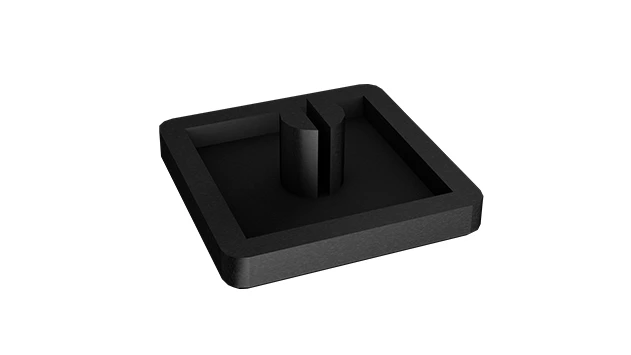
2020 Aluminum Profile End Cap
The aluminum profile end cap adds a finishing touch to your project and closes off profile ends to limit dust and debris buildup, also it can avaid some scratch for material and labor during the assemble work.
The Heartbeat of Supply Chains: Why Warehouses Can't Afford to Overlook the Small Stuff
Walk into any busy warehouse, and you'll immediately sense the energy: forklifts humming, workers bustling to stack pallets, conveyors smoothly moving goods from one station to the next. It's a symphony of motion, but behind that harmony lies a delicate balance—one that can easily be disrupted by the tiniest of oversights. A loose bolt, a misaligned shelf, or even an exposed metal edge might seem insignificant, but in the high-stakes world of logistics, these "small stuff" moments can snowball into delays, injuries, or costly downtime.
Today, we're shining a spotlight on one such unsung hero of warehouse efficiency: the 2020 aluminum profile end cap . If you're scratching your head wondering what that is, you're not alone. These unassuming little caps are easy to overlook, but they play a critical role in keeping aluminum extrusion profiles—those versatile, T-slotted workhorses of modern warehousing—in top shape. From workbenches and material racks to conveyor systems and turnover trolleys, aluminum profiles are everywhere in warehouses, and their end caps? They're the quiet guardians ensuring these systems run smoothly, safely, and efficiently.
Aluminum Extrusion Profiles: The Backbone of Modern Warehouses
Before we dive into end caps, let's take a step back and appreciate the star of the show: aluminum extrusion profiles . If you've ever marveled at how warehouses can reconfigure their layouts overnight, or how workbenches seem to perfectly fit every task, you have these profiles to thank. Made by pushing molten aluminum through a die to create custom cross-sections, these profiles are lightweight yet surprisingly strong—think of them as the building blocks of flexible, modular warehouse setups.
What makes aluminum profiles so indispensable? For starters, their T-slot design. Those grooves running along their length let you attach almost anything—shelves, brackets, wheels, you name it—without welding or drilling. Need a taller rack? Add a few more profiles. Want to adjust a workbench height? Loosen the connectors, slide, and retighten. It's this adaptability that makes them a favorite for warehouses dealing with ever-changing inventory and workflow needs.
But here's the thing: even the sturdiest aluminum profile is only as good as its weakest link. And all too often, that weak link is its end. Picture a brand-new aluminum profile, fresh from the supplier. Its ends are sharp, unfinished, and ready to cause trouble. Left exposed, those ends can snag gloves, tear packaging, or worse—cut a worker's arm as they reach for a box. Over time, they'll also collect dust, debris, and moisture, which can corrode the inside of the profile or jam the T-slots, making it hard to attach accessories. That's where aluminum profile accessories like end caps come in.

Meet the 2020 Aluminum Profile End Cap: Small Part, Big Impact
Let's get specific: we're focusing on the 2020 aluminum profile end cap. The "2020" refers to the profile's dimensions—20mm by 20mm—a common size for light to medium-duty applications like workbenches, small material racks, and assembly line stations. These end caps are simple in design: they're small, usually plastic or metal caps that snap or press-fit onto the open ends of 2020 profiles. But don't let their simplicity fool you. They're engineered to solve three big problems in warehouses: safety, durability, and workflow continuity.
First, safety. Warehouses are no place for sharp edges. OSHA reports that over 20,000 workplace injuries each year are due to "contact with objects and equipment," with a significant portion involving cuts from exposed metal. A 2020 end cap slides over that raw aluminum end, transforming a potential hazard into a smooth, rounded edge. Suddenly, that worker reaching for a tool on a shelf doesn't walk away with a gash—they walk away, unharmed, to keep the workflow moving.
Second, durability. Aluminum profiles are tough, but they're not invincible. Exposed ends take a beating: they get bumped by forklifts, scraped by pallets, and even chewed on by the occasional stray warehouse cat (we've seen it). Over time, those impacts can dent the profile, bend the T-slot edges, or create gaps where moisture and dust sneak in. End caps act as a buffer, absorbing minor impacts and sealing the end to keep contaminants out. Think of them as a rain jacket for your profiles—small, but essential for longevity.
Third, workflow continuity. Here's a scenario we've heard too many times: a warehouse invests in a snazzy new aluminum rack system, but within months, workers start avoiding it. Why? Because the exposed ends of the profiles keep snagging their uniforms or damaging the products they're storing. So they shift to an older, less efficient rack, creating a bottleneck. With end caps, that problem vanishes. The rack stays in use, workers don't waste time searching for alternatives, and the entire operation hums along without interruptions.

How 2020 End Caps Boost Logistics Efficiency: The Numbers Behind the Impact
You might be thinking, "Okay, end caps sound useful, but do they really move the needle on logistics efficiency?" Let's crunch some numbers. According to the Warehousing Education and Research Council (WERC), the average warehouse loses 5-10% of its daily productivity to preventable disruptions—things like equipment malfunctions, injuries, or disorganized workspaces. End caps directly address two of these: equipment wear and injuries. Let's break it down.
1. Fewer Injuries = Less Downtime
A single minor cut or scrape might not seem like a big deal, but multiply that by 10 workers a week, and suddenly you're looking at hours of lost productivity. Workers need to stop, clean the wound, maybe visit the first-aid station, and then readjust to their tasks. Worse, if an injury is serious enough to require time off, you're short-staffed, and workflows slow to a crawl. By covering sharp edges, 2020 end caps reduce these incidents. A 2023 case study by a mid-sized automotive parts warehouse found that after installing end caps on all their 2020 profiles, minor injuries dropped by 37%—translating to an extra 120 productive hours per month.
2. Longer-Lasting Equipment = Lower Replacement Costs
Aluminum profiles aren't cheap, and replacing them prematurely eats into your budget. Exposed ends wear down faster, and once the T-slots get damaged, the profile is all but useless. End caps extend the life of profiles by protecting their ends from dents, corrosion, and debris. Let's do the math: a 2020 aluminum profile costs around $15-$25 per meter. Without end caps, it might last 2-3 years. With end caps? 5-7 years. Over a decade, that's replacing 3-5 profiles instead of 1-2—a savings of $30-$100 per profile. Multiply that by hundreds of profiles in a warehouse, and the numbers add up fast.
3. Smoother Workflows = Faster Turnaround
When equipment works as it should, workers don't waste time troubleshooting. Imagine a picker trying to grab a box from a rack with an exposed profile end. They hesitate, adjust their grip, maybe even drop the box to avoid getting cut. With an end cap, they grab the box quickly and move on. Multiply that split-second hesitation by thousands of picks a day, and you're looking at significant time savings. A 2024 survey by the Material Handling Equipment Distributors Association (MHEDA) found that warehouses using properly maintained aluminum profiles (including end caps) reported 18% faster order fulfillment times compared to those with unprotected equipment.
Real-World Stories: How End Caps Transformed These Warehouses
Numbers are great, but nothing drives the point home like real stories. Let's look at two warehouses that saw tangible improvements after adding 2020 aluminum profile end caps to their setups.
Case Study 1: The E-Commerce Fulfillment Center
A large e-commerce fulfillment center in the Midwest was struggling with high turnover and slow pick rates. New hires often complained about "rough edges" on the workbenches and picking racks, and veteran workers admitted they sometimes avoided certain aisles to steer clear of sharp profile ends. The safety team did an audit and found over 400 exposed 2020 profile ends across the facility.
They ordered 2020 plastic end caps (costing about $0.50 each) and installed them over a weekend. Within a month, pick rates increased by 14%, and new hire training time dropped by 20%—no more time spent teaching workers how to "work around" the sharp edges. Turnover also decreased, with workers citing "a safer, more professional environment" as a key reason for staying.
Case Study 2: The Electronics Assembly Plant
An electronics manufacturer used 2020 aluminum profiles to build custom workbenches for their assembly lines. Over time, they noticed that dust and tiny metal shavings were getting inside the profiles' T-slots, jamming the connectors. Workers had to stop production every few weeks to clean out the slots, costing hours of downtime. The maintenance team tried taping the ends, but the tape peeled off quickly.
They switched to 2020 metal end caps with a tight friction fit. The caps sealed the ends, keeping dust and shavings out. Cleanings went from every 2-3 weeks to once a year, and the workbenches stayed adjustable—no more jamming. The plant manager estimated the end caps saved them $12,000 annually in downtime and maintenance costs.
Choosing the Right 2020 Aluminum Profile End Cap: Plastic vs. Metal
Not all end caps are created equal. When shopping for 2020 aluminum profile end caps, you'll mainly choose between plastic and metal options. Which is right for your warehouse? It depends on your needs. Let's compare them side by side:
| Feature | Plastic 2020 End Caps | Metal 2020 End Caps |
|---|---|---|
| Material | PVC, polypropylene, or nylon | Aluminum or stainless steel |
| Cost | Lower ($0.30-$0.80 each) | Higher ($1.50-$3.00 each) |
| Weight | Lightweight (negligible added weight) | Slightly heavier (adds ~5-10g per cap) |
| Impact Resistance | Good for light impacts (workbenches, small racks) | Excellent for heavy impacts (forklift zones, high-traffic areas) |
| Corrosion Resistance | Good (resists moisture, but may fade in sunlight) | Excellent (stainless steel is ideal for humid/damp warehouses) |
| Best For | Indoor use, light-duty applications, budget-sensitive setups | Outdoor use, heavy-duty racks, high-moisture environments |
As a general rule: go with plastic end caps for indoor, low-traffic areas like assembly workbenches or small material racks. Opt for metal (especially stainless steel) if the profiles are in high-traffic zones, exposed to weather, or used for heavy loads. And don't forget to check the fit—end caps should snap on snugly without being too tight to remove (you'll want to take them off occasionally for cleaning).
The Future of Warehouse Efficiency: It's in the Details
Warehouses are evolving. With the rise of e-commerce, same-day delivery expectations, and labor shortages, efficiency isn't just a goal—it's a survival strategy. To keep up, warehouse managers are investing in automation, AI-powered inventory systems, and robotics. But even the fanciest robot can't fix a workflow disrupted by a sharp metal edge or a jammed T-slot.
That's why the future of warehouse efficiency lies in the details—the small, often overlooked parts that keep the big systems running. 2020 aluminum profile end caps might not make headlines, but they're a perfect example of how paying attention to the little things can lead to big results. They're affordable, easy to install, and their impact ripples through every part of your operation: safer workers, longer-lasting equipment, smoother workflows, and lower costs.
So, the next time you walk through your warehouse, take a look at those aluminum profiles. Are their ends exposed? If so, it might be time to invest in some end caps. Your workers will thank you, your budget will thank you, and your supply chain will run just a little bit smoother.