- Company Articles
- Products and Technology
- Product knowledge
- 2020 Aluminum Profile End Caps vs. Plastic: Environmental Impact Comparison

2020 Aluminum Profile End Caps vs. Plastic: Environmental Impact Comparison
Related Product
2020 Aluminum Profile End Cap
The aluminum profile end cap adds a finishing touch to your project and closes off profile ends to limit dust and debris buildup, also it can avaid some scratch for material and labor during the assemble work.
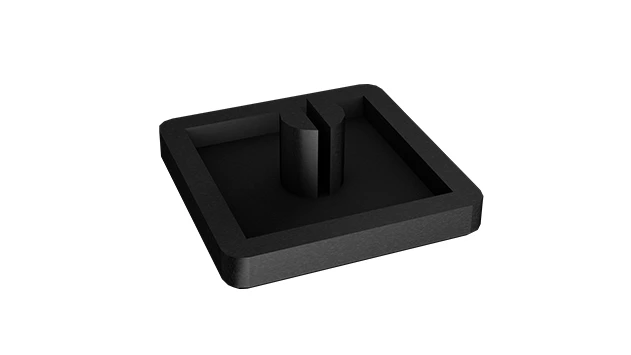
In the world of manufacturing, construction, and industrial design, it's often the smallest components that make the biggest difference. Take end caps, for example—those unassuming pieces that seal the ends of tubes, pipes, and profiles. While they might seem trivial, they play a critical role in protecting equipment, enhancing safety, and even improving aesthetics. But here's the thing: not all end caps are created equal. Today, we're zooming in on two common types: the 2020 aluminum profile end cap and its plastic counterpart, the plastic pipe end cap. Beyond their functional roles, we'll explore a question that matters more than ever: which one leaves a lighter footprint on our planet?
What Are End Caps, and Why Should We Care?
Let's start with the basics. End caps are exactly what they sound like: caps or plugs designed to fit snugly over the open ends of tubes, pipes, or profiles. Think of them as the "protective caps" for industrial materials. For instance, if you've ever seen an aluminum profile—those sleek, grooved structures used in everything from factory workbenches to retail displays—you've probably noticed the caps at their ends. These caps prevent debris, moisture, or even curious fingers from getting inside the profile, which could damage internal components or create safety hazards. They also give the finished product a clean, polished look, which matters in industries where presentation counts.
But end caps aren't just about function and looks. They're part of a larger ecosystem of aluminum profile accessories—small but essential parts that make aluminum profiles versatile and practical. From brackets to connectors, these accessories turn basic aluminum tubes into fully functional systems. And when it comes to choosing between materials for these accessories, the environmental impact can't be ignored. That's where the 2020 aluminum profile end cap and plastic pipe end cap step into the spotlight. Let's unpack why this choice matters.
The Materials: Aluminum vs. Plastic—What's in Your End Cap?
Before diving into environmental impact, let's get to know the materials themselves. The 2020 aluminum profile end cap is, as the name suggests, made from aluminum—specifically, aluminum alloys that balance strength, lightweight, and corrosion resistance. Aluminum is a staple in industrial settings because it's durable, easy to shape, and compatible with the t-slot design of most aluminum profiles. These end caps are typically molded or machined to fit the exact dimensions of a 2020 aluminum profile (that's a profile with a 20mm x 20mm cross-section, for reference), ensuring a tight, secure fit.
On the other side, we have the plastic pipe end cap. Plastic end caps are usually made from materials like polyvinyl chloride (PVC), high-density polyethylene (HDPE), or polypropylene (PP). Plastic is popular here for a few reasons: it's cheap to produce, lightweight, and can be molded into almost any shape with minimal effort. You'll often find plastic end caps on lower-cost or temporary setups, where budget is a bigger priority than long-term durability.
But here's the catch: when it comes to sustainability, the story of a material isn't just about how it performs in the moment. It's about its entire lifecycle—from how it's made to how it's disposed of. Let's break that down.

Environmental Impact: A Lifecycle Comparison
To really understand which end cap is better for the planet, we need to look at their environmental impact across three key stages: production, use, and end-of-life. Let's start at the beginning: how these end caps are made.
Stage 1: Production—The Energy and Resources Behind the Scenes
Producing aluminum isn't a simple process. It starts with mining bauxite ore, which is then refined into alumina, and finally smelted into aluminum metal. This smelting step is energy-intensive—traditional aluminum production uses a lot of electricity, much of which still comes from fossil fuels in many parts of the world. That means the initial carbon footprint of an aluminum end cap can be higher than its plastic counterpart. But here's the twist: aluminum is infinitely recyclable. When manufacturers use recycled aluminum (often called "secondary aluminum"), the energy required drops by a staggering 95% compared to producing new aluminum from bauxite. That's a game-changer for sustainability.
Plastic end caps, on the other hand, start with fossil fuels. Crude oil or natural gas is refined into monomers, which are then polymerized into plastic resins. This process also uses energy and releases greenhouse gases, but the initial energy input is generally lower than producing virgin aluminum. However, plastic production has another downside: it relies on non-renewable resources. Every plastic end cap made from new plastic is a small but significant drain on finite fossil fuel reserves. And unlike aluminum, plastic can't be recycled infinitely—each time it's recycled, the polymer chains break down, reducing quality. Most plastic ends up being "downcycled" into lower-grade products, like park benches or plastic lumber, before eventually reaching the end of its useful life.
Stage 2: Use Phase—Durability and Longevity Matter
Once they're made, how do these end caps hold up in real-world use? Let's say you're running a factory with assembly lines built using aluminum profiles. You install 2020 aluminum profile end caps on the workstations. Aluminum's strength and resistance to corrosion mean those caps are likely to last for years—even decades—without cracking, warping, or degrading. They can withstand temperature fluctuations, exposure to oils or cleaning chemicals, and the occasional bump from a forklift. That longevity translates to less frequent replacement, which means fewer resources used over time.
Now imagine using plastic pipe end caps in the same setting. Plastic is less rigid than aluminum, so it might crack if something heavy hits it. It can also degrade when exposed to UV light or harsh chemicals, turning brittle over time. In a busy factory, you might find yourself replacing plastic end caps every year or two. Each replacement means more plastic being produced, shipped, and installed—adding up to a larger environmental footprint over the long run. Even in less demanding settings, like a retail display, plastic end caps might need replacing sooner than aluminum ones, simply because they're not built to last as long.
Stage 3: End of Life—Recycling, Waste, and What Happens Next
Eventually, every end cap reaches the end of its useful life. What happens then is a critical part of the environmental equation. For aluminum end caps, the story is relatively positive. Aluminum is one of the most recyclable materials on the planet—about 75% of all aluminum ever produced is still in use today. When an aluminum end cap is no longer needed, it can be collected, melted down, and turned into a new end cap (or a soda can, or a car part) with minimal loss of quality. The recycling process uses just 5% of the energy required to make new aluminum, and it produces 95% fewer greenhouse gas emissions. In a circular economy, aluminum end caps can theoretically loop indefinitely, creating almost no waste.
Plastic end caps have a less optimistic end-of-life scenario. Despite growing awareness about recycling, only about 9% of all plastic ever produced has been recycled, according to recent studies. The rest ends up in landfills, incinerators, or the environment. Even if a plastic pipe end cap is tossed into a recycling bin, there's no guarantee it will actually be recycled. Contamination (from food residue, other plastics, or non-recyclable materials) is a major issue, and many recycling facilities don't accept small plastic parts like end caps. If it does get recycled, as we mentioned earlier, it will likely become a lower-quality product and eventually end up in a landfill. In landfills, plastic can take hundreds of years to decompose, leaching microplastics and potentially harmful chemicals into soil and water along the way.

Side-by-Side: A Detailed Environmental Comparison
To make this clearer, let's put the key environmental metrics side by side. The table below compares the 2020 aluminum profile end cap and the plastic pipe end cap across six critical areas:
| Environmental Aspect | 2020 Aluminum Profile End Cap | Plastic Pipe End Cap |
|---|---|---|
| Production Energy Use | High for virgin aluminum; 95% lower with recycled aluminum | Lower initial energy than virgin aluminum, but relies on fossil fuels |
| Recyclability Rate | ~95% recyclable; can be recycled infinitely | ~9% globally recycled; limited to 2-3 recycling cycles before downcycling |
| Estimated Lifespan | 10-20+ years (industrial use) | 1-5 years (industrial use); shorter in harsh environments |
| Carbon Footprint (kg CO2e per unit)* | 0.8-1.2 (virgin); 0.04-0.06 (recycled) | 0.3-0.5 (new plastic); 0.2-0.4 (recycled plastic) |
| Toxicity Risk | Low; aluminum is inert and non-toxic | Moderate; may leach microplastics or additives (e.g., phthalates) over time |
| Waste Generation | Minimal; high recycling rates reduce landfill waste | High; most end up in landfills or environment after use |
*Estimates based on lifecycle assessment (LCA) data for similar small metal and plastic components. Actual values may vary by manufacturer and material source.
Real-World Impact: What This Means for Businesses
You might be thinking, "These are just small end caps—does the choice really matter that much?" Let's take a hypothetical example. Suppose a mid-sized manufacturing company uses 1,000 aluminum profiles in its facility, each requiring 4 end caps. That's 4,000 end caps total. If they choose plastic pipe end caps, replacing them every 2 years, over a 10-year period they'd need 20,000 end caps. If each plastic cap weighs 5 grams, that's 100 kg of plastic—most of which would end up in landfills. Now, if they choose 2020 aluminum profile end caps, replacing them once every 10 years, they'd use 4,000 caps total. If those aluminum caps are made from 100% recycled aluminum, their carbon footprint would be a fraction of the plastic alternative, and at the end of 10 years, those caps could be recycled into new ones, creating almost no waste.
It's not just about waste, either. Many businesses today are prioritizing sustainability to meet customer demands, comply with regulations, or reduce their environmental impact. Choosing aluminum profile accessories like the 2020 aluminum profile end cap sends a message that they're committed to long-term sustainability, not just short-term cost savings. It's a small choice, but multiplied across thousands of components, it adds up to meaningful change.
Looking Ahead: Trends Shaping the Future of End Caps
As the world moves toward a more circular economy, the future of end caps is likely to be shaped by two key trends: a shift toward recycled materials and stricter regulations on single-use plastics. For aluminum end caps, this means even greater use of recycled aluminum, as manufacturers invest in closed-loop recycling systems. Some suppliers are already offering "cradle-to-cradle" aluminum accessories, where old end caps are collected, recycled, and turned into new ones—closing the loop entirely.
For plastic, the focus is on reducing reliance on fossil fuels. Biodegradable or plant-based plastics are emerging, but they're still expensive and often require specific conditions to decompose properly (like industrial composting facilities). For now, they're not a mainstream alternative for industrial end caps. Another trend is "design for recycling"—making plastic products easier to recycle by using single-material designs or avoiding hard-to-recycle additives. But even with these innovations, plastic's inherent limitations (finite recyclability, reliance on non-renewables) make it a less sustainable choice than aluminum in the long run.
Conclusion: Choosing Sustainability Without Sacrificing Function
At the end of the day, the choice between a 2020 aluminum profile end cap and a plastic pipe end cap isn't just about cost or convenience—it's about the kind of future we want to build. Aluminum end caps have a higher initial environmental impact when made from virgin material, but their durability, infinite recyclability, and reliance on recycled resources make them the more sustainable choice over their lifecycle. Plastic end caps may be cheaper upfront, but their short lifespan, fossil fuel reliance, and poor end-of-life prospects make them a less responsible option for businesses looking to reduce their environmental footprint.
As consumers, manufacturers, and policymakers continue to prioritize sustainability, the demand for eco-friendly aluminum profile accessories will only grow. The 2020 aluminum profile end cap is more than just a small component—it's a symbol of how even the tiniest parts can contribute to a larger, more sustainable industrial ecosystem. So the next time you're choosing end caps for your aluminum profiles, remember: the small choices today can make a big difference tomorrow.