- Company Articles
- Products and Technology
- Product knowledge
- 2040 Aluminum Profile End Cap Sizing: A Complete Measurement Guide

2040 Aluminum Profile End Cap Sizing: A Complete Measurement Guide
Related Product
2040 Aluminum Profile End Cap
The aluminum profile end cap adds a finishing touch to your project and closes off profile ends to limit dust and debris buildup, also it can avaid some scratch for material and labor during the assemble work.
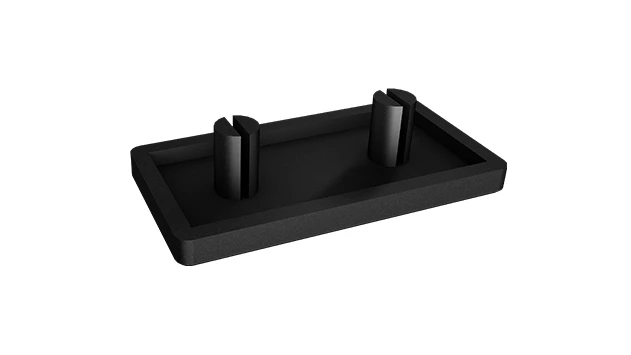
If you've ever worked with aluminum extrusion profiles, you know that the little details often make the biggest difference. Take, for example, the humble end cap. It might seem like a small accessory, but when it comes to 2040 aluminum profiles—one of the most versatile and widely used profiles in manufacturing, DIY projects, and industrial setups—getting the right end cap size is crucial. Whether you're building a workbench, a material rack, or a custom machine frame, ill-fitting end caps can ruin the look, compromise safety, or even damage your profile over time. In this guide, we'll walk you through everything you need to know about sizing 2040 aluminum profile end caps, from understanding the profile itself to avoiding common measurement mistakes. Let's dive in.
What Are 2040 Aluminum Profiles, Anyway?
Before we talk about end caps, let's make sure we're all on the same page about the star of the show: the 2040 aluminum profile. If you're new to the world of aluminum extrusion, you might be wondering, "What does '2040' even mean?" Great question! The numbers refer to the profile's cross-sectional dimensions, measured in millimeters. So, a 2040 profile is typically 20mm wide and 40mm tall (or vice versa, depending on orientation—more on that later). These profiles are part of the T-slot aluminum extrusion family, which means they have grooves (called T-slots) along their length that allow you to attach accessories like brackets, panels, and yes, end caps.
2040 profiles are beloved for their balance of strength and versatility. They're sturdy enough to support moderate loads (think workbenches or light-duty material racks) but lightweight enough to be easily maneuvered and assembled. You'll find them in factories, workshops, maker spaces, and even home garages, used for everything from custom shelving to 3D printer frames. And because they're modular, you can mix and match them with other profiles (like 2020 or 3030) to create almost any structure you can imagine.
Why End Caps Matter: More Than Just a Finishing Touch
You might be thinking, "Do I really need end caps? Can't I just leave the profile ends exposed?" Technically, you could—but we strongly advise against it. End caps serve three key purposes that make them a must-have for any 2040 aluminum profile project:
Safety First: Aluminum extrusion profiles are cut to length during manufacturing, which can leave sharp, jagged edges at the ends. These edges are no joke—they can snag clothing, scratch skin, or even cut hands if you're not careful. End caps cover these rough edges, turning a potential hazard into a smooth, safe surface. This is especially important if your project will be used by multiple people (like a workshop workbench) or if it's in a high-traffic area.
Protection for Your Profile: The ends of aluminum profiles are vulnerable to damage. Dust, dirt, and moisture can seep into the open ends, leading to corrosion over time—even with anodized or coated profiles. End caps act as a barrier, keeping debris out and extending the life of your profile. They also prevent dents or dings to the ends, which can happen if the profile is knocked against walls, tools, or other equipment.
Aesthetics and Professionalism: Let's be honest—exposed profile ends look unfinished. Whether you're building something for your business or a personal project, end caps give your structure a polished, professional look. They come in a variety of colors (usually black, white, or silver to match common profile finishes) and styles, so you can choose one that complements your design.
In short, end caps are small investments that pay off big in safety, durability, and appearance. But to get these benefits, you need the right size. So, how do you measure for 2040 aluminum profile end caps?

Anatomy of a 2040 Aluminum Profile: Key Dimensions to Know
Before you grab a tape measure, it helps to understand the basic anatomy of a 2040 aluminum profile. While most 2040 profiles follow the same general dimensions, there can be slight variations between manufacturers—especially when it comes to T-slot size and wall thickness. Let's break down the critical measurements you'll need to consider:
1. Overall Width and Height (Cross-Section)
As we mentioned earlier, "2040" refers to the profile's width and height. But here's the catch: orientation matters. A 2040 profile can be oriented so that it's 20mm wide and 40mm tall, or 40mm wide and 20mm tall, depending on how you mount it. For end cap sizing, you'll need to know which orientation you're using because the end cap's length and width will depend on this. For example, if your profile is standing "tall" (20mm wide x 40mm tall), the end cap will need to cover a 20mm x 40mm area. If it's lying "flat" (40mm wide x 20mm tall), the end cap dimensions will flip to 40mm x 20mm.
Pro tip: Always measure the actual cross-section of your profile, even if it's labeled "2040." Some manufacturers may have slight tolerances (e.g., 19.8mm instead of 20mm) that can affect end cap fit.
2. T-Slot Design and Protrusions
Most 2040 profiles have T-slots along their length, which are essential for attaching accessories. These slots are formed by raised ridges (called "T-slot flanges") inside the profile. When measuring for end caps, you need to account for these flanges because they can protrude into the end of the profile. If an end cap is too shallow, it might not sit flush against the profile end—it could bump into the T-slot flanges and leave gaps, which defeats the purpose of using an end cap.
Common T-slot sizes for 2040 profiles include M3, M4, or M5 (referring to the bolt size they accommodate). The slot width and depth can vary, so it's worth checking your profile's specifications or measuring the slot opening with a caliper.
3. Wall Thickness
Aluminum profiles have hollow centers, with walls that vary in thickness (usually between 1mm and 3mm, depending on the profile's load rating). The wall thickness affects the "inner" dimensions of the profile end, which is where the end cap will sit. A thicker wall means less space inside the profile, so the end cap's "depth" (how far it inserts into the profile) needs to be shorter to avoid hitting the inner walls.

Types of 2040 Aluminum Profile End Caps: One Size Doesn't Fit All
Not all end caps are created equal. There are a few different types to choose from, each with its own sizing considerations. Let's take a look at the most common ones:
1. Slip-On End Caps
Slip-on end caps are the most popular type. They're designed to slide over the end of the profile, with a snug fit that holds them in place without adhesive or fasteners. They're easy to install and remove, making them great for projects where you might need to access the inside of the profile later (e.g., running wires through the profile). Slip-on end caps come in "shallow" and "deep" varieties: shallow caps cover just the end surface, while deep caps extend a few millimeters into the profile for a more secure fit.
2. Adhesive-Backed End Caps
For a more permanent solution, adhesive-backed end caps have a strong, double-sided tape on the back. You peel off the backing and press the cap onto the profile end, creating a bond that won't budge. These are ideal for outdoor projects or applications where vibration might loosen a slip-on cap. The sizing here is similar to slip-on caps, but you'll want to ensure the adhesive surface is large enough to create a strong bond—so the cap's length and width should match the profile end exactly.
3. Threaded End Caps
Threaded end caps have internal threads that screw onto a threaded insert inside the profile. These are less common for 2040 profiles but are used in specialized applications where the end cap needs to support a load (like a leveling foot). Sizing for threaded caps is more precise, as the thread pitch and diameter must match the insert exactly.
4. Decorative End Caps
If aesthetics are a top priority, decorative end caps come in unique shapes (like rounded edges or custom logos) or colors. They're usually slip-on or adhesive-backed, but their design might add extra dimensions (e.g., a rounded top that extends beyond the profile end). For these, you'll need to measure not just the profile end but also the cap's overhang to ensure it doesn't interfere with other parts of your project.
Step-by-Step Measurement Guide: How to Get the Perfect Fit
Now that you know the basics, let's walk through the process of measuring your 2040 aluminum profile for end caps. You'll need a few simple tools:
- A digital caliper (preferred for precision, but a ruler with mm markings works too)
- A pencil and paper to jot down measurements
- A flashlight (to see inside the profile end and check for T-slot flanges)
Follow these steps, and you'll be well on your way to finding the right end cap:
Step 1: Measure the Profile's Outer Width and Height
Start by measuring the outer dimensions of the profile end. Place your caliper or ruler across the "width" (the shorter side) and "height" (the longer side) of the profile. For a standard 2040 profile, you should get readings close to 20mm (width) and 40mm (height), but remember—always measure your specific profile, as tolerances can vary. Write these numbers down as "Outer Width (OW)" and "Outer Height (OH)."
Step 2: Measure the Inner Width and Height (Optional but Recommended)
If you're using a deep slip-on end cap or an adhesive cap that inserts into the profile, you'll need to measure the inner dimensions. Shine a flashlight into the profile end and use your caliper to measure the distance between the inner walls (inner width and inner height). This will tell you how much space the end cap has to "seat" inside the profile. For example, if the outer width is 20mm and the wall thickness is 1.5mm, the inner width would be 20mm – (2 x 1.5mm) = 17mm.
Step 3: Check for T-Slot Flanges
T-slot flanges are the raised ridges that form the T-slots along the profile's length. At the end of the profile, these flanges can protrude slightly into the end opening. If you don't account for them, your end cap might not sit flush. To measure the flanges, use your caliper to find the distance from the edge of the profile to the start of the flange. For example, if the outer width is 20mm and there's a flange 2mm from each edge, the end cap's inner width should be at least 20mm – (2 x 2mm) = 16mm to clear the flanges.
Step 4: Determine End Cap Depth
The "depth" of the end cap refers to how far it extends into the profile (for slip-on or adhesive caps) or how thick it is (for shallow caps). For shallow caps, a depth of 1-2mm is usually enough to cover the edge. For deep caps, aim for a depth of 5-10mm—this ensures a secure fit without hitting the inner walls. If you're unsure, check the manufacturer's recommendations for your profile's wall thickness.
| Measurement | Tool Needed | What It Tells You | Example for 2040 Profile |
|---|---|---|---|
| Outer Width (OW) | Caliper or ruler | End cap width/length | 20mm (or 40mm, depending on orientation) |
| Outer Height (OH) | Caliper or ruler | End cap height/width | 40mm (or 20mm, depending on orientation) |
| Inner Width (IW) | Caliper | Space for deep end cap insertion | 17mm (if OW=20mm, wall thickness=1.5mm) |
| T-Slot Flange Protrusion | Caliper | Clearance needed for end cap fit | 2mm from edge |
| End Cap Depth | Ruler | How far cap inserts into profile | 5-10mm (deep cap) |
Common Sizing Mistakes to Avoid
Even with careful measuring, it's easy to make mistakes when sizing end caps. Here are the most common pitfalls and how to steer clear of them:
Mistake #1: Assuming All 2040 Profiles Are Identical
Not all 2040 profiles are created equal! Different manufacturers may use slightly different T-slot designs, wall thicknesses, or tolerances. For example, one brand's 2040 profile might have a 5mm T-slot width, while another uses 6mm. These small differences can add up when it comes to end cap fit. Always measure your specific profile, even if you've used 2040 profiles before.
Mistake #2: Mixing Up Width and Height
We mentioned this earlier, but it's worth repeating: 2040 profiles can be oriented two ways (20x40 or 40x20). If you measure the width as 40mm but install the profile in a 20mm-wide orientation, your end cap will be too big. Always confirm the orientation of your profile before finalizing end cap dimensions.
Mistake #3: Ignoring T-Slot Flanges
T-slot flanges are easy to overlook, but they're a common culprit for ill-fitting end caps. If your end cap is the right outer size but still won't sit flush, check for flanges—they might be blocking the cap from seating properly. Use a file or sandpaper to gently smooth any sharp flange edges if needed (but be careful not to alter the profile's dimensions).
Mistake #4: Choosing the Wrong Depth
A cap that's too shallow might fall off, while one that's too deep could crack the profile end when pressed in. If you're unsure, start with a shallow cap and test the fit—you can always switch to a deeper one if needed. For adhesive caps, a depth of 2-3mm is usually sufficient for a strong bond.
Choosing the Right End Cap: It's All About Compatibility
Now that you have your measurements, how do you choose the right end cap? Start by checking the manufacturer's recommendations for your specific 2040 profile—many aluminum extrusion suppliers (like us!) offer end caps designed to pair perfectly with their profiles. If you're buying from a third-party, look for end caps labeled "for 2040 aluminum profiles" and compare their dimensions to your measurements.
Don't forget to consider the environment your project will be in. For outdoor use or humid areas, choose end caps made from UV-resistant, moisture-proof materials (like nylon or polypropylene). For industrial settings with heavy wear, metal end caps (though less common) offer extra durability. And if aesthetics matter, pick a color that matches your profile's finish—most end caps come in black, silver, or white to complement anodized aluminum.
Lastly, don't skimp on quality. Cheap end caps can crack, warp, or lose their grip over time. Invest in end caps from a reputable aluminum profile accessories supplier—they'll be made to tighter tolerances and last longer, saving you time and frustration in the long run.
Installation Tips: Getting Your End Caps to Stay Put
Even the best-sized end cap won't work if it's installed incorrectly. Here are a few tips to ensure a smooth, secure installation:
Clean the Profile End: Before installing, wipe the profile end with a clean cloth and rubbing alcohol to remove dirt, oil, or debris. This helps slip-on caps seat better and ensures adhesive caps bond properly.
Press Firmly (But Gently): For slip-on caps, align the cap with the profile end and press firmly until you feel it "seat." For adhesive caps, apply even pressure across the entire surface for 30-60 seconds to activate the adhesive. Avoid using a hammer or excessive force—this can damage the profile or the cap.
Check for Gaps: After installation, inspect the end cap for gaps. A properly sized cap should sit flush with the profile end, with no spaces around the edges. If you see gaps, double-check your measurements—you might need a different size.
Let Adhesive Cure: If using adhesive caps, give the adhesive time to cure (usually 24 hours) before putting stress on the cap. This ensures the bond is fully formed and won't fail under load.
Beyond End Caps: Complementary Aluminum Profile Accessories
End caps are just one piece of the puzzle when it comes to aluminum extrusion projects. To take your structure to the next level, consider pairing them with other aluminum profile accessories:
T-Slot Rubber Seal Covers: These flexible strips fit into the T-slots of your profile, sealing out dust and moisture while reducing noise from vibrating accessories. They're a great complement to end caps for full-profile protection.
Corner Brackets: For joining profiles at 90-degree angles, corner brackets add strength and stability. Look for brackets that fit your profile's T-slot size (e.g., M5 for 2040 profiles).
Panel Inserts: If you're adding a work surface or side panel to your structure, panel inserts slide into the T-slots and hold panels securely in place. They come in various lengths to match your profile size.
By combining end caps with these accessories, you'll create a structure that's not only functional but also built to last.
FAQ: Your End Cap Sizing Questions Answered
Q: Are 2040 end caps compatible with other profile sizes, like 2020 or 3030?
A: No, end caps are sized specifically for the profile's dimensions. A 2040 end cap won't fit a 2020 profile (which is 20mm x 20mm) or a 3030 profile (30mm x 30mm). Always match the end cap size to your profile's outer width and height.
Q: Can I trim an end cap to fit if it's slightly too big?
A: It's not recommended. Trimming can weaken the cap or leave rough edges, defeating the purpose of using an end cap. It's better to order the correct size from the start.
Q: How many end caps do I need for a project?
A: One end cap per profile end! For example, a simple workbench with four 2040 legs will need 8 end caps (4 legs x 2 ends each). Always order a few extras in case of damage or misplacement.
Q: Are there end caps for curved or custom-shaped profiles?
A: Yes! While most end caps are for straight profiles, some manufacturers offer custom end caps for curved or specialty profiles. Contact your aluminum profile supplier for options.
Final Thoughts: Sizing Done Right
Sizing 2040 aluminum profile end caps might seem like a small detail, but it's one that can make a big difference in the safety, durability, and appearance of your project. By taking the time to measure your profile's dimensions, understand T-slot flanges, and choose the right end cap type, you'll ensure a fit that's secure, professional, and built to last. And remember—when in doubt, reach out to your aluminum extrusion supplier. They'll have the expertise and specific measurements to help you find the perfect end cap for your 2040 profile.
So, grab your caliper, measure twice, and install with confidence. Your profile (and your hands!) will thank you.