- Company Articles
- Products and Technology
- Product knowledge
- 3 Common Mistakes When Choosing Swivel Stem Caster Wheels with Brake

3 Common Mistakes When Choosing Swivel Stem Caster Wheels with Brake
Related Product
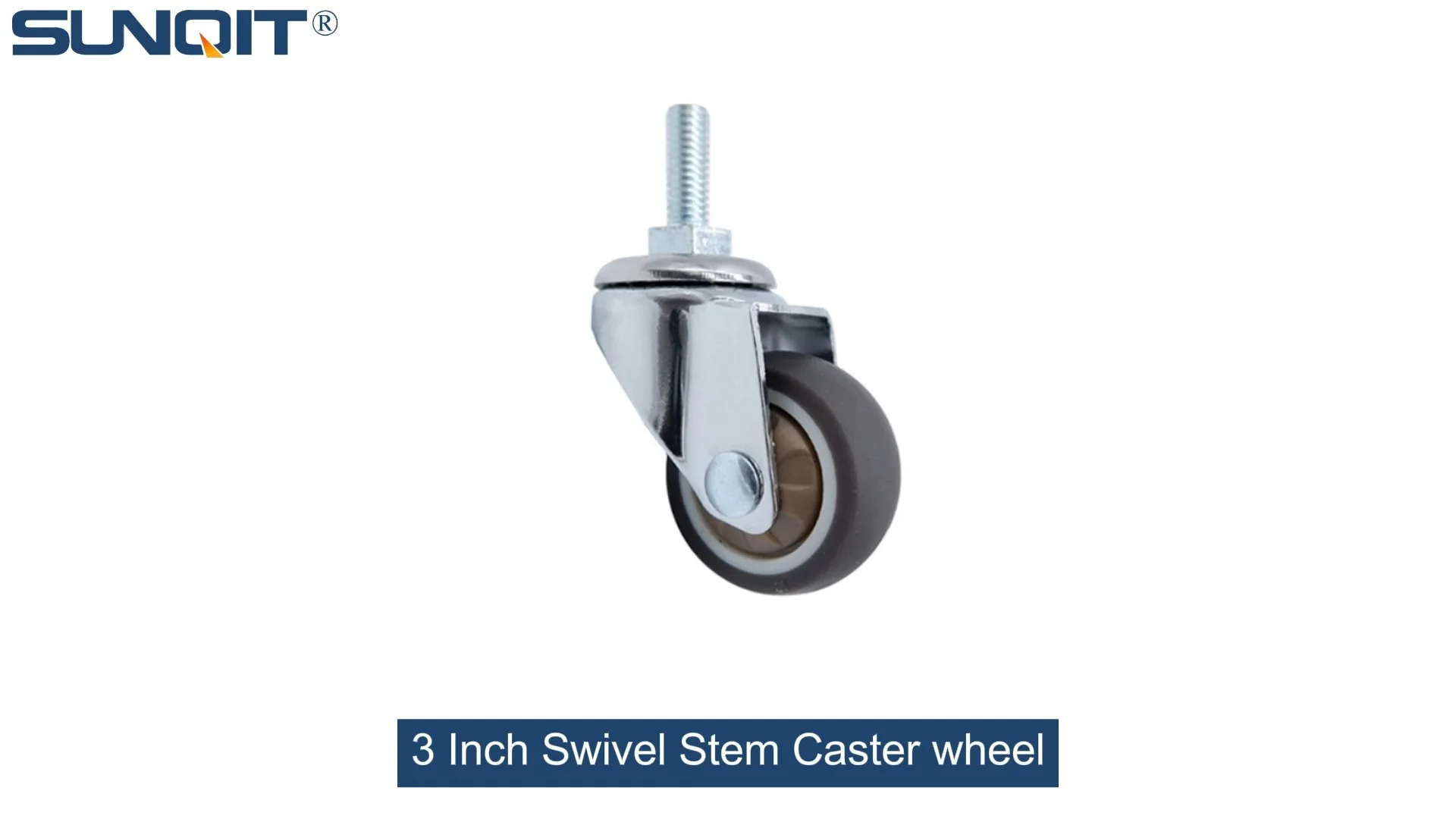
Swivel Stem Caster wheel
360 Degree Swivel Stem Caster. Threaded-post mount design, castors diameter 3 inch.Each swivel caster wheels loading 70KGS. Heavy enough and widely suit for carts, chairs, cabinet, flow rack, workbench, turnover rolley.
Why overlooking these details could cost your workflow, safety, and bottom line
In the bustling world of manufacturing, warehousing, and lean system operations, it's the small components that often keep the entire operation running smoothly. Take a moment to look around your workspace: the workbench where your team assembles products, the turnover trolley and rack shuttling materials between stations, the conveyor lines feeding into packaging—chances are, they all rely on one unsung hero: caster wheels. Specifically, swivel stem caster wheels with brake have become indispensable in creating flexible, efficient work environments. They let you move heavy loads with ease, lock equipment in place for safety, and adapt layouts to evolving workflow needs.
But here's the catch: not all caster wheels are created equal. And choosing the wrong swivel stem caster wheels with brake can turn that "unsung hero" into a silent saboteur. From unexpected downtime and worker fatigue to safety hazards and increased maintenance costs, the consequences of poor selection are far-reaching. In this article, we'll dive into three of the most common mistakes buyers make when selecting these critical components, and more importantly, how to avoid them. Whether you're outfitting a new lean system, upgrading workbenches, or replacing worn parts on your turnover trolley and rack, these insights will help you make choices that boost efficiency, protect your team, and extend the life of your equipment.
Mistake #1: Ignoring Load Capacity—The Hidden Danger of "Good Enough"
Walk into any hardware store or industrial supplier, and you'll likely find shelves lined with caster wheels labeled "heavy-duty" or "lightweight." It's tempting to grab the first pair that looks sturdy enough and call it a day. But here's the hard truth: guessing at load capacity is one of the costliest mistakes you can make. Swivel stem caster wheels with brake are engineered to handle specific weight ranges, and ignoring those limits—whether by overestimating or underestimating—puts your operation at risk.
Static vs. Dynamic Load: What's the Difference?
Load capacity isn't a single number. Every caster wheel has two critical ratings: static load (the weight it can support when stationary) and dynamic load (the weight it can handle when in motion). For example, a caster rated for 500kg static load might only support 350kg when rolling—because movement adds stress from vibration, uneven floors, and sudden stops. If your turnover trolley and rack regularly carries 400kg of materials, choosing a caster with a 350kg dynamic load isn't "close enough"—it's a disaster waiting to happen.
The Consequences of Getting It Wrong
Underestimating load capacity is obvious: wheels bend, stems snap, or brakes fail under strain. But overestimating is just as problematic. A caster built for 1000kg will be bulkier, heavier, and harder to maneuver than one rated for 500kg. This adds unnecessary effort for workers pushing a workbench or trolley, leading to fatigue, slower workflows, and even ergonomic injuries. Worse, oversized casters may not fit properly on your equipment, forcing modifications that compromise stability.
| Caster Wheel Type | Static Load Capacity (kg) | Dynamic Load Capacity (kg) | Best For |
|---|---|---|---|
| Rubber Swivel Stem (5-inch wheel) | 300-400 | 200-300 | Light workbenches, medical carts (smooth floors) |
| Polyurethane Swivel Stem (6-inch wheel) | 600-800 | 450-650 | Turnover trolley and rack, medium-duty assembly lines |
| Nylon Swivel Stem (8-inch wheel) | 1000-1500 | 800-1200 | Heavy machinery, outdoor use, concrete floors |
How to Get It Right: Calculate, Don't Guess
Start by calculating the maximum total load your caster will need to support. For a workbench, this includes the weight of the bench itself, tools, materials, and even the operator if they stand on it. For a turnover trolley and rack, factor in the heaviest batch of materials it will carry (don't forget packaging!). Once you have that number, add a 20-30% buffer to account for unexpected stress—like hitting a floor unevenness or sudden stops. Then, match that to the caster's dynamic load capacity (not static!). When in doubt, ask your supplier for load test data—reputable caster suppliers will happily provide it.
Mistake #2: Forgetting the Floor—Why Wheel Material Matters More Than You Think
"It's just a wheel—how different can they be?" That's a question we hear all too often. But the truth is, the relationship between your caster wheel and your floor is like a dance: get the rhythm wrong, and everything falls apart. Swivel stem caster wheels with brake are designed to perform on specific floor types, and choosing a wheel material that clashes with your environment is a recipe for premature wear, safety risks, and operational headaches.
Floor Conditions: The Unsung Variable
Let's break down the most common floor types and why they demand different wheel materials:
- Smooth, indoor floors (tile, polished concrete, vinyl): These surfaces are unforgiving to hard, rigid wheels. Nylon or metal wheels, for example, will create loud, (ear-piercing) noise and may scratch or mark floors. Instead, opt for rubber or polyurethane wheels—they absorb shock, reduce noise, and provide better grip when the brake is engaged.
- Rough or uneven floors (unfinished concrete, outdoor pavements): Here, soft wheels like rubber will wear quickly, developing flat spots or tearing on debris. Polyurethane or cast iron wheels are better—their durability resists cuts and abrasions, ensuring smooth rolling even over cracks or gravel.
- Wet or oily surfaces (machine shops, food processing): Slippery conditions call for wheels with high traction and chemical resistance. Avoid standard rubber, which can degrade in oil; instead, choose polyurethane blended with additives for grip, or non-marking rubber designed for wet environments.
The Cost of Mismatched Materials
Imagine this: A warehouse upgrades to a lean system, installing new workbenches and turnover trolley and rack with low-cost nylon caster wheels. Their floors are polished concrete, and within weeks, the wheels start squealing, leaving scuff marks everywhere. Workers complain about the noise, and the maintenance team is stuck replacing wheels monthly. What seemed like a budget-friendly choice ends up costing more in replacements, labor, and lost productivity.
On the flip side, using soft rubber wheels on a rough concrete floor will lead to "chunking"—small pieces of rubber tearing off the wheel. This creates uneven rolling, making the trolley harder to push and straining the swivel stem and brake mechanism. Over time, the brake may fail to lock properly because the wheel no longer sits flat on the floor.
Pro Tip: Test Before You Commit
Don't rely solely on product descriptions. Ask your caster supplier for sample wheels, and test them in your actual workspace. Roll them over the floor, engage the brake, and simulate a full workday's use. Pay attention to noise, rolling resistance, and wheel wear. It's a small investment of time that can save you from months of frustration.

Mistake #3: Overlooking Brake Quality—Why "Good Enough" Brakes Put Everyone at Risk
When shopping for swivel stem caster wheels with brake, it's easy to fixate on the "swivel stem" and "wheel" parts and treat the "brake" as an afterthought. But the brake is what turns a mobile tool into a stationary, safe workstation. A faulty brake isn't just an inconvenience—it's a safety hazard. In busy lean system environments, where workers are moving quickly and loads are heavy, a brake that fails can lead to collisions, falls, or damaged products.
Not All Brakes Are Created Equal
Swivel stem caster wheels with brake come with different brake types, each suited to specific needs. Here's what you need to know:
- Total lock brakes: These lock both the wheel (preventing rolling) and the swivel stem (preventing rotation). Ideal for workbenches or equipment that needs to stay perfectly still during use—like assembly stations where precision is critical.
- Wheel-only brakes: These lock the wheel but allow the swivel stem to rotate. Useful for turnover trolley and rack that need to stay in place but might need slight repositioning (e.g., aligning with a conveyor). However, they won't prevent the trolley from "wandering" if bumped.
- Foot vs. hand brakes: Foot brakes are convenient for quick, one-step locking—just step on the lever. Hand brakes, while less common, offer more control and are easier to engage for workers with limited mobility. Choose based on your team's needs and the frequency of locking/unlocking.
Signs of a Low-Quality Brake
How can you spot a brake that's more likely to fail? Watch for these red flags:
- Flimsy levers: If the brake lever bends or feels loose when pressed, it's a sign of poor materials. A sturdy brake should engage with a firm, positive "click."
- Inconsistent locking: Test the brake multiple times—if it sometimes locks and sometimes slips, the mechanism is faulty. This is often due to cheap springs or misaligned brake pads.
- Hard-to-reach levers: Brakes placed too close to the floor or under the trolley are frustrating to use, leading workers to skip locking them altogether. Prioritize ergonomic designs where the lever is easy to access.
Invest in Durability, Not Just Price
It's tempting to save a few dollars on caster wheels with basic brakes, but remember: every time a brake fails, you're risking injury or damage. Look for brakes made with high-quality steel components and replaceable pads—these will last longer and are easier to maintain. Reputable caster suppliers will also offer warranties on brake mechanisms, giving you peace of mind.

The Bottom Line: Your Caster Wheels Deserve Attention
Swivel stem caster wheels with brake might seem like a small detail in your larger lean system or workflow—but as we've explored, they're critical to efficiency, safety, and cost-effectiveness. By avoiding these three mistakes—ignoring load capacity, mismatching wheel materials to floors, and neglecting brake quality—you'll create a workspace that's not just productive, but built to last.
So the next time you're in the market for caster wheels, take a step back. Calculate your load, inspect your floors, test the brakes, and don't be afraid to ask your supplier tough questions. After all, the right swivel stem caster wheels with brake won't just support your equipment—they'll support your team, your workflow, and your success.