- Company Articles
- Products and Technology
- Product knowledge
- 3030 Aluminum Profile End Caps as Essential 3C Assembly Line Components

3030 Aluminum Profile End Caps as Essential 3C Assembly Line Components
Related Product
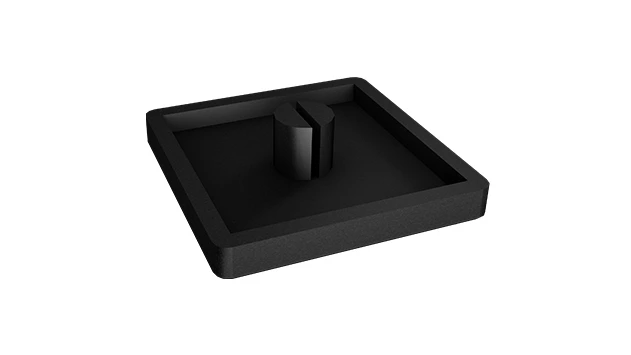
3030 Aluminum Profile End Cap
The aluminum profile end cap adds a finishing touch to your project and closes off profile ends to limit dust and debris buildup, also it can avaid some scratch for material and labor during the assemble work.
Walk into any modern 3C (Computer, Communication, Consumer Electronics) manufacturing facility, and you'll be met with a symphony of precision: robotic arms gliding silently, workers in anti-static suits handling tiny components, and conveyor belts moving products through stages with clockwork efficiency. Behind this seamless dance of technology and human skill lies a hidden network of infrastructure—one that's often overlooked but critical to keeping the line running smoothly. At the heart of this infrastructure are aluminum profiles, and among their most unassuming yet vital accessories? The 3030 aluminum profile end cap. These small, often plastic components might seem insignificant at first glance, but in the fast-paced world of 3C assembly, they're the unsung heroes that keep operations safe, efficient, and aligned with lean manufacturing principles.
The Backbone of 3C Assembly Lines: Aluminum Profiles
Before diving into the specifics of end caps, let's take a step back to understand the role of aluminum profiles in 3C manufacturing. Aluminum profiles—extruded aluminum beams with a T-slot design—have become the gold standard for building modular workstations, material racks, conveyor frames, and production cells in industrial settings. Their popularity stems from a few key advantages: they're lightweight yet strong, corrosion-resistant, and infinitely customizable. The T-slot grooves running along their length allow for easy attachment of accessories like brackets, panels, and connectors, making it simple to reconfigure layouts as production needs change.
In 3C manufacturing, where product lifecycles are short and production lines must adapt quickly to new models (think of how often smartphones or laptops are updated), this modularity is non-negotiable. A single assembly line might need to switch from assembling a 6-inch phone to a 7-inch tablet in a matter of days, and aluminum profiles make that transition possible without tearing down and rebuilding entire structures. Among the most widely used profiles is the 3030 aluminum profile—a 30mm x 30mm beam that strikes the perfect balance between strength and versatility. It's sturdy enough to support workbenches loaded with tools and components but lightweight enough to be repositioned when needed. From workstations where technicians assemble circuit boards to material racks that hold delicate screens, 3030 profiles are the backbone of these dynamic environments.
Aluminum Profile Accessories: Small Parts, Big Impact
Aluminum profiles alone are just beams of metal. What transforms them into functional, flexible systems are the accessories that accompany them. Aluminum profile accessories range from heavy-duty connectors that join profiles at angles to panels that create work surfaces, and yes—end caps that seal the ends of the profiles. These accessories are the "glue" that holds the modular system together, and their quality directly impacts the performance of the entire setup. In 3C assembly, where precision is measured in millimeters and downtime costs thousands of dollars per minute, cutting corners on accessories is simply not an option.
Consider, for example, a workbench built with 3030 profiles. Without the right connectors, the bench might wobble, risking damage to sensitive components. Without panel mounts, attaching a (ESD) work surface becomes a hassle, increasing the risk of electrostatic discharge that could fry microchips. And without end caps? The raw, cut ends of the aluminum profiles become a hazard—sharp edges that can catch on gloves, scratch anti-static mats, or even injure workers handling parts near the bench. In a industry where even a small cut can lead to downtime (not to mention compliance issues), these "small" oversights add up quickly.

What Are 3030 Aluminum Profile End Caps?
So, what exactly is a 3030 aluminum profile end cap? Put simply, it's a small, usually plastic or rubber component designed to fit snugly over the exposed ends of 3030 aluminum profiles. Most end caps are molded to match the profile's cross-section—square, in the case of 3030 profiles—with a slightly tapered design that allows them to be pressed into place without tools. They're available in a range of materials, including standard nylon, ESD-safe variants (critical for 3C environments), and even metal for heavy-duty applications, though plastic remains the most common for its cost-effectiveness and shock-absorbing properties.
At first glance, their purpose seems straightforward: to cover the ends of the profiles. But dig deeper, and you'll realize their role is multi-layered. Let's break down the key functions they serve in a 3C assembly line:
1. Safety First: Protecting Workers and Products
In any manufacturing setting, worker safety is paramount, but in 3C assembly, it's doubly critical. Workers spend hours standing at workbenches, reaching across surfaces, and handling small parts—often in tight spaces. The raw end of an aluminum profile, even if "deburred" during manufacturing, can still have sharp edges or burrs that catch on clothing, gloves, or skin. A single nick on a finger might seem minor, but in a line where workers handle electrostatic-sensitive components, a cut could lead to bleeding, which in turn requires stopping work, cleaning the area, and potentially replacing contaminated parts. Over time, these small interruptions add up to significant productivity losses.
End caps eliminate this risk by providing a smooth, rounded surface that cushions contact. For example, ESD-safe end caps—made with conductive plastic that dissipates static charges—go a step further by preventing static buildup on the profile ends, which could otherwise discharge onto nearby components like microprocessors or circuit boards. In 3C manufacturing, where a single static discharge can render a $500 component useless, this added layer of protection is invaluable.
2. Preserving Profile Integrity: Dust, Debris, and Longevity
Aluminum profiles are designed to last for years, but their longevity depends on proper maintenance. The open ends of a profile act like tiny funnels, collecting dust, oil, and debris from the factory floor. Over time, this buildup can corrode the interior of the profile, weaken the T-slot structure, or interfere with the fit of accessories like brackets or connectors. Imagine trying to slide a connector into a T-slot clogged with dust—you'd waste time cleaning it out, or worse, damage the slot trying to force the accessory in.
End caps seal off these open ends, creating a barrier against contaminants. This not only extends the life of the profiles but also reduces maintenance costs. In a lean manufacturing system—where minimizing waste (including time spent on upkeep) is a core principle—this is a small detail with big returns. A 3C plant running 24/7 might have hundreds of 3030 profiles in use; without end caps, maintenance teams would spend hours annually cleaning out debris from profile ends. With end caps, that time is redirected to more critical tasks, like optimizing production flow or troubleshooting equipment.
3. Noise Reduction: A Quieter, More Focused Work Environment
Factory floors are inherently noisy, but excessive noise can lead to worker fatigue, reduced concentration, and even hearing damage. In 3C assembly, where tasks require extreme precision (like soldering microscopic components or aligning camera lenses), distractions from noise can lead to errors. Aluminum profiles, when left uncovered, can contribute to this noise: tools or parts accidentally dropped against the open end of a profile will produce a sharp, echoing "clink" that disrupts the work environment. End caps, made from soft plastics or rubber, absorb impact and muffle these sounds, creating a calmer atmosphere that's better suited for detailed work.
4. Aesthetic and Organizational Benefits: Keeping Lines "Lean" and Visually Cohesive
Lean manufacturing isn't just about efficiency—it's also about visual management. A clean, organized workspace reduces errors, makes it easier to spot issues, and fosters a sense of pride among workers. Exposed profile ends, with their raw aluminum finish and potential for debris buildup, create a cluttered, unprofessional look. End caps, available in colors like black, white, or blue, provide a uniform, finished appearance that aligns with 5S principles (Sort, Set in Order, Shine, Standardize, Sustain)—a cornerstone of lean systems. For example, a workbench used for assembling camera modules might use blue end caps, while one for battery installation uses red, making it easy at a glance to identify which station is for which task. This visual cue reduces confusion and speeds up training for new workers.

Types of 3030 Aluminum Profile End Caps: Tailored to 3C Needs
Not all end caps are created equal, and 3C manufacturers have specific needs that drive the choice of which type to use. Let's explore the most common variants and how they fit into assembly line operations:
Standard Nylon End Caps
The workhorse of end caps, standard nylon end caps are affordable, durable, and suitable for most general-purpose applications. They're made from rigid nylon plastic, which resists wear and chemical exposure (important in factories where cleaning agents or coolants might come into contact with profiles). These end caps are designed for a tight, friction fit—simply press them onto the end of a 3030 profile, and they stay in place until intentionally removed. They're available in neutral colors like black or white, making them easy to integrate into any workspace design.
ESD-Safe End Caps
In 3C manufacturing, electrostatic discharge (ESD) is the enemy. Even a small static charge—too weak for humans to feel—can destroy sensitive electronic components like integrated circuits or memory chips. ESD-safe end caps are made with conductive plastic that dissipates static charges, preventing them from building up on the profile ends. These end caps are often black (a common color for ESD-safe products) and are tested to meet industry standards like ANSI/ESD S20.20. They're a must-have for workstations where components are handled directly, such as circuit board assembly or final product testing.
Colored End Caps for Visual Management
As mentioned earlier, visual management is key in lean systems. Colored end caps take this a step further by allowing manufacturers to color-code workstations, racks, or production zones. For example, green end caps might mark workstations dedicated to quality control, yellow for assembly, and red for maintenance areas. This simple system reduces errors—imagine a new worker trying to remember which rack holds "inspected" vs. "uninspected" parts; with color-coded end caps, it's instantly clear. Colored end caps are often made from the same durable nylon as standard caps but with added pigments for visibility.
Heavy-Duty End Caps
In high-traffic areas—like conveyor frames that support heavy loads or material racks used to store bulky components—standard end caps might not hold up to frequent impact. Heavy-duty end caps are thicker, made from reinforced plastic or even rubber, and designed to absorb more wear and tear. For example, a 3030 profile used as a guard rail along a conveyor belt might be bumped by carts or pallets dozens of times a day; a heavy-duty end cap will prevent the profile end from cracking or the cap from popping off.
Installation and Integration: Simplicity by Design
One of the reasons end caps are so well-suited for 3C assembly lines is their ease of installation. Unlike some industrial accessories that require tools, adhesives, or specialized training, end caps are designed for a "press-fit" application. A worker can install one in seconds: align the cap with the profile end, apply gentle pressure, and it snaps into place. This simplicity is critical in fast-paced environments where every second counts. When reconfiguring a workstation, workers don't need to spend time unscrewing or ungluing end caps—they can be popped off and reused on the new setup.
This reusability aligns with lean principles of reducing waste. Unlike tape or foam padding (which might be used as a makeshift alternative to end caps), end caps can be reused dozens of times, cutting down on material costs and landfill waste. For example, a 3C manufacturer that reconfigures its assembly line four times a year can reuse the same set of end caps each time, rather than buying new padding or tape for each change.
The Impact of End Caps: A Real-World Example
To put the importance of 3030 aluminum profile end caps into perspective, let's consider a hypothetical but realistic scenario at a mid-sized 3C factory producing smartwatches. Before implementing end caps, the factory's assembly line workstations—built with 3030 aluminum profiles—had exposed ends. Over six months, the plant recorded 12 minor injuries (cuts to hands) from workers brushing against these ends, each resulting in an average of 30 minutes of downtime while the worker received first aid and the area was cleaned. Additionally, maintenance teams spent 8 hours monthly cleaning debris from profile ends, and static discharge from unprotected profiles was linked to 5 instances of damaged circuit boards (costing approximately $2,000 per board).
The factory then switched to ESD-safe nylon end caps for all 3030 profiles. Within three months, injury reports dropped to zero. Maintenance time spent cleaning profiles fell to 1 hour monthly. Static-related component damage also ceased. When the numbers were crunched, the investment in end caps—costing less than $500 for the entire line—saved the factory over $15,000 in downtime, component losses, and maintenance costs in the first year alone. Beyond the financials, workers reported feeling safer and more focused, and new hires required less training time thanks to the cleaner, more organized appearance of the workstations.
| Metric | Without End Caps | With 3030 Aluminum Profile End Caps |
|---|---|---|
| Worker Injuries (6 months) | 12 minor cuts | 0 injuries |
| Maintenance Time (monthly) | 8 hours (debris cleaning) | 1 hour (occasional inspection) |
| Static-Related Component Damage | 5 instances ($10,000 total) | 0 instances |
| Workspace Aesthetics | Cluttered, exposed raw edges | Clean, uniform, color-coded (if using colored caps) |
| Profile Longevity | Corrosion and debris buildup reduce lifespan by ~20% | Profiles remain clean; lifespan extended by ~30% |
Choosing the Right End Cap: Key Considerations for 3C Manufacturers
With so many end cap options available, how do 3C manufacturers choose the right one? Here are the critical factors to consider:
Material Compatibility
Ensure the end cap material is compatible with the factory environment. For example, if the workstation is near chemicals or high temperatures, a heat-resistant or chemical-resistant plastic (like polypropylene) might be necessary. ESD-safe environments require conductive materials, so look for end caps labeled as ESD-compliant.
Fit and Tightness
A poorly fitting end cap will fall off, defeating its purpose. Look for end caps specifically designed for 3030 profiles—generic caps may not fit the T-slot design or the profile's exact dimensions. Reputable suppliers will list the profile size (e.g., "3030 series") on the product label, ensuring a snug, friction fit.
Color and Branding
If visual management is a priority, choose colored end caps that align with your factory's color-coding system. Some suppliers even offer custom colors for larger orders, allowing manufacturers to match brand colors or create unique codes for specific processes.
Supplier Reliability
Consistency is key in manufacturing. A supplier that delivers end caps with varying thicknesses or fitment issues will cause headaches down the line. Look for suppliers with a track record in industrial aluminum accessories—ideally those who specialize in serving the 3C sector and understand its unique needs.
Aligning with Lean Systems: End Caps as Part of the Bigger Picture
At this point, it's clear that 3030 aluminum profile end caps are more than just "caps"—they're integral to maintaining a lean, efficient, and safe 3C assembly line. Lean manufacturing, at its core, is about eliminating waste in all forms: waste of time, waste of materials, waste of space, and waste of human potential. End caps contribute to this by:
- Reducing waste of time: No more stopping production for injuries or cleaning profile ends.
- Reducing waste of materials: Profiles last longer, and end caps are reusable, cutting down on replacement costs.
- Reducing waste of space: A cleaner, more organized workspace makes better use of available area.
- Empowering workers: A safer, less distracting environment allows workers to focus on high-value tasks, boosting productivity and job satisfaction.
In short, end caps are a tangible example of how lean thinking isn't just about big-picture strategies like automation or workflow redesign—it's about sweating the small stuff. As James Womack, co-author of The Machine That Changed the World (a foundational book on lean manufacturing), once said, "Lean thinking is not difficult, but it requires attention to detail." 3030 aluminum profile end caps are the embodiment of that attention to detail.
Conclusion: Small Components, Big Impact
The next time you pick up a smartphone or tablet, take a moment to appreciate the complexity of its creation. Behind that sleek device is a world of precision manufacturing, where every component—no matter how small—plays a role. 3030 aluminum profile end caps may not appear in any product specs or marketing materials, but they're essential to ensuring that the assembly line runs safely, efficiently, and in line with the lean principles that drive modern 3C manufacturing.
For 3C manufacturers looking to optimize their operations, investing in quality end caps is a low-cost, high-return decision. They protect workers, preserve equipment, reduce waste, and contribute to a culture of excellence. In a industry where margins are tight and competition is fierce, it's the small details that separate the leaders from the laggards. And in that regard, the humble 3030 aluminum profile end cap is anything but small.