- Company Articles
- Products and Technology
- Product knowledge
- 3030 Aluminum Profile End Caps in Electronics Manufacturing: ESD Protection?

3030 Aluminum Profile End Caps in Electronics Manufacturing: ESD Protection?
Related Product
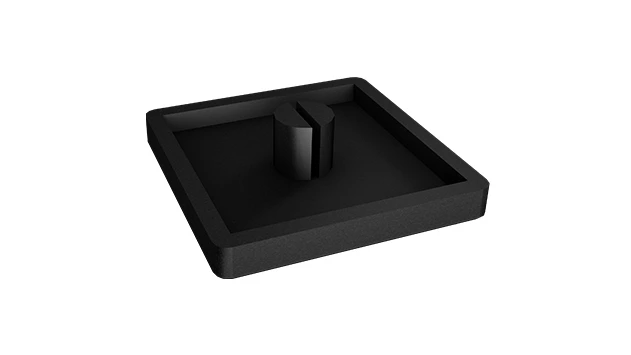
3030 Aluminum Profile End Cap
The aluminum profile end cap adds a finishing touch to your project and closes off profile ends to limit dust and debris buildup, also it can avaid some scratch for material and labor during the assemble work.
The Invisible Threat in Electronics Manufacturing – ESD's Silent Impact
Walk into any electronics manufacturing facility, and you'll be met with a symphony of precision: robotic arms gliding smoothly, technicians hunched over magnifying glasses, and conveyor belts carrying tiny components that hold the power of entire devices. From smartphones that fit in our pockets to medical monitors that save lives, every electronic product begins as a collection of fragile parts—microchips, capacitors, semiconductors—each smaller than a grain of rice and infinitely more sensitive. But amid this orchestrated chaos, there's a silent, invisible threat that can unravel hours of meticulous work in an instant: electrostatic discharge, or ESD.
ESD isn't just the static shock you feel when touching a doorknob on a dry day. In electronics manufacturing, it's a microscopic phenomenon with macroscopic consequences. A single static charge as low as 250 volts can damage a sensitive integrated circuit (IC), and charges as small as 10 volts can disrupt the delicate operations of a microchip. What makes ESD so insidious is that its effects aren't always immediate. A component zapped by static might work during initial testing but fail weeks later in the field, leading to costly recalls, frustrated customers, and damaged reputations. For manufacturers, the cost of ESD-related failures is staggering—industry reports estimate it runs into billions annually, from lost production to warranty claims. In a sector where margins are tight and competition fierce, controlling ESD isn't just a best practice; it's a business imperative.
To combat this, manufacturers invest heavily in ESD protection measures: grounded workstations, anti-static mats, wrist straps, and specialized packaging. But in the quest to shield components from static, one often-overlooked element plays a quietly critical role: the humble aluminum profile end cap. Specifically, in setups built around 3030 aluminum profiles—the workhorses of modular manufacturing workstations—the 3030 aluminum profile end cap does more than just cover sharp edges. It's a small but vital piece of the ESD protection puzzle, working alongside ESD workstations and lean pipe workbenches to create a safer, more reliable production environment.
The Backbone of Modern Workstations: Aluminum Profiles and Their Role
Before we can appreciate the role of end caps, we need to understand the backbone they protect: aluminum profiles. Walk through any modern manufacturing plant, warehouse, or even a tech startup's prototyping lab, and you'll see these sleek, silver (or sometimes black, white, or anodized) extrusions everywhere. They form the frames of workbenches, the shelves of material racks, the rails of conveyor systems, and the supports of ESD workstations. So why have aluminum profiles become the go-to building block for industrial setups?
Aluminum's appeal lies in its unique combination of properties: it's lightweight yet surprisingly strong, resistant to corrosion, and infinitely customizable. Unlike rigid steel frames or flimsy plastic structures, aluminum profiles are modular. They're designed with T-slots—longitudinal grooves running along their length—that allow accessories like brackets, joints, and panels to be attached without welding or drilling. This modularity means a workstation built with aluminum profiles can be reconfigured in hours, not days, as production needs change. Need to add a shelf? Slide a bracket into the T-slot. Want to adjust the height of a workbench? Swap out a few profiles. This flexibility is a cornerstone of lean manufacturing, where adaptability directly translates to efficiency.
Among the myriad aluminum profile sizes available—from tiny 15x15mm profiles for light-duty use to beefy 80x80mm beams for heavy machinery—the 3030 aluminum profile stands out as a workhorse. As the name suggests, it measures 30mm by 30mm in cross-section, a sweet spot that balances strength, weight, and versatility. It's sturdy enough to support tools, components, and even small equipment, yet lightweight enough to be easily maneuvered during setup. This makes it ideal for building lean pipe workbenches, where workers assemble components, test circuits, or package products. In ESD-sensitive areas, 3030 profiles are often paired with conductive materials and grounding systems to create ESD workstations that keep static at bay.
But a profile is only as good as the accessories that bring it to life. Without the right joints, brackets, or end caps, a 3030 aluminum profile is just a length of metal. And when it comes to ESD protection, the accessories—particularly the 3030 aluminum profile end cap—are where the rubber meets the road (or, more literally, where the profile meets the workstation).

Beyond the Profile: The Unsung Hero – Aluminum Profile Accessories
If aluminum profiles are the bones of a workstation, then aluminum profile accessories are the muscles, tendons, and ligaments that make it move, support weight, and adapt to different tasks. The world of accessories is surprisingly diverse: there are corner joints that connect profiles at 90-degree angles, T-joints for branching structures, brackets that hold shelves or monitors, and casters that turn a stationary bench into a mobile cart. Each accessory has a specific job, but together, they transform raw profiles into functional, tailored workspaces.
Among these accessories, end caps might seem like an afterthought. After all, their primary function is simple: to cover the exposed ends of aluminum profiles. Without them, a profile's cut edges can be sharp, posing a safety risk to workers who might brush against them. They also prevent dust, debris, and small components from lodging inside the T-slots, which could jam accessories or compromise the profile's structural integrity. Aesthetically, end caps give workstations a finished, professional look, hiding the rough edges of cut metal. But to dismiss them as mere "covers" is to overlook their deeper role—especially in environments where ESD protection is critical.
Aluminum profile accessories like end caps are designed with the same modularity as the profiles themselves. They're engineered to snap, slide, or screw into place, ensuring a secure fit without damaging the profile. For 3030 aluminum profiles, the 3030 aluminum profile end cap is specifically sized to match the profile's 30mm x 30mm cross-section. It's available in various materials, from basic plastic to conductive rubber, and in different styles—some are flat and unobtrusive, others have flanges for added protection, and still others are designed with grip surfaces for ergonomic handling. But in ESD workstations, the material and design of the end cap take on new importance. A poorly chosen end cap could generate static, trap charge, or even insulate the profile from grounding systems—all of which undermine the workstation's ability to protect components.

3030 Aluminum Profile End Caps: More Than Just a Cover
The Basics: What Is a 3030 Aluminum Profile End Cap?
At its core, a 3030 aluminum profile end cap is a small, usually cylindrical or rectangular piece designed to fit snugly over the exposed end of a 3030 aluminum profile. Think of it as a "cap" for a tube, but engineered with precision to match the profile's unique shape. Most 3030 profiles have T-slots running along their length, so end caps often feature tabs or ribs that fit into these slots, securing them in place without the need for adhesives or screws (though some designs do use small screws for added stability in high-vibration environments).
The most common end caps are made from plastic—PVC or nylon—due to their low cost, ease of manufacturing, and ability to be colored (often black, gray, or the same color as the profile for a cohesive look). But in ESD-sensitive areas, plastic alone might not cut it. That's where specialized end caps come in: conductive rubber, static-dissipative nylon, or even metalized plastics infused with carbon fibers or metal particles to enhance conductivity. These materials don't just cover the profile's end; they actively help manage static charge.
Material Matters: How End Cap Composition Impacts ESD Protection
To understand why material choice is critical, let's break down how ESD affects components. Static charge builds up when there's an imbalance of electrons on a surface. When that surface comes into contact with a conductive path to ground, the charge discharges—quickly. If that discharge happens through a sensitive component, it can melt tiny wires inside the chip or create "soft errors" that corrupt data. To prevent this, ESD workstations are designed to either dissipate charge slowly (static-dissipative materials) or conduct it away immediately (conductive materials), both of which require a path to ground.
A standard plastic end cap (non-conductive) can act as an insulator. If a charge builds up on the aluminum profile, the end cap might prevent that charge from reaching the ground, creating a "pocket" of static at the profile's end. Over time, this charge could grow until it finds a path to discharge—potentially through a component resting on the workstation. In contrast, a conductive end cap made from rubber infused with carbon black or metal particles creates a continuous conductive path from the profile's end to the grounded frame of the workstation. Any charge that builds up on the profile is quickly channeled through the end cap, down the profile, and into the ground, never reaching dangerous levels.
Static-dissipative end caps strike a middle ground. They're not as conductive as metal or carbon-infused rubber, but they allow charge to bleed off slowly, preventing sudden discharges. This is useful in environments where components are extremely sensitive to rapid current flow. For example, some semiconductors can be damaged by even a slow but sustained current, so dissipative materials ensure charge is removed gradually without overwhelming the component.
| Material Type | Surface Resistance (Ω) | ESD Protection Class | Key Features | Best For |
|---|---|---|---|---|
| Conductive Rubber | 10³ – 10⁶ | Conductive | Flexible, excellent grip, high conductivity | High-risk ESD areas (microchip assembly, semiconductor testing) |
| Static-Dissipative Nylon | 10⁶ – 10⁹ | Static-Dissipative | Durable, chemical-resistant, slow charge dissipation | Moderate-risk areas (PCB assembly, component handling) |
| Standard PVC | >10¹² | Insulative | Low cost, lightweight, available in colors | Non-ESD areas (packaging, non-sensitive assembly) |
| Metalized ABS | 10⁴ – 10⁷ | Conductive | Rigid, impact-resistant, good for heavy-duty use | Industrial workstations with high vibration |
Fit and Function: Why 3030-Specific End Caps Are Non-Negotiable
Not all end caps are created equal, and when it comes to 3030 aluminum profiles, a "one-size-fits-all" approach won't work. Profiles from different manufacturers might have slightly different T-slot dimensions or edge radii, so end caps must be designed to match the specific profile they'll cover. A poorly fitting end cap can rattle loose, exposing sharp edges or creating gaps where charge can accumulate. Worse, if the end cap doesn't make full contact with the profile's surface, even a conductive material won't effectively channel charge to ground.
Manufacturers of aluminum profile accessories understand this, which is why 3030 aluminum profile end caps are engineered with precision. They feature tabs that lock into T-slots, ensuring a tight, secure fit. Some designs even include a slight taper, so they're easy to install but stay in place once pushed on. For ESD applications, this snug fit is critical: it ensures the conductive or dissipative material of the end cap is in constant contact with the aluminum profile, maintaining that all-important path to ground.
ESD Workstations: A Holistic Approach to Static Control
To truly appreciate the role of 3030 aluminum profile end caps, we need to zoom out and look at the bigger picture: the ESD workstation. An ESD workstation isn't just a table with a grounding mat; it's a system where every component—from the work surface to the tools to the aluminum profiles and their end caps—works together to minimize static risk. Let's break down how these systems are structured and where end caps fit in.
At the heart of most ESD workstations is a lean pipe workbench built with 3030 aluminum profiles. The workbench's surface is typically an anti-static mat made from rubber or vinyl, which is grounded via a cord to the building's electrical system. Technicians wear wrist straps that connect to the same ground, ensuring any charge on their bodies is safely dissipated. Above the bench, there might be overhead ionizers that neutralize static in the air, and nearby, ESD-safe storage bins for components. Even the flooring is often conductive or dissipative, so charges from shoes don't build up.
The aluminum frame of the workbench—built from 3030 profiles—plays a dual role: structural support and conductive pathway. Because aluminum is a metal, it's naturally conductive, making it an excellent material for grounding. The profiles are connected to the workstation's ground via conductive joints or brackets, ensuring the entire frame is at ground potential. But if the ends of those profiles are capped with non-conductive end caps, there's a risk of charge accumulating at the frame's extremities—exactly where components might be placed or where workers might rest their arms.
Here's where the 3030 aluminum profile end cap shines. By using conductive or dissipative end caps, the entire length of the profile—from one end to the other—is part of the grounded system. A technician placing a component near the edge of the workbench won't have to worry about a static charge lingering on the profile's end. A component sliding along the bench (perhaps on a roller track) won't pick up charge from an ungrounded end cap. Even in high-traffic areas where workers brush against the bench, the end caps prevent static buildup, turning potential hazards into non-issues.
Consider a real-world example: a smartphone assembly line. Each workstation is a lean pipe workbench built with 3030 aluminum profiles. Technicians assemble PCBs loaded with tiny chips. The workbench has an anti-static mat, grounded wrist straps, and ionizers overhead. The aluminum frame is grounded via conductive casters that connect to the floor's grounding grid. The 3030 profiles are capped with conductive rubber end caps. One day, a new technician forgets to wear their wrist strap. As they reach across the bench to grab a component, their sleeve rubs against the aluminum profile, building up a small charge. Without the conductive end cap, that charge might linger on the profile's end. But with the end cap, the charge flows through the cap, into the profile, down the grounded frame, and into the floor. The component remains safe, and production continues uninterrupted. That's the power of a well-designed ESD system—and the quiet contribution of the end cap.
Choosing the Right 3030 End Cap: Factors to Consider
Not all ESD workstations are created equal, and neither are end caps. Choosing the right 3030 aluminum profile end cap depends on several factors, from the sensitivity of the components being handled to the specific conditions of the manufacturing environment. Here's what to keep in mind when selecting end caps for ESD protection:
Component Sensitivity: Know Your Risk Level
The first step is understanding how sensitive your components are to ESD. Components are rated by their Electrostatic Discharge Sensitivity according to standards like ANSI/ESD S20.20. For example:
- Class 0 (0–250V): Extremely sensitive components, like some microprocessors and RF chips.
- Class 1A (250V–500V): Very sensitive, including many memory chips and sensors.
- Class 1B (500V–1000V): Sensitive, such as most ICs and diodes.
- Class 1C (1000V–2000V): Moderately sensitive, like capacitors and resistors.
For Class 0 or 1A components, conductive end caps are a must. They ensure rapid charge dissipation, leaving no room for error. For Class 1B or 1C components, static-dissipative end caps might suffice, offering a balance of protection and cost. In areas where components are less sensitive, standard plastic end caps could work, but it's often safer to stick with dissipative materials to maintain a consistent ESD environment.
Environmental Conditions: Temperature, Humidity, and Wear
Manufacturing environments can be harsh. Some facilities are hot and humid (like those producing batteries), others are dry and cool (semiconductor cleanrooms). End caps must stand up to these conditions without degrading. Conductive rubber, for example, can become brittle in extreme cold or lose conductivity if exposed to certain chemicals. Static-dissipative nylon is more chemical-resistant but might warp in high temperatures. Metalized ABS is durable but can scratch, which might compromise conductivity if the metal layer is worn away.
Humidity also plays a role. In dry environments (relative humidity <30%), static builds up more easily, so conductive end caps are preferable. In humid environments, static is less of an issue, but end caps might need to resist moisture to prevent mold or degradation. For example, a food processing plant with high humidity might use stainless steel end caps for corrosion resistance, while a semiconductor cleanroom with low humidity would opt for carbon-infused conductive rubber.
Installation and Maintenance: Ease of Use Matters
Even the best end cap won't protect anything if it's not installed correctly. Look for end caps designed for easy, secure installation. Snap-fit designs are popular because they don't require tools—just push them onto the profile until they lock into the T-slots. Screw-on end caps offer a tighter fit for high-vibration environments but take longer to install. Some end caps have visible indicators (like a colored ring) that show when they're properly seated, reducing the risk of human error during setup.
Maintenance is another consideration. Over time, end caps can wear: snap-fit tabs might break, conductive materials might lose their conductivity due to dirt or abrasion, or static-dissipative properties might degrade with exposure to UV light. Choose end caps made from durable materials that can withstand regular cleaning (many ESD workstations are wiped down daily with isopropyl alcohol). Conductive end caps should be tested periodically with a surface resistance meter to ensure they're still providing a path to ground—just like any other ESD protection device.
The Future of ESD Protection: Innovations in Aluminum Profile Accessories
As electronics continue to shrink and become more powerful, the need for advanced ESD protection will only grow. Components like 5G chips, quantum computing processors, and medical implants are more sensitive than ever, demanding tighter control over static charge. This evolution is driving innovation in aluminum profile accessories, including end caps, as manufacturers look for ways to enhance protection while maintaining flexibility.
One emerging trend is "smart" end caps embedded with sensors. These end caps could monitor surface resistance in real time, alerting technicians if conductivity drops below a threshold. Imagine a workstation where an LED on the end cap glows green when everything is grounded and red if there's a problem—no need for manual testing. Some prototypes even include wireless connectivity, sending data to a central dashboard that tracks ESD compliance across the facility. This would allow managers to spot trends, like end caps wearing out faster in certain areas, and proactively replace them before failures occur.
Another area of innovation is sustainable materials. As manufacturers push for greener operations, there's growing interest in eco-friendly end caps made from recycled plastics or biodegradable polymers infused with conductive natural fibers (like carbonized bamboo). These materials would offer the same ESD protection as traditional options but with a lower environmental footprint. For example, a static-dissipative end cap made from recycled nylon and carbon black could reduce reliance on virgin plastics while still meeting strict ESD standards.
Modularity is also being taken to new heights. Some suppliers are developing "universal" end caps that fit multiple profile sizes (e.g., 3030, 3060, 4040) by adjusting to different widths, reducing the need for inventory of multiple end cap types. Others are creating end caps with integrated features, like small tool holders or cable management clips, turning them into multi-functional accessories that save space on the workstation.
Perhaps most exciting is the integration of nanotechnology into end cap materials. Nanoparticles of conductive metals or carbon nanotubes can be added to plastics or rubber to create end caps with ultra-low surface resistance and exceptional durability. These nanocomposite materials are lighter, more flexible, and more conductive than traditional options, opening up new possibilities for ESD protection in extreme environments—like space manufacturing or deep-sea electronics production.
Conclusion: Small Component, Big Impact – The Critical Role of 3030 End Caps
In the grand scheme of electronics manufacturing, the 3030 aluminum profile end cap is easy to overlook. It's small, relatively inexpensive, and doesn't have the flash of a high-tech ionizer or the visibility of a grounded wrist strap. But as we've explored, its role in ESD protection is anything but minor. It's the final link in a chain of safeguards that protect billions of dollars' worth of components and ensure the reliability of the electronics we rely on every day.
From preventing sharp edges to channeling static charge to ground, the 3030 aluminum profile end cap does more than cover a profile's end. It transforms a simple building block into a critical part of an ESD workstation, working alongside lean pipe workbenches, conductive mats, and grounding systems to create a safe environment for sensitive components. Whether made from conductive rubber, static-dissipative nylon, or the next generation of smart materials, it's a testament to the idea that in manufacturing, success lies in the details.
As electronics manufacturing continues to evolve, so too will the humble end cap. Innovations in materials, design, and technology will make it smarter, more durable, and more integral to ESD protection. But no matter how advanced it gets, its core mission will remain the same: to keep static at bay, one profile end at a time. So the next time you walk through a manufacturing plant, take a moment to look at the workstations around you. Chances are, you'll see 3030 aluminum profiles—and the end caps that help make them safe. They may be small, but their impact is enormous.