- Company Articles
- Products and Technology
- Product knowledge
- 3030 vs 4040 Aluminum Profile End Caps: Key Differences You Need to Know

3030 vs 4040 Aluminum Profile End Caps: Key Differences You Need to Know
Related Product
4040 Aluminum Profile End Cap
The aluminum profile end cap adds a finishing touch to your project and closes off profile ends to limit dust and debris buildup, also it can avaid some scratch for material and labor during the assemble work.
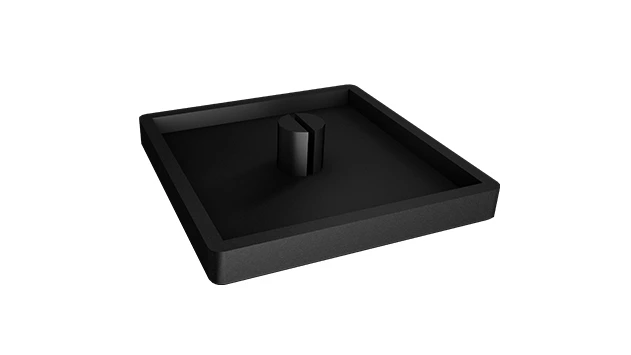
If you've ever dabbled in building workbenches, material racks, or even small-scale conveyor systems, you've probably come across aluminum profiles. These versatile, lightweight structures are the backbone of countless industrial and DIY projects, thanks to their strength, flexibility, and sleek finish. But here's a detail that often gets overlooked: the end caps. Those small, unassuming pieces that snap or screw onto the ends of aluminum profiles might seem trivial, but they play a huge role in safety, durability, and aesthetics. Today, we're zeroing in on two of the most common profile sizes—3030 and 4040—and their corresponding end caps. By the end, you'll know exactly which one fits your project, whether you're a seasoned manufacturer or a weekend hobbyist.
Aluminum Profiles 101: Why Size Matters
First, let's get back to basics. Aluminum profiles are extruded shapes made by forcing heated aluminum through a die, resulting in consistent cross-sections. They're used in everything from factory workstations to retail displays because they're easy to assemble, customizable, and resistant to corrosion. The numbers "3030" and "4040" refer to their dimensions: a 3030 profile is 30mm by 30mm, and a 4040 is 40mm by 40mm. That 10mm difference might not sound like much, but it impacts everything from load capacity to compatibility with accessories—including end caps.
Think of aluminum profiles as the "bones" of your project. The end caps, then, are like the "caps" on those bones—they seal off the open ends, preventing dust, debris, or moisture from getting inside. They also smooth out sharp edges, reducing the risk of cuts or scrapes. And let's not forget aesthetics: a project with neatly capped profiles looks finished and professional, whereas exposed ends can make even the sturdiest structure feel incomplete. So, while end caps are small, choosing the right one for your profile size is non-negotiable.
What Are 3030 Aluminum Profiles and Their End Caps?
The 3030 Profile: Compact and Versatile
The 3030 aluminum profile is a workhorse in the world of small to medium-scale projects. At 30mm x 30mm, it's compact enough for tight spaces but strong enough to handle moderate loads. You'll find it in home workshops, small business workbenches, and even lightweight material racks. Its popularity stems from its balance of size and strength— it's not too bulky, so it's easy to maneuver, but it can still support tools, parts, or shelving without bending.
One of the reasons 3030 profiles are so widely used is their compatibility with a huge range of aluminum profile accessories. From brackets and connectors to hinges and casters, there's an accessory for almost any need. And yes, that includes end caps specifically designed for 30mm ends. These end caps are engineered to fit snugly into the profile's T-slot or onto its outer edges, depending on the design.
3030 End Caps: Design and Function
3030 aluminum profile end caps come in a few variations, but most share the same core purpose: to seal and protect 30mm profile ends. Let's break down the common types:
- Slip-on End Caps: These are the simplest and most common. Made of plastic (usually nylon or polypropylene) or sometimes aluminum, they slide directly into the open end of the profile. They're held in place by friction, so installation is as easy as pushing them in until they're flush. They're great for lightweight applications where you might need to remove them occasionally—say, if you need to run wires through the profile later.
- Snap-fit End Caps: Similar to slip-on, but with small tabs or ridges that "snap" into the profile's T-slot, creating a tighter seal. They're more secure than slip-on caps, making them ideal for projects that might vibrate or move, like a portable workbench or a small turnover trolley.
- Screw-on End Caps: For heavier-duty use, some 3030 end caps come with pre-drilled holes that align with the profile's T-slot. You secure them with small screws, ensuring they won't pop off even under stress. These are popular in industrial settings where safety and durability are top priorities.
Material-wise, plastic end caps are the most common for 3030 profiles because they're affordable and lightweight. They're available in colors like black, white, or gray, so you can match them to your project's aesthetic. Aluminum end caps are less common but offer extra durability—they're a good choice if the profile will be exposed to harsh conditions, like moisture or heavy impacts.

What Are 4040 Aluminum Profiles and Their End Caps?
The 4040 Profile: Sturdy and Heavy-Duty
If the 3030 is the compact workhorse, the 4040 aluminum profile is the heavyweight champion. At 40mm x 40mm, it's larger and thicker, making it suitable for industrial-grade projects. Think factory conveyor systems, heavy material racks, or large workbenches that need to support power tools, machinery, or bulk supplies. The extra 10mm in width and height translates to significantly higher load capacity—4040 profiles can handle weights that would bend a 3030 profile.
4040 profiles are also more rigid, which is crucial for stability in large structures. For example, a conveyor system built with 4040 profiles will vibrate less during operation, reducing wear and tear on both the system and the products moving along it. They're also compatible with larger accessories, like heavier-duty casters or wider brackets, making them a favorite in manufacturing and logistics.
4040 End Caps: Built for Strength
Like their 3030 counterparts, 4040 end caps are designed to fit 40mm profile ends, but they're built to match the profile's sturdier nature. Here's what sets them apart:
- Size and Thickness: 4040 end caps are physically larger, with thicker walls to withstand the same heavy loads as the profile itself. A plastic 4040 end cap might have a reinforced core, while aluminum versions are often solid or semi-hollow for extra strength.
- Installation Methods: While slip-on and snap-fit options exist, screw-on end caps are far more common for 4040 profiles. Because these profiles are used in high-stress applications, a friction-fit cap just isn't reliable enough. Screw-on caps ensure the end is sealed tight, even if the structure is jostled or heavy weights.
- Material Choices: Aluminum end caps are more prevalent here than with 3030 profiles. Since 4040 profiles are often used in industrial environments, the end caps need to stand up to oil, chemicals, or frequent bumps. Aluminum is corrosion-resistant and tough, making it a better long-term investment than plastic in these cases.
Another thing to note about 4040 end caps is their compatibility with the profile's T-slot size. 4040 profiles often have wider or deeper T-slots to accommodate larger fasteners, so their end caps are designed to match these dimensions. A 3030 end cap will never fit a 4040 profile, and vice versa—their sizes are non-negotiable. This is why it's critical to know your profile size before ordering end caps (more on that later).

Key Differences Between 3030 and 4040 End Caps
Now that we've covered the basics of 3030 and 4040 profiles and their end caps, let's dive into the nitty-gritty: how do these end caps actually differ? We'll break it down by size, material, installation, applications, and cost to help you decide which is right for your project.
| Feature | 3030 Aluminum Profile End Caps | 4040 Aluminum Profile End Caps |
|---|---|---|
| Profile Size | 30mm x 30mm | 40mm x 40mm |
| End Cap Dimensions | Approx. 30mm x 30mm (varies by design) | Approx. 40mm x 40mm (varies by design) |
| Common Materials | Plastic (nylon, polypropylene), occasional aluminum | Plastic (reinforced), aluminum (more common) |
| Installation Methods | Slip-on, snap-fit, screw-on (screw-on less common) | Slip-on, snap-fit, screw-on (screw-on most common) |
| Typical Applications | Home workshops, small workbenches, lightweight material racks | Industrial conveyor systems, heavy material racks, large workbenches |
| Cost Range | Lower (plastic caps: $0.50–$2 each; aluminum: $2–$5 each) | Higher (plastic caps: $1–$3 each; aluminum: $3–$8 each) |
| Load Capacity Support | Supports moderate loads (paired with 3030 profiles) | Supports heavy loads (paired with 4040 profiles) |
Size: It's All in the Millimeters
The most obvious difference is size. A 3030 end cap is designed for a 30mm x 30mm profile, so its outer dimensions will be just slightly smaller than 30mm to slide into the end. A 4040 end cap, on the other hand, is sized for 40mm x 40mm profiles. This might seem like a no-brainer, but it's how many people order the wrong size because they didn't measure their profiles first. Always double-check your profile's dimensions before buying end caps—measure the width and height at the end to confirm it's 30mm or 40mm. Remember: 3030 and 4040 end caps are not interchangeable.
Material: Plastic vs. Aluminum (and When to Choose Each)
While both 3030 and 4040 end caps come in plastic and aluminum, the balance leans different ways. For 3030 profiles, plastic is king. It's cheap, lightweight, and more than sufficient for low-stress projects. If you're building a small workbench in your garage, plastic end caps will do the job just fine—they'll keep dust out and edges smooth without adding unnecessary cost. Aluminum 3030 end caps are available but are usually overkill unless you're dealing with moisture or frequent impacts.
For 4040 profiles, aluminum end caps are more common, and for good reason. These profiles are used in industrial settings where durability is key. Aluminum end caps can withstand oil, chemicals, and heavy bumps that would crack or warp plastic. That said, plastic 4040 end caps do exist—they're often reinforced with thicker walls or ribbing to add strength. They're a good choice if you need to save money and the project isn't under extreme stress, like a static material rack in a dry warehouse.
Installation: How Secure Do You Need It?
Installation method matters, especially if your project moves or vibrates. For 3030 profiles, slip-on or snap-fit end caps are usually enough. If you're building a workbench that stays in one place, a slip-on cap will stay put for years. But if you're making a portable trolley with casters, a snap-fit or screw-on cap is better—you don't want it falling off mid-move.
4040 profiles, being heavier-duty, almost always use screw-on end caps. Why? Because the structures they're part of—conveyor systems, heavy racks—are under constant stress. A slip-on cap might vibrate loose over time, exposing the profile end and creating a safety hazard. Screw-on caps, secured with small bolts or screws into the profile's T-slot, ensure a permanent, secure fit. Even if the structure shakes or jolts, the cap stays in place.
Cost: You Get What You Pay For (But Sometimes You Don't Need to)
Unsurprisingly, 4040 end caps cost more than 3030 ones. The larger size means more material, and aluminum options (which are more common for 4040) are pricier than plastic. On average, a plastic 3030 end cap might cost $0.50–$2, while a plastic 4040 cap could be $1–$3. Aluminum versions jump to $2–$5 for 3030 and $3–$8 for 4040. If you're buying in bulk, those costs add up—but remember, skimping on end caps can lead to bigger expenses later, like replacing damaged profiles or fixing safety issues.
That said, there's no need to overspend. If your project is small and low-stress, 3030 plastic end caps are the way to go. Save the aluminum 4040 caps for when you really need them—like in a factory setting where durability is non-negotiable.
How to Choose: 3030 or 4040 End Caps for Your Project
Now that you know the differences, how do you decide which end cap is right for you? Start by answering these questions:
1. What Size Profile Are You Using?
This is the first and most important question. If you're using 3030 profiles, you need 3030 end caps. If you're using 4040, you need 4040 end caps. There's no workaround here—they won't fit otherwise. If you're not sure, measure the profile's width and height at the end with a ruler. It should be either 30mm or 40mm (or close to it—some profiles have slightly rounded edges, but the nominal size will still be 3030 or 4040).
2. What's the Project's Purpose?
Ask yourself: What will the structure be used for, and how much stress will it be under? For light to moderate use—think a home workshop workbench or a small shelving unit—3030 profiles with plastic end caps are perfect. They're affordable, easy to work with, and more than strong enough.
For heavy-duty use—like an industrial conveyor system, a material rack holding hundreds of pounds, or a workbench with power tools—4040 profiles with aluminum end caps are the way to go. The extra size and strength will ensure the structure holds up over time, and the aluminum caps will protect the profile ends from damage.
3. What's Your Budget?
If cost is a major factor, 3030 end caps are the cheaper option. But don't let price alone drive your decision. If you skimp on end caps for a heavy-duty project, you might end up replacing them (or worse, the entire profile) sooner than later. It's better to invest in the right caps upfront than to pay for repairs down the line.
4. Will the Project Be Exposed to Harsh Conditions?
Moisture, chemicals, extreme temperatures, or frequent impacts all call for more durable end caps. In these cases, aluminum end caps are better than plastic, regardless of profile size. For example, if you're building a material rack in a damp warehouse, aluminum 3030 end caps will resist rust and corrosion better than plastic ones. Similarly, a 4040 conveyor system in a factory with oil or coolant spills will benefit from aluminum caps that won't degrade when exposed to fluids.
Final Thoughts: Small Part, Big Impact
Aluminum profile end caps might be small, but they're a critical part of any project involving aluminum extrusion profiles. Choosing between 3030 and 4040 end caps comes down to your profile size, project purpose, budget, and environment. Remember: 3030 caps are for compact, moderate-use projects, while 4040 caps are for heavy-duty, industrial applications. And when in doubt, opt for a screw-on aluminum cap—it's the most secure choice for long-term durability.
At the end of the day, the goal is to build something that's safe, functional, and looks great. With the right end caps, you'll achieve all three. So, measure your profiles, assess your needs, and choose wisely—your project (and your hands) will thank you.