- Company Articles
- Products and Technology
- Product knowledge
- 3030a EU Standard Aluminum Profile: Corrosion Resistance & Durability

3030a EU Standard Aluminum Profile: Corrosion Resistance & Durability
Related Product
3030A EU Standard Aluminum Profile
3030 is a 3.00 x 3.00CM fractional 30 series square extrusion T-slot profile with four open T-slots, each side with 3.00cm face. The profile has align-a-grooves to assist in aligning connecting profiles.
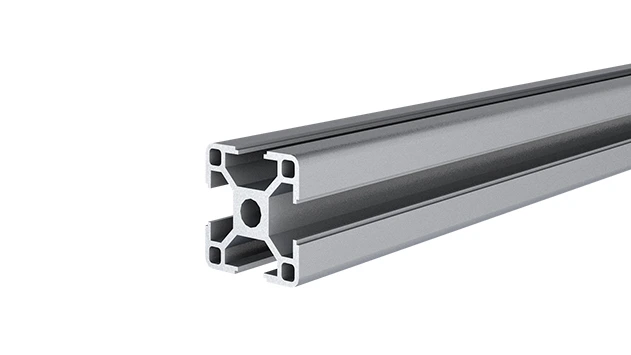
In the bustling world of manufacturing, where every component plays a role in keeping operations running smoothly, there's one unsung hero that often goes unnoticed: the aluminum profile. These sleek, versatile structures form the backbone of workbenches, material racks, assembly lines, and countless other setups that keep factories, workshops, and warehouses productive. But not all aluminum profiles are created equal. Among the many options available, the 3030a EU Standard Aluminum Profile stands out as a paragon of reliability, thanks to its exceptional corrosion resistance and long-lasting durability. Let's dive into what makes this profile a game-changer for businesses looking to build setups that stand the test of time.
What Is the 3030a EU Standard Aluminum Profile?
Before we explore its standout features, let's start with the basics: what exactly is the 3030a EU Standard Aluminum Profile? At its core, it's a type of aluminum extrusion profile —a product of the extrusion process, where heated aluminum alloy is pushed through a custom die to create a specific cross-sectional shape. The "3030" in its name refers to its dimensions: 30mm in width and 30mm in height, making it a compact yet robust choice for medium-duty applications. The "a" denotes a specific variant within the 3030 series, often indicating slight modifications in wall thickness, alloy composition, or slot design to meet EU manufacturing standards.
EU standards are no small detail here. They ensure that every 3030a profile leaving the production line meets strict criteria for consistency, safety, and performance. This means businesses can trust that whether they're sourcing from a local supplier or an international lean system supplier , the 3030a profiles they receive will match the same high-quality specs—no unpleasant surprises when it comes to fit, strength, or durability.
But what truly sets the 3030a apart is its composition. Most 3030a profiles are made from 6063-T5 aluminum alloy, a popular choice in extrusion for its excellent balance of strength, workability, and corrosion resistance. The "T5" designation refers to the tempering process—artificially aging the alloy to enhance its mechanical properties without sacrificing its malleability. This combination of material and manufacturing precision lays the groundwork for the profile's impressive performance.
Corrosion Resistance: Defying Rust and Wear
In manufacturing environments, corrosion is the silent enemy. Whether it's due to humidity, exposure to chemicals, or even just daily wear and tear, rust and degradation can turn a sturdy setup into a wobbly, unsafe liability in no time. This is where the 3030a profile truly shines: its corrosion resistance is second to none, and it all starts with aluminum's natural defense mechanism.
The Science of Aluminum's Natural Protection
Aluminum is unique among metals because it forms a thin, invisible layer of aluminum oxide (Al₂O₃) when exposed to oxygen. This layer acts as a barrier, preventing further oxidation (the process that causes rust in iron and steel). Unlike iron oxide, which flakes off and exposes fresh metal to corrosion, aluminum oxide is stable and self-healing. If the surface is scratched, the exposed aluminum quickly reacts with oxygen to form a new protective layer—no need for constant repainting or treatments.
But the 3030a profile doesn't stop at nature's defense. Manufacturers often enhance its corrosion resistance with additional finishes, tailored to the specific needs of the environment it will be used in. Let's take a closer look at these finishes:
- Anodization: This electrochemical process thickens the natural oxide layer, making it more durable and resistant to abrasion. Anodized 3030a profiles come in a range of colors—clear, black, silver, or gold—and offer excellent protection against moisture and mild chemicals. In humid workshops or outdoor settings (like covered loading docks), anodized 3030a profiles can last decades without showing signs of corrosion.
- Powder Coating: For environments with higher chemical exposure, powder coating is a popular choice. A dry powder is electrostatically applied to the profile and cured under heat, forming a tough, uniform layer that resists chipping, fading, and corrosion. Powder-coated 3030a profiles are common in automotive plants, where oils, coolants, and cleaning agents are part of daily operations.
- Clear Chromate Conversion Coating: This thin, transparent coating (often used as a pre-treatment before painting or powder coating) adds an extra layer of protection against saltwater and industrial pollutants. It's a favorite in coastal manufacturing facilities, where salt air can corrosion in lesser materials.
"We used to replace steel workbench frames every 2–3 years because they'd rust in our humid workshop," says Maria Gonzalez, a production manager at a electronics assembly plant in Barcelona. "Since switching to anodized 3030a aluminum profiles five years ago, we haven't had to replace a single frame. Even with daily exposure to cleaning sprays and occasional spills, they still look brand new."
Testing the Limits: How 3030a Stands Up to Harsh Conditions
To truly understand the 3030a's corrosion resistance, let's look at real-world testing. In salt spray tests—a common method to simulate coastal or industrial environments—samples of 3030a profiles (anodized and powder-coated) are exposed to a continuous mist of saltwater for 1,000 hours. The results? Minimal to no signs of corrosion, with the protective layers intact and the underlying aluminum unaffected. For comparison, untreated steel would show significant rust within 24–48 hours under the same conditions.
Another test involves exposure to weak acids and alkalis, common in food processing or chemical handling facilities. The 3030a profile's finishes (especially powder coating) resist discoloration, pitting, and degradation, ensuring that even in these harsh settings, the profile maintains its structural integrity.

Durability: Built to Handle the Grind
Corrosion resistance is only half the story. A profile that resists rust but bends under pressure is hardly useful. The 3030a EU Standard Aluminum Profile excels here too, offering durability that makes it a staple in high-traffic, high-stress environments.
Strength in Every Millimeter
The 3030a's durability starts with its design. Its square cross-section provides balanced strength in all directions, while its internal reinforcing ribs (a common feature in quality aluminum profile designs) add rigidity without adding unnecessary weight. The wall thickness, typically around 1.5–2mm for the 3030a variant, strikes the perfect balance between lightness and sturdiness—light enough to be easily assembled and reconfigured, yet strong enough to support heavy loads.
Let's talk numbers: a standard 3030a profile (6063-T5 alloy) has a tensile strength of around 180 MPa (megapascals) and a yield strength of 110 MPa. In practical terms, this means it can withstand significant force before deforming. For example, a 1-meter length of 3030a profile can support up to 150–200 kg when used as a horizontal beam (depending on the support spacing), making it ideal for workbenches, shelving, and light-duty conveyor frames.
Fatigue Resistance: Going the Distance
Durability isn't just about handling heavy loads once—it's about handling them repeatedly, day in and day out, without weakening over time. This is where fatigue resistance comes into play. The 3030a profile's alloy composition and extrusion process ensure that it can withstand cyclic loading (like the constant placing and removing of tools on a workbench or the vibration of a nearby machine) without developing cracks or losing strength.
Consider a workbench in a busy automotive repair shop. Every day, mechanics place heavy tools, parts, and equipment on it—sometimes slamming items down in a hurry. Over time, a lesser material might start to warp or develop stress fractures. But a workbench built with 3030a profiles? It stays straight, stable, and reliable, even after years of this treatment. That's the power of fatigue resistance.
Impact Resistance: Bouncing Back from Accidents
In any workshop, accidents happen. A forklift might nudge a material rack, a heavy box could slip and hit a corner, or a tool might be dropped on a frame. The 3030a profile's ductility—the ability to bend without breaking—makes it surprisingly resilient to these impacts. Unlike brittle materials (like some plastics or untreated steel), aluminum alloys like 6063-T5 can absorb energy from a collision, deform slightly, and retain their structural integrity. In most cases, minor dents can be straightened, and the profile continues to function as intended.
| Profile Type | Dimensions (mm) | Wall Thickness (mm) | Weight (kg/m) | Max Load Capacity (kg/m)* | Corrosion Resistance Features | Common Applications |
|---|---|---|---|---|---|---|
| 3030a EU Standard | 30x30 | 1.5–2.0 | 1.2–1.4 | 150–200 | Natural oxide layer, anodization, powder coating options | Workbenches, material racks, light-duty assembly lines |
| 2020 EU Standard | 20x20 | 1.0–1.2 | 0.7–0.8 | 80–100 | Basic oxide layer, limited finish options | Small shelving, display units, lightweight frames |
| 4040 EU Standard | 40x40 | 2.0–3.0 | 2.0–2.5 | 300–400 | Same as 3030a, with thicker walls for added protection | Heavy-duty workbenches, industrial machinery frames |
*Max load capacity based on horizontal beam with supports every 1 meter.
Beyond the Profile: How Accessories Enhance Performance
A great aluminum profile is only as good as the accessories that complement it. The 3030a EU Standard Aluminum Profile works seamlessly with a range of aluminum profile accessories , each designed to enhance its functionality, durability, and ease of use. Let's explore a few key accessories that make the 3030a setup even more robust:
End Caps: Protecting Ends and Preventing Debris
The 3030 aluminum profile end cap is a small but essential accessory. These plastic or rubber caps fit snugly into the open ends of the profile, preventing dust, dirt, and moisture from entering the internal channels. Over time, debris buildup can weaken a profile's structural integrity, so end caps act as a first line of defense. They also add a clean, finished look to the setup and prevent sharp edges from causing injuries—an important safety feature in busy workspaces.
Connectors: Building Strong, Stable Joints
No aluminum profile setup is complete without connectors, and the 3030a works with a variety of options to create sturdy joints. The 90° aluminum profile connector is a staple, allowing users to join two profiles at a right angle with minimal effort. These connectors are often made from high-strength aluminum or steel, with built-in screws or bolts that clamp securely into the profile's T-slots. For more complex angles, 45° or 135° connectors are available, ensuring that even custom setups (like corner workbenches or angled material racks) remain stable.
Rubber Strips: Adding Grip and Reducing Noise
The aluminum profile rubber strip is another unsung hero. These flexible strips fit into the T-slots of the 3030a profile, providing a non-slip surface for items placed on shelves or workbenches. They also reduce noise—no more clanging when tools or parts are set down—and protect delicate materials (like circuit boards or glass components) from scratches. In assembly lines, rubber strips can even help guide materials along a path, ensuring smooth, consistent movement.
Real-World Applications: Where 3030a Shines
Now that we've covered the "why" behind the 3030a's performance, let's look at the "where." This profile's versatility makes it a go-to choice for a wide range of applications, from small workshops to large-scale manufacturing facilities. Here are a few examples of how businesses are putting it to work:
Workbenches: The Heart of the Workshop
Workbenches are the workhorses of any workshop, and the 3030a profile is ideal for building sturdy, customizable options. Take the "Workbench E (single deck-without caster)" from many suppliers—a simple yet effective setup with a 3030a frame, a plywood or metal top, and optional shelves. Thanks to the profile's load capacity, this workbench can easily support 200–300 kg of tools, parts, and equipment. Its corrosion resistance means it holds up in garages, labs, or food prep areas, while its lightweight design makes it easy to reposition (with casters added if needed).
Material Racks: Organizing Heavy Loads
Material racks, like the "Material Rack B (3 row and 3 floor)," rely on strong, stable frames to hold everything from raw materials to finished products. The 3030a profile's ability to support 150–200 kg per meter makes it perfect for these racks, even when loaded with heavy boxes or metal parts. Unlike wooden racks, which warp or rot over time, or steel racks, which rust, 3030a-based racks stay level and sturdy for years, reducing the need for replacements and minimizing downtime.
Lean Manufacturing Setups: Streamlining Production
In lean manufacturing, efficiency is key, and the 3030a profile plays a vital role in creating streamlined assembly lines. Its modular design allows teams to quickly reconfigure workstations, add or remove shelves, or adjust heights to fit changing production needs. For example, a lean system supplier might use 3030a profiles to build kanban racks, pick-to-light systems, or flow racks, all of which help reduce waste and improve workflow. The profile's durability ensures these setups can keep up with the fast pace of lean operations, day in and day out.
Why Choose 3030a Over Other Materials?
With so many materials available—steel, wood, plastic, or other aluminum alloys—why should businesses opt for the 3030a EU Standard Aluminum Profile? Let's break down the advantages:
- Cost-Effective in the Long Run: While aluminum profiles may have a higher upfront cost than wood or some plastics, their durability and low maintenance needs make them cheaper over time. No repainting, no rust repairs, and no frequent replacements—just reliable performance for decades.
- Lightweight Yet Strong: Aluminum is about one-third the weight of steel, making 3030a setups easier to assemble, move, and reconfigure. This flexibility is a huge plus for businesses that need to adapt to changing production demands.
- Eco-Friendly: Aluminum is 100% recyclable, with no loss of quality during the recycling process. For businesses aiming to reduce their environmental footprint, choosing 3030a profiles is a step in the right direction.
- Aesthetic Appeal: Let's not overlook looks—anodized or powder-coated 3030a profiles have a clean, modern appearance that enhances the overall look of a workshop. This may seem minor, but a well-organized, visually appealing workspace can boost employee morale and impress clients or auditors.
Conclusion: Investing in Reliability
In the end, the 3030a EU Standard Aluminum Profile isn't just a piece of metal—it's an investment in reliability. Its exceptional corrosion resistance ensures it stands up to moisture, chemicals, and harsh environments, while its durability means it handles heavy loads, impacts, and daily wear without breaking a sweat. Paired with high-quality aluminum profile accessories and backed by EU standards, it's a choice that pays off in reduced maintenance costs, fewer replacements, and a more efficient, productive workspace.
Whether you're building a simple workbench, a complex material rack, or an entire assembly line, the 3030a profile offers the peace of mind that comes with knowing your setup is built to last. In a world where every minute of downtime costs money, and every component matters, the 3030a EU Standard Aluminum Profile is more than just a tool—it's a partner in productivity.
So, the next time you walk through a workshop or factory, take a closer look at the frames holding everything together. Chances are, if they're sturdy, rust-free, and built to last, they're made with a profile like the 3030a. And now, you'll know exactly why that matters.