- Company Articles
- Products and Technology
- Product knowledge
- 3030a EU Standard Aluminum Profile for Automotive Tooling & Fixtures

3030a EU Standard Aluminum Profile for Automotive Tooling & Fixtures
Related Product
3030A EU Standard Aluminum Profile
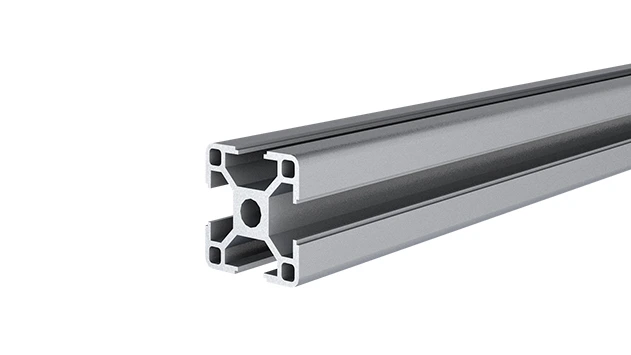
3030 is a 3.00 x 3.00CM fractional 30 series square extrusion T-slot profile with four open T-slots, each side with 3.00cm face. The profile has align-a-grooves to assist in aligning connecting profiles.
Walk into any automotive manufacturing plant today, and you'll likely be struck by two things: the precision of the assembly lines and the relentless pace of production. Every component, from a tiny screw to a bulky engine block, moves with clockwork efficiency—all thanks to the unsung heroes of the factory floor: tooling and fixtures. These are the structures that hold parts in place during welding, guide components through assembly, and ensure every vehicle meets the strict quality standards customers demand. But here's the thing: automotive manufacturing isn't static. New models, updated designs, and evolving safety regulations mean tooling and fixtures can't be one-and-done solutions. They need to adapt, and fast. That's where the 3030a EU Standard Aluminum Profile comes in. Lightweight yet surprisingly strong, modular by design, and built to meet the rigorous demands of European manufacturing standards, this unassuming aluminum extrusion has quietly become the backbone of flexible, efficient automotive tooling. Let's dive into why it's become a favorite among engineers, plant managers, and manufacturers alike.
What Is the 3030a EU Standard Aluminum Profile, Anyway?
First things first: let's demystify the name. The "3030a" refers to its dimensions—30mm in width and 30mm in height—making it a square profile that's compact enough for tight spaces but robust enough to handle heavy loads. The "EU Standard" tag isn't just a marketing buzzword; it means the profile adheres to strict European norms for material quality, dimensional accuracy, and safety. This isn't some generic aluminum extrusion you'd find at a hardware store. It's engineered specifically for industrial use, crafted from high-grade 6063-T5 aluminum alloy—a material known for its excellent strength-to-weight ratio, corrosion resistance, and machinability. The "T5" designation tells us it's been artificially aged to enhance its hardness, making it tough enough to withstand the daily wear and tear of a busy factory.
But what really sets the 3030a apart is its design. Unlike solid steel bars or rigid plastic extrusions, this profile features a hollow core with T-slots running along all four sides. These T-slots are like the profile's "universal connectors"—they allow for easy attachment of accessories, from brackets and panels to casters and hinges, without the need for welding or drilling. Imagine building with a set of high-quality Lego bricks, but for industrial machinery. That's the modularity the T-slots enable. And because it's part of the EU standard system, every 3030a profile from a reputable supplier is guaranteed to be compatible with other EU-standard aluminum profile accessories, no matter the brand. That interoperability is a game-changer for manufacturers who need to mix and match components to create custom solutions.
Why Automotive Tooling Needs More Than Just "Strong"
Automotive tooling and fixtures have come a long way from the heavy, immovable steel structures of the past. Back then, if a car model changed, you'd often have to scrap the old tooling and build new ones from scratch—a process that took weeks, if not months, and cost a small fortune. Today, with consumer demands shifting faster than ever (think electric vehicles, autonomous driving features, and lightweight materials), that approach just doesn't cut it. Tooling needs to be flexible . It needs to be reconfigurable . And it needs to be cost-effective over the long haul. Let's break down the key challenges automotive tooling faces—and how the 3030a profile addresses them.
Precision: The Non-Negotiable Requirement
In automotive manufacturing, even a fraction of a millimeter can make a difference. A fixture that holds a door panel during welding, for example, must position the panel with absolute accuracy to ensure the welds are strong and the door aligns perfectly with the rest of the car. Steel tooling can offer this precision, but it's heavy and hard to adjust. The 3030a profile, thanks to its extrusion process, is manufactured with incredibly tight tolerances—often within ±0.1mm for straightness and ±0.2mm for cross-sectional dimensions. That means when you build a fixture with 3030a, you can trust that it will hold parts exactly where they need to be, every single time. And because the T-slots are machined with equal precision, accessories like brackets and connectors fit snugly, eliminating the play that can throw off alignment.
Durability: Keeping Up with the Factory Grind
Automotive plants don't take days off. Tooling and fixtures are in use 24/7, subjected to vibrations from machinery, impacts from moving parts, and exposure to coolants, lubricants, and even occasional spills. Steel might seem like the obvious choice for durability, but it has a Achilles' heel: rust. Unless it's constantly painted or coated, steel will corrode over time, weakening the structure and compromising precision. The 3030a profile, on the other hand, comes with a natural advantage: aluminum's inherent resistance to corrosion. Most 3030a profiles are also anodized—a process that creates a protective oxide layer on the surface, making them even more resistant to chemicals and wear. We've seen 3030a fixtures in automotive plants that have been in use for over a decade, still looking and performing like new. Compare that to steel, which might need replacement after just a few years, and the long-term value becomes clear.
Weight: Making Maneuverability a Reality
Here's a little-known fact: heavy tooling isn't just hard to move—it's dangerous. A steel fixture weighing several hundred kilograms requires forklifts or cranes to reposition, increasing the risk of accidents and slowing down production when layouts need to change. The 3030a profile solves this with its lightweight design. Aluminum is about one-third the weight of steel, so even a large 3030a structure can often be moved by two or three workers without specialized equipment. This is a big deal for lean manufacturing principles, where minimizing waste (including time wasted on reconfiguring equipment) is key. For example, when a plant switches from producing a sedan to an SUV, the tooling for the door assembly line might need to be adjusted. With 3030a fixtures, that reconfiguration can happen in hours, not days—keeping the assembly line running and reducing downtime.

3030a in Action: Real-World Applications in Automotive Tooling
Enough theory—let's talk about how the 3030a profile is actually used on the factory floor. From workbenches where technicians assemble components to complex fixtures that guide robots during welding, its applications are as varied as the parts they help produce. Here are a few standout examples:
Workbenches: Where Precision Meets Ergonomics
Walk up to any assembly station in an automotive plant, and you'll likely find a workbench at the center of the action. These aren't your average garage workbenches; they're customized to hold tools, position parts at the optimal height for workers, and even integrate with power tools or testing equipment. The 3030a profile is ideal for building these workbenches because it lets manufacturers tailor every aspect to their needs. Want a bench that's 1.2 meters wide with a shelf for tool storage and a vice on one end? No problem. Need to add a LED light strip under the top shelf to illuminate the workspace? The T-slots make it easy—just clip the light bracket into the slot and tighten a screw. And because 3030a is lightweight, the bench can be mounted on caster wheels (another accessory that fits into the T-slots) for easy movement, allowing workers to reposition it as needed. We visited a German automotive supplier last year that had replaced all their steel workbenches with 3030a models. The plant manager told us worker satisfaction had gone up—no more straining to reach parts on fixed benches—and productivity had increased by 15% because the benches could be adjusted to fit each task.
Welding Fixtures: Holding Parts Steady, Even Under Heat
Welding is one of the most demanding processes in automotive manufacturing. High temperatures, sparks, and the need for precise alignment make welding fixtures critical. The 3030a profile excels here for two reasons: its thermal stability and its modularity. Aluminum has good heat conductivity, which means it won't warp under the intense heat of welding (unlike some plastics), ensuring the fixture maintains its shape and alignment. And because the T-slots allow for easy attachment of adjustable clamps and locators, manufacturers can design fixtures that hold different part sizes without rebuilding from scratch. For example, a fixture used to weld door frames for a compact car can be reconfigured with new clamps to handle a larger SUV door frame—saving the cost of buying a whole new fixture. One automotive OEM we spoke to estimated they saved €200,000 in fixture costs over a year by using 3030a profiles for their welding stations.
Flow Racks: Keeping Materials Moving
In lean manufacturing, keeping materials flowing to the assembly line exactly when they're needed is crucial (it's called "just-in-time" production, and it's how plants avoid stockpiling unnecessary inventory). Flow racks—structures with inclined roller tracks that let parts slide down to workers as needed—are the unsung heroes of this process. And yes, you guessed it: 3030a profiles are perfect for building these racks. The profile's strength means it can support heavy bins of parts, while its modularity allows for racks with multiple levels, adjustable heights, and even custom widths to fit different part sizes. Plus, because the 3030a is corrosion-resistant, it holds up well in environments where parts might be oily or damp (like near engine assembly lines). A plant in Spain that switched to 3030a flow racks reported a 20% reduction in time workers spent retrieving parts, simply because the racks could be positioned closer to the assembly line and adjusted to the perfect height.
The Secret Sauce: Aluminum Profile Accessories That Make 3030a Versatile
A profile is only as good as the accessories that go with it, and the 3030a's ecosystem of aluminum profile accessories is what truly unlocks its potential. These aren't afterthoughts—they're engineered to work seamlessly with the profile, turning a simple extrusion into a fully functional system. Let's take a closer look at some of the most useful ones:
Connectors: The Glue That Holds It All Together
If the 3030a profile is the "bones" of a structure, connectors are the "joints." And just like human joints, they need to be strong, flexible, and easy to adjust. The most common type is the 90° aluminum profile connector, which, as the name suggests, joins two profiles at a right angle—perfect for building the frame of a workbench or a flow rack. But there are also 45° connectors for angled structures, 135° connectors for corners that need to "bend back," and even three-way or four-way connectors for more complex designs. What's impressive is how these connectors work: most slide into the T-slots of the 3030a profile and are secured with a hex key, requiring no drilling or welding. This means you can disassemble and reconfigure a structure just as easily as you built it. We once watched a team of engineers take apart a 3030a welding fixture, rearrange the profiles with new connectors, and have it back in use in under two hours. Try doing that with a welded steel fixture.
Panels and Plates: Adding Functionality to the Frame
A frame made of 3030a profiles is a great start, but you'll often need flat surfaces—for a workbench top, a shelf, or a back panel to mount tools. That's where panels and plates come in. These can be made of aluminum, plywood, or even anti-static materials (important for electronics assembly), and they attach directly to the 3030a profile using panel mounts that slide into the T-slots. For example, a workbench built with 3030a might use a 18mm-thick aluminum honeycomb panel for the top surface—it's lightweight, strong, and resistant to scratches from tools. Or, in a cleanroom environment where dust is a concern, a smooth acrylic panel can be attached to the frame to create a protective barrier. The best part? If a panel gets damaged (say, a heavy part is dropped on the workbench top), you can replace just the panel, not the entire frame—saving time and money.
Casters: Making Structures Mobile
Remember how we talked about the 3030a's lightweight design making structures easier to move? Casters take that mobility to the next level. These wheeled accessories attach to the bottom of 3030a frames, turning a stationary workbench into a mobile cart or a fixed flow rack into a portable material handler. But not all casters are created equal. For heavy loads, you might opt for heavy-duty casters with locking brakes to keep the structure stable when in use. For cleanrooms, there are non-marking casters that won't leave scuff marks on the floor. And for environments where precision positioning is key, some casters even have swivel locks to keep the structure moving in a straight line. One plant we visited used 3030a carts with casters to transport engine components from the machining area to the assembly line—saving workers from pushing heavy carts by hand and reducing the risk of back injuries.
End Caps and Covers: The Finishing Touches
It's the little things that count, and end caps are a perfect example. These small plastic or aluminum caps fit over the ends of 3030a profiles, covering the hollow core to prevent dust, debris, or moisture from getting inside. They also make the profiles safer by eliminating sharp edges—important in a factory where workers are constantly moving around. There are even specialized end caps with holes for routing cables, turning a simple profile into a cable management system. It's a small accessory, but it's one more way the 3030a system shows it's designed with real-world use in mind.
3030a vs. Other Profiles: Why It Stands Out in the Crowd
The 3030a isn't the only aluminum profile on the market. There's the smaller 2020 profile (20x20mm), the larger 4040 profile (40x40mm), and even non-square profiles like the 3060 (30x60mm). So why has the 3030a become such a favorite for automotive tooling? Let's compare it to a few common alternatives to see why it hits the sweet spot for many applications.
| Profile Type | Dimensions (mm) | Typical Load Capacity (kg/m) | Best For | Limitations in Automotive Tooling |
|---|---|---|---|---|
| 3030a EU Standard | 30x30 | 150-200 | Workbenches, welding fixtures, flow racks, small to medium load applications | Not ideal for extremely heavy loads (e.g., engine blocks over 500kg) |
| 2020 EU Standard | 20x20 | 50-100 | Light-duty structures, small tool holders, electronics assembly | Too small for most automotive tooling; limited load capacity |
| 4040 EU Standard | 40x40 | 250-350 | Heavy-duty fixtures, large workbenches, material storage racks | Heavier and bulkier; overkill for many medium-load applications |
| Steel Square Tubing (30x30mm) | 30x30 | 300-400 | Extremely heavy loads, high-temperature environments | Heavy, prone to corrosion, not modular; requires welding |
As the table shows, the 3030a strikes a balance between size, strength, and versatility. The 2020 profile is too small for most automotive tooling applications—it just can't handle the weight of car parts or the stress of repeated use. The 4040 profile, while strong, is overkill for many tasks; using it for a simple workbench would add unnecessary weight and cost. Steel, meanwhile, offers more load capacity but at the expense of mobility, corrosion resistance, and flexibility. For most automotive tooling needs—workbenches, fixtures for small to medium parts, flow racks—the 3030a is just right. It's like the Goldilocks of profiles: not too small, not too big, but perfectly suited for the job.
The Lean Manufacturing Connection: How 3030a Supports a Lean System
Lean manufacturing isn't just a buzzword—it's a philosophy centered on eliminating waste, improving efficiency, and continuously improving processes. And the 3030a profile aligns perfectly with these principles. Here's how:
Waste Reduction: No More Overbuilding
Traditional steel tooling often requires overbuilding to account for "just in case" scenarios—adding extra bracing or using thicker materials than necessary. With the 3030a's modular design, you only build what you need, when you need it. If a fixture is only going to be used for a short production run, you can disassemble it afterward and reuse the profiles for another project. This reduces material waste and cuts down on storage costs (no more keeping old steel fixtures in a warehouse "just in case").
Continuous Improvement: Iterate Without Starting Over
Lean manufacturing thrives on continuous improvement—small, incremental changes that add up to big gains in efficiency. The 3030a makes it easy to test these changes. For example, if a workbench isn't at the right height for workers, you can adjust the legs by adding or removing profile sections. If a flow rack isn't holding enough parts, you can add an extra level using connectors and new profiles. These tweaks don't require redesigning the entire structure, so teams can experiment and refine processes without disrupting production.
Employee Empowerment: Let Workers Shape Their Workspace
Here's a radical idea: the people who use the tooling every day (the workers) often have the best ideas for improving it. But with rigid steel fixtures, they're stuck with whatever was designed for them. The 3030a changes that. Because it's easy to modify, workers can suggest and even implement small changes to their workbenches or fixtures—like adding a shelf for frequently used tools or adjusting the angle of a part holder. This not only improves efficiency but also boosts morale, as employees feel more ownership over their workspace. It's a win-win.
Choosing the Right Supplier: What to Look for When Sourcing 3030a Profiles
Not all 3030a profiles are created equal. To get the most out of your investment, you need to choose a supplier that understands automotive manufacturing and can deliver high-quality products. Here are a few key things to look for:
Certifications: Ensure Compliance with EU Standards
First and foremost, make sure the supplier's 3030a profiles are certified to meet EU standards. Look for certifications like CE marking, which indicates compliance with health, safety, and environmental requirements. You should also ask about material certifications—like a mill test report (MTR) that confirms the aluminum alloy is 6063-T5. A reputable supplier will be happy to provide these documents; if they hesitate, that's a red flag.
Inventory and Lead Times: Avoid Production Delays
In automotive manufacturing, downtime is expensive. You don't want to wait weeks for a shipment of profiles to arrive when you need to build a new fixture. Look for suppliers with large inventories of 3030a profiles and accessories, ideally with multiple warehouses to ensure quick delivery. Some suppliers even offer same-day or next-day shipping for standard items—critical when you need to make a last-minute adjustment to a tooling setup.
Technical Support: More Than Just a Sales Team
Building complex tooling with 3030a profiles can be tricky, especially if you're new to modular aluminum systems. The best suppliers offer more than just products—they provide technical support. This might include CAD drawings of standard structures, advice on load capacities, or even help designing custom fixtures. We've worked with suppliers who sent engineers to our plant to help troubleshoot a tricky welding fixture design—something a low-cost, no-frills supplier would never do.
The Future of Automotive Tooling: Why 3030a Will Remain a Staple
As automotive manufacturing continues to evolve—with electric vehicles, autonomous driving, and even 3D-printed parts on the horizon—one thing is clear: tooling and fixtures will need to become even more flexible and precise. The 3030a EU Standard Aluminum Profile is well-positioned to meet these future demands. Its modular design makes it easy to integrate with new technologies (like sensors for monitoring part positions or IoT devices for tracking tool usage). Its lightweight nature will become even more important as plants look to reduce energy use (moving lighter structures requires less power). And its compatibility with aluminum profile accessories means it can adapt to new materials and processes as they emerge.
In the end, the 3030a profile is more than just a piece of aluminum. It's a symbol of how manufacturing is changing—moving away from rigid, one-size-fits-all solutions and toward flexible, adaptable systems that can keep up with the pace of innovation. For automotive manufacturers looking to stay competitive in a fast-changing industry, it's not just a good investment—it's a necessary one. So the next time you see a car roll off the assembly line, take a moment to appreciate the tooling that made it possible. Chances are, there's a 3030a profile somewhere in there, quietly doing its job—and doing it well.