- Company Articles
- Products and Technology
- Product knowledge
- 3030a EU Standard Aluminum Profile for Flexible Production Lines

3030a EU Standard Aluminum Profile for Flexible Production Lines
Related Product
3030A EU Standard Aluminum Profile
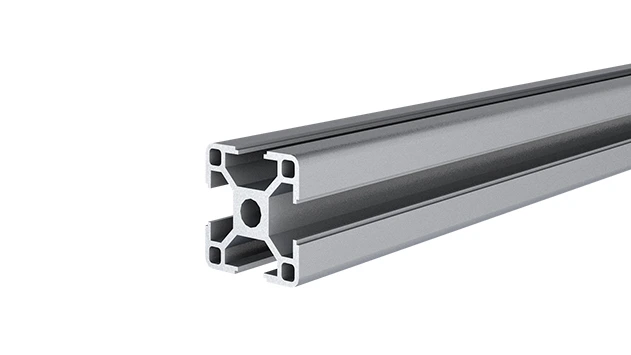
3030 is a 3.00 x 3.00CM fractional 30 series square extrusion T-slot profile with four open T-slots, each side with 3.00cm face. The profile has align-a-grooves to assist in aligning connecting profiles.
In today's fast-paced manufacturing world, the ability to adapt is everything. Picture a small electronics workshop that used to spend weeks reconfiguring its assembly line every time a new product came in. Workers would struggle with heavy steel frames, welding torches, and custom-built fixtures—only to tear it all down a month later for the next order. Sound familiar? For many manufacturers, rigid production setups aren't just inefficient; they're a barrier to growth. That's where the 3030a EU Standard Aluminum Profile comes in. This unassuming 30x30mm extrusion has quietly become the backbone of flexible production lines, offering a blend of strength, adaptability, and simplicity that's reshaping how factories operate.
What Makes the 3030a EU Standard Aluminum Profile Stand Out?
First things first: let's talk about what exactly the 3030a is. At its core, it's an aluminum extrusion profile—a length of aluminum shaped under high pressure through a die to create a consistent, precise cross-section. The "3030" refers to its dimensions: 30mm in width and 30mm in height, making it compact enough for tight spaces but robust enough to handle heavy loads. The "EU Standard" tag isn't just a label; it's a promise of quality. Manufactured to strict European tolerances, this profile ensures uniformity across batches, so every piece you buy will fit seamlessly with the last—no more frustrating gaps or misaligned holes.
But what really sets the 3030a apart is its design. Unlike plain steel pipes or generic aluminum tubes, the 3030a features T-slots running along its length. These grooves, typically 6mm or 8mm wide, are like built-in attachment points for aluminum profile accessories. Need to add a shelf? Slide a bracket into the T-slot and secure it with a hex screw. Want to mount a light or a tool holder? Just pop in a T-nut and bolt it down. This modularity means you're not stuck with a one-and-done structure; you can tweak, extend, or repurpose your setup in minutes, not days.
The Material Science: Strength Without the Bulk
Aluminum has long been favored in manufacturing for its strength-to-weight ratio, but the 3030a takes this a step further. Most 3030a profiles are made from 6063-T5 aluminum alloy, a blend known for its excellent extrudability and mechanical properties. When heat-treated to the T5 temper, it gains a balance of hardness and ductility that makes it both strong and easy to work with. Let's put this in perspective: a 1-meter length of 3030a with a 1.5mm wall thickness can support up to 70kg of evenly distributed weight. That's enough to hold toolboxes, circuit boards, or even small machinery without bending or warping.
Compare that to steel, which might offer similar strength but at twice the weight. For workers who need to reposition workbenches or material racks, that difference is game-changing. No more straining to move heavy equipment or waiting for a forklift—two people can easily carry a 2-meter section of 3030a and assemble it on the spot. And unlike steel, aluminum doesn't rust. In factories where moisture or chemicals are present, this means less maintenance and longer-lasting equipment. A quick wipe with a damp cloth is all it takes to keep the 3030a looking and performing like new.

Aluminum Profile Accessories: The Building Blocks of Flexibility
A profile is only as good as the accessories that go with it, and the 3030a's ecosystem of aluminum profile accessories is where its flexibility truly shines. Let's break down the essentials:
- Connectors: These are the glue that holds your system together. 90° aluminum profile connectors let you join two profiles at a right angle, while 135° connectors are perfect for corner braces. There are even three-way and four-way connectors for building complex structures like material racks or workbench frames.
- Brackets and Plates: From simple L-brackets to heavy-duty gusset plates, these accessories add strength to joints and create mounting points for shelves, panels, or machinery. Many are designed to slide directly into the T-slots, so you can adjust their position without disassembly.
- End Caps and Covers: These small but important pieces protect the ends of the profile from debris and prevent sharp edges (a big win for workplace safety). They also give your setup a clean, professional look.
- Wheels and Casters: Add casters to the bottom of a 3030a frame, and suddenly your fixed workbench becomes a mobile workstation. Lockable casters keep it steady during use, while swivel wheels make maneuvering tight corners a breeze.
The beauty of these accessories is that they're universal. Whether you're buying from a local supplier or importing from abroad, as long as they're EU-standard, they'll work with your 3030a profile. This interoperability means you're never locked into a single brand—you can mix and match to find the best tools for the job.
From Workbench to Whole Line: Real-World Applications
Let's get practical. How do manufacturers actually use the 3030a? Let's start with the workbench—the heart of any production line. A basic 3030a workbench might consist of four vertical legs, a frame of horizontal profiles, and a plywood or aluminum top. But with the right accessories, it can become so much more. Add a shelf below for storage, a tool rail along the back for hanging pliers and screwdrivers, and a LED light bar above for better visibility. Need to make it ESD-safe for electronics assembly? Just swap out the top for an anti-static panel and add grounding clips via the T-slots. When the next project requires a taller bench? Loosen the connectors, adjust the legs, and you're done. No welding, no cutting, no hassle.
Material racks are another common use case. A typical 3030a material rack might have three levels, each supported by cross-braces and reinforced with gusset plates. The T-slots make it easy to add dividers, so you can separate different components—resistors in one section, capacitors in another. And because the 3030a is lightweight, even a fully loaded rack can be moved with a few people, making it easy to reposition near the assembly line when needed. Compare that to a traditional steel rack, which would require a forklift and a team of workers to relocate.
But the 3030a isn't just for static structures. It's also a star in dynamic systems like flow racks and conveyor supports. By combining 3030a frames with roller tracks (another EU-standard accessory), manufacturers create gravity-fed flow racks that move materials from loading to picking stations with minimal effort. The T-slots allow for quick adjustments to the angle of the rollers, ensuring items glide smoothly without jamming. And when production needs change? Simply reconfigure the frame to add more lanes or adjust the height—no need to buy a whole new rack.
Why Lean Systems Love the 3030a
Lean manufacturing is all about eliminating waste—whether that's time, materials, or space. The 3030a aligns perfectly with this philosophy. Let's take a small automotive parts supplier I worked with a few years back. They used to have separate workbenches for each product line: one for brake components, another for engine parts, and a third for electrical harnesses. When orders shifted, half their workbenches would sit idle, taking up valuable floor space. After switching to 3030a, they built modular workbenches that could be reconfigured in an hour. Now, a single bench might assemble brake parts in the morning and switch to electrical harnesses in the afternoon. Floor space freed up by unused benches? They turned it into a testing area, increasing their output by 20% in six months.
Another lean principle is "continuous improvement," and the 3030a makes experimentation easy. Want to test a new assembly process? Build a small prototype setup with 3030a and aluminum profile accessories, run a trial, and tweak as needed. If it works, scale it up; if not, disassemble the parts and use them for something else. There's no sunk cost in a failed experiment because the materials are reusable. This culture of iteration is how small manufacturers stay competitive with larger players.
Comparing the 3030a to Other Profiles: Which One's Right for You?
The 3030a isn't the only aluminum profile on the market. Let's see how it stacks up against other common sizes to help you decide if it's the right fit for your needs:
| Profile Type | Dimensions (WxH) | Wall Thickness (mm) | Max Load Capacity (kg/m) | Common Applications | Best For |
|---|---|---|---|---|---|
| 2020 EU Standard | 20x20mm | 1.0–1.5 | 30–50 | Small shelves, light-duty workbenches, 3D printer frames | DIY projects, hobby workshops, lightweight tasks |
| 3030a EU Standard | 30x30mm | 1.5–2.0 | 70–100 | Workbenches, material racks, mobile trolleys, conveyor supports | Medium-duty manufacturing, assembly lines, warehouse setups |
| 4040 EU Standard | 40x40mm | 2.0–3.0 | 120–180 | Heavy machinery frames, industrial workstations, large storage racks | Heavy-duty production, automotive/ aerospace manufacturing |
As you can see, the 3030a hits the sweet spot for most small to medium manufacturers. It's not overkill for light tasks, but it's sturdy enough for daily use in a busy factory. If you're building something like a heavy-duty press or a large storage rack, you might opt for the 4040. But for workbenches, flow racks, and mobile stations—the backbone of flexible production—the 3030a is hard to beat.
Installation: No Welding, No Problem
One of the biggest myths about aluminum profiles is that they require specialized skills to assemble. Let me debunk that right now: you don't need to be a master craftsman to build with the 3030a. In fact, most setups can be put together with just a few basic tools: a hex key set, a rubber mallet (to tap connectors into place), and a level (to keep things straight). Here's a quick step-by-step for building a simple workbench:
- Cut the profiles to length: Most suppliers will cut profiles to your desired size, but if you need to adjust on-site, a hacksaw or miter saw with a metal blade works fine.
- Assemble the frame: Start with the four vertical legs. Attach horizontal profiles to the top and bottom using 90° connectors. Slide the connectors into the T-slots, align the holes, and tighten the screws with a hex key.
- Add cross-braces: For stability, add diagonal cross-braces between the legs. Use corner brackets to secure them, and check with a level to ensure the frame isn't wobbly.
- Mount the top: Lay your worktop (plywood, aluminum, or anti-static panel) on the frame and secure it with screws through the T-slots. Add edge caps if needed for safety.
- Customize: Add shelves, tool rails, or casters using T-nuts and brackets. Remember: everything can be adjusted later, so don't stress about getting it perfect on the first try.
The best part? Disassembly is just as easy. If you need to move your workbench to a new location or repurpose the profiles for a different project, simply loosen the screws, take it apart, and rebuild. No wasted materials, no permanent modifications—just pure flexibility.
Maintenance: Keeping Your 3030a Setup in Top Shape
Aluminum is low-maintenance by nature, but a little care goes a long way in extending the life of your 3030a setup. Here are a few tips:
- Clean regularly: Wipe down profiles with a damp cloth to remove dust, oil, or debris. For stubborn grime, use a mild detergent—avoid harsh chemicals that could damage the anodized finish.
- Check connections: Over time, vibrations from machinery can loosen screws. Do a quick monthly check with a hex key to tighten any loose connectors.
- replace worn parts: Accessories like casters or brackets can wear out with heavy use. Keep a few spares on hand, and swap them out at the first sign of damage (e.g., a wobbly wheel or a cracked bracket).
- Protect from impact: While the 3030a is strong, it's not indestructible. Use corner guards or bumpers if your setup is near high-traffic areas to prevent dents.
The Future of Manufacturing: Why the 3030a Matters
As manufacturing trends toward smaller batches, faster turnaround times, and customization, the need for flexible systems will only grow. The 3030a isn't just a tool for today; it's an investment in tomorrow. Imagine a factory where a single production line can switch from assembling smartwatches in the morning to medical devices in the afternoon, all by reconfiguring 3030a workstations and flow racks. Or a startup that scales from a garage workshop to a full-scale facility without replacing its entire infrastructure—just adding more profiles and accessories as needed.
Sustainability is another angle. Aluminum is 100% recyclable, and the 3030a's modular design means less waste—when a project ends, you don't throw away the frame; you reuse it. This aligns with the growing demand for eco-friendly manufacturing practices, making the 3030a a choice that's good for both your bottom line and the planet.
Final Thoughts: Your Turn to Build Flexibility
The 3030a EU Standard Aluminum Profile might not look like much at first glance, but it's a quiet revolution in manufacturing. It's the difference between a factory stuck in the past and one ready to adapt to whatever the future brings. Whether you're a small business owner tired of rigid setups or a production manager looking to streamline operations, the 3030a offers a simple, affordable way to build the flexible production line you need.
So, what are you waiting for? Grab a few profiles, some accessories, and start experimenting. Build a workbench, a material rack, or even a custom conveyor support. You'll be amazed at how quickly a few 30x30mm extrusions can transform your factory floor from a maze of fixed structures into a dynamic, adaptable space where change is not just possible—it's easy. The future of manufacturing is flexible, and it starts with the 3030a.