- Company Articles
- Products and Technology
- Product knowledge
- 3030a EU Standard Aluminum Profile for Mechanical Parts Manufacturing

3030a EU Standard Aluminum Profile for Mechanical Parts Manufacturing
Related Product
3030A EU Standard Aluminum Profile
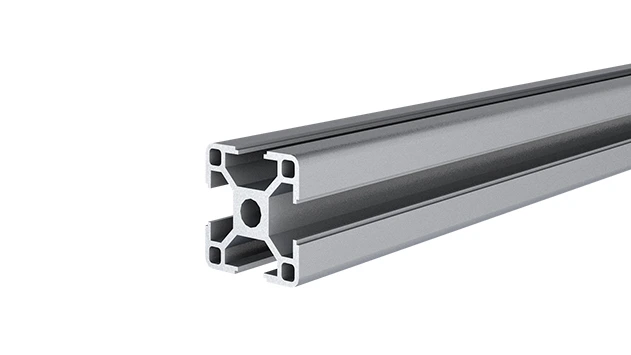
3030 is a 3.00 x 3.00CM fractional 30 series square extrusion T-slot profile with four open T-slots, each side with 3.00cm face. The profile has align-a-grooves to assist in aligning connecting profiles.
In the fast-paced world of mechanical parts manufacturing, where precision meets productivity, the tools and materials you choose can make or break your operation. Every minute spent reconfiguring workstations, every dollar wasted on rigid, one-size-fits-all setups, and every hiccup in workflow efficiency chips away at your bottom line. This is where the 3030a EU Standard Aluminum Profile steps in—not just as a material, but as a catalyst for smarter, more adaptable manufacturing. As part of the broader family of aluminum extrusion profile solutions, this profile has redefined how factories design workspaces, assemble production lines, and respond to evolving demands. Let's dive into why this unassuming piece of aluminum is becoming the backbone of modern mechanical parts manufacturing.
What Exactly Is the 3030a EU Standard Aluminum Profile?
At its core, the 3030a is a precision-engineered aluminum extrusion profile designed to meet the rigorous standards of the European union. "3030" refers to its cross-sectional dimensions—30mm by 30mm—a sweet spot that balances strength, versatility, and space efficiency. The "a" denotes its specific design variant, optimized for mechanical applications with features like T-slots running along its length. These T-slots are the profile's secret weapon: they allow for quick, tool-free attachment of aluminum profile accessories such as connectors, brackets, end caps, and hinges, turning a simple piece of aluminum into a building block for almost any structure.
Manufactured through the aluminum extrusion process, the 3030a starts as a billet of high-grade aluminum alloy (typically 6063-T5, known for its excellent strength-to-weight ratio and corrosion resistance). Heated to around 500°C, the billet is forced through a die to create its distinct 30x30mm shape with integrated T-slots. This process ensures consistency across every piece, so you can trust that each profile will fit perfectly with the next—no guesswork, no mismatched parts.
The Features That Make 3030a Stand Out
What sets the 3030a apart from other materials (or even other aluminum profiles) is its thoughtful design, tailored to the needs of mechanical parts manufacturing. Let's break down its most impactful features:
- Lightweight Yet Remarkably Strong : Aluminum's natural lightness makes the 3030a easy to handle during installation and reconfiguration, but don't let that fool you. Thanks to its alloy composition and extrusion design, it can support impressive loads—often up to 150kg per linear meter when properly braced. This makes it ideal for everything from lightweight workbenches to heavy-duty material racks.
- Modular by Design : The T-slots running along all four sides of the profile mean you can attach accessories anywhere, at any angle. Need to add a shelf to a workbench? Slide in a bracket. Want to mount a tool holder? Screw in a connector. This modularity eliminates the need for welding or drilling, cutting down on setup time and allowing for on-the-fly adjustments.
- Corrosion and Wear Resistance : The 3030a's aluminum alloy naturally forms a protective oxide layer, shielding it from rust and corrosion. For environments where moisture or chemicals are present, anodized finishes (available in silver, black, or custom colors) add an extra layer of defense, ensuring the profile stays looking and performing like new for years.
- Precision Machining Compatibility : Unlike some cheaper profiles, the 3030a is engineered with tight tolerances. This means it pairs seamlessly with precision components—critical for mechanical parts manufacturing, where even a millimeter of misalignment can throw off an entire assembly line.
- ESD-Safe Options : For manufacturers working with sensitive electronics (a common overlap in mechanical parts production), ESD-coated versions of the 3030a are available. These profiles dissipate static electricity, protecting delicate components from damage during assembly or inspection.

Why 3030a Is a Game-Changer for Mechanical Parts Manufacturing
Mechanical parts manufacturing isn't just about making parts—it's about making them efficiently, consistently, and adaptably. Here's how the 3030a directly addresses these needs:
Flexibility to Keep Up with Change
Product lifecycles in manufacturing are shorter than ever. A factory might produce a batch of gears one month and switch to sensor housings the next. Traditional steel workbenches or fixed racks can't keep up—reconfiguring them often requires cutting, welding, or even replacing entire structures. With the 3030a, though, adapting is as simple as loosening a few connectors and rearranging the profiles. A workbench used for gear assembly can be transformed into an inspection station in an hour, not a day. This agility reduces downtime and lets manufacturers pivot quickly to meet new orders or design changes.
Cost Savings That Add Up
While the upfront cost of aluminum profiles might be slightly higher than basic steel, the long-term savings are undeniable. First, labor costs plummet: installing a 3030a-based workbench takes a fraction of the time compared to building a custom steel one. Second, reusability: when a project ends or a setup is no longer needed, the profiles and accessories can be disassembled and repurposed elsewhere in the factory. Third, maintenance costs are minimal—no painting, no rust removal, just an occasional wipe-down. Over time, these savings far outweigh the initial investment.
Lean System Integration
Lean manufacturing principles—focused on minimizing waste and maximizing value—are the backbone of modern production. The 3030a aligns perfectly with these goals. Its modularity reduces overproduction of custom fixtures; its lightweight design cuts down on material waste; and its adaptability ensures that every square foot of floor space is used efficiently. For example, a lean system built with 3030a might include flow racks that deliver parts directly to the assembly line, eliminating unnecessary movement, or ergonomic workstations that reduce operator fatigue and errors. In short, 3030a doesn't just support lean manufacturing—it enables it.
Real-World Applications: How Factories Are Using 3030a Today
The 3030a's versatility means it's used across almost every stage of mechanical parts manufacturing. Here are some of the most impactful applications:
Workbenches: The Heart of the Factory Floor
The workbench is where the magic happens—assembly, inspection, testing, and packaging all rely on a stable, adaptable surface. 3030a-based workbenches are a favorite among manufacturers for good reason. They can be customized with:
- Adjustable height (using telescoping legs or crank systems) to suit operators of different heights, reducing strain.
- Integrated tool rails with hooks for wrenches, screwdrivers, and pneumatic tools, keeping essentials within arm's reach.
- Storage shelves or drawers (using aluminum profile brackets) for parts and supplies, eliminating clutter.
- ESD-safe tops for electronics assembly, preventing static damage to sensitive components.
One automotive parts manufacturer reported that switching to 3030a workbenches reduced operator movement by 25% and cut assembly errors by 18%—simply by having tools and parts organized exactly where they were needed.
Material Handling and Flow Racks
Moving raw materials and through the factory efficiently is critical to keeping production on track. 3030a profiles are used to build flow racks, roller conveyors, and turnover trolleys that ensure parts move smoothly from one station to the next. For example, a flow rack constructed with 3030a and paired with roller tracks (another aluminum extrusion profile accessory) allows gravity to feed parts to the assembly line, reducing the need for manual lifting. Trolleys built with 3030a are lightweight enough for operators to push easily but strong enough to carry heavy loads, making material transport safer and faster.
Inspection and Testing Stations
Mechanical parts require rigorous inspection to meet quality standards. 3030a profiles are ideal for building custom inspection stations, where precision is non-negotiable. These stations can be fitted with:
- Mounts for cameras, sensors, or measuring tools, positioned at exact angles using adjustable brackets.
- LED lighting strips (attached via T-slot connectors) to illuminate parts without glare.
- Adjustable fixtures to hold parts securely during testing, ensuring consistent results.
How 3030a Stacks Up Against Other Aluminum Profiles
Not all aluminum profiles are created equal. The 3030a sits in a sweet spot between smaller profiles (like the 2020) and larger ones (like the 4040). Here's how it compares:
| Profile Type | Dimensions (mm) | Max Load Capacity (kg/m) | Best For | Limitations |
|---|---|---|---|---|
| 2020 EU Standard | 20x20 | 80-100 | Light-duty shelves, small workstations, prototyping | Not suitable for heavy loads; limited accessory compatibility |
| 3030a EU Standard | 30x30 | 120-150 | Workbenches, flow racks, material handling, medium-duty structures | May be overkill for very lightweight applications |
| 4040 EU Standard | 40x40 | 200-250 | Heavy-duty racks, industrial machinery frames, large work cells | Heavier, bulkier, and more expensive than 3030a for most tasks |
For most mechanical parts manufacturers, the 3030a offers the best balance of strength, flexibility, and cost. It's sturdy enough for daily use but not so heavy that it becomes cumbersome to reconfigure. And because it's part of the EU standard system, it's compatible with a vast range of accessories—no need to worry about proprietary parts or limited options.
Essential Aluminum Profile Accessories for 3030a
A profile is only as good as the accessories that bring it to life. Here are the must-have aluminum profile accessories that make 3030a so versatile:
- 90° Aluminum Profile Connectors : These L-shaped brackets join two 3030a profiles at right angles, perfect for building the corners of workbenches or racks. Available in both fixed and swivel designs for added flexibility.
- End Caps : Simple but essential, these plastic or aluminum caps fit over the ends of profiles to cover sharp edges, prevent dust buildup in T-slots, and give structures a clean, finished look.
- Gusset Plates : For added stability in high-load applications (like heavy workbenches), gusset plates reinforce joints, distributing weight evenly across the structure.
- Hinges : Aluminum or nylon hinges let you add doors, fold-down shelves, or flip-up panels to 3030a structures—ideal for storage cabinets or foldable workstations that save space when not in use.
- Leveling Feet : Adjustable feet screw into the bottom of profiles, ensuring workbenches and racks stay stable even on uneven factory floors. Some models include rubber pads to prevent slipping and reduce vibration.
- Panel Mounts : These brackets attach plywood, acrylic, or metal panels to 3030a frames, creating work surfaces, machine guards, or tool cabinets.
The best part? Most accessories are cross-compatible with other EU standard profiles, so you can mix and match 3030a with 2020 or 4040 profiles if needed—further expanding your design possibilities.
The Future of Manufacturing Is Modular—And 3030a Leads the Way
In an industry where change is the only constant, the 3030a EU Standard Aluminum Profile isn't just a tool—it's a strategic advantage. Its blend of strength, flexibility, and cost-effectiveness makes it the ideal choice for mechanical parts manufacturers looking to stay competitive in a fast-moving market. Whether you're building a single workbench or overhauling your entire production line, 3030a and its ecosystem of aluminum extrusion profiles and accessories offer a level of adaptability that traditional materials can't match.
As factories continue to embrace lean principles, automation, and rapid prototyping, the demand for modular solutions will only grow. The 3030a isn't just keeping up with these trends—it's helping to shape them. So, if you're ready to build a manufacturing setup that can evolve with your business, reduce costs, and boost productivity, it's time to consider the 3030a EU Standard Aluminum Profile. Your factory floor (and your bottom line) will thank you.