- Company Articles
- Products and Technology
- Product knowledge
- 3030a EU Standard Aluminum Profile for Medical Devices: Safety Features

3030a EU Standard Aluminum Profile for Medical Devices: Safety Features
Related Product
3030A EU Standard Aluminum Profile
3030 is a 3.00 x 3.00CM fractional 30 series square extrusion T-slot profile with four open T-slots, each side with 3.00cm face. The profile has align-a-grooves to assist in aligning connecting profiles.
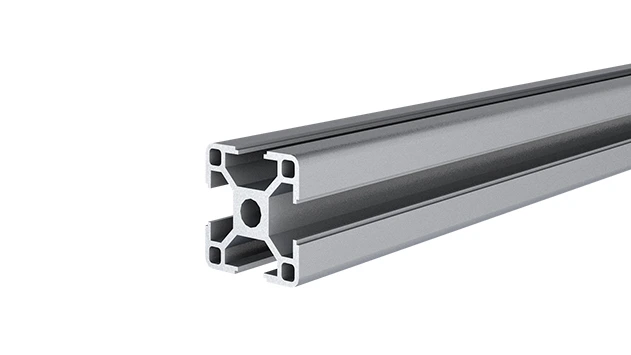
In the world of medical device manufacturing, precision isn't just a goal—it's a lifeline. Every component, from the smallest screw to the framework of assembly workbenches, plays a role in ensuring patient safety. Among these unsung heroes is the 3030a EU standard aluminum profile, a structural workhorse designed to meet the rigorous demands of medical environments. But what makes this specific profile stand out? It's not just about strength or versatility; it's about built-in safety features that align with the strictest EU regulations. Let's dive into how the 3030a aluminum profile becomes a cornerstone of safety in medical device production, from its material composition to its real-world applications.
Understanding the 3030a EU Standard Aluminum Profile
Before we unpack its safety features, let's get familiar with the basics. The "3030a" in its name isn't just a random code—it tells us two key things: its dimensions and its compliance. The "3030" refers to a cross-section of 30mm by 30mm, making it compact enough for detailed assembly work yet sturdy enough to support heavy equipment. The "a" denotes a specific variant within EU standard aluminum profiles, engineered with medical-grade applications in mind. Unlike generic aluminum extrusions, the 3030a is manufactured to meet EN 755, the European standard for aluminum and aluminum alloys, ensuring consistency in quality and performance across every batch.
But why aluminum, and why this particular? In medical settings, materials must check multiple boxes: they need to be non-toxic, easy to sanitize, corrosion-resistant, and lightweight enough to allow flexibility in workspace design. Steel, while strong, is prone to rust and adds unnecessary weight, making it harder to reconfigure assembly lines. Plastic, on the other hand, lacks the structural integrity needed for long-term use. Aluminum, and specifically the 3030a profile, strikes that perfect balance—combining durability with the safety features critical for medical environments.
Material Safety: The Foundation of Aluminum Extrusion Profile
At its core, the 3030a profile's safety starts with its material: high-purity aluminum. Most medical-grade aluminum profiles, including the 3030a, are made from 6063 aluminum alloy, known for its excellent extrusion properties and chemical stability. This alloy is composed of 99.7% pure aluminum, with trace amounts of magnesium and silicon to boost strength without compromising safety. What does this mean for medical device manufacturing? No toxic additives, no off-gassing, and no risk of chemical leaching—essential for cleanrooms where even minute contaminants could compromise sensitive devices like pacemakers or surgical tools.
The extrusion process itself also contributes to safety. Unlike welded steel frames, which can have weak points or sharp burrs, aluminum extrusion creates a seamless, uniform structure. The 3030a's cross-section is formed by pushing molten aluminum through a die, resulting in consistent wall thickness and no hidden defects. This uniformity ensures predictable load distribution, reducing the risk of structural failure even under repeated use. For medical facilities, where assembly workbenches might hold delicate imaging equipment or sterile instrument trays, this reliability is non-negotiable.

Design Safety Features: Built for Protection
Safety in the 3030a profile isn't an afterthought—it's engineered into every detail. Let's break down the key design elements that set it apart:
- Smooth Edges and Rounded Corners: Medical staff and technicians work long hours in tight spaces, often handling small components. Sharp edges on structural profiles could lead to lacerations or snagged gloves, introducing contamination risks. The 3030a addresses this with edges rounded to a minimum radius of 0.5mm, eliminating sharp points without sacrificing structural integrity.
- T-Slot Configuration: The profile's signature T-shaped slots (typically 6mm wide) aren't just for attaching accessories—they're a safety feature. Unlike drilled holes or adhesives, T-slots allow for secure, tool-free attachment of brackets, shelves, or lighting using standardized bolts. This means no loose screws or weak connections that could vibrate loose during assembly, reducing the risk of falling tools or unstable work surfaces.
- Uniform Wall Thickness: With a consistent wall thickness of 1.5mm (adjustable for heavy-duty variants), the 3030a distributes weight evenly along its length. This prevents stress fractures, even when supporting uneven loads like stacked instrument cases or automated assembly arms. For medical workbenches that might hold 50kg+ of equipment, this stability is critical to avoiding collapses.
- Anodized Surface Finish: Most 3030a profiles undergo anodization—a process that forms a protective oxide layer on the aluminum surface. This layer is non-porous, resistant to chemicals (like disinfectants used in medical settings), and easy to clean. Unlike painted surfaces, which can chip and harbor bacteria, anodized aluminum maintains its integrity even after repeated wipe-downs with harsh cleaners like isopropyl alcohol.
Aluminum Profile Accessories: Enhancing Safety in Every Connection
A profile is only as safe as the accessories that connect it. The 3030a's safety ecosystem extends beyond the profile itself to include a range of purpose-built aluminum profile accessories, each designed to reinforce stability and reduce risk. Let's look at a few key examples:
90° and 45° Connectors: These L-shaped or angled joints lock into the T-slots using grub screws, creating rigid right-angle or diagonal connections. Unlike plastic clips or adhesive bonds, metal connectors distribute stress evenly, preventing the profile from twisting under load. For example, a 90° aluminum profile connector used to build a workbench corner ensures the structure stays square, even when technicians lean on it during assembly.
End Caps: The open ends of aluminum profiles could trap dust, moisture, or debris—all potential contaminants in medical settings. 3030a end caps (typically made of food-grade plastic or rubber) snap into place, sealing the profile's interior. This not only keeps the profile clean but also adds an extra layer of protection against sharp edges, even if the anodized finish is scratched over time.
Gussets and Reinforcement Plates: For high-stress areas like workbench legs or shelf supports, gussets (triangular metal plates) add extra rigidity. By connecting two perpendicular profiles, they prevent bending at the joints, ensuring the structure can handle dynamic loads—like a technician placing a 20kg sterilization tray on a shelf. This reinforcement is especially important in mobile workbenches, where movement could otherwise weaken connections.
Key Safety Specifications: A Closer Look
To truly appreciate the 3030a's safety credentials, let's put its specs into context. The table below outlines critical safety-related specifications and their real-world benefits:
| Feature | Specification | Safety Benefit |
|---|---|---|
| Smooth Edge Radius | ≥ 0.5mm | Reduces risk of lacerations during assembly; prevents glove snags |
| T-Slot Width | 6mm (standardized) | Ensures compatibility with universal accessories; secure, tool-free attachment |
| Anodization Thickness | 15–20μm | Resists corrosion from disinfectants; maintains non-porous surface for easy cleaning |
| Material Purity | 99.7% aluminum (6063 alloy) | No toxic heavy metals; compliant with RoHS and REACH regulations |
| Load-Bearing Capacity | 150kg/m linear load (standard); up to 300kg/m (heavy-duty) | Stable support for medical equipment without bending or warping |
Applications in Medical Device Workbenches: Safety in Action
Let's ground this in a real-world scenario: a workbench used to assemble diagnostic devices like ultrasound probes. These workbenches need to be stable, adjustable, and easy to sanitize—all areas where the 3030a profile shines.
First, the frame: Built from 3030a profiles connected with 90° aluminum profile connectors, the workbench's base is sturdy enough to support a 100kg instrument cart while remaining lightweight enough to reposition with locking casters. The T-slots allow for custom add-ons: a fold-down writing shelf, a LED task light (to reduce eye strain during detailed work), and ESD (electrostatic discharge) mats to protect sensitive electronics from static damage. Because the T-slots secure these accessories tightly, there's no risk of the light swinging loose or the shelf collapsing mid-assembly.
Sanitization is another critical factor. Medical workbenches are cleaned multiple times daily with harsh chemicals. The 3030a's anodized finish resists pitting or discoloration from these cleaners, ensuring the surface remains smooth and bacteria-free. End caps prevent moisture from seeping into the profile, avoiding mold growth that could contaminate the workspace. Even the aluminum profile accessories, like stainless steel brackets, are corrosion-resistant, so they won't degrade over time.
Ergonomics also play into safety. The 3030a's modular design allows the workbench height to be adjusted using telescoping profile sections and locking collars. This means technicians of different heights can work comfortably, reducing the risk of repetitive strain injuries. A tired technician is more likely to make mistakes, so anything that supports comfort directly enhances product safety.
Compliance with EU Medical Device Regulations
In the EU, medical device manufacturing is governed by strict regulations like ISO 13485 (quality management) and the Medical Device Regulation (MDR). The 3030a profile doesn't just meet these standards—it simplifies compliance for manufacturers. Here's how:
Material Safety Data Sheets (MSDS): Reputable suppliers provide MSDS documentation for the 3030a profile, confirming it contains no hazardous substances like lead or cadmium. This is critical for RoHS compliance, which restricts the use of 10+ hazardous materials in electrical and electronic equipment—including many medical devices.
CE Marking: To bear the CE mark, the 3030a undergoes third-party testing to ensure it meets EU safety, health, and environmental requirements. For medical applications, this includes testing for chemical resistance, load-bearing capacity, and biocompatibility (ensuring no harmful substances leach into products).
Traceability: High-quality 3030a profiles come with batch numbers, allowing manufacturers to trace each piece back to its production run. In the event of a safety audit or recall, this traceability ensures accountability and helps identify potential issues quickly.
Long-Term Safety: Durability That Protects Over Time
Safety in medical settings isn't just about the first day of use—it's about maintaining that safety for years. The 3030a profile excels here, thanks to aluminum's natural durability and the profile's design:
Resistance to Wear and Tear: Unlike plastic profiles that can crack or steel that rusts, aluminum is inherently corrosion-resistant. The anodized layer adds extra protection, ensuring the profile withstands daily use, frequent cleaning, and even minor impacts (like a dropped tool) without degrading.
Low Maintenance: Medical facilities don't have time for frequent repairs. The 3030a requires minimal upkeep—just occasional tightening of accessory bolts (if used) and routine cleaning. Even if an accessory like a connector wears out, it can be replaced quickly without disassembling the entire structure, reducing downtime.
Load-Bearing Stability Over Time: Aluminum doesn't fatigue like some materials. The 3030a's uniform structure ensures it maintains its load-bearing capacity (up to 150kg/m for standard variants) even after years of use. This is crucial for long-term workbench stability, where gradual weakening could lead to catastrophic failure.
Conclusion: Safety as a Foundation, Not an Add-On
The 3030a EU standard aluminum profile isn't just a building block for medical device manufacturing—it's a safety partner. From its rounded edges and T-slot connections to its anodized finish and compliant accessories, every feature is designed to reduce risk, enhance cleanliness, and support the meticulous work of creating life-saving devices. For manufacturers, choosing the 3030a means more than meeting regulations; it means investing in a system where safety is built in, not bolted on. In a field where every detail matters, that's the kind of reliability that makes all the difference.
As medical technology advances, the demand for safer, more efficient production tools will only grow. The 3030a EU standard aluminum profile is ready to meet that challenge—quietly, reliably, and with safety at its core.