- Company Articles
- Products and Technology
- Application Cases
- 3030a EU Standard Aluminum Profile in 3C Assembly Lines: Efficiency Metrics

3030a EU Standard Aluminum Profile in 3C Assembly Lines: Efficiency Metrics
Related Product
3030A EU Standard Aluminum Profile
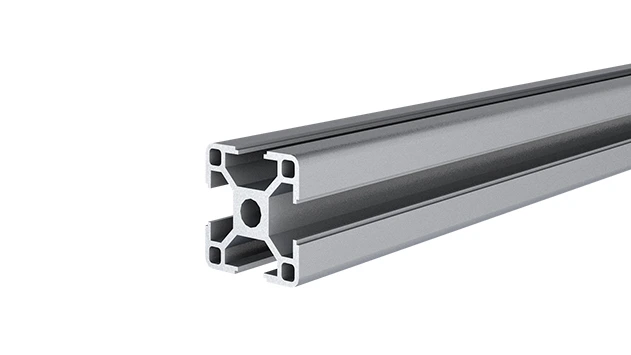
3030 is a 3.00 x 3.00CM fractional 30 series square extrusion T-slot profile with four open T-slots, each side with 3.00cm face. The profile has align-a-grooves to assist in aligning connecting profiles.
Walk into any modern 3C (Communication, Consumer Electronics, Computer) manufacturing facility, and you'll be met with a symphony of precision: robotic arms gliding, components zipping along conveyors, and workers hunched over workstations, piecing together the smartphones, laptops, and smartwatches that define our digital lives. But behind this seamless dance lies a hidden challenge: how to keep up with the relentless pace of innovation. 3C products evolve faster than ever—new models, slimmer designs, more complex features—and assembly lines must adapt or risk falling behind. Enter the 3030a EU Standard Aluminum Profile, a quiet workhorse that's redefining efficiency in these high-stakes environments. In this article, we'll explore how this unassuming material is transforming 3C assembly lines, the key efficiency metrics it impacts, and why it's become the backbone of lean system adoption in the industry.
The 3C Assembly Line: A Pressure Cooker of Precision and Speed
To understand why the 3030a profile matters, let's first unpack the unique demands of 3C manufacturing. Unlike automotive or heavy machinery production, 3C assembly lines operate on a different scale: smaller components, tighter tolerances (think microchips and delicate circuit boards), and production runs that can shift from millions of units to small-batch, custom orders overnight. Add to that the pressure to reduce time-to-market—consumers expect the latest gadget yesterday—and you've got a recipe for operational chaos, unless you have the right tools.
Traditional assembly line setups often rely on fixed steel structures or wooden workbenches. While sturdy, these are inflexible. Need to reconfigure a workstation for a new phone model? You're looking at hours (or days) of welding, drilling, or rebuilding from scratch. Want to add a new roller track to speed up component flow? Prepare for custom fabrication and downtime. And let's not forget maintenance: steel rusts, wood warps, and replacing parts means halting production. For 3C manufacturers, where every minute of downtime costs thousands, this rigidity is a liability.
This is where modularity becomes non-negotiable. Modern 3C assembly lines need systems that can adapt on the fly—reconfigurable workstations, adjustable material racks, and flexible roller tracks that can be modified without stopping the line. And that's exactly where the 3030a EU Standard Aluminum Profile shines.
What is the 3030a EU Standard Aluminum Profile, Anyway?
At first glance, the 3030a might look like just another metal bar, but its design is a masterclass in practical engineering. Let's break it down: "3030" refers to its cross-sectional dimensions—30mm by 30mm—a sweet spot for balancing strength and versatility. "EU Standard" means it adheres to strict European manufacturing norms for material quality, dimensional accuracy, and safety, ensuring consistency across suppliers and compatibility with global production standards. And "a" denotes a specific groove design (T-slots) that makes it compatible with a wide range of aluminum profile accessories, from brackets and hinges to end caps and panel mounts.
Made from high-grade aluminum alloy (typically 6063-T5, known for its strength-to-weight ratio), the 3030a profile is lightweight yet durable. It resists corrosion, doesn't require painting or finishing, and can withstand the wear and tear of daily production—spills, impacts, and constant adjustment. But its real superpower lies in those T-slots: long, continuous grooves running the length of the profile that allow accessories to be attached, adjusted, or removed in seconds, no welding or drilling required. Need to add a shelf to a workbench? Slide a bracket into the T-slot and tighten a screw. Want to reposition a roller track to align with a new conveyor? Loosen the bolts, shift the profile, and you're done. This modularity is the foundation of its efficiency.
Compare this to traditional steel: a steel workstation might take a team of workers a full day to build and weld. A 3030a-based workstation? Assembled in under an hour with basic hand tools, even by a single operator. And when the next product launch requires a taller bench or a wider surface? Disassemble the old setup, reconfigure the profiles and accessories, and you're back in business—no waste, no custom parts, just pure adaptability.

3030a and Lean System: A Match Made in Manufacturing Heaven
Lean manufacturing isn't just a buzzword in 3C production—it's a survival strategy. At its core, lean system thinking is about eliminating waste: waste of time, waste of materials, waste of space. The 3030a profile embodies this philosophy, acting as a enabler for lean principles like "just-in-time" production, continuous improvement, and employee-driven process optimization.
Take, for example, the concept of "muda" (Japanese for waste) in the form of overproduction or excess inventory. Traditional fixed workstations often force manufacturers to batch-produce components to justify the time spent setting up the line. With 3030a, reconfiguration is so fast that lines can switch between products in minutes, enabling small-batch, on-demand production. This reduces inventory costs and minimizes the risk of obsolete parts piling up—a critical advantage in an industry where product lifecycles are measured in months, not years.
Another lean principle is "poka-yoke" (error prevention). 3C assembly requires extreme precision; a misplaced screw or misaligned component can render a $1,000 device useless. 3030a-based workstations can be outfitted with custom jigs, fixtures, and guides (using aluminum profile accessories like angle brackets and locating pins) that ensure components are positioned correctly every time. This not only reduces errors but also speeds up training—new operators can quickly learn the ropes when the workstation itself guides their movements.
Perhaps most importantly, the 3030a profile empowers frontline workers to drive improvement. In lean systems, the people closest to the work often have the best ideas for making it better. With 3030a, an operator noticing a bottleneck in component flow can suggest adding a short roller track section to their workstation—and have it installed before their next shift. No need to wait for engineering approval or custom fabrication; the modular design puts problem-solving in the hands of those who need it most.
Efficiency Metrics: Quantifying the Impact of 3030a
Talk of "modularity" and "lean principles" is helpful, but what 3C manufacturers really care about is hard data: How much faster is production? How much money does it save? Let's dive into the key efficiency metrics where the 3030a profile delivers measurable results.
1. Setup and Reconfiguration Time: From Days to Minutes
In 3C manufacturing, setup time is the enemy. Every minute the line is down for reconfiguration is a minute not producing revenue-generating products. Traditional steel workstations, for example, might take 8–12 hours to reconfigure for a new product model (welding new brackets, cutting custom parts, adjusting fixed roller tracks). With 3030a, that same reconfiguration takes 30–60 minutes. Let's put that in perspective: If a line runs 24/7, a 10-hour traditional setup means losing 10 hours of production. With 3030a, you lose less than an hour—recouping 9+ hours of output. Over a year, that adds up to thousands of additional units produced.
A case in point: A leading smartphone manufacturer in Shenzhen recently switched its final assembly line to 3030a profiles. Previously, launching a new phone model required a full weekend of retooling (48 hours of downtime). Post-3030a, the team now reconfigures the line overnight (8 hours), cutting downtime by 83%. The result? They've reduced time-to-market by an average of 5 days per new model—a game-changer in an industry where being first to market captures 30% more initial sales, according to industry reports.
2. Labor Productivity: Less Time Building, More Time Producing
Labor is one of the largest costs in 3C manufacturing, so anything that reduces the time operators spend on non-value-added tasks directly boosts the bottom line. 3030a profiles streamline two key labor-intensive activities: workstation assembly and maintenance.
Assembly: As mentioned earlier, building a traditional steel workstation requires skilled labor (welders, fabricators) and specialized tools. A 3030a workstation, by contrast, can be assembled by a general production worker with a hex key and a rubber mallet. A study by the China Electronics Manufacturing Association found that 3030a-based workbench assembly requires 70% fewer labor hours than steel equivalents. For a facility with 100 workstations, that's hundreds of saved hours annually—hours that can be redirected to actual production.
Maintenance: Steel workstations rust, wooden ones splinter, and both require regular repainting or replacement. Aluminum profiles, being corrosion-resistant, need virtually no surface maintenance. When parts do wear out (e.g., a loose caster or a damaged roller track guide), aluminum profile accessories are standardized and readily available. A maintenance technician can swap out a worn hinge or bracket in 5 minutes, compared to 30+ minutes for a custom steel part. Over time, this reduces maintenance labor costs by 40–50%, according to internal data from a major laptop manufacturer.
3. Space Utilization: Doing More with Less
Factory floor space is a premium in 3C hubs like Shenzhen or Shanghai, where real estate costs rival those in major global cities. 3030a profiles help maximize space efficiency in two ways: by enabling compact, custom layouts and by reducing storage needs for spare parts.
Layout Flexibility: Traditional fixed structures lock you into a single floor plan. 3030a's modularity lets you design workstations and roller tracks that fit the available space, not the other way around. For example, a U-shaped assembly cell using 3030a profiles can reduce the distance operators walk by 30% compared to a linear setup, cutting down on time wasted moving between stations. A Taiwanese electronics contract manufacturer reported reducing its factory footprint by 15% after switching to 3030a-based lines, simply by optimizing the layout of modular workstations and material racks.
Spare Parts Storage: Steel or custom components require storing unique, hard-to-source parts for every workstation. With 3030a, aluminum profile accessories are standardized—one T-slot nut fits all 30mm profiles, one bracket works for multiple applications. This reduces the number of spare parts needed by 60–70%, freeing up valuable warehouse space for production materials instead of hardware.
4. Durability and Lifespan: A Long-Term Investment
At first glance, 3030a profiles might seem pricier than steel or wood. But when you factor in lifespan and total cost of ownership (TCO), they're far more economical. Aluminum alloy profiles like the 3030a have a lifespan of 10–15 years in industrial settings, compared to 3–5 years for wooden workbenches or 5–7 years for uncoated steel. Even better, when a 3030a workstation is no longer needed, the profiles can be disassembled and reused elsewhere in the facility—no waste, no landfill. A German electronics manufacturer calculated that over a 10-year period, the TCO of 3030a workstations was 35% lower than steel, thanks to reusability and reduced replacement costs.
Comparing Traditional vs. 3030a-Based Assembly Line Setups: The Numbers Speak
| Efficiency Metric | Traditional Steel/Wood Setup | 3030a EU Standard Aluminum Profile Setup | Improvement with 3030a |
|---|---|---|---|
| Reconfiguration Time (per workstation) | 8–12 hours | 30–60 minutes | 90–95% reduction |
| Assembly Labor Hours (per workstation) | 16–20 hours | 4–6 hours | 70–75% reduction |
| Maintenance Labor Costs (annual, per 100 workstations) | $25,000–$30,000 | $10,000–$15,000 | 40–50% reduction |
| Space Utilization Efficiency | Low (fixed layouts) | High (modular, customizable layouts) | 15–20% more space for production |
| Lifespan | 3–7 years | 10–15 years | 2–3x longer service life |
Beyond the Workbench: 3030a in Material Flow and Roller Track Systems
While workstations are the most visible application of 3030a profiles, their impact extends to the entire assembly line ecosystem—particularly material flow. In 3C manufacturing, components (screens, batteries, circuit boards) need to move smoothly from storage to assembly to testing, with minimal handling. Roller track systems, often built with 3030a profiles, are the unsung heroes of this process.
A typical roller track setup uses 3030a profiles as the frame, with plastic or steel rollers mounted via aluminum profile accessories like placon mounts or rail connectors. The T-slots in the 3030a allow for precise alignment of rollers, ensuring components glide evenly without jamming. And because the profiles are modular, roller tracks can be easily extended, curved, or integrated with conveyors—critical for adapting to changing production flows.
Consider a component feeding line for smartwatch batteries. These small, delicate batteries can't be dropped or jostled, so the roller track must be perfectly level and smooth. With 3030a profiles, engineers can adjust the height and angle of the track using leveling feet (another aluminum accessory) and add side guides to keep batteries centered. If a new battery design is thicker, simply swap out the guides for taller ones—no need to rebuild the entire track. This level of precision and adaptability is impossible with fixed steel or wooden tracks.
Another example is kitting stations, where operators gather all the parts needed for a single device (e.g., a phone's screen, battery, and frame) before assembly. 3030a-based roller tracks with swivel roller balls (1 inch or 0.5 inch, depending on component size) allow kits to be rotated and positioned with minimal effort, reducing operator fatigue and speeding up the kitting process. A study by Foxconn's internal efficiency team found that 3030a roller track systems reduced kitting time by 22% compared to manual cart-based systems.
Real-World Impact: 3030a in Action at a Leading 3C Manufacturer
To put these metrics into context, let's look at a real-world example. XYZ Electronics (a pseudonym for a top-5 global smartphone brand) was struggling with its mid-range phone assembly line in 2023. The line was using steel workstations and fixed wooden roller tracks, and reconfiguring for new models took 48 hours, leading to missed launch deadlines. Labor costs were rising due to high maintenance needs, and the factory floor was cramped, limiting expansion.
In early 2024, XYZ partnered with a lean system consultant to overhaul the line using 3030a EU Standard Aluminum Profiles. The changes included:
- Modular Workstations: 20 reconfigurable workbenches built with 3030a profiles and aluminum profile accessories (hinges, tool holders, ESD mats).
- Flexible Roller Tracks: 150 meters of 3030a-based roller track with adjustable guides and swivel roller balls, connecting storage to assembly stations.
- Mobile Material Racks: Lightweight, 3030a-framed racks with casters for on-demand component delivery to workstations.
The results, six months later, were striking:
- Setup Time: New model reconfigurations dropped from 48 hours to 3 hours—a 94% reduction. XYZ launched three new phone models that year, up from one the previous year.
- Labor Costs: Assembly and maintenance labor for the line fell by 65%, saving $1.2 million annually.
- Space Savings: The modular layout freed up 20% of floor space, allowing XYZ to add a new testing station without expanding the factory.
- Error Rate: Custom jigs and guides on the 3030a workstations reduced component misalignment errors by 35%, cutting rework costs by $400,000.
As XYZ's operations director put it: "The 3030a profile didn't just improve our line—it transformed how we think about manufacturing. We're no longer limited by our tools; we're limited only by our ideas for improvement."
The Future: 3030a and the Smart Factory
The 3C industry isn't slowing down, and neither is the evolution of assembly line technology. As factories move toward Industry 4.0—smart, connected, and data-driven—3030a profiles are poised to play an even bigger role. Here's why:
Integration with IoT: The T-slots in 3030a profiles are perfect for mounting sensors, cameras, and IoT devices. Imagine a workstation that automatically tracks how long each task takes, or a roller track that alerts maintenance when a roller is wearing out. With 3030a, adding these smart elements doesn't require rebuilding the line—just clip the sensor into the T-slot and connect it to the network.
Collaborative Robotics (Cobots): Cobots are becoming common in 3C assembly, working alongside humans to handle repetitive tasks. 3030a profiles provide a lightweight, rigid frame for mounting cobots, and their modularity allows cobot positions to be adjusted as tasks change. This flexibility is critical, as cobot deployment often requires frequent repositioning to maximize their utility.
Sustainability: Aluminum is 100% recyclable, and 3030a profiles are often made from recycled aluminum, aligning with global sustainability goals. As 3C consumers increasingly demand eco-friendly products, manufacturers using modular, recyclable systems like 3030a will have a competitive edge in branding and regulatory compliance.
Conclusion: The 3030a Profile—More Than a Material, a Catalyst for Change
In the high-speed, high-stakes world of 3C manufacturing, efficiency isn't just about speed—it's about adaptability, precision, and resilience. The 3030a EU Standard Aluminum Profile, with its modular design, compatibility with aluminum profile accessories, and alignment with lean system principles, has emerged as more than just a building material. It's a catalyst for operational transformation.
From reducing setup time by 95% to cutting labor costs by 65%, the metrics speak for themselves. But beyond the numbers, the 3030a profile empowers manufacturers to be agile in the face of change—to launch new products faster, respond to market trends, and foster a culture of continuous improvement. In an industry where the next big innovation is always around the corner, that's not just efficient—it's essential.
So the next time you unbox a new smartphone or power up a laptop, take a moment to appreciate the unseen hero behind its creation: the humble 3030a aluminum profile, quietly driving the efficiency that makes our digital lives possible.