- Company Articles
- Products and Technology
- Product knowledge
- 3030a EU Standard Aluminum Profile in Communication Equipment Production

3030a EU Standard Aluminum Profile in Communication Equipment Production
Related Product
3030A EU Standard Aluminum Profile
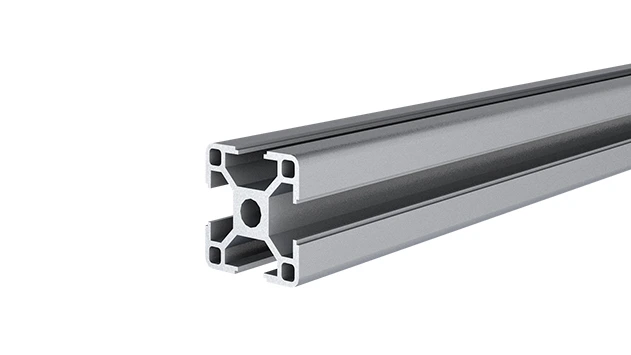
3030 is a 3.00 x 3.00CM fractional 30 series square extrusion T-slot profile with four open T-slots, each side with 3.00cm face. The profile has align-a-grooves to assist in aligning connecting profiles.
3030a EU Standard Aluminum Profile in Communication Equipment Production
Walk into any modern communication equipment production facility, and you'll notice a silent hero working behind the scenes: the infrastructure that holds everything together. From the workbenches where technicians assemble circuit boards to the material racks that keep components organized, every piece plays a role in ensuring efficiency, precision, and scalability. In an industry where technology evolves at breakneck speed—with 5G rollouts, IoT devices, and fiber-optic systems demanding ever-more intricate manufacturing—production lines can't afford to be rigid. They need solutions that adapt as quickly as the products themselves. That's where the 3030a EU Standard Aluminum Profile comes in. More than just a metal frame, it's a building block for flexible, durable, and future-ready production environments. Let's dive into how this unassuming profile is transforming communication equipment manufacturing, one connection at a time.
The Backbone of Modern Production: Why 3030a Stands Out
Communication equipment production isn't just about soldering wires or fitting chips. It's a dance of precision and adaptability. A single facility might produce routers one month, satellite modems the next, and then shift to fiber-optic transceivers—each with different dimensions, weight requirements, and assembly steps. Traditional production setups, built with fixed steel frames or custom woodwork, struggle to keep up. They're heavy, time-consuming to reconfigure, and often end up as waste when a new product line is introduced.
Enter the 3030a EU Standard Aluminum Profile. Part of the broader family of aluminum extrusion profiles, this specific model is designed with the unique needs of high-tech manufacturing in mind. Let's break down what makes it special. First, the "3030" refers to its cross-section: 30mm by 30mm, a sweet spot that balances strength and versatility. It's sturdy enough to support heavy equipment—think oscilloscopes, soldering stations, or component bins—yet lightweight enough that even a small team can reposition it without specialized tools. The "a" in its name denotes a specific groove design (EU standard), featuring T-slots that run the length of the profile. These slots aren't just for show; they're the secret to its adaptability, allowing for quick attachment of accessories like brackets, shelves, or cable management clips without drilling or welding.
But it's not just the dimensions that matter. The 3030a is made from high-grade aluminum alloy, typically 6063-T5, known for its excellent strength-to-weight ratio and corrosion resistance. In communication equipment production, where components are often sensitive to dust, moisture, or static, durability isn't optional. Aluminum's natural resistance to rust means the profile holds up in cleanrooms or factory floors where humidity levels fluctuate. Unlike steel, it won't add unnecessary weight to mobile workstations or trolleys, making it easier to reconfigure lines on the fly. And because it's an extrusion profile—shaped by forcing heated aluminum through a die—it has a consistent, smooth finish that minimizes snags on delicate wiring or circuit boards.
Beyond the Profile: The Power of Aluminum Profile Accessories
A profile is only as good as the accessories that bring it to life. The 3030a truly shines when paired with the right aluminum profile accessories, turning a simple extrusion into a fully functional system. Let's say a production team needs to build a workbench for assembling 5G base station components. They start with the 3030a profiles as the frame, but to make it useful, they'll add:
-
Connectors
: 90° aluminum profile connectors to join vertical and horizontal beams at clean right angles, ensuring stability without welding. These connectors slide into the T-slots and tighten with a hex key, creating a secure joint that can be disassembled and reused.
-
End Caps
: 3030 aluminum profile end caps to cover the open ends of the profile, preventing dust buildup and eliminating sharp edges that could scratch components or injure technicians.
-
Brackets
: Gusset plates and angle codes to reinforce joints where extra weight is involved, like under a shelf holding heavy test equipment. These accessories distribute load evenly across the frame, preventing warping over time.
-
Panel Mounts
: T-slot nuts and bolts to attach plywood or aluminum honeycomb panels to the frame, creating a sturdy work surface. These mounts allow for quick height adjustments—critical when technicians of different heights need to use the same bench.
What's remarkable is how these accessories transform the 3030a from a static piece of metal into a modular system. Need to add a shelf halfway up the workbench? Slide a bracket into the T-slot and tighten. Want to attach a LED light bar overhead? Use a pipe clamp accessory to secure it. The days of waiting for a welder or carpenter to modify a bench are gone. Technicians can make adjustments themselves, in minutes, using basic tools. This flexibility is a game-changer in communication equipment production, where product specs can change weekly and downtime costs thousands of dollars.
Building the Perfect Workbench: 3030a in Action
Let's zoom in on one of the most common applications of the 3030a: the assembly workbench. In communication equipment manufacturing, the workbench is the technician's command center. It's where they place circuit boards, sort resistors and capacitors, and use precision tools like microscopes or thermal cameras. A poorly designed workbench leads to fatigue, errors, and slowdowns. A well-designed one? It becomes an extension of the technician, boosting productivity and accuracy.
Consider a mid-sized manufacturer producing small-cell radio units for urban 5G networks. These units are compact—about the size of a shoebox—but packed with sensitive electronics. The assembly process requires a clean, organized space where components are within arm's reach, and tools are secured to prevent static damage. The production manager, Maria, decides to build custom workbenches using 3030a profiles. Here's how she does it:
First, she selects 3030a profiles for the frame, choosing a height of 850mm to accommodate both standing and seated work (with adjustable stools). The frame is 1200mm long and 600mm deep—wide enough for the radio unit and tools, but not so wide that technicians have to stretch. She uses 90° aluminum profile connectors to join the vertical legs to the horizontal beams, adding gusset plates at each corner for extra stability. For the work surface, she opts for an aluminum honeycomb panel, lightweight but rigid, mounted using T-slot bolts. The panel has pre-drilled holes for grounding straps, critical for preventing electrostatic discharge (ESD) that could fry the radio's microchips.
Under the bench, Maria adds two shelves using 3030a profiles and aluminum guide rails. The lower shelf holds bins of components, organized by part number, while the upper shelf (adjustable, thanks to sliding brackets) holds a small parts feeder. On the back of the bench, she mounts a pegboard made from perforated aluminum, attached to the 3030a frame with panel mounts. This holds frequently used tools—screwdrivers, tweezers, wire strippers—keeping them visible and accessible. To manage the tangle of cables from power tools and test equipment, she runs a cable tray along the back of the bench, secured with T-slot clamps.
Six months later, the manufacturer wins a contract to produce a larger outdoor 5G unit, requiring a deeper workbench (800mm instead of 600mm). Instead of building new benches, Maria's team disassembles the existing ones, adds longer 3030a profiles to the depth, and reattaches the honeycomb panels. The whole process takes two technicians one day, instead of the week it would have taken to build new wooden benches. The old accessories—connectors, brackets, end caps—are reused, cutting down on waste and costs. "We used to dread product changes because of the setup time," Maria says. "Now, with the 3030a, we see them as opportunities to optimize. The bench adapts, so we can too."
Lean System Integration: Streamlining Workflows with 3030a
Communication equipment production thrives on lean principles—eliminating waste, reducing downtime, and maximizing value. The 3030a profile isn't just a tool for building; it's a tool for streamlining. Let's look at how it integrates with lean systems to create more efficient workflows.
Take material handling, for example. In a traditional setup, components might be stored in fixed racks far from the assembly line, requiring technicians to walk back and forth to fetch parts—a classic case of "motion waste." With 3030a, teams can build mobile turnover trolleys and racks that glide right to the workbench. The trolley frames, made from 3030a profiles and fitted with caster wheels (another accessory), are lightweight enough to push easily but sturdy enough to hold heavy component bins. Because the profiles are modular, the trolley can be customized with dividers or shelves to match the size of the parts—no more wasted space or jostling components.
Then there's "waiting waste"—when production stalls because a workbench isn't set up for the next task. With 3030a's quick assembly, setup times plummet. A team can reconfigure a line from assembling routers to modems in hours, not days. This agility aligns perfectly with just-in-time (JIT) manufacturing, where components arrive exactly when needed, and production lines switch between products to meet demand. No more overproduction or idle equipment.
Even quality control benefits. 3030a workbenches can be outfitted with adjustable fixtures to hold components at precise angles, ensuring technicians inspect every solder joint or connector with consistent lighting and visibility. The profiles' smooth, non-conductive surface (when paired with ESD accessories) also reduces the risk of static damage, cutting down on defective products and rework—another lean win.
Case Study: How a Telecom Manufacturer Cut Setup Time by 70% with 3030a
A leading European telecom manufacturer was struggling to keep up with demand for its new line of fiber-optic transceivers. The production line, built with steel frames and fixed workbenches, took three days to reconfigure between product variants. With orders pouring in, the team needed a faster solution. They replaced the steel frames with 3030a profiles and aluminum profile accessories.
The results were striking: setup time dropped to just six hours, as technicians could quickly adjust bench heights, add/remove shelves, and reposition material racks using the T-slot accessories. Defect rates also fell by 15%, thanks to the ESD-safe work surfaces and better component organization. "We used to have two teams: one building products, one building benches," says the plant manager. "Now, the same team does both. The 3030a turned our production line into a puzzle we can rearrange in a day."
Technical Specs: Why 3030a Meets EU Standards
For manufacturers operating in Europe or exporting to EU markets, compliance with standards is non-negotiable. The 3030a isn't just labeled "EU standard"—it's engineered to meet strict criteria for safety, quality, and sustainability. Let's break down the specs that matter:
| Specification | 3030a EU Standard | Benefit for Communication Production |
|---|---|---|
| Material | 6063-T5 Aluminum Alloy | High strength-to-weight ratio; corrosion-resistant for long-term use in factories. |
| Cross-Section | 30mm x 30mm | Balances load capacity (up to 150kg/m) with flexibility for compact setups. |
| T-Slot Design | 8mm slot width, 2mm wall thickness | Compatible with standard EU accessories; secure attachment of brackets/tools. |
| Surface Finish | Anodized (20μm thickness) | Scratch-resistant; ESD-safe option available for sensitive electronics. |
| Length Options | 1m, 2m, 3m, or custom-cut | Reduces waste by matching profile length to exact needs. |
| Compliance | CE, RoHS, REACH certified | Meets EU safety and environmental regulations for electronics manufacturing. |
These specs aren't just numbers on a page. They translate to real-world reliability. The anodized finish ensures the profile won't chip or corrode, even in factories with strict cleaning protocols. The T-slot compatibility means manufacturers can source accessories from multiple suppliers, avoiding vendor lock-in. And the CE certification gives peace of mind that the profile meets EU safety standards for worker protection—critical in environments where technicians interact with the equipment daily.
Future-Proofing Production: 3030a in the Age of Smart Manufacturing
Communication equipment is getting smarter, and so are the factories that build it. Industry 4.0—with its IoT sensors, AI-driven analytics, and automated workflows—is reshaping production floors. The 3030a profile is ready for this future, too. Its modular design makes it easy to integrate smart tools:
-
Sensor Mounting
: T-slots can hold IoT sensors that monitor temperature, humidity, or vibration on the production line. If a workbench starts vibrating excessively (a sign of loose components), the sensor sends an alert, preventing defects before they happen.
-
Automation Integration
: 3030a frames can support lightweight robotic arms or conveyor systems, guiding them along precise paths. The profiles' consistent dimensions ensure the robots have a stable, repeatable base to operate from.
-
Digital Twin Compatibility
: Since the 3030a system is modular, its dimensions and configurations can be easily modeled in 3D software. Manufacturers can create digital twins of their production lines, testing new setups virtually before building them in real life—saving time and reducing errors.
As communication equipment continues to evolve—smaller, faster, more complex—the factories that build them need infrastructure that can grow with the technology. The 3030a isn't just keeping up; it's leading the way.
Conclusion: The 3030a—More Than a Profile, a Production Partner
In the fast-paced world of communication equipment production, adaptability isn't a luxury—it's survival. The 3030a EU Standard Aluminum Profile, paired with the right aluminum profile accessories, offers that adaptability in spades. It's a profile that becomes a workbench, a trolley, a rack, or a robot mount—whatever the job demands. It's a system that reduces waste, streamlines workflows, and grows with your business. And it's a partner that understands the unique challenges of building the technology that connects our world.
So the next time you pick up a router, a 5G modem, or a fiber-optic transceiver, take a moment to appreciate the unsung hero behind it: the 3030a profile, quietly holding everything together, and ensuring that the future of communication is built on a foundation of flexibility, efficiency, and innovation. Because in a world that never stops connecting, neither should our production lines.