- Company Articles
- Products and Technology
- Product knowledge
- 3030a EU Standard Aluminum Profile in Consumer Electronics Production

3030a EU Standard Aluminum Profile in Consumer Electronics Production
Related Product
3030A EU Standard Aluminum Profile
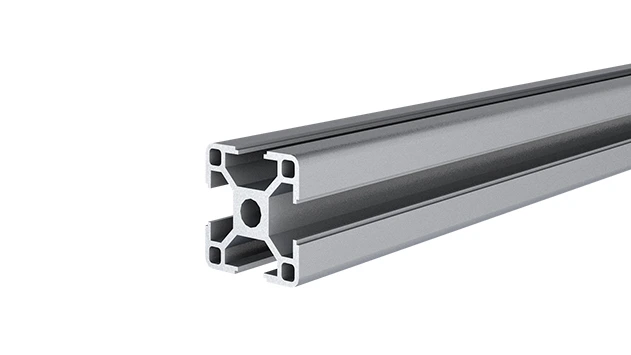
3030 is a 3.00 x 3.00CM fractional 30 series square extrusion T-slot profile with four open T-slots, each side with 3.00cm face. The profile has align-a-grooves to assist in aligning connecting profiles.
In the buzzing world of consumer electronics, where innovation moves at the speed of light and product lifecycles shrink by the month, manufacturers face a unique set of challenges. Every day, factories churn out smartphones with sleeker designs, laptops with faster processors, and wearables that track our every step—each requiring precision, efficiency, and a production setup that can keep pace with constant change. Enter the unsung hero of modern manufacturing: the 3030a EU Standard Aluminum Profile . More than just a metal frame, this unassuming component has become the backbone of assembly lines, workstations, and material handling systems in electronics plants worldwide. Its blend of strength, flexibility, and modularity makes it the perfect partner for an industry that demands both stability and adaptability. Let's dive into why this aluminum profile has become indispensable in crafting the devices we can't live without.
What Makes 3030a EU Standard Aluminum Profile So Special?
First things first: let's break down what "3030a EU Standard Aluminum Profile" actually means. The "3030" refers to its dimensions—30mm by 30mm—making it a compact yet robust choice for structures that need to balance size and strength. The "EU Standard" tag ensures it meets strict European guidelines for quality, durability, and safety, which is critical in industries like consumer electronics where precision is non-negotiable. And "a" denotes a specific extrusion design, typically featuring T-slots along its length—those handy grooves that let you attach accessories, brackets, and components without drilling or welding.
But what really sets this profile apart is how it's made. Using an aluminum extrusion profile process, manufacturers heat aluminum alloy to a malleable state and force it through a die, creating the precise 30x30mm shape with integrated T-slots. This method ensures uniformity across every piece—no two profiles are slightly off, which is vital when building workstations that must align perfectly for assembly tasks. The result? A lightweight yet surprisingly strong material (aluminum alloys like 6063-T5 are common here) that resists corrosion, stands up to daily wear and tear, and won't add unnecessary bulk to production lines.
For consumer electronics, where components are tiny (think microchips, camera lenses, or battery connectors), stability is everything. A shaky workbench or misaligned conveyor can ruin a batch of products in seconds. The 3030a profile's rigidity ensures that workstations stay level, material racks hold components securely, and roller tracks feed parts smoothly to assembly stations. And because it's aluminum, it's easy to move and reconfigure—no need for heavy machinery when rearranging a line for a new product launch.
Aluminum Profile Accessories: The Secret to Modularity
A profile is only as good as the accessories that bring it to life, and the 3030a shines here too. Walk into any electronics factory, and you'll find aluminum profile accessories like corner brackets, T-slot nuts, end caps, and hinges turning basic 30x30mm frames into fully functional workstations, material racks, and even mobile trolleys. These accessories are designed to snap, slide, or bolt into the T-slots, making setup and adjustments a breeze—no welding, no drilling, just quick, tool-driven customization.
Take, for example, the humble corner bracket. A simple L-shaped piece of metal, it connects two 3030a profiles at a 90-degree angle, forming the corner of a workbench. Need to add a shelf? Slide a T-slot nut into the profile, attach a bracket, and lay a panel on top. Want to mount a monitor arm for assembly instructions? Use a swivel joint to adjust the angle. Even small details, like end caps, matter—they cover the sharp edges of the profile, protecting workers from scrapes and preventing dust from collecting in the T-slots (critical in cleanroom environments common in electronics manufacturing).
One accessory that's particularly game-changing for electronics production is the adjustable leveling foot. Consumer electronics factories often have uneven floors from years of heavy equipment use, but these feet screw into the bottom of 3030a frames, letting workers tweak each leg's height to ensure workbenches are perfectly level. For delicate tasks like soldering tiny circuit boards or aligning smartphone screens, that stability can mean the difference between a flawless product and a costly defect.

Building the Perfect Workbench: 3030a in Action
If there's one place where the 3030a profile truly shines, it's in crafting workbenches —the heart of any electronics assembly line. Unlike generic workbenches made from wood or steel, those built with 3030a aluminum profiles are custom-tailored to the task at hand. Let's paint a picture: imagine a workstation where an assembler is attaching a camera module to a smartphone. The workbench needs to hold the phone steady, have bins for tiny screws and adhesives within arm's reach, and maybe a static-dissipative surface to protect sensitive electronics from ESD (electrostatic discharge). With 3030a, this isn't just possible—it's easy.
The frame of the workbench starts with 3030a profiles cut to length, connected by corner brackets and reinforced with gusset plates for extra stability. The top might be an aluminum honeycomb panel (lightweight but strong) covered in an ESD mat. Underneath, shelves made from the same 3030a profiles hold toolboxes and component trays, attached with brackets that slide into the T-slots. On the side, a small material rack—also built with 3030a—keeps partially assembled units organized. Even the height is adjustable: by adding casters with brake wheels (another aluminum profile accessory ), workers can raise or lower the bench to match their height, reducing fatigue during long shifts.
What happens when the factory switches to a new phone model with different dimensions? Instead of replacing the entire workbench, workers simply reposition the brackets, swap out the component bins, and adjust the shelf heights. That adaptability is priceless in an industry where production lines might retool every 6–12 months. A 3030a workbench isn't just a piece of furniture—it's a long-term investment that grows with the business.
3030a and Lean Systems: Streamlining Electronics Manufacturing
Lean manufacturing isn't just a buzzword in consumer electronics—it's a survival strategy. With tight profit margins and fierce competition, factories can't afford waste: wasted time, wasted space, or wasted materials. That's where lean systems come in, and 3030a aluminum profiles are the perfect enablers of lean principles.
Take "5S" (Sort, Set in Order, Shine, Standardize, Sustain), a cornerstone of lean methodology. 3030a profiles help "Set in Order" by creating dedicated spaces for every tool and component. Material racks built with 3030a have labeled slots for specific parts, so assemblers don't waste time hunting for screws or cables. Workstations are standardized using the same profile and accessories, so workers can move between lines with minimal training. And because the profiles are easy to clean (aluminum resists dust and grime), maintaining the "Shine" step is a breeze.
Another lean principle is "just-in-time" production, where materials arrive exactly when they're needed. 3030a-based roller tracks and flow racks make this possible. Imagine a line assembling smartwatches: components like watch faces, straps, and batteries need to flow to the assembly station precisely as workers are ready for them. Roller tracks built with 3030a profiles and plastic roller guides (yellow or grey, depending on the factory's color-coding system) ensure parts glide smoothly, reducing bottlenecks. If production speeds up or slows down, the tracks can be extended or shortened by adding or removing profile sections—no need for custom fabrication.
Perhaps the biggest lean benefit of 3030a is its role in reducing changeover time. When a factory shifts from producing one device to another, every minute of downtime costs money. With traditional steel workbenches or fixed racks, reconfiguring the line could take days. With 3030a, it takes hours. Workers loosen a few bolts, swap out brackets, and reposition components—all thanks to the profile's modular design. For a factory churning out multiple product lines, that agility translates to higher output and lower costs.
How 3030a Compares to Other Aluminum Profiles
You might be wondering: with so many aluminum profiles on the market (2020, 4040, 4080, etc.), why choose 3030a for consumer electronics? The answer lies in its balance of size, strength, and versatility. Let's compare it to a few common alternatives:
| Profile Type | Dimensions (mm) | Typical Load Capacity (kg/m) | Weight (kg/m) | Best For in Electronics Production |
|---|---|---|---|---|
| 3030a EU Standard | 30x30 | 150–200 | 1.2–1.5 | Workstations, small material racks, light-duty conveyor frames |
| 2020 EU Standard | 20x20 | 80–120 | 0.8–1.0 | Lightweight shelving, component bins, small tool holders |
| 4040a EU Standard | 40x40 | 250–350 | 2.0–2.5 | Heavy-duty workbenches, large material racks, machinery frames |
As the table shows, 2020 profiles are too small for most workbench frames—they lack the load capacity to support tools, components, and workers leaning on the surface. 4040 profiles, while strong, are overkill for electronics assembly, adding unnecessary weight and taking up precious floor space in crowded factories. 3030a hits the sweet spot: it can support 150–200 kg per meter (plenty for a workstation with tools and components) while remaining lightweight enough to reconfigure easily. Its 30x30mm size fits neatly into tight production lines, leaving room for workers to move and collaborate.
For example, a smartphone assembly line might use 3030a for workbenches, 2020 for the small component bins attached to those workbenches, and 4040 only for heavy-duty equipment like automated testing stations. This mix-and-match approach—made possible by compatible aluminum profile accessories across all sizes—lets factories optimize every inch of space.
Real-World Impact: A Day in the Life of a 3030a-Powered Factory
To truly understand the value of 3030a, let's walk through a typical day at a consumer electronics factory specializing in wireless earbuds. The factory runs two shifts, producing 10,000 units daily—each with over 50 tiny components. Here's how 3030a shapes the workflow:
6:00 AM: Pre-shift Setup – The night shift hands over to the morning team, and supervisors check the assembly lines. A 3030a-based flow rack near the entrance holds boxes of incoming circuit boards, each slot labeled with a barcode. The rack's shelves, adjusted using 3030a brackets, are angled slightly to let boxes slide forward as they're emptied—no bending or reaching. Nearby, a mobile trolley (frame built with 3030a, casters with brake wheels) carries ESD-safe bins of batteries, waiting to be distributed to workstations.
9:00 AM: Assembly in Full Swing – At Workstation 5, Maria is attaching earbud speakers to their plastic casings. Her workstation, a 3030a frame with an aluminum honeycomb top, has a custom setup: a small shelf to her left holds a precision screwdriver (mounted via a 3030a bracket), and a row of tiny bins to her right holds screws sorted by size. The bench height is adjusted to her elbow level, reducing strain. Above her, a monitor arm (attached to the workstation frame via a swivel joint) displays step-by-step instructions for the day's model.
1:00 PM: Mid-Shift Changeover – The factory switches from standard earbuds to a premium model with noise-canceling technology. Instead of stopping production, workers reconfigure their stations in 20 minutes: they swap out the component bins, adjust the monitor instructions, and add a small magnifying lamp (mounted to the 3030a frame) for inspecting the new model's finer details. The 3030a profiles' T-slots make it easy to detach and reattach accessories without tools.
5:00 PM: Quality Control – Finished earbuds move along a 3030a-based roller track to the QA area. The track's plastic roller guides (yellow, to match the factory's color-coding for "finished goods") ensure smooth transport, and the aluminum frame keeps the track level—critical for avoiding jams. Inspectors sit at 3030a workbenches with built-in lighting, checking for defects before packaging.
8:00 PM: End-of-Shift Tear Down – Workers clean their stations, and supervisors reset the line for the next day. A 3030a material rack near the exit holds completed boxes, ready for shipping. The racks are modular, so if tomorrow's order is larger, they'll add another 3030a section and a few more brackets—no need for a new rack.
In this factory, 3030a isn't just a material—it's the glue that holds the entire operation together. It adapts to the workers, the products, and the ever-changing demands of the consumer electronics market.
Sustainability and the Future of 3030a in Electronics
Today's consumers don't just care about the features of their devices—they care about how they're made. Sustainability has become a key differentiator for electronics brands, and 3030a aluminum profiles play a role here, too. Aluminum is 100% recyclable, and recycling it uses just 5% of the energy required to produce new aluminum. When a factory upgrades its production line, old 3030a profiles can be melted down and reused, reducing waste. Even better, the modularity of 3030a means fewer materials are needed overall: instead of buying a new workbench, you reconfigure the old one.
Looking ahead, the future of 3030a in consumer electronics is bright. As factories adopt more automation and IoT (Internet of Things), we'll see 3030a profiles integrated with smart sensors—tracking weight on workbenches to prevent overloading, or monitoring vibration to detect maintenance issues early. Aluminum alloys may become even lighter or stronger, and accessories could evolve to include quick-connect systems for even faster reconfigurations. But one thing is certain: the need for flexible, durable, and efficient manufacturing solutions will only grow, and 3030a is poised to meet that need.
Conclusion: Why 3030a is More Than Just Metal
In the high-stakes world of consumer electronics production, where every second and every millimeter counts, the 3030a EU Standard Aluminum Profile has proven itself to be more than just a building material. It's a catalyst for efficiency, a enabler of innovation, and a foundation for lean, sustainable manufacturing. By combining strength and flexibility with a vast ecosystem of aluminum profile accessories , it empowers factories to adapt quickly, reduce waste, and focus on what matters most: creating the next generation of devices that connect, inspire, and simplify our lives.
So the next time you pick up your smartphone or slip on your wireless earbuds, take a moment to appreciate the unsung hero behind it all. Somewhere, in a factory far away, a 3030a aluminum profile helped bring that device to life—one T-slot, one bracket, and one perfectly aligned workbench at a time.